Search engine optimization (SEO) is crucial for any business looking to establish a strong online presence and drive organic traffic to their website.
For large organizations, the stakes are even higher. Enterprise SEO needs to account for as many as millions of URLs, multiple stakeholders, slow dev queues, technical debt, content governance, international SEO, AI search disruption, and revenue accountability. It’s really a lot to manage, but the right approach can keep things efficient.
In this guide, Associate Director of SEO, Eric Solomon, will explore the world of enterprise SEO management, its unique challenges, best practices, and how it can impact your business.
What You’ll Learn
- Understanding Enterprise SEO
- 10 Key Components of a Successful Enterprise SEO Strategy
- Enterprise SEO Best Practices
- Success Stories – Enterprise SEO Examples
- Common Mistakes in Enterprise SEO
- Future Trends to Watch For
- Enterprise SEO Tools to Try
- What to Look for in Enterprise SEO Firms
- FAQs About Enterprise SEO
Understanding Enterprise SEO & When You Need It
Enterprise SEO is the art of optimizing large websites with hundreds to millions of pages to rank higher on search engines like Google. Unlike traditional SEO, which focuses on smaller websites, enterprise SEO requires a more complex and strategic approach to address the scale and scope of large enterprise sites.
Just keep in mind that an enterprise SEO strategy isn’t just about managing large websites; it also stands out with its requirement for:
- Cross-functional governance
- Marketing automation
- Template optimization
- Reporting at scale
- Multi-domain management
- Risk reduction
- SEO integration into product and development workflows
Examples of sites that might need enterprise-level SEO include:
- Fortune 500 companies
- Large ecommerce sites with 10,000+ pages
- Businesses with multiple locations
- Enterprises with several websites
While mid-market SEO tends to involve more manual tasks and getting quicker wins, enterprise SEO entails large-scale SEO strategies that require more scalability and automation to excel.
To execute enterprise SEO successfully, a higher level of orchestration, advanced skills, and project management are required. When applied effectively, these principles can lead to significant returns for the organization.
Why Enterprise SEO?
A robust enterprise SEO strategy can drive organic traffic, improve brand visibility, and ultimately lead to higher conversions and revenue.
In recent years, enterprise SEO has grown and evolved, thanks to major advancements in technology and changes in search engine algorithms. Today, enterprise SEO is more data-driven, focusing on user experience, quality of written content, and technical optimization.
Ultimately, the core enterprise SEO outcomes should include:
- Increased overall organic traffic and leads
- High revenue and ROI through increased conversions
- Improved brand visibility and reputation
- An improved user experience with a highly navigable site that
- connects with visitors and search engines
Enterprise SEO Challenges
However, enterprise SEO comes with its own set of challenges, including scalability, harmonization across departments, and managing complex websites. In traditional SEO, one or two SEOs can handle all aspects of search optimization. In enterprise SEO, the workload is too large for one or two people to manage successfully, requiring a dedicated SEO team for each aspect of search optimization.
Communication also plays a role in enterprise SEO, not only within the SEO team but across departments. The success of search optimization efforts depends on how well your development, marketing, IT, and design teams understand the value of SEO and work together toward achieving a common goal.
To ensure communication levels are where they should be, an enterprise SEO team needs to establish strict SEO guidelines. These guidelines should help colleagues and C-level managers understand the importance of SEO and explain the rationale behind certain decisions.
In addition, automation is key in enterprise SEO. Saving even a small amount of time per person can result in significant time savings for the entire enterprise.
With the help of the right enterprise SEO solutions, you could cater to the needs of every aspect of your business, creating a cohesive strategy that aligns your efforts with the goals of each department. Knowing how to do enterprise SEO the right way can ultimately help your business flourish online.
The key is implementing the most compatible enterprise SEO tools and working with experienced enterprise SEO experts who know how to develop the perfect strategy for businesses like yours.
My Expert Insight on Enterprise SEO
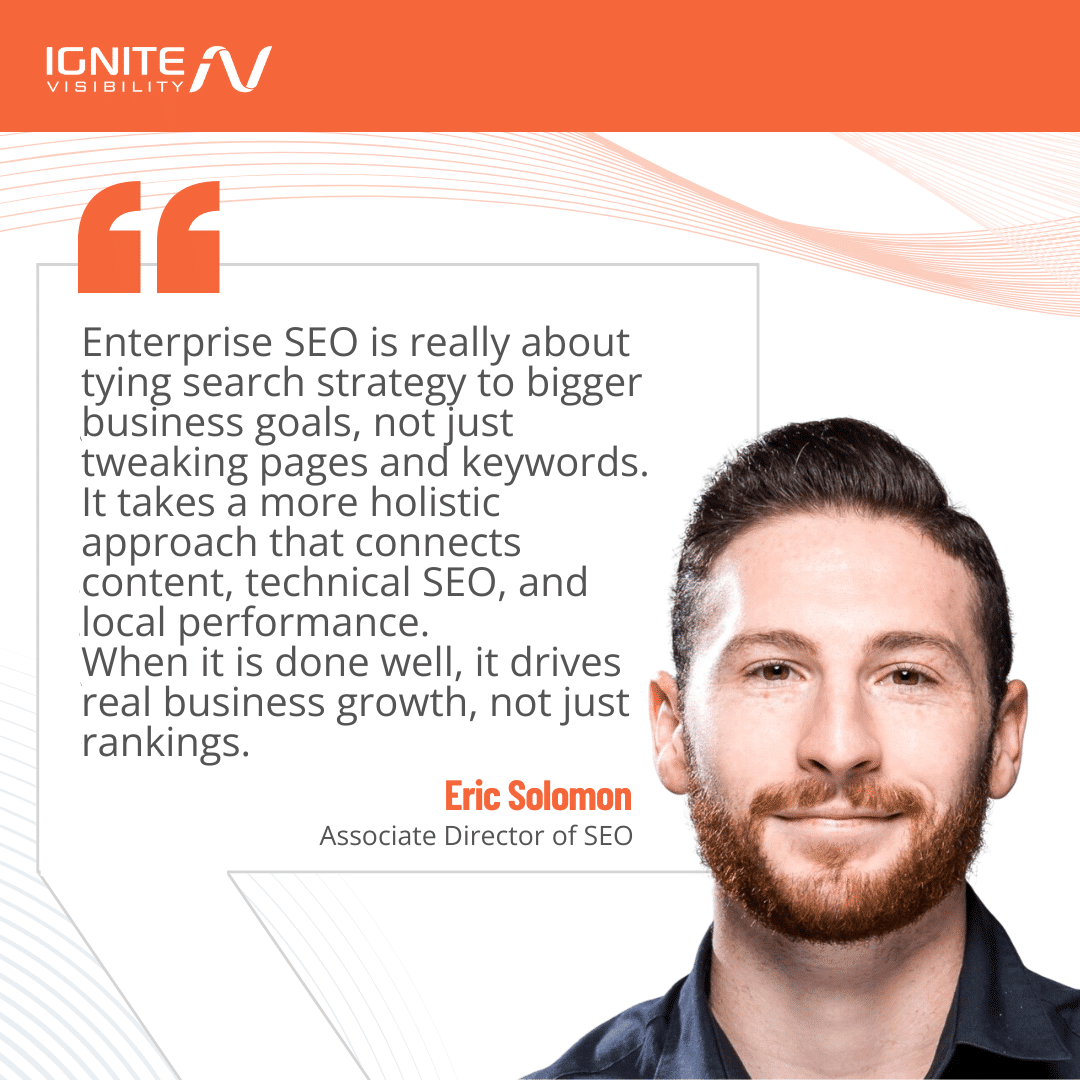
Enterprise SEO is not just about optimizing web pages; it’s about creating a cohesive strategy that aligns with the overall business goals.
Enterprise SEO solutions are strategic, involving more than fine-tuning keywords or meta tags. Instead, the idea is to focus on crafting a holistic approach that incorporates SEO seamlessly into wider business objectives.
Consider the effects of Google’s recent March 2025 Core Update, which reinforced the need for sites to contain helpful, reliable content and strong quality signals, leading some to experience volatility in search results. Core updates entail broad changes to ranking systems, and if you experience any traffic changes following one, it’s best to perform a content quality assessment to determine if this factor contributed to the change.
At Ignite Visibility, we’ve helped many large websites excel with our tailored enterprise SEO services. One multi-location home services franchise worked with our experts to boost organic traffic across locations, with Google Business Profile optimization, high-quality local content, and high-intent keyword targeting contributing to a 38% year-over-year (YoY) increase in organic search bookings, a 28% YoY boost in page one keyword rankings, and over 15,000 keyword rankings for the entire site.
Knowing what enterprise SEO entails and how to approach your strategy can help you succeed with your efforts.
10 Key Components of a Successful Enterprise SEO Strategy
1. In-Depth Technical SEO
Technical SEO is the backbone of any successful enterprise SEO strategy. It’s about optimizing how your website is built and how search engines crawl and understand it.
Things like site speed, fixing errors that can prevent search engines from properly exploring your site, and making sure it works well on mobile devices all play a significant role.
A good technical SEO strategy not only helps you show up better in search results but also makes it easier for people to use your site.
At the same time, enterprises could face unique challenges when implementing technical SEO, such as ensuring indexability and crawlability for thousands or even millions of pages, along with issues regarding duplicate content and canonicalization, and optimizing performance on complex websites with many assets.
Some effective enterprise SEO approaches for technical SEO include:
- Prioritize site architecture and internal linking to optimize the most important pages first
- Block low-priority and duplicate pages to better manage your crawl budget
- Use XML sitemaps to improve crawlability for search engines
There are also multiple tools and metrics you can use to help you monitor and measure your technical SEO strategy. For example, you may use Google Search Console to monitor index coverage, mobile usability, and crawl errors, while Google Analytics 4 (GA4) can measure organic traffic, user behavior, conversions, bounce rate, and other key metrics.
For example, an expansive ecommerce website might have tens of thousands of product pages. A good enterprise SEO strategy incorporating technical SEO could prioritize the products that achieve the most sales and block any duplicate product pages, with a comprehensive XML sitemap accounting for all product categories.
2. E-E-A-T Optimization
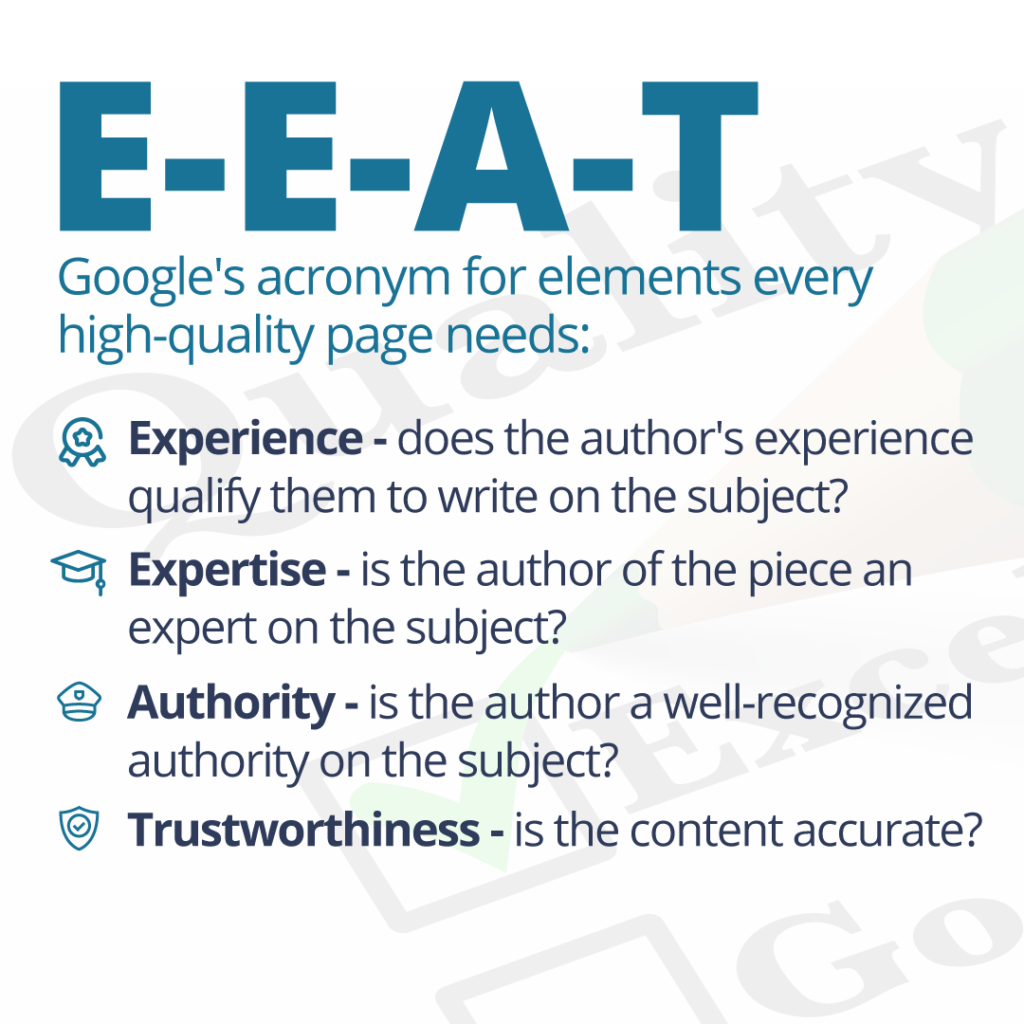
E-E-A-T (Experience, Expertise, Authoritativeness, Trustworthiness) optimization is particularly important for large organizations, especially in industries related to health, finance, and other YMYL (Your Money Your Life) topics. E-E-A-T is Google’s specific guideline for prioritizing readability and overall quality for websites, making it a core component of effective enterprise search engine optimization.
Demonstrating expertise, authoritativeness, and trustworthiness in your content can significantly impact your credibility and ranking on search engines. This can be achieved by posting high-quality content that is accurate and well-researched.
Challenges with E-E-A-T that could impact enterprise SEO include:
- Scaling signals across large content libraries, including author bios and experience-based content
- Communicating E-E-A-T guidelines across content, legal, IT, and other teams
- Managing negative reviews on a large scale, which can be especially difficult with a large number of product pages with poor ratings and reviews
Meanwhile, some strategies for effective enterprise SEO management for E-E-A-T include:
- Identifying subject matter experts (SMEs) and attributing expertise to them in content
- Showcasing first-hand experience in blog posts and other content
- Maintaining accuracy and transparency
- Establishing E-E-A-T guidelines at the enterprise level
Some of the best enterprise SEO tools for managing and monitoring E-E-A-T compliance include Clearscope and other content optimization keywords, content governance tools like Asana, and Rallio or other reputation management platforms.
Metrics like engagement rate, time on page, and organic growth for informational queries could indicate the performance of SEO in alignment with E-E-A-T.
As an example, a healthcare enterprise could regularly produce articles about various health topics with clear expertise from licensed medical professionals and bios included on all authored pages.
3. Scale Your Content Strategy
Managing lots of content can be tough for big organizations. A good content strategy involves reviewing your content and refining your process to give users a consistent, top-notch experience. Scalability will help you adapt your campaigns as needed to foster long-term business growth.
Regularly checking your content and filling any gaps can make the user journey more unified and engaging.
However, there are some challenges that can come with scalability for enterprise SEO solutions, such as:
- Maintaining brand consistency at high volume, including consistent branding and messaging across all content
- Acquiring approval at all levels and maintaining regulatory compliance
- Silos among various teams (e.g., SEO and design) that lead to inefficient workflows
To overcome these challenges, here are some effective enterprise SEO approaches to boost scalability:
- Develop a style guide to maintain a consistent brand voice for all content at scale
- Establish a centralized content hub to effectively manage all assets and content versions
- Create a strong review and approval workflow that assigns responsibilities among teams, with clearly defined roles
There are also plenty of innovative enterprise SEO tools to assist with scalability, such as headless CMSs that separate content management from presentation layers for more efficient content publishing, Monday.com and other project management tools that ease workflows, and digital asset management (DAM) systems that can distribute brand-compliant images, videos, and other media.
4. Domain Authority and Trust
Domain authority in enterprise SEO refers to a website’s reputation among search engines for providing users with a reliable and trusted source of engaging information.
Building up your authority online is incredibly important, especially in enterprise SEO. That means getting quality backlinks, mentions from other brands, and forging partnerships to ensure your website is more trustworthy.
When your website is seen as a reliable source in your industry, it can boost your rankings on search engines and bring in more people naturally.
Challenges that businesses might encounter when it comes to domain authority might include:
- Difficulty in significantly boosting domain authority with a large site as it expands
- Managing link acquisition and distributing link equity across multiple domains
- Slower results from an enterprise SEO strategy
Here is some cutting-edge enterprise SEO advice based on current best practices:
- Leverage your existing brand equity with digital PR to produce linkable assets and engage in proactive media outreach while positioning experts in earned media
- Develop authoritative pillar pages covering a broader topic in great detail, branching out with subpages that then link back to and support these pillars
- Conduct regular link audits to gauge the health of your backlink profile and optimize accordingly, balancing quality with quantity
You can use various innovative enterprise SEO tools to help build and monitor domain authority. For instance, Moz Pro’s Link Explorer can provide a breakdown of backlink profiles, page authority, and spam scores, while Semrush can indicate your website’s Authority Score while helping audit backlinks.
A good example of an enterprise building and leveraging domain authority is finance company NerdWallet, which is always publishing detailed and expert-backed financial studies, data reports, and surveys, getting backlinks from major sources like The New York Times and other publications.

5. User Experience (UX) and SEO
The experience users have on your site is a big deal for SEO, especially if you’ve got a big website. Making your site fast, easy to use on mobile, and ensuring a smooth journey for visitors can make them happier and boost your rankings on search engines.
Google uses UX as a factor when determining how to rank websites, making it an integral component of a solid enterprise SEO strategy.
Here are some UX challenges that can impact enterprise SEO management:
- Legacy systems that make it difficult to implement good UX practices like fast page loading speeds and mobile responsiveness
- Inconsistent navigation and information architecture that make it harder for users to find what they’re looking for and for search engines to crawl the site
- Non-responsive design for mobile devices that compromise mobile-first indexing
Now, here are some of the ways to boost SEO for enterprise companies with a good UX:
- Prioritize performance metrics that adhere to Google’s Core Web Vitals, including Largest Contentful Paint (LCP), Interaction to Next Paint (INP), and Cumulative Layout Shift (CLS)
- Focus on giving mobile users a seamless experience that parallels desktop users’ interactions
- Implement a flat hierarchy to keep all critical content close to the homepage while making navigation intuitive
The best enterprise SEO tools can help you get the best results from your efforts, including Google Search Console for monitoring Core Web Vitals, Hotjar and other heatmapping tools that measure how users interact with your site, and Optimizely or other A/B testing tools to determine which designs yield the best results among users.
Of course, one example of an expansive enterprise website with a great UX is Amazon, which gives users personalized recommendations and an easily navigable site for both desktop and mobile users.
6. Data and Analytics
To succeed with your enterprise SEO, you’ve got to lean on data. By digging into things like user behavior, where your traffic is coming from, and how well your keywords are performing, you can update your approach.
Analytics will provide you with the information you need to gauge your website’s overall performance, from user engagement and conversions to search rankings.
You may face the following key challenges when attempting to collect and evaluate your data and analytics:
- Collecting too much data to the point where it is hard to extract meaningful and innovative enterprise SEO insights
- Siloed data and issues with integration between analytics tools, CRMs, and other enterprise SEO solutions
- Failing to track the key performance indicators (KPIs) that correspond with enterprise SEO goals
In overcoming these, here is some cutting-edge enterprise SEO advice:
- Determine your goals and what you want to achieve to help identify the metrics that matter
- Centralize data governance and ensure integration across all tools
- Regularly generate in-depth reports to track progress, whether weekly, monthly, or quarterly
Some key tools you can use for reporting and analytics include:
- Google Analytics 4 for user engagement, behavior, conversions, and traffic acquisition
- Google Search Console to measure organic search performance, including rankings, clicks, and impressions
- Business intelligence and data visualization tools that can help analyze large data sets
- CRM systems like HubSpot and Salesforce
7. Integrate Structured Data and Schema Markup
Giving search engines clear context as to what your content is about will also help your rankings. The key to this is the use of schema markup, which is a type of structured data.
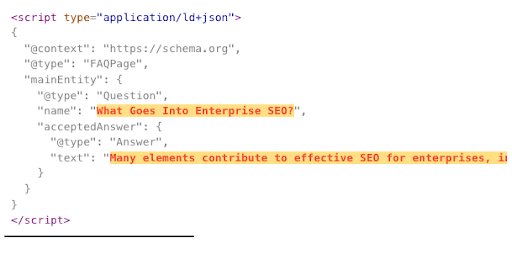
Structured data is code that you can include on your pages to indicate what type of content they contain, e.g., products, articles, reviews, FAQs, etc. Search engine bots can then crawl this text and perceive it as a ranking signal.
The most popular code format is schema, with the most common language being JSON-LD, which Google recommends.
Schema markup, including image schema, is particularly helpful in getting your content to show up for featured snippets and AI search results, the latter of which we’ll get more into below.
Here’s an example of what schema markup for FAQ content might look like:
8. Optimize for AI Search
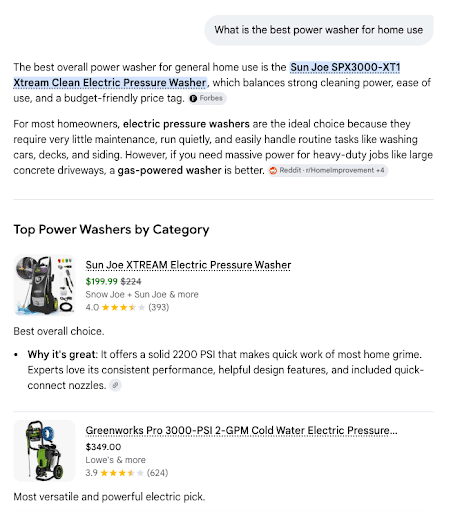
In addition to traditional search results, you must optimize for AI search to maximize visibility, including Google’s AI Overviews and AI Mode, along with other generative engines like ChatGPT and Perplexity.
These results are becoming increasingly essential, as AI changes the way people search online. More and more users are going beyond basic keyword searches and asking more in-depth questions with complex queries.
AI chat agents can relay large amounts of summarized or synthesized information, pulling from the most reputable sources in the process. To appear in citations, you need to produce helpful, well-researched, and top-quality content that AI platforms are likely to use.
Here are some quick tips to help you optimize for AI with enterprise SEO:
- Write content in natural, conversational language
- Include questions and answers that users and generative engines are likely to ask and answer, respectively
- Break up your content with H2s, H3s, and other headings
- Build authority with unique perspectives, insights, reports, and expert author bios with credentials
- Establish topical authority around industry topics and subtopics
9. Implement Off-Page SEO and Digital PR
Another core component is off-site enterprise search optimization, which entails building a strong backlink profile through link-building efforts and enterprise-level PR with plenty of positive brand mentions across the web.
Link-building requires you to perform outreach to online industry publications, getting those sites to link back to you and distribute their domain authority to your site.
With the help of digital PR, you can also provide expert quotes to journalists through platforms like Connectively and SourceBottle, which will get your brand more mentions on highly trusted news sites and industry blogs to boost your credibility.
Ultimately, more authority through backlinks and strong PR will contribute to higher rankings with your enterprise SEO strategy.
10. Consider International or Local Requirements
Enterprise SEO also often involves both international and local optimization.
When building an international presence, some enterprise SEO best practices include:
- Choosing the right URL structure and hierarchy for global sites, e.g., a “co.uk” domain for British audiences or an “/en-gb/” subdirectory for a site’s British-English branch
- Implementing language and region targeting with hreflang tags to mitigate the risk of duplicate content while optimizing targeting for regional audiences
- Adapting your content to regional buying behaviors, units of measurement, cultures, and currencies
- Optimizing for regional search engines, such as Yandex for Russian audiences and Baidu in China
Meanwhile, here are some local enterprise SEO best practices to implement:
- Google Business Profile optimization at scale for each location, maintaining accurate name, address, and phone number (NAP) information, with localized attributes like unique offerings and business hours, along with reviews
- High-quality local landing pages with location-specific keyword targeting, LocalBusiness schema markup, and hyper-local content such as local news and staff bios
- Local link-building and citations that boost your off-page optimization efforts, including backlinks on local directories and brand mentions on relevant local news publications

Enterprise SEO Best Practices
Now that we understand the significance of enterprise SEO, let’s delve into some of the advanced strategies necessary for larger companies. In learning how to do enterprise SEO, here are some key enterprise SEO best practices to implement in a complete checklist:
- Enable web crawlers to access your website for indexing and ranking with proper robots.txt configurations and XML sitemaps that list all canonical pages
- Check your Core Web Vitals to ensure your website offers a good user experience to all visitors, including fast loading times
- Optimize mobile SEO with a mobile-responsive design that helps you reach audiences using smartphones and tablets
- Remove or consolidate any duplicate pages to avoid cannibalization in search results
- Determine how your site and brand appear in AI search results
- Regularly review content quality and performance
- Integrate enterprise SEO into your overall marketing strategy, including PPC, social media, email, and other campaigns
- Check all of your on-page elements, such as meta titles and descriptions, internal links, keyword usage, and image optimization
- Assess your backlink profile and remove any potentially harmful links from websites with low domain authority
- Measure relevant metrics based on your goals, including organic traffic, conversions, and rankings
- Consistently compare your site’s performance with competitors to identify areas of improvement
Enterprise SEO Success Stories
Real-world examples of successful enterprise SEO strategies can provide valuable insights into how other organizations have overcome challenges and achieved success.
Salesforce
Take Salesforce, for example. As a leading CRM platform, they manage tens of thousands of pages on their site, streamlining operations with a content management platform for bulk functions.
They kick-started their journey with a thorough enterprise website SEO audit, fixing technical glitches and earning relevant backlinks.
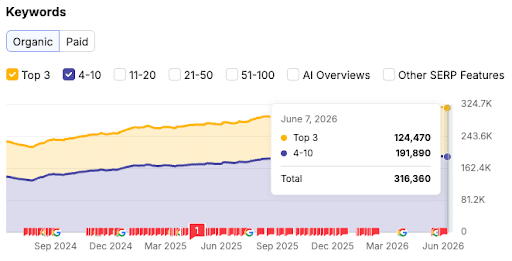
Salesforce now dominates Google’s first page for over 300,000 keywords, which has led to their website traffic to a staggering one million within one year.
Salesforce also gets over 285,000 mentions in AI search across the globe, helping further maximize its presence in these results.
What Enterprise SEOs Can Learn:
- Conducting a thorough SEO audit can help identify any required fixes
- Continually optimizing technical SEO can further reap the benefits of enterprise SEO
- Expanding your backlink network to many sites with high domain authority can help you boost reputability and further increase the chances of ranking for both traditional and AI search
Shopify
Then there’s Shopify, a powerhouse in ecommerce. Their SEO playbook revolves around establishing domain authority, pinpointing lucrative keywords, and crafting a robust link-building strategy.
They excel in ranking for “drop shipping” keywords and their variations, cleverly generating both external and internal links.

With a meticulous five-step SEO integration method, Shopify creates tailored landing pages for app partners, infusing them with the right mix of keywords and glowing customer reviews.
What Enterprise SEOs Can Learn:
- High domain authority with effective link-building can significantly boost rankings
- Targeting relevant keywords with relevant internal and external links can help land top placements in SERPs
- A proven process for page implementation and optimization will enable you to connect to your target audiences more effectively
Intuit
Lastly, let’s look at Intuit, a global financial platform. Facing a content challenge, they bravely axed 2,000 outdated blog posts, making up a whopping 40% of their content. But it wasn’t a cut-and-dry decision.
By replacing the old with fresh, high-quality content, Intuit witnessed a remarkable 20% surge in overall organic traffic, soaring to a 44% spike during the tax season frenzy. This surge also resulted in a 72% increase in sign-ups.
What Enterprise SEOs Can Learn:
- Replacing old content with new, fresh pages can significantly increase rankings and organic traffic
- Seasonality can factor into how enterprise SEO will help your business
Common Mistakes in Enterprise SEO
Discussing common pitfalls in enterprise SEO and how to avoid them can help organizations avoid costly mistakes and improve their SEO performance.
Unclear Goals
Set clear and specific goals for your SEO strategy, whether it’s to increase traffic, generate leads, or boost sales. Divide your goals and focus on them one at a time to prevent confusion and wasted efforts.
Skipping SEO Audits
Conduct regular SEO audits to identify areas for improvement, such as technical optimization, content quality, and user experience. Addressing these issues can boost your website’s position in search engine results.
Ignoring Duplicate Content
Duplicate content can cause indexing issues with search engines. Use canonical tags to indicate the main version of a page and avoid duplicate content penalties.

Neglecting Title and Meta Description
Craft unique and descriptive titles and meta descriptions for each page to attract clicks and improve search engine visibility.
Prioritizing Over-Expansion
Focus on optimizing existing content and pages before creating new ones. Updating and optimizing older pages can improve their chances of ranking and prevent website bloat.
Not Optimizing Channels
Use multiple channels, including SEO, paid search, and social media, to scale your marketing efforts effectively. An omnichannel strategy can help retain customers and maximize brand visibility.
Ignoring Internal Linking at Scale
Many enterprises neglect to build out their internal links as they expand, which can leave a big opportunity on the table. New pages should link to existing pages and vice versa to help distribute link equity among all pages.
Lack of HTTPS and Security Protocol Consistency
Enterprise websites must use secure HTTPS domains instead of unsecured HTTP, and security protocols should provide a standard for all teams to follow across all domains and subdomains.
Index Bloat
Low-value pages can waste crawl budget and hurt your domain’s overall authority. Conduct an in-depth site audit to identify low- or non-value pages and isolate any indexing errors holding your site back.
Poor Faceted Navigation
Sorting and filtering options can multiply URLs on a massive scale, leading to more issues with duplicate content. The Google Faceted Navigation Guide can help with setting up parameters and implementing “noindex” on sorting parameters.
Ignoring Log Files
Crawl data shows how search engines interact with your site and content, but many SEOs ignore site logs and focus instead on front-end rankings. Take a look at your server logs to pinpoint crawl traps, orphaned pages, and any moments where search crawlers waste crawl budget on irrelevant pages.
Weak Migration Planning
Moving over to a new domain without proper redirect implementation could lead to a significant drop in rankings and organic traffic. Be sure to map all of your old URLs to their new counterpart and use 301 redirects to transfer page value.
No SEO QA in Releases
Developers may launch new pages or sites without taking the proper precautions to preserve their enterprise SEO strategy. SEO needs to be integral to your quality assurance (QA) measures within the staging environment, with automated crawling and testing.
Overreliance on AI Content
Google tends to punish websites with generic AI-generated content. Try to minimize the amount of AI content on your site and make sure your content is helpful, unique, and human-backed, using AI only as a tool to increase efficiency, not replace the human touch.
Siloed Reporting
SEO metrics are often disconnected from other teams and business revenue. Use unified data dashboards to centralize reporting and tie your SEO performance to meaningful metrics like core KPIs, revenue, and conversions.
Duplicate Templates
Identical content layouts can limit the uniqueness of your pages and lead to problems with duplicate content. Make your templates more dynamic and optimized based on search intent, with unique text blocks.
Unmanaged International/Local Pages
Improper use of hreflang tags and unmanaged or duplicate landing pages can result in indexing issues and cannibalization. Make sure your site uses correct hreflang tags for all language variations and make all local landing pages unique with data specific to each location, such as local reviews and business details.
No Prioritization Model
Teams could waste time on low-impact, high-effort SEO tasks. Try to get quick wins by continually optimizing high-performing pages before developing new content, and use an actionable framework like Impact, Confidence, Ease (ICE) or another model to help prioritize content optimization.
Enterprise SEO Trends to Prioritize
Looking ahead, enterprise SEO will see a ton of exciting changes driven by up-and-coming tech. Let’s explore a few:
- Augmented Reality (AR): Integrating AR into your SEO plans will open new possibilities for immersive experiences which will revolutionize how users engage with brands and search for information.
- Natural Language Processing (NLP) and Natural Language Generation (NLG): Search engine algorithms are being reshaped as their understanding of content and keywords change. These algorithms are continuing to prioritize content creation and optimization that put relevance and context first.
- Voice Search and User Experience (UX): With voice search continuing to grow in popularity, it’s essential to pay attention to the experience you’re providing users. Optimize your content for conversational queries to rank higher in search and create seamless interactions in the future.
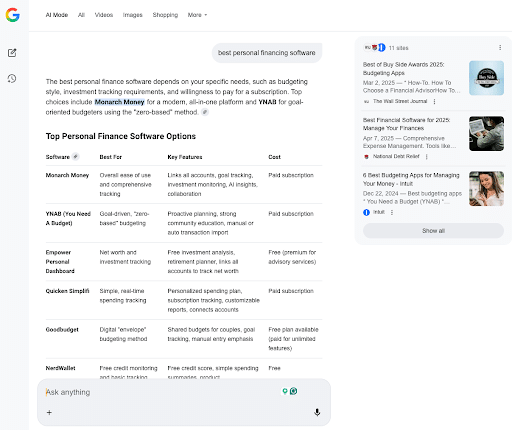
- AI-Powered Search: Google and other search engines are implementing tools like AI Overviews and AI Mode, and people are using generative engine platforms like ChatGPT to conduct searches, making it important to optimize for these platforms with effective generative engine optimization.
- First-Party Data and Privacy-Driven SEO: You must also make the shift toward privacy-centric SEO by collecting more first-party data from your audiences, which entails asking for consent for personal details that you can then use for personalization and targeting. Doing so will keep you compliant with ever-evolving privacy regulations while maintaining your audience’s trust.
- Entity-Based SEO and Knowledge Graph Optimization: Using structured data like schema, you can give search engines more context about your content and what it’s about using entity-based SEO, e.g., whether a page is about a particular thing, person, or place. Taking this step could help optimize for Knowledge Graphs and other rich snippets in Google search results.
- Multimodal Search: Today, people conduct searches using more than simple text queries, engaging in visual search and voice search while looking for various types of media, from blog posts to videos to images. Optimizing for all of these types of searches can help you maximize your reach, especially among mobile users implementing Google Lens, Siri, and other technologies.
For enterprises to thrive, staying agile and keeping up to date with these trends will be non-negotiable.
Enterprise SEO Tools & Platforms To Try
Finding the right tools for your enterprise SEO strategy can seem overwhelming, especially when you’re gearing up to serve large corporate clients. Fortunately, these tools make tasks such as keyword research, competitive analysis, website audits, and content optimization much easier.
Here are some critical tools to use for enterprise search optimization based on use case:
Crawling and Log Analysis
Oncrawl
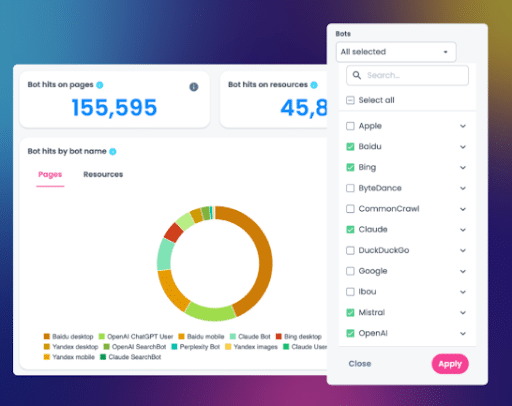
Oncrawl is a cloud platform that can crawl all of your pages and analyze log and performance data to assist with technical SEO.
The tool provides real log data to determine how Googlebot, Bing, and AI bots interact with your pages across your site, with detailed technical SEO audits and insights to help you continually improve your enterprise SEO strategy.
Rank Tracking
Moz Pro
Moz Pro helps you target the right keywords to create custom support. This tool helps remove the SEO complexity by understanding your visitors, tracking your rankings, crawling and auditing your site, helping you optimize your pages, and identifying unique link-building opportunities.
Generally, Moz Pro is great for teams in need of flexibility but not full enterprise SEO automation, as it still will require some manual tasks.
With tiered plans, Moz Pro offers pricing ranging from $99/month for the most standard plan to $599/month for the premium plan. There’s an option to pay yearly to save 20% as well.

Analytics and Business Intelligence
Google Analytics
For those just starting or hesitant to invest, Google Analytics is a free tool that tracks website traffic and performance and delivers a range of audience overview and demographics reports. However, mastering Google Analytics takes time and expertise to analyze its various reports effectively. You’ll get access to customer insights to help improve your ROI, connect your insights to results, and then make your data work for you.
Today, users have access to Google Analytics 4 (GA4), along with Google Cloud’s BigQuery for advanced data modeling. BigQuery can automate the entire data lifecycle to harness the power of AI platforms with your data.

Keep in mind that privacy-first measurement is crucial in maintaining compliance with today’s privacy regulations. Google’s Looker Studio can also integrate into your enterprise dashboard for data visualization.
Project Management
HubSpot’s Website Grader
This free tool evaluates your website and provides suggestions for SEO improvements. HubSpot’s Website Grader also helps enhance website performance, optimize for mobile, personalize experiences, and implement SEO best practices. You’ll get your website rating in seconds, with a breakdown of performance, SEO, mobile, security, and more.

Technical Monitoring
Conductor
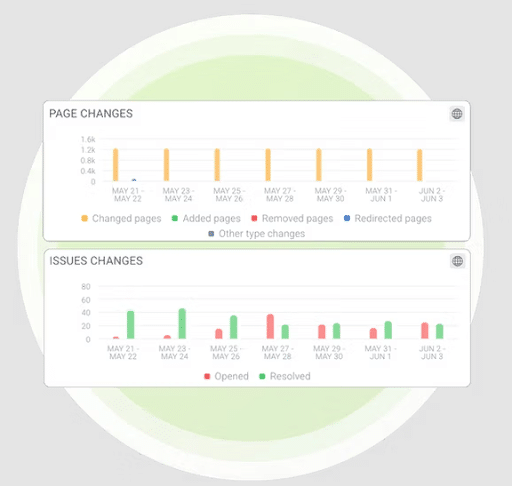
With the help of Conductor, you can monitor enterprise SEO and AI SEO in real time. This solution will ultimately help protect your visibility through 24/7 monitoring, enabling you to identify and address any issues before they have the chance to hurt your site’s performance.
One big advantage of Conductor is instant alerts when any changes occur, ensuring the right people on your team become aware of any issues. The tool also helps with prioritization by identifying the pages costing you the most, with insights into what’s hurting them and how to fix them.
Link Analysis
Ahrefs
Another all-in-one toolkit, Ahrefs is similar to Moz Pro and stands out for its extensive backlink database, which is helpful for link-building and competitive analysis. This tool will also help you audit and optimize your website, track your ranking progress, and give you new content ideas. Ahrefs runs its search engine, providing high-end infrastructure to power all its services.
With a free option, you’ll have access to the Site Explorer and Site Audit tools. Monthly plans begin with the Lite version, starting at $99/month, and leading up to the Enterprise custom plan, available on annual contracts only.

AI Content Governance
Slate
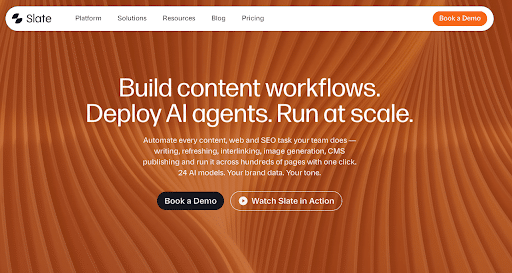
Slate is an enterprise content operations solution that helps with SEO optimization and content governance and workflow management.
It can assist with managing content across multiple contributors, with CMS handoff and editorial oversight capabilities that enterprises need for governing content at scale.
Slate’s content governance framework can also adhere to editorial guardrails and your unique brand voice, keeping content of consistent quality and distinctly yours.
Other Comprehensive Enterprise SEO Software Platforms
To supplement the above enterprise SEO tools, you might want to integrate the following suites into your enterprise SEO strategy:
Enterprise Suites
- BrightEdge: This enterprise SEO software suite is great for content creation and management, contributing to a comprehensive content strategy. One of the main advantages of this tool is its AI-driven suggestions to optimize content and boost website performance, and it can help refine your efforts with keyword research to help boost enterprise keyword rankings. Additional tools include backlink analysis, with enterprise-level pricing.
Technical SEO Platforms
- Lumar (formerly Deepcrawl): For more help with technical SEO, consider using Lumar’s enterprise SEO dashboard, which can conduct an in-depth technical SEO analysis to identify any issues that might be hurting your site’s performance, with advanced analysis capabilities for large enterprise websites. Like Conductor, Lumar performs 24/7 monitoring for website changes, helping determine if there are any problems before they become SEO-breaking.
AI-Powered Tools
- seoClarity: This enterprise SEO software provides an AI-powered solution for competitor analysis, daily rank tracking, forecasting, and attribution modeling, helping marketers identify critical opportunities and map the entire customer journey.
- Jasper: This AI writing assistant can help maintain consistent style and tone across all of your content using the “Brand Voice” feature, which will enable you to maintain consistency in everything from blog posts to ad copy.
Content Optimization Tools
- Clearscope: Use this tool to ensure all of your content is well-optimized with proper keyword inclusion and get suggestions based on competitor keyword usage. It uses natural language processing (NLP) to provide you with a content grade as well.
- Surfer SEO: Get real-time SEO scores using Surfer SEO’s content editor, which uses AI to recommend structure, keyword usage, and content length based on the top-ranking results for similar topics in search engines.
When selecting the best enterprise SEO tools, two of the most crucial components to consider are automation and AI-powered modules. AI-driven enterprise SEO metrics and data could provide you with valuable data and actionable insights, while automation can simplify various processes to help you focus more on other aspects of your business.
Pricing Models & Selecting an Enterprise SEO Service
Many enterprises can benefit from the help of an experienced enterprise SEO consultant to assist with everything from enterprise local SEO to company-wide search engine performance.
At the same time, it’s important to consider enterprise SEO pricing before you commit to any service. The right expert or agency will be transparent about pricing and what you can expect to get for your budget.
Common Enterprise SEO Pricing Structures
There are multiple pricing structures that you’ll find with enterprise SEO services, with the most common being:
- Retainer: Many enterprise SEO consultants charge a retainer fee, which is a fixed and recurring fee that you may pay monthly, quarterly, or over another period. This model is ideal for solutions that will provide you with long-term support and comprehensive ongoing services. You also get automation and reporting integration using enterprise SEO software like Data Studio and GA4, contributing even more to the overall value.
- Project-Based: Other service providers may charge for a single project, requiring clients to pay a fixed fee based on a set of deliverables within a particular period. You might benefit from this enterprise SEO pricing model if you need a one-time, highly specific task within a specific timeline, but it isn’t ideal for ongoing services.
- Performance-Based: Here, an enterprise SEO consultant would charge based on the results of the services you receive. For example, you might have specific goals, such as increasing rankings, website traffic, or conversion rates. In these instances, you would only pay based on how well the provider was able to achieve those goals, making the provider highly accountable. To ensure services are yielding ideal performance, enterprise SEO firms should provide verifiable deliverables and avoid “black hat” SEO tactics like keyword stuffing and spammy backlinks that could otherwise hurt your efforts.
RFP/RFQ Checklist for Selecting an Enterprise SEO Expert
As you search for a service provider you can trust, the following are some critical qualities to look for that can indicate the quality of services you’ll get:
- Experience: Seek a company with plenty of experience in everything from enterprise local SEO for multi-location marketing to full-scale company-wide campaigns that cover the entire brand.
- Vertical Expertise: You may also look for experience in your specific industry—a good SEO company will have experience in many industries and be capable of expanding their services and tailoring them to work with even more.
- SLAs: Reliable service providers will also help establish clear service level agreements (SLAs) that outline the responsibilities and expectations, helping ensure services achieve the client’s goals. SLAs help determine how to resolve certain issues as they arise, measure success, and maintain a healthy, sustainable, and long-term relationship between clients and consultants.
- Transparency: You should always know what you’re going to get. Ideally, the right service provider will work with the best enterprise SEO tools to achieve results, keeping you informed with in-depth analytics and insights, ultimately using enterprise SEO best practices to help you get and stay ahead of competitors. Along the way, you should always know what approach your consultant will take and have a say in the direction of your strategy.
What to Look for in Enterprise SEO Firms
To get the best results from your strategy and expert enterprise SEO insights that can truly elevate your business, it’s often best to work with an experienced enterprise SEO agency.
Here are some more specific factors that make up the best enterprise SEO services:
Scalability
Ultimately, you want to work with a partner that takes truly scalable and effective enterprise SEO approaches, with experience working with large and complex sites, including those for multi-location or multi-brand environments.
Strategy Over Tactics
Your partner should also develop full-scale enterprise SEO solutions that go beyond simple tactics, focusing on prioritization, forecasting, and alignment with your unique business objectives.
Innovative Enterprise SEO Tools
In helping you build your enterprise SEO strategy, the right company will implement reliable enterprise SaaS SEO solutions. Some of the best enterprise SEO software to look for includes tools like BrightEdge for managing SEO campaigns, Botify for AI-driven search engine optimization, and Ignite Visibility Powered By Rallio AI for amplifying your brand with AI-SEO.
Communication and Collaboration
Additionally, enterprise SEO services should incorporate effective communication and collaboration across all teams, from IT and content to leadership, ensuring everyone works together cohesively for effective enterprise SEO management.
Security and Compliance
A good enterprise SEO service provider will also have strict security protocols, with the ability to maintain compliance with GDPR and other regulations. Process maturity is also essential for a good partnership.
If you want to work with a highly experienced and resourceful enterprise SEO agency, Ignite Visibility ticks all of these boxes. Over the years, we have provided cutting-edge enterprise SEO advice to clients across many industries, optimizing SEO for enterprise companies using strategies that truly work for them.
Let’s look into a particular strategy: In one of our case studies, a leading home services brand, worked with us to optimize its SEO and AI through 10,000 locally targeted pages. The result was a 32% increase in leads with a 729% increase in AI visibility. In addition, the client saw a 33% increase in organic service page traffic and a 60% rise in high-intent keyword rankings.
Enterprise SEO FAQs
1. What are the benefits of enterprise SEO?
Enterprise SEO can give you the same benefits as regular SEO, plus the ability to automate many tasks. As your website scales, your SEO team will be able to keep up.
2. How long does it take to see results from enterprise SEO?
It can take days, weeks, or months for enterprise SEO campaigns to work. It all depends on the speed and effectiveness of your strategy and when search engines crawl your site.
3. How do I know if I need enterprise SEO?
If you have a large website that’s likely to expand, you could benefit from enterprise SEO. Good enterprise SEO services can help you scale your site and maintain SEO for up to millions of pages.
4. What’s the difference between enterprise SEO and traditional SEO?
While enterprise and traditional SEO share the same goal of maximizing visibility on search engines with top rankings, SEO for enterprise companies is different in that it requires more scalable and comprehensive strategies to effectively help large websites while meeting business objectives.
5. How does AI impact enterprise SEO?
AI-driven predictive analytics and enterprise SEO software can help businesses more effectively scale their strategies and determine what’s working while automating more manual tasks.
6. How do you choose the right enterprise SEO agency or partner?
Good enterprise SEO firms will provide exhaustive and tailored enterprise SEO services that work based on each client’s unique needs. The right enterprise SEO service provider should also have ample experience working with enterprises in your industry, with years of expertise.
7. Why do companies invest in enterprise SEO solutions?
To get the full benefits of enterprise SEO, many businesses work with agency partners for comprehensive enterprise SEO services. Having this level of expertise behind your SEO can help you take full control over your strategy, increasing your chances of achieving and maintaining top rankings.
8. How much do enterprise SEO services cost?
Good enterprise SEO solutions can cost up to thousands of dollars, depending on the scale of your site and requirements, but these services are often worth the price if you can work with a reliable agency that optimizes performance to maximize visibility, conversions, and revenue.
9. What is SEO governance, and why is it crucial at the enterprise level?
Enterprises need effective SEO governance to manage their systems and strategies, facilitating cross-team communication and collaboration based on strict SEO standards. Otherwise, enterprises can suffer from siloed management and unauthorized changes to their SEO that could hinder performance.
10. How can I optimize my enterprise SEO strategy for AI Overviews?
There are many ways you can optimize your content with good SEO to appear in AI Overviews and other AI search results, including using structured data to help AI bots understand your content, broken up content with appropriate header tags, and answering users’ questions with unique and helpful insight.
11. Why do enterprise SEO tools differ from those for small businesses?
Enterprise websites work with as many as millions of pages and equally massive data loads, requiring tools that are capable of extensive site crawls, analysis, and optimization guidance.
12. What does an enterprise technical SEO audit cover?
There are several key elements that a thorough technical SEO audit will cover for enterprises, such as Core Web Vitals compliance, AI crawler access, zero-click measurement, AI citation mapping, and crawl budget management for up to millions of URLs.
13. What is a crawl budget, and how does it apply to enterprise SEO?
Crawl budget refers to the number of web pages that search engines can and will crawl and index within a particular timeframe. Considering enterprise websites often have a large number of pages that can take up a big crawl budget, it’s important to ensure bots only crawl the pages you want to index and rank to maximize crawl efficiency.
14. What is the biggest risk in multi-domain SEO management?
When managing SEO for multiple domains, you need to avoid fragmented data and poor link equity. Unifying analytics and maintaining a consistent URL structure can help you avoid these issues.
15. What is content pruning, and how does it help enterprise websites?
Content pruning involves auditing and removing any content that fails to perform or provide real value for your site and SEO strategy. Removing low-value pages can reallocate crawl budget to pages that matter for more efficient indexing and ranking.
16. What should I look for when selecting an agency for enterprise SEO services?
The right agency will have the SEO enterprise skills needed to help you develop and maintain a winning strategy. Look for a potential partner that can meet your business’s unique requirements, integrate solutions into your existing BI and IT stacks, and help with both traditional and AI search optimization.
Achieve Your Business Goals with Ignite Visibility
Whether you’re looking to streamline marketing processes, outshine competitors, or take your enterprise SEO game to the next level, our team at Ignite Visibility has the solutions you need.
Ignite Visibility can assist you in:
- Monitoring your online reputation and securing valuable links
- Improving your E-E-A-T optimization
- Scaling your content marketing strategy
- And much more!
Excited to get started? Check out our SEO services and discover how we can boost your site’s performance.