

In 2026, manual brand auditing is a death sentence for scaling franchises. If your brand guidelines are in a PDF sitting in a forgotten folder, you’ve already lost, and your competitors know it.
Don’t think of franchise branding as just a design principle. View it as a growth strategy. For franchisors and franchise marketing leaders, maintaining a unified brand identity across dozens, hundreds, or even thousands of locations is one of the most complex operational challenges you’ll face. One rogue social media post, one off-brand flyer, one locally “customized” logo, and all that trust you’ve spent years building starts to erode. This makes inconsistency both an aesthetic and a revenue problem.
In this guide, Mark Renehan, VP of Franchise Development, will explore potential brand consistency challenges, as well as how to maintain brand consistency across teams and partners, even when you’re spread across the country.
What You’ll Learn:
- What Is Franchise Branding Consistency?
- Why Is Brand Consistency Important?
- 5 Actionable Strategies To Maintain Franchise Brand Consistency
- What Franchisees Can Customize Without Hurting the Brand
- Recommended Tools and Systems for Franchise Brand Consistency
- FAQs About Franchise Brand Consistency
What Is Franchise Branding Consistency?
Franchise branding consistency is the process of ensuring that every single touchpoint a customer, prospect, or potential investor comes across feels and looks like it belongs to the same brand, no matter where they encounter it.
From a national TV spot to a franchisee’s Instagram story, from a local Google Business Profile to the way a crew member greets a customer at the counter, brand consistency is the thread that ties the entire franchise together. It was forms that connection between one location and another.
True franchise brand consistency operates across four interconnected pillars:
- Marketing
- Customer Experience
- Operations
- Digital presence
When one of those pillars is misaligned, the impact ripples outward. Understanding what brand consistency truly encompasses is the first step toward protecting it.
Here’s a breakdown of the core components every franchisor needs to create a seamless experience across their entire company:
- Visual identity: Logos, color palettes, and typography.
- Brand voice: The “personality” of your messaging.
- Customer experience: Service standards that feel the same in New York as they do in London.
- NAP Consistency: Ensuring Name, Address, and Phone numbers are uniform across all local listings, such as Google Business Profile.
- Technical Performance: Fast-loading local landing pages that meet Core Web Vitals standards.
With the help of the best platforms for maintaining brand consistency in multinational marketing ops and local business marketing, you can effectively build a brand that your customers come to know and trust at every location.
Expert Opinion on Franchise Branding
The franchisors with the prettiest brand guidelines aren’t necessarily the ones who can scale successfully. The ones who find success are oftentimes the ones who take the time to build the systems that make compliance effortless.
Franchise brand consistency isn’t about control for the sake of control. It’s more about protecting the equity every single franchisee has a stake in.
Looking at it this way should help you reframe how you think about branding altogether. Instead of another demand handed down from corporate, see it as a shared asset that lives or dies by how well it’s supported at every level of your network.
When franchisees understand that brand standards exist to protect their investment and build their company, not to restrict their autonomy, the entire conversation around compliance changes.
Why Is Brand Consistency Important?
When people think of major franchises, they usually have a particular identity in mind. Everything, from your logo and the colors you use to your values and how you communicate, play a role in how the general public identifies and recognizes your business. Whenever someone mentions your brand, you want a cohesive and positive image to come to mind.
Maintaining consistent branding across platforms is essential to achieving that goal. Here are some reasons why brand consistency is so important to your franchise’s success.
Building Trust and Recognition
One of the primary benefits of maintaining a consistent franchise brand is the ability to attract more customers and higher-quality investors. Having a consistent brand image and voice across all locations will help customers gradually recognize and trust you over competitors, regardless of where your target audience is located.
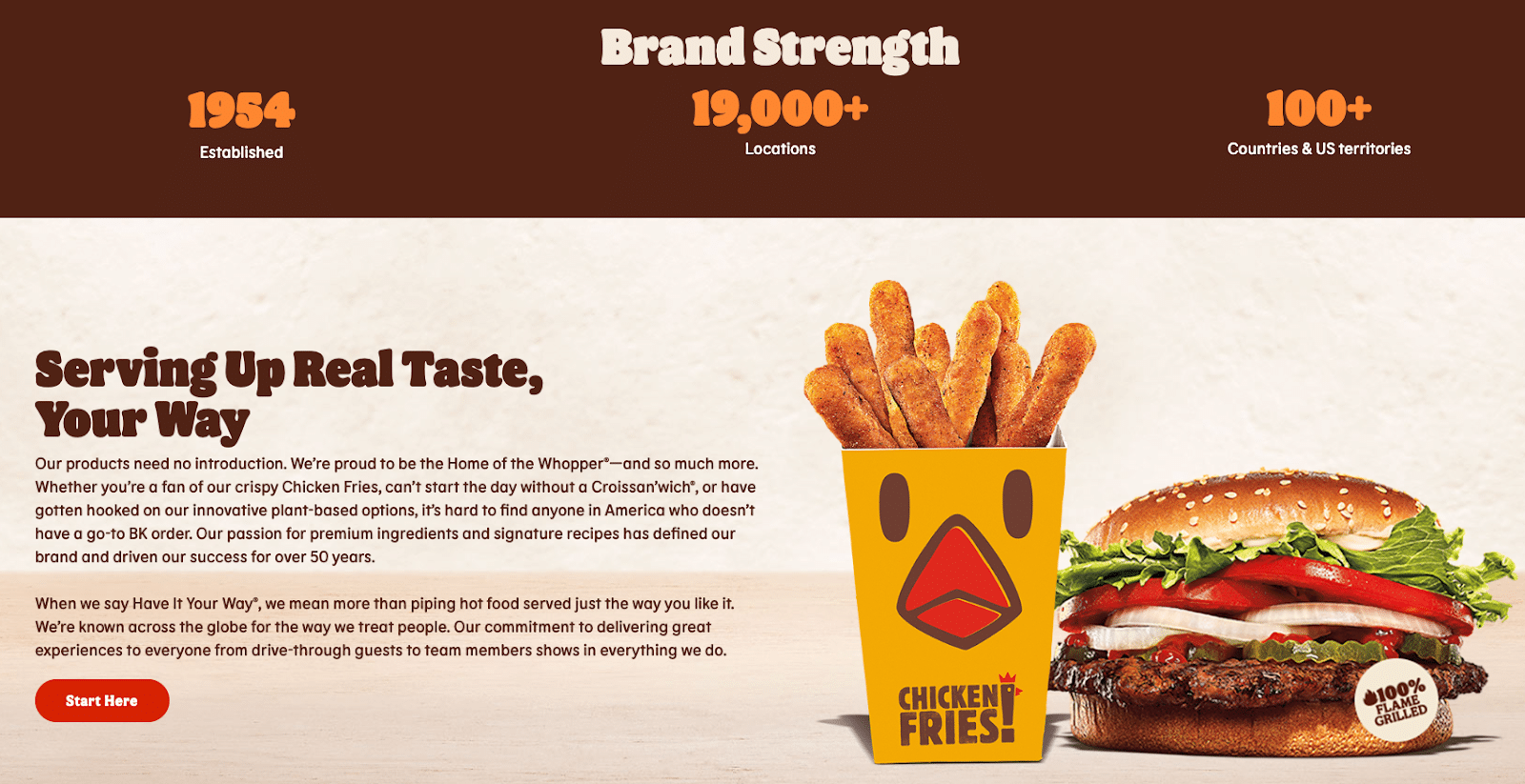
Let’s take a look at Burger King, one of the most popular brand consistency examples in the United States. This brand maintains the same recognizable logo, color schemes, and messaging to make it stand apart while fostering loyalty among its millions of customers. Even with menu items very similar to those of other quick-service franchise restaurants, its consistent branding makes sure that there’s no mistaking it for McDonald’s or other chains.
Maintaining Operational Efficiency
Consistent branding also improves operational efficiency
across all locations. Clear brand guidelines will standardize operations, ensuring all processes run as they should.
When franchisees know exactly what to expect from marketing materials, operational standards, and customer service, everything runs much more smoothly. Increased operational efficiency ultimately leads to happier and more loyal end customers.
Improving Brand Equity
If you want brand longevity, you need to create brand equity. Strong, consistent branding will help you do this. Over time, your customers will associate you with quality and reliability, which is essential to maintain a competitive advantage.
More Effective Franchise Development
Ensuring brand consistency with multi-location signage and other marketing materials that adapt to local needs will assist with:
- Franchisee lead generation
- Optimizing franchisee recruiting content and advertising strategies
- Email, social, and other marketing channels
Increased Conversions
As you learn how to ensure franchise locations maintain brand consistency online, you’ll find that it also helps to drive conversions toward the bottom of the funnel.
With a consistent identity and voice tailored for local targeting, you can build stronger relationships while encouraging prospective leads and customers to move along the customer journey toward a sale.
Reduced Rework
Standardized templates and assets will keep everything in one place and help with maintaining brand consistency across platforms, from local websites to social media campaigns.
Additionally, local teams, sales reps, partners, and others can customize materials to suit local needs without hurting the integrity of core branding, eliminating the need for revisions down the road.
How to Maintain Franchise Brand Consistency
Maintaining brand consistency across a franchise network is the result of deliberate systems, clear standards, and the right technology working together. Whether you’re managing 10 locations or 10,000, the fundamentals remain the same.
Here’s a quick-reference breakdown of the most effective steps franchise marketing leaders can take to keep their brand tight at every level of the network.
- Build a living brand guide: Move beyond the static PDF and create a dynamic, cloud-based brand hub that franchisees can access, search, and actually use in real time.
- Establish a brand governance structure: Define who owns brand decisions at the corporate level and who has approved flexibility at the local level, so nothing falls into a gray area.
- Create pre-approved, localizable asset libraries: Give franchisees a curated toolkit of on-brand templates they can customize within set parameters, eliminating the need to go rogue.
- Implement brand compliance auditing tools: Replace manual review processes with automated platforms that monitor visual, digital, and messaging consistency across all locations.
- Standardize your local digital presence: Conduct regular audits of NAP data, Google Business Profiles, and local landing pages to ensure accuracy and consistency across every location.
- Train franchisees on brand standards from day one: Embed brand education into onboarding and make it an ongoing requirement, not a one-time checkbox.
- Establish a clear escalation and correction process: When brand violations occur, have a documented, non-punitive process for correction that keeps franchisees cooperative rather than defensive.
- Review and evolve your brand standards regularly: Schedule quarterly or bi-annual brand audits to ensure your standards keep pace with market shifts, new platforms, and network growth.
Let’s dive a little deeper into how to maintain brand consistency across teams and partners.
5 Actionable Strategies To Maintain Franchise Brand Consistency
Brand consistency at scale requires more than good intentions, it requires a system. The following five strategies are the operational backbone of every high-performing franchise brand. Each one addresses a specific breakdown point in the chain between corporate vision and local execution.
1. Standardize the Non-Negotiables
The first step to protecting your brand is knowing exactly which elements are untouchable. Not everything needs to be locked down, but certain brand elements must be non-negotiable.
The clearest way to communicate this to your franchise network is to clearly explain what is and isn’t customizable. When franchisees understand the rules and the reasoning behind them, compliance becomes a natural behavior rather than a reluctant obligation.
| Always Standardized | Can Be Localized |
| Primary logo and logo usage rules | Local event promotions |
| Brand color palette | Community-specific social content |
| Typography and font system | Store hours and location-specific details |
| Brand voice and tone guidelines | Locally relevant imagery (within style guide parameters) |
| Legal disclaimers and compliance language | Local partnerships and sponsorships |
| Core service or product positioning | Regional offers (within approved offer rules) |
| National offer structure and pricing rules | Language or dialect adjustments for local markets |
| Taglines and trademarked phrases | Local staff spotlights and community stories |
2. Give Franchisees Approved Templates and Content Libraries
Making your content accessible will make it easier for your franchisees to comply with your brand guidelines. If a franchisee doesn’t have what they need when they need it, they’ll improvise, and go off script.
When learning how to ensure franchise locations maintain brand consistency online, be sure to develop a robust, easy-to-access library of plug-and-play content that covers every channel and use case they’ll encounter. This should include:
- Pre-approved social media post templates
- Paid ad creative
- Google Business Profile content
- Local landing page modules
- Email templates
- Print assets for in-location use.
The more comprehensive your library, the less reason a franchisee has to go off-brand.
3. Use Tools to Scale Consistency Across Locations
Trying to monitor hundreds of social accounts, local listings, review responses, and ad campaigns through spreadsheets and email threads is not a strategy, and it can often turn into a liability.
The right technology stack transforms brand governance from a reactive scramble into a proactive, automated system.
For franchise and multi-location brands specifically, Rallio is a platform worth serious consideration. Built with franchise networks in mind, Rallio offers:
- Pre-approved content libraries that franchisees can access and deploy directly
- Social media scheduling across locations
- Employee advocacy tools
- Review request and monitoring
- Directory listing management
Simply put, the right tools will make maintaining brand consistency across multiple locations easier than ever.
4. Create Clear Approval Workflows
Even with the best templates and tools in place, if no one knows who’s supposed to do what, you’ll end up with inconsistency. A clear, documented approval workflow eliminates that ambiguity and keeps your brand protected without slowing down local marketing momentum.
Here’s a simple governance model to use as a starting point:
| Content Type | Approval Required? | Who Approves? |
| Local community posts – events, staff spotlights, etc. | No – publish freely from approved templates | Franchisee |
| Organic social using pre-approved templates | No | Franchisee |
| Local partnerships or sponsorship announcements | Review required | Regional Manager |
| Location-specific landing page copy | Yes | Corporate Marketing |
| Paid social and search ad campaigns | Yes | Corporate Marketing |
| Promotional or offer copy | Yes | Corporate Marketing |
| Signage and print materials outside template library | Yes | Corporate Marketing |
5. Train, Monitor, and Coach Continuously
Typically, when brand consistency breaks down, it’s not because franchisees don’t care. It’s usually because they don’t know the rules well enough to follow them.
That’s a systems and education problem, and it requires continuous investment in training, monitoring, and coaching rather than a one-time onboarding session.
Start with onboarding. Every new franchisee should undergo structured brand training before publishing a single piece of content or opening their doors to the public. This training should cover visual standards, brand voice, approved platforms, content workflows, and the tools they’ll use day to day.
Don’t stop after onboarding. Schedule refresher trainings at regular intervals, especially when brand standards are updated, new platforms are introduced, or audit data reveals patterns of non-compliance across the network.
Monitoring is the other half of the equation. Corporate marketing teams should maintain ongoing visibility into local social accounts, review response activity, ensure Google Business Profile accuracy, and monitor local listing data.
When violations are identified, don’t punish the franchisee. Instead, coach them to do better. Franchisees who feel supported in understanding and executing brand standards are far more likely to become brand ambassadors than those who feel policed. Build a culture of consistency, not compliance anxiety, and your brand will be far stronger for it.
What Franchisees Can Customize Without Hurting the Brand
You don’t have to give up all localization to maintain brand consistency. Here are some ways that each franchisee can add their own flavor to your existing brand guidelines.
Local photography and visual content
Encourage your franchisees to capture authentic images of their team, in-store moments, local events, and behind-the-scenes content. Ensure the images align with your brand guidelines by providing photography guidelines.
Community sponsorships and local partnerships
Supporting a local Little League team, sponsoring a neighborhood 5K, or partnering with a regional charity are all powerful community-building moves at the local level. It will build goodwill, drive foot traffic, and create organic content opportunities. Franchisees should be given approved messaging templates and logo usage guidelines for any co-branded materials to ensure the brand is represented correctly, even in informal community contexts. A light review process for any public-facing co-branded announcements is a reasonable guardrail that keeps things on track without slowing franchisees down.
Review responses
Responding to customer reviews, both positive and negative, is one of the highest-impact local marketing activities a franchisee can own. Provide each location with brand voice guidelines and escalation protocols for negative reviews to ensure responses stay on-brand and legally sound. The goal is authentic, not unguided.
Regionally relevant messaging
There are moments when a one-size-fits-all message simply doesn’t land the same way in every market. What resonates with a customer in Austin may not land the same way in Minneapolis. Franchisees should be able to adjust the framing of their messaging to feel more locally relevant, such as by adding market-specific context or culture, as long as core positioning, offer language, trademarked phrases, and legal disclaimers remain intact.
Localized landing page details
Franchisees can and should contribute localized details to their landing pages, neighborhood references, local team bios, community involvement highlights, and location-specific hours or services. The page architecture, design framework, and core copy should remain standardized at the corporate level. That’s how to maintain consistent branding across franchise websites while still adding that local touch.
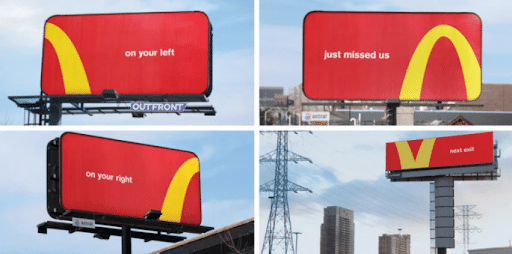
When franchisees operate within a well-designed flexibility framework, they don’t weaken your brand. Instead, they extend it into communities in ways that no corporate campaign ever could.
Recommended Tools and Systems for Franchise Brand Consistency
As your franchise network grows, manual oversight becomes impossible. The right technology stack will make brand management and enforcement of brand consistency easier.
Here’s a breakdown of some of the best digital display systems for brand consistency, as well as key tool categories every franchisor should cover:
Social Media Management
Every franchise needs location-based marketing tools for franchise brand consistency. You’ll specifically need a platform built for multi-location publishing to allow corporate to distribute pre-approved content while giving franchisees controlled access to post locally.
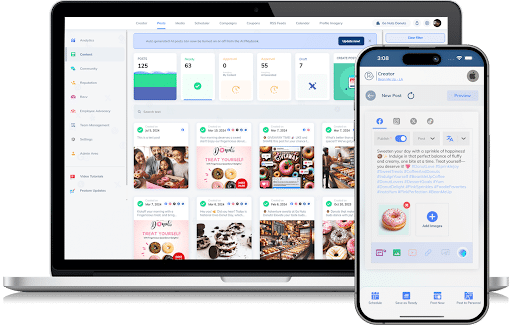
Rallio is one that was built specifically for franchise and multi-location brands. It offers pre-approved content libraries, location-level scheduling, employee advocacy tools, and performance analytics across your entire network — all from a single dashboard.
Content Libraries and Digital Asset Management (DAM)
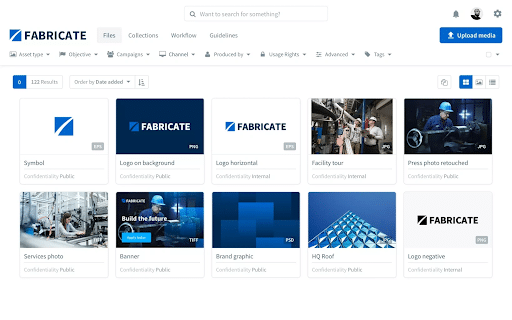
A DAM platform gives franchisees on-demand access to approved logos, templates, imagery, and campaign assets. Tools like Rallio, Bynder, or Brandfolder keep your asset library organized, up-to-date, and protected from outdated template use.
Review Management
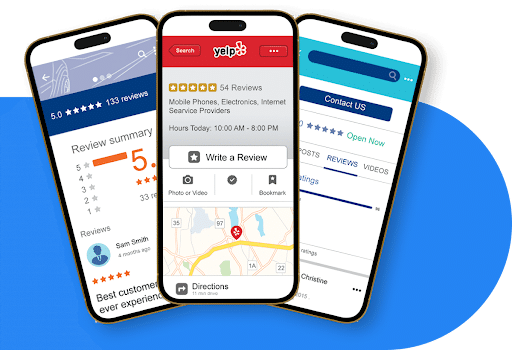
Franchisee review responses need oversight without micromanagement. Rallio includes review generation and response tools that give corporate visibility into how each location is engaging with customers online, making it a natural fit for franchises already using it for social management.
Directory and Listings Management
NAP consistency across Google, Yelp, Apple Maps, and dozens of other directories requires dedicated tooling. Platforms like Yext or Moz Local allow you to manage location data across hundreds of listings simultaneously, eliminating the drift that quietly damages both SEO and customer trust.
Local Page Management
Local landing pages need a templated structure that franchisees can populate with location-specific details without breaking the design or copy framework. Working with an agency like Ignite Visibility will help you build scalable local page infrastructure for multi-location brands.
Approval Workflows
Routing local content through the right approval channels requires a dedicated workflow tool. There are platforms that allow marketing teams to set up tiered review processes so that high-risk content, like paid ads, offer language, signage, gets approved before it goes live.
Some of these platforms, like Rallio, have the approval workflow built into the content management system.
Reporting and Analytics
Brand consistency is easier to defend when you can measure it. Look for reporting tools that give you cross-location visibility into social performance, listing accuracy, review scores, and campaign results. Rallio’s analytics layer covers the social and reputation side, while platforms like Looker Studio can consolidate data from across your stack into a single reporting view.
Franchise Brand Consistency Checklist
Interested in a quick-reference tool to help you see where your franchise network stands? Here’s a checklist:
Brand Guidelines
- Brand guidelines are housed in a centralized, cloud-based platform
- Visual standards (logo, color, typography, imagery) are clearly documented and accessible to all franchisees
- Brand voice and messaging guidelines are written in plain language franchisees can actually apply
- A clear list of non-negotiables vs. localizable elements is documented and distributed
Templates and Content Libraries
- Pre-approved templates exist for social media, paid ads, email, print, and Google Business Profile content
- All templates are version-controlled with outdated assets archived or removed
- Franchisees know where to find the content library and how to use it
- Localizable template fields are clearly marked so franchisees know what they can and cannot edit
Tools and Technology
- Location-based marketing tools for franchise brand consistency
- A DAM or brand portal is active and regularly maintained
- Directory and listings management are handled through a dedicated platform
- Local landing pages are built on a standardized template with franchisee input fields defined
- Review monitoring is active across all locations
Approval Workflows
- A tiered approval framework is documented and distributed to all franchisees
- Franchisees know exactly which content types require corporate approval before publishing
- An escalation path exists for off-brand content or compliance violations
- Approval turnaround times are defined so franchisees aren’t left waiting
Training
- Brand standards training is embedded in the franchisee onboarding process
- Refresher training is scheduled at regular intervals or triggered by brand updates
- Franchisees have a clear point of contact for brand questions and support
- Training materials are updated any time brand standards change
Audits
- Social media accounts across all locations are monitored regularly for brand compliance
- Local listings are audited for NAP accuracy on a recurring schedule
- Google Business Profiles are reviewed for consistency in imagery, descriptions, and categories
- A non-punitive correction process is in place for flagged brand violations
Reporting
- Cross-location social performance is tracked and reviewed by corporate marketing
- Review scores and response rates are monitored across all locations
- Local landing page performance (traffic, conversions, Core Web Vitals) is reported regularly
- Brand audit findings are documented and used to inform training and governance updates
FAQs About Franchise Brand Consistency
1. What is the difference between brand guidelines and brand governance?
Brand guidelines are the documented standards that define how your brand looks, sounds, and communicates. Brand governance is the system that ensures those guidelines are actually followed. Think of guidelines as the rulebook and governance as the referee. Both are essential, and neither works without the other.
2. How do you maintain franchise brand consistency across multiple locations?
Maintaining brand consistency across multiple franchise locations requires a combination of clear standards, scalable tools, and continuous education. Start by centralizing your brand guidelines and asset library in a platform all franchisees can access. Implement a tiered approval workflow that defines which content can be published freely and which requires corporate review. Use multi-location social management and listing tools to maintain visibility across every location. Back it all up with regular training, periodic brand audits, and a reporting structure that surfaces compliance gaps before they compound.
3. What parts of franchise marketing can be localized?
Content that performs well at the local level includes community event posts, local photography, sponsorship announcements, regional messaging that reflects local culture, personalized review responses, and location-specific landing page details such as team bios, neighborhood references, and local hours. The key distinction is that localization can adapt the brand message, but not the core message itself. Offer language, legal disclaimers, logos, core positioning, and trademarked phrases should always remain standardized, regardless of market.
4. What tools help franchises maintain brand consistency?
The most effective franchise brand consistency tech stacks cover several key functions: social media management and content distribution, digital asset management (DAM), local listing and directory management, review monitoring, local page infrastructure, approval workflow routing, and cross-location reporting. Platforms like Rallio are built specifically for franchise and multi-location brands, offering pre-approved content libraries, social scheduling, review management, employee advocacy, and directory listing tools in one place.
5. How do reviews and listings affect franchise brand consistency?
Reviews and local listings are two of the most visible brand touchpoints in a franchise network. Inconsistent NAP data (Name, Address, Phone number) across directories like Google, Yelp, and Apple Maps directly undermines local SEO performance and signals to both search engines and customers that a brand lacks operational integrity. Similarly, unmonitored or poorly written review responses can contradict the brand voice and erode customer trust at the location level. Every review response is a public-facing piece of brand communication, and every inaccurate listing is a crack in the brand’s credibility. Managing both with dedicated tools and clear response guidelines is not optional for franchises serious about consistency at scale.
Maintain Franchise Brand Consistency With the Help of Ignite Visibility
Don’t let your brand guidelines become a barrier to local connection. Using the right tech stack and one of the best digital marketing firms for franchise brand consistency around, you can automate the boring stuff so your franchisees can focus on the customers, while staying on brand.
Ready to strengthen your franchise identity? Connect with us today to discuss your needs and request a free proposal that will demonstrate how we can help your franchise create the consistent branding it needs to succeed!

