
JSON-LD schema is now more crucial than it’s ever been. This little acronym plays a pretty major role in Google’s ability to index your content, and especially in 2026, as this is the language your website uses to communicate with AI engines, allowing you to appear in AI Overviews, AI Mode, and other generative engine results.
In this post, Keely McGroarty, SEO Strategist, explains JSON-LD, why it’s important, how to add JSON-LD for beginners, and how to use it effectively for SEO.
TL;DR
- What is JSON-LD?
- Where Does JSON-LD Schema Go?
- JSON-LD Nesting
- What’s the Difference Between JSON-LD and JSON?
- Common JSON-LD Schema Mistakes
- What Changes Will You See By Implementing JSON-LD?
- JSON-LD SEO: Testing Your Structured Data
- JSON-LD Frequently Asked Questions
What Is JSON-LD Code?
JSON-LD (JavaScript Object Notation for Linked Data) is a simplified means to create machine-readable data from websites, making your content easier for search crawlers to index.
JSON-LD offers syntactic simplicity found with the traditional JSON but offers more inherent meaning.
As a result, Google and Bing support JSON-LD because it enables developers to efficiently organize and connect data using schema markup. Today, it’s the standard language for both semantic search and AI context through entity-based SEO, helping you effectively connect with audiences in conventional and AI-driven search. By providing structured data, sites are better positioned to appear in rich results and adapt to evolving algorithms focused on delivering more relevant, context-aware answers.
The lightweight data format will enhance a website’s performance as all data is seamlessly linked across the internet.
How Does JSON-LD Work?
JSON-LD works by annotating various elements on web pages, which helps create a clear structure that search engines can interpret.
When Google’s crawlers encounter structured data, they can better understand a web page’s content, making indexing more efficient.
When using JSON-LD, your webpage becomes more structured, and the embedded data allows search engines like Google to display rich snippets. These features include information like review stars, event details, product information, and FAQs.

Why Is JSON-LD Essential For SEO?
Structured data is an important asset for anyone publishing content online. JSON-LD makes it easier for machines to read, and as a result, Google can better index your content, improving its chances of appearing in rich results.
Rich snippets in particular have shown to improve click-through rates (CTR) by as much as 30% according to recent studies, making structured data essential for competing in organic search results.
Expert Insight into JSON-LD Structured Data
There are many components that go into an effective and comprehensive SEO strategy, and JSON-LD is one of the most important, especially with the rise of AI search and how it’s changing the way websites rank.
Not only can strong JSON-LD SEO help achieve higher rankings in the form of rich results and top organic spots, but it can also significantly boost AI visibility on Google and other platforms, helping ensure you appear for all relevant results to gain your audience’s trust and encourage more clicks.
By incorporating this language into structured data on our clients’ pages, I’ve seen how it can get real results. One of our quick-service restaurant clients implemented this and other SEO tactics to gain a 106% increase in quality leads, a 40% boost in organic conversions, and a 35% rise in franchise awards from website leads.
Now, I want to go over how to add JSON-LD for beginners and how you can use a JSON-LD schema generator for SEO.
Where Does JSON-LD Schema Go?
Unlike microdata, RDFa, or microformats, JSON-LD can be embedded directly within the <script> tag in the page’s <head> or anywhere else in the pages <body>.
<script type=”application/ld+json”>
{
“your”: “code”
}
</script>
It’s also possible to implement JSON-LD dynamically by inserting it into the Document Object Model (DOM).
JSON-LD Nesting
Nesting refers to organizing information into layers. For JSON-LD, this involves using certain immutable tags that don’t change at all, making them easy to reuse.
An Example of Nesting
Nesting in JSON-LD starts with the item property which specifies the item type. The item properties will belong to item types that are unique.
For example, an item property “name” can be an event name, person name, or name of a place. In the example below, the name of the performer and venue are both nested.

In the first item type, (ex. Performer) you would first match it with the item property (ex. actor, director, singer). The item property is then identified by opening curly brackets with the new item type (“@type”:) and attribute/value data.
A type could also include nearly any Action, Person, Place, Product, Event, or another type of thing, with subtypes underneath those item types. Getting granular with these details can give search engines a highly specific context that helps with SEO.
Another element you’ll want to incorporate is “@context:”. You can include this code in the following format: class=”redactor-autoparser-object”>https://schema.org”
This code is crucial as it lets the browser know what each element on the page means according to the definitions found on schema.org.
When used the right way, these immutable tags can contribute to an advanced SEO strategy that helps you get ahead of competitors neglecting to use JSON-LD.
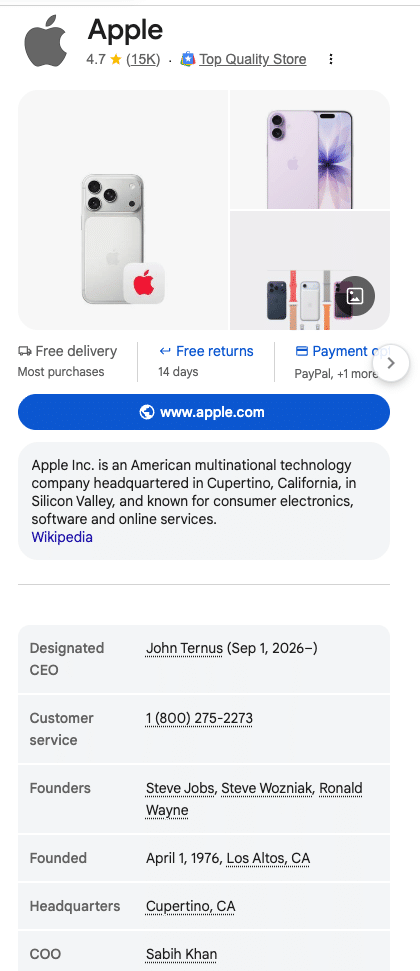
Nesting can also help generate a “Knowledge Graph” in search results for your brand, giving AI a better understanding of the relationship between your CEO, products, and location.
What’s the Difference Between JSON-LD and JSON?
JSON stands for JavaScript Object Notation. It’s a lightweight data-interchange format used to send and receive structured data. JSON-LD, on the other hand, uses JSON format but is structured in a way that makes it compatible with schema.org standards.
The real difference is that JSON-LD allows web pages to communicate their content’s meaning more explicitly to search engines, resulting in rich results such as star ratings or recipe snippets that enhance user engagement.
Common JSON-LD Schema Mistakes
If your structured data is not working, there may be common errors to check:
- Syntax Issues: Ensure you’re using the correct quotation marks.
- Using Wrong Vocabulary: Refer to Schema.org for required and allowed properties.
- Inaccurate Data: Information must match what’s visible on the webpage.
- Formatting Mistakes: Copying from programs like Microsoft Word can break your markup.
- Hidden Data: Another big mistake that marketers can make in 2026 is providing JSON-LD structured data that isn’t visible to human users, as Google now penalizes any “invisible” schema; always ensure schema matches content on the page.
What Changes Will You See By Implementing JSON-LD?
By implementing JSON-LD, you can expect several significant changes to how your content appears in search results. Google supports this structured data format to enhance rich results, which can include:
Event Details
Businesses or organizations that host events can use JSON-LD to showcase upcoming events right in the search results. This allows potential attendees to see event dates, locations, and even purchase tickets directly.
Example: If you’re hosting a webinar or in-person event, the event’s title, date, and location appear in search, making it easy for users to get the details without needing to visit your site.
Site Links in Search Results
By using JSON-LD for site navigation, you can influence which pages Google displays as site links beneath your main search result. This offers users quick access to important pages such as “Contact Us,” “Services,” or “About Us.”
Example: If your homepage is ranked, additional links like “Products,” “Blog,” and “Contact” can appear as quick-access options, improving navigation for users.
FAQs and How-to Guides
JSON-LD markup also allows Google to pull specific questions and answers or step-by-step guides from your content and feature them directly in search results as rich snippets.
Example: A business offering technical support can use FAQ schema to display common troubleshooting questions in the “People Also Ask” (PAA) section of search results, increasing the chances that users will click your content when looking for quick answers directly in the SERPs.
Merchant Center Auto-Sync
With the help of JSON-LD SEO, you can also automatically update product feeds whenever any changes are made, such as availability or pricing. Schema will create a dedicated data source for Google to pull from and develop an accurate product feed in real-time.
Example: An ecommerce brand might use schema and Google’s Merchant Center to update product feeds with accurate data, such as prices and descriptions.
AI Citations
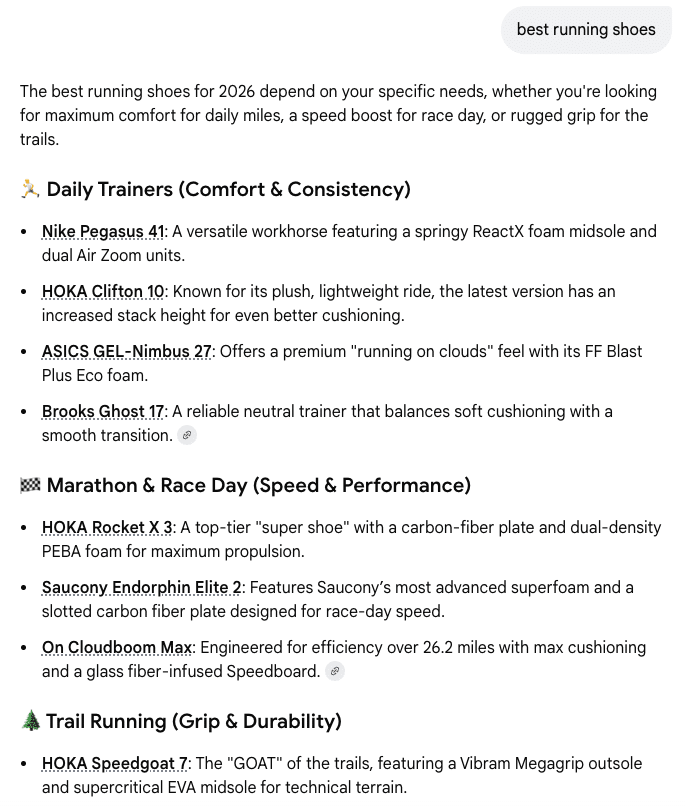
JSON-LD will help you appear in AI search results, such as Google’s AI Overviews and AI Mode. These are critical results to show up for, as they often dominate SERPs and appear as the first results, even above sponsored results.
Example: A retail brand develops JSON-LD schema that includes details about a particular product, including specifications, reviews, images, and SKU data, enabling these details to appear in AI citations like AI Overviews and ChatGPT.
2025-2026 Schema Breakthroughs
Moving into 2026 and beyond, using a JSON-LD schema generator for SEO is no longer just about optimizing for rich results—it’s equally essential for appearing in AI citations, and there are some new innovations coming along that can help with this even more:
Organization Schema
Using Organization schema, Google can use JSON-LD to place your brand and its information in the Knowledge Graph, e.g., the “knowsAbout” property that establishes your brand as a topical authority.
Effective schema markup will also keep AI systems from confusing your company with competitors in both Knowledge Graphs and AI citations.
ProductGroup Schema
Retailers and ecommerce businesses will benefit from ProductGroup schema, which handles product variants, such as sizes, materials, and colors.
For example, the “variesBy” property defines the dimensions of a particular product family, eliminating the need to create separate product pages for every color. In turn, people can ask generative engines questions like, “Can you show me a red version of this desk?” AI will then be able to provide the desired variant.
ProfilePage Schema
Additionally, you can use ProfilePage schema to prove that your content appeals to Google’s E-E-A-T guidelines, specifically that you demonstrate expertise in your industry.
An example here includes the use of the “mainEntity” connection indicator, which links a specific “Person” object to your pages to establish them as the author. Other properties like “hasCredential” and “alumniOf” can further showcase individuals as certified and experienced experts.
JSON-LD SEO: Testing Your Structured Data
To ensure your JSON-LD code is functioning, you should regularly test it using tools like:
1. Schema.org’s Markup Validator to validate all Schema.org-based structured data without Google specific warnings.

2. Google’s Rich Results Test was recently updated in 2023 to include new schema types and provide better diagnostic information to troubleshoot issues.

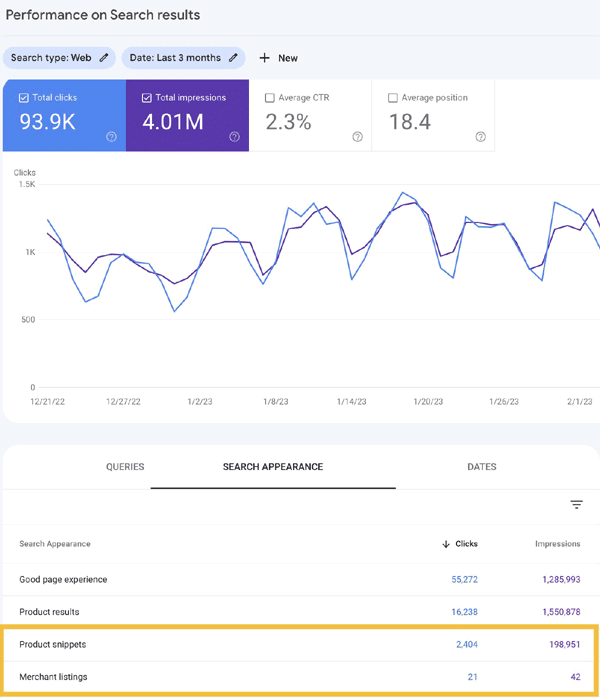
3. Search Console “Merchant Listings” to provide you with specific reports and performance filters that can track interactive “free listing” experiences in Google.
Source: Google
4. AI simulator and JSON-LD validator tools like Schema App that can check to see if your data is “chunkable” for large language models (LLMs), confirming whether your content can appear in AI search results.
JSON-LD Frequently Asked Questions
1. Does JSON-LD help with AI Overviews (SGE)?
Yes, JSON-LD can help you show up in AI Overviews and other AI-driven search results by giving generative answer engines key information and context about your site and pages, increasing the likelihood of achieving top rankings across platforms when working with other on-page and off-site SEO elements.
2. Is it better to put JSON-LD in the head or body?
While you can add Google JSON-LD to the body or head of your web pages, it’s generally best to include it in the head. Putting code in the head will help keep structured data organized and make it easier for Google and other search engines to crawl it as soon as they land on your pages.
3. What is ‘Organization’ schema, and why is it huge now?
Organization schema is a particular type of markup that gives search engines information about a company, including names, locations, and logos. This schema is important today to optimize for entity-based SEO and appear in AI-powered search results.
4. Can I have too much schema?
Yes, it’s possible to have too much JSON-LD schema on a website. Using multiple schema types with JSON-LD for SEO can give search engines more context regarding what your content is about, but using markup for irrelevant data, overly complex schema, or duplicate entries can be detrimental to your strategy.
5. How do I monitor JSON-LD in Google Search Console?
Once you’ve added JSON-LD structured data to your site, you can use Google Search Console to determine whether it’s working or not. “Enhancement” reports can track structured data types, such as “Recipes” and “Sitelinks search box,” and you can view any errors that keep your pages from showing up in rich results.
Want to Get the Most Out of Your SEO Strategy?
Ignite Visibility has a team of expert digital marketing professionals. We leverage the power of SEO to help businesses improve their on-page optimization, boost organic rankings, and achieve their marketing goals.
Our expert strategists work closely with clients to understand their unique needs and design customized SEO strategies that maximize return on investment:
- Creating optimal content or catering to user intent,
- Address technical issues within the back end of your site
- Target keywords aligned to the buyer’s customer journey
- And more!
If you want to discover how we can help you get the most from JSON-LD for SEO, learn more about our search engine optimization services today!