Before you can nurture leads and turn them into customers as they move down the marketing funnel, you must attract them at the beginning of the customer journey. At this point, the top of the funnel, your content should hook new potential customers, grabbing and holding their attention.
In this blog post, Danny Conlon, Ignite Visibility’s SVP of Marketing, will explore top-of-funnel marketing and show you how to develop a strategy that fuels your brand awareness and acquisition efforts.
What You’ll Learn:
- What Is Top-of-Funnel Marketing?
- How Top of the Funnel Marketing Fits into the Buyer Journey
- Strategies for Effective Top-of-Funnel Campaigns
- Keyword and Intent Mapping for Top of Funnel Strategies
- Content Formats That Win at Top of Funnel Marketing
- Measuring Success in TOFU Marketing
- Common Top-of-Funnel Marketing Challenges and How to Overcome Them
- Top of Funnel Marketing FAQs
My Expert Opinion on Top-of-Funnel Strategies
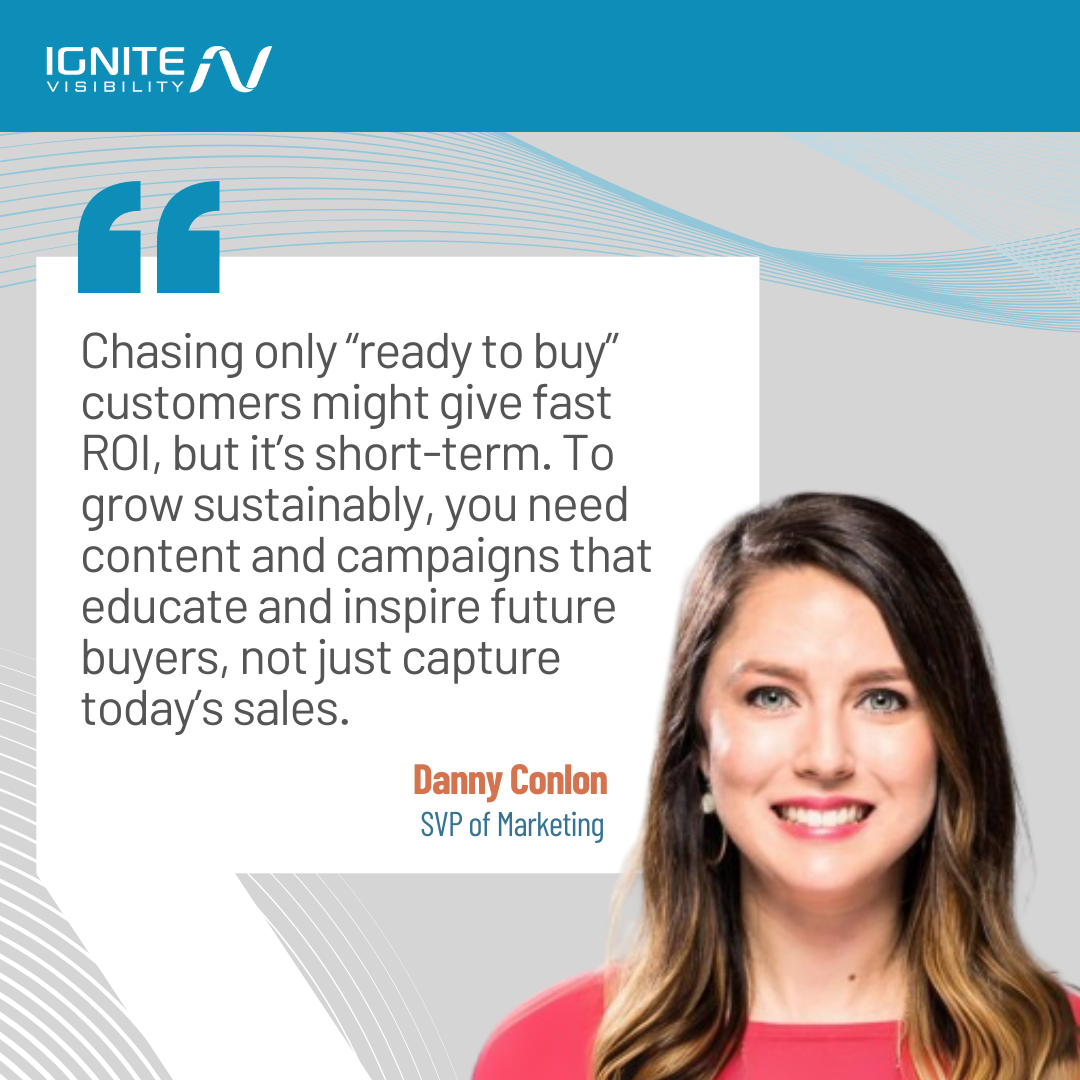
I’ve found that one of the most common, expensive mistakes even the most sophisticated marketers make is ignoring the top of the funnel. When the pressure is on to show immediate ROI, focus often shifts to the bottom of the funnel, hyper-focusing on customers ready to convert right away. It’s understandable as this is the quickest way to squeeze out immediate revenue.
But this isn’t a sustainable long-term solution. You always need to keep feeding the top of the funnel to create the demand you eventually intend to harvest. If you only focus on the ‘buy now’ crowd, you eventually hit a ceiling where your audience is exhausted, your acquisition costs skyrocket, and your brand becomes a commodity. Sustainable growth requires a balanced ecosystem: capturing today’s sales while simultaneously educating and inspiring the customers of tomorrow.
This process will involve using tactics like search engine optimization (SEO), pay-per-click (PPC) advertising, content marketing, and social media marketing, along with offline marketing efforts. By creating high-value content and targeting the right audiences, you can capture people at the beginning of the buyer’s journey before your competitors.
I recommend looking deeply into what your audiences want from your business. What kinds of pain points can you address? Are there any content gaps that you can fill to capture new leads? Maybe you can do something that your competitors aren’t doing, such as touching on certain features or challenges or targeting more informational keywords with your content. Ultimately, the right approach will make all the difference in reaching and attracting valuable potential customers.
What Is Top-of-Funnel Marketing?
Top-of-funnel marketing is a type of marketing strategy that connects with people at the beginning of the customer journey through initial touchpoints, leading them down the rest of the sales funnel.
The main intent of top of funnel strategies is to provide information to target audiences before moving them along toward a sale. For instance, a fitness brand might provide guidance on certain workout routines or healthy diets to get individuals started on their fitness journey.
Top of funnel content also helps businesses collect initial information about prospects to keep them engaged and provide a more tailored experience. An example here might include a finance brand that asks for a person’s email in exchange for an ebook providing a spending guide.
How Top of the Funnel Marketing Fits into the Buyer Journey
Top of funnel strategies generally fit into a holistic strategy that covers the entire funnel from top to bottom. It will look something like this:
- Top of the funnel (TOFU): Here, businesses want to connect with their target audiences with plenty of information and resources. Content here might include blog posts, infographics, ebooks, whitepapers, videos, webinars, and podcasts.
- Middle of the funnel (MOFU): At the middle of the funnel, your goal would be to nurture leads and relationships that eventually result in sales, persuading them to turn to you over competitors during the consideration stage of the buyer’s journey. Example MOFU content includes segmented drip emails, product demos, testimonials, research reports, product comparison guides, and online courses.
- Bottom of the funnel (BOFU): Once people reach the bottom of the funnel, it’s time to turn them into loyal paying customers and brand advocates. Here, you might use content such as coupons, discount codes, buyer guides, and FAQs.
Strategies for Effective Top-of-Funnel Campaigns
If you want to get the best results from your top-of-funnel strategies, you’ll need to implement the following top-of-funnel marketing tactics.
1. Create Valuable Content With Content Marketing
One of the main steps you’ll need to take is to create valuable top-of-funnel content.
This content will include:
- Main web pages
- Blogs
- Guides
- Articles
- Ebooks
- Videos
- Images
- Infographics
You should target all of this top-of-funnel content to inform audiences and establish your business as an industry authority. Remember, this stage is about building awareness, recognition, and trust among your target audiences, enticing them to continue their journey to the bottom of the funnel.

Before writing your content, develop a top-of-funnel KW strategy. In the process, you’ll want to learn about your audience’s pain points and figure out how to address them. What information can you provide to bring real value to your audiences, and how can your products or services resolve your customers’ challenges?
You can look at trending topics in your industry using tools like Google Trends, which will help you identify top-level opportunities to cover with your content. Conducting competitive research can also help you determine what kinds of topics generate the most engagement among competitors.
With the right combination of text and visual informative content, your website will attract more valuable leads.
How to Execute Content Marketing Strategies:
- Define your goals and audience, such as building brand awareness.
- Develop your brand story and the kind of value your content provides.
- Assess existing content and map your strategy to guide content creation and curation.
You should also measure your content strategy based on the kinds of results you want to achieve, with potential key performance indicators (KPIs) including:
- Website traffic and unique visitors
- Impressions
- SEO rankings
- Social media reach
- Engagement metrics like bounce rate and session duration
2. Leverage Social Media Marketing
In addition to your website, you’ll want to target the social media channels your audiences use. Social media is particularly crucial for top-of-funnel marketing tactics, as 50% of B2B marketers find it to be the best way to achieve their goals at this stage.
Start by determining where your audience spends its time. You can achieve this by looking into your audience and seeing which platforms they’re most likely to use by demographic. For instance, you might use platforms like Facebook and Twitter to target younger and older users, while visual platforms like TikTok and Instagram are better for targeting Gen Zers. LinkedIn, on the other hand, is great if you’re marketing to professionals.
Again, you can conduct competitive research to see which platforms they use to engage with audiences, and take cues from them.
Once you’ve built your social media profile, you can begin building a presence through consistent engagement.
Here’s some ideas to get you started:
- Be sure to post regularly! Focus on creating educational top-of-funnel content. This would include top-level blog posts and guides.
- Leverage social media to amplify TOFU content you’ve already created, helping you reach new audiences. Don’t forget to engage with users in the comments.
Short-form video content is often your best bet when engaging audiences on social media, such as Instagram Reels, which 78% of one survey’s respondents plan to prioritize. People enjoy short videos that quickly relay information, which you can elaborate on with other content, such as blog posts or longer videos on other platforms.

In addition to posts, be sure to use ads to further reach audiences at the top of the funnel. Platforms like Facebook make it easy to hyper-target your ads based on demographics, interests, and other factors.
How to Execute a Social Media Strategy:
- Identify your target audience.
- Develop a content plan and themes.
- Build a calendar to maintain consistent posting on each platform.
Some KPIs to measure here might include:
- Reach and impressions
- Follower growth rate
- Share of voice (SOV)
- Likes, comments, and shares
An example of a social media top of the funnel marketing strategy for a home services brand might include posts showing before and after renovation projects, links to blog posts covering DIY projects, and dos and don’ts for homeowners when seeking home services.

3. Implement SEO Best Practices
Dominating search engines is extremely important in a digital top-of-funnel strategy. You can do so organically and cost-effectively with good SEO.
An SEO strategy will begin with keyword research using tools like Google Keyword Planner. Look for keywords with informational intent, meaning people enter them to learn more about surface-level industry topics. Be sure to use keyword clusters for content and social media ads, grouping multiple similar keywords for use across multiple content pieces.
For instance, a home services company might target keywords like “when to renovate vs. rebuild,” “how to remodel a bathroom,” or specific issues pertaining to the home that might call for home services. You can then develop content around these keywords, incorporating them naturally into your content to help with rankings on search engines like Google.

Make sure your content is of the highest quality, as this content will engage readers and subsequently signal to Google that it’s worth ranking. Also, high-quality content will move people farther down the marketing and sales funnel.
There are many SEO elements to consider beyond basic keyword content optimization to help you achieve high rankings, such as:
- Optimized title tags and meta descriptions that appear in search results
- Keyword-rich headers and sub headers within your content
- Internal links using relevant keywords as anchor text
- Link building campaigns that lead back to your site from others
- Image alt text
- Technical SEO strategies
Also, don’t simply target traditional search results. Today, AI Overviews on Google and other generative engines summarize information while citing various sources. Ranking for these with generative engine optimization (GEO) can supplement your traditional SEO tactics.

How to Execute an SEO Strategy:
- Identify your target keywords.
- Develop high-quality content targeting those keywords.
- Continually optimize existing content for better performance over time.
In the process, track KPIs like:
- Organic search traffic
- Keyword rankings
- Impressions
- Click-through rate (CTR)
Winning the “Zero-Click” Search
Google’s AI Overviews often provide the answer directly on the search page, meaning the user may never click your link. To turn a “zero-click” search into a lead, follow these AI-SEO tips:
- The “Summary First” Rule: Use the “Inverted Pyramid” style. Give a 40–60 word direct answer to the primary question at the very top of your article. This increases the chance of the AI citing you as the definitive source.
- Add a “Value Gap”: Provide a high-level answer that the AI can scrape, but reference a proprietary tool or checklist that is only available on your site. (e.g., “While the average cost is $5,000, you can use our [Brand Name] Interactive Cost Calculator for a zip-code-specific quote.”)
- Structured Data (Schema): Use FAQSchema or HowTo Schema markup. This acts as a “map” for the AI, making it easier for Google to extract your content and credit your brand.
4. Run Targeted Ads Across the Web
To supplement your SEO and other top-of-funnel marketing tactics, you need to run top-of-funnel ads on various platforms.
These campaigns will involve:
- Paid Search: These include paid search engine results that appear alongside organic results, potentially taking traffic away from organic competitors.
- Display Ads: These ads are visual image or video ads that show up on other websites, targeting users based on their specific demographics, with retargeting ads potentially following people who’ve visited your website in the past without making a purchase.
- Paid Social: All social media platforms allow you to build ad campaigns to target users using visual and text ads, depending on placement and the nature of the platform.
With hyper-targeted campaigns and strategies that reach the right people on the platforms they use, your ads can significantly boost awareness and engagement. Ads that continually appear across platforms will also make your brand more recognizable and trustworthy, encouraging more people to click through.

How to Execute Paid Ad Strategies:
- Identify your objectives and target audience.
- Select the platforms your audiences engage with, from Google to social media.
- Optimize landing pages that correspond with each ad.
Keyword and Intent Mapping for Top of Funnel Strategies
To get the best results from your strategy, you need to effectively map your top of the funnel keywords for use in content and SEO strategies.
Here are some key steps to take when mapping terms and search intent:
- Seed Topics: To establish your content pillars, choose around five to 10 categories related to your core services.
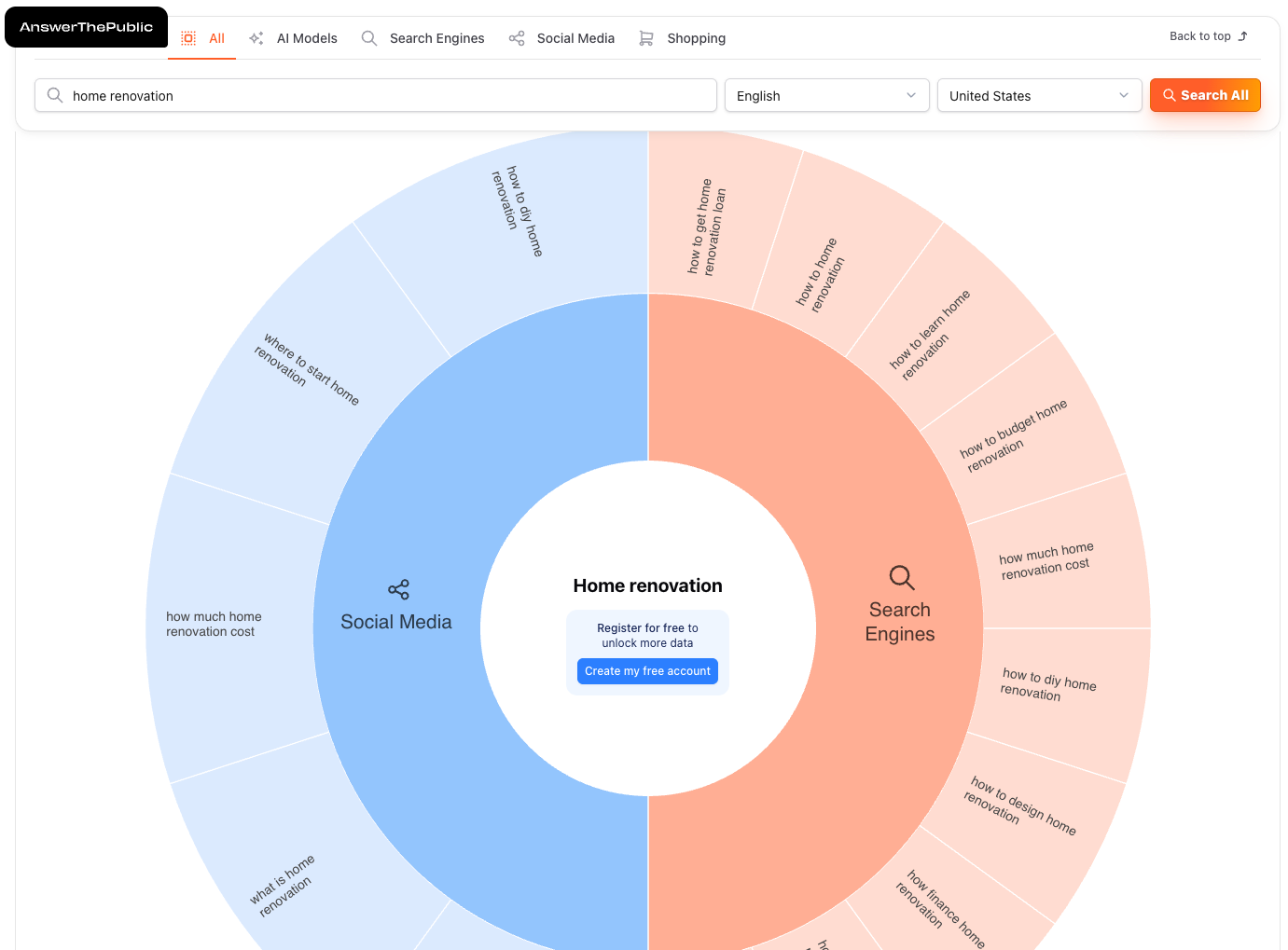
- Question Keywords: Top of the funnel keywords should also incorporate question terms that people are likely to search when learning about a particular industry topic, using tools like AnswerThePublic. Google’s “People Also Ask” section can also give you some ideas.
- Long-Tail Informational Queries: Try to target long-tail keywords of three or more terms that offer more in-depth results.
- FAQ Clusters: Develop a dedicated FAQ page or section for certain topical pages around your question and long-tail keywords, which can help maximize coverage.
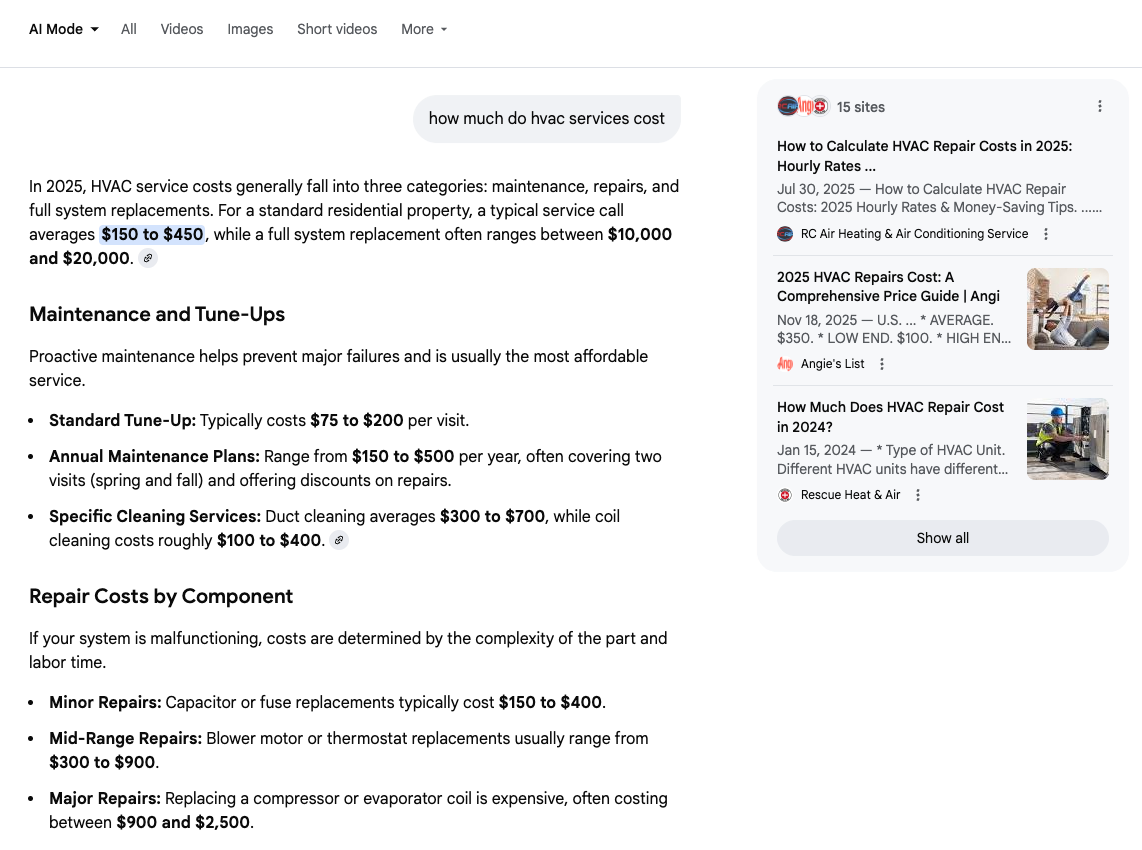
Also, be sure to optimize for AI SEO, including Google’s AI Overviews and AI Mode. Often, the terms that appeal for these searches include more conversational ones, especially those that people enter using voice search on mobile devices.
Helpful and concise FAQs can go a long way in helping you appear for AI searches, along with structured data that gives search engines more context regarding your content.
To give you a better idea of how to map and target top of sales funnel terms, let’s look at some examples in the home services industry:
| Keyword | Intent | Target Volume |
| “Emergency plumber near me” | Transactional | High volume and high competition |
| “Best water heater for 4 bedroom house” | Commercial | Moderate volume, ideal for comparison guides and “best of” lists |
| “Why is my AC making clickinig noise?” | Informational | Lower volume and lower competition, suitable for targeting in a blog post or FAQ section |
| “HVAC repair cost in [city]” | Commercial | Moderate volume with high intent |
Pro-Tip: Define Your “Negative Personas”
The biggest mistake in TOFU marketing is attracting “empty” traffic—users who will never buy. To protect your budget, define your Negative Personas.
- The “DIY-er”: If you sell premium home services, avoid keywords like “how to fix a leak for free” or “cheap DIY plumbing.” You want people looking for expert help, not a weekend project.
- The “Student”: If you are a B2B SaaS company, your informational content shouldn’t be so generic that it only attracts students doing research papers.
- The “Job Seeker”: Ensure your “About Us” or “Industry Insights” keywords don’t accidentally target people looking for employment rather than services.
Action Item: Use “Negative Keywords” in your PPC campaigns to exclude terms like “free,” “cheap,” “jobs,” or “course.”
Content Formats That Win at Top of Funnel Marketing
There are multiple kinds of content to incorporate into your funnel optimization strategies, including:
Main web pages
This content will function as your central hub for all of your marketing efforts, ultimately converting your target audiences into leads and customers. Landing pages can connect to ads, with links to them from social media posts and other content.
Blogs
You should also implement blog posts that cover a range of surface topics with plenty of detail, which will help establish you as a trusted authority and help appeal to Google’s E-E-A-T guidelines for Experience, Expertise, Authority, and Trustworthiness. Blog posts should be around 1200 to 1800 words to extensively cover topics and topic clusters, with scannable headers throughout that keep your content skimmable.
Guides
Write “how tos” and other types of guides that can cover everything from how to determine the cost of your offerings to how to find the right company, which can further demonstrate your business’s helpfulness.
Articles
Write articles covering various topics, including industry news and updates that showcase your knowledge.
Ebooks
When creating gated content, provide ebooks that people can download in exchange for emails and other first-party data. This content can supplement shorter blog posts or articles to encourage people to dive deeper into a topic while engaging with your brand.
Videos
People find video content to be among the most helpful and engaging today, making a combination of short-form and long-form video essential to funnel optimization strategies. Short-form videos should remain at around 30 to 90 seconds with bite-sized information, while long-form videos can run for about six to 12 minutes.
Images
Like videos, images are a great way to diversify your content and supplement text. Be sure to optimize your videos for top of the funnel SEO by including alt text describing image content.
Infographics
Condense lots of statistics and other information into a more digestible format using infographics that list pieces of data in a visual presentation. These images are a great way to summarize information presented in blog posts, articles, and ebooks.
To measure each of these channels, be sure to measure relevant KPIs in alignment with your goals, such as:
- Time on page
- Click-through rate
- Impressions
- Site visits
- Video views and completion rates
Additionally, implement micro-formats to optimize for search engine snippets and AI features, including numbered lists and FAQ blocks with short sections for each.
Measuring Success in TOFU Marketing
You won’t be able to gauge the success of your efforts without measuring the results. You’ll need to track the right metrics and measure them against your goals.
Key Metrics to Track
The goals you set will dictate which metrics to track. At the top of the marketing funnel, your goals will likely include building brand awareness and engagement, in which case you’ll want to track metrics like:
- Search engine rankings
- Ad impressions
- Website traffic
- Engagement on social media, such as likes, shares, and comments
- Lead generation and conversion rates that indicate the quality of leads moving down the funnel
Let’s look a little closer at some critical top of sales funnel KPIs:
- Impressions: The total number of times top of funnel content or ads appear on screens without guaranteeing that users viewed them.
- Reach: Indicates the number of unique individuals who see content, potentially more accurate than impressions.
- Branded Search Lift: Measures the percentage increase in people searching specifically for your brand name, which could indicate that people are becoming aware of your brand with your marketing efforts.
- Organic Sessions: Tracks the number of visits to your website from traditional search engine results.
- Engagement Rate: The percentage of users who interact with content in various ways, such as through likes, comments, and shares.
- Assisted Conversions: Instances where users interact with content like blogs and social posts early on in the customer journey before eventually converting. However, assisted conversions could conflict with view-through attribution in that view-through attributions assume users processed ads even if the ads merely appeared in front of them.
Keep in mind that the metrics and KPIs you track will depend on the type of industry you’re in. For instance, you might set higher benchmarks for certain metrics in B2B vs. B2C verticals. More specifically, you might set a target engagement rate range of 1% to 3% in a B2C vertical and 3% to 5% in a B2B industry. Meanwhile, because B2B audiences are smaller and more niche than B2C audiences, you may want to target an organic session growth of 20% to over 40% year over year (YoY) in a B2C vertical, whereas B2B businesses might lower that to 10% to 15% YoY.
Tools for Tracking Performance
You can track the above metrics using a variety of analytical tools, including:
- Google Analytics
- Google Search Console
- Social media analytics tools
Using Google Analytics 4 (GA4), you can set up events that help you keep track of top of the funnel performance. Here are some key steps to take in GA4:
- Log in to your GA4 account.
- Go to Admin > Data Streams, and select your web stream.
- Toggle Enhanced measurement to “On.”
- Create custom “Awareness” events under Admin > Events > Create Event, and select a naming convention like “content_view” for high-value blog visits, “subscribe,” and “video_play.”
- Select custom parameters with Custom Definitions.
- Track assisted conversions and multi-touch by setting your property to Data-Driven Attribution and viewing Conversion Paths.
Common Top-of-Funnel Marketing Challenges and How to Overcome Them
There are some challenges you may face when developing your strategies, but there are some solutions to keep them working the way they should.
Creating Consistently High-Quality Content
Businesses may struggle to develop great content on a regular basis, especially when there are many topics and platforms to cover.
Creating a strict content marketing plan and schedule can help mitigate this as you build your website and external presence. If you need help with this, vetting top content marketing agencies can help you find a marketing agency capable of handling your content development and optimizing it for peak performance on search engines, social media, and other channels.
Here are a few tactical fixes to help you produce great top of the funnel marketing content more consistently:
- Develop and follow an editorial calendar to organize and regularly introduce topics into your content plan, along with a repurposing playbook that helps you get the most from your content, such as chopping up long-form content into shorter and different types of content pieces.
- Use the inverted pyramid journalism style for some content, such as answering a question that an article’s title asks within the first sentence of the introduction, along with other key takeaways that can increase your chances of appearing in AI search results and snippets while providing immediate value to readers.
- Optimize content with naturally incorporated keywords throughout, which is often easier when developing pillar content that covers a topic extensively with many conversational long-tail terms.
As a quick test here, copy and paste a draft of your text content pieces into an AI tool like ChatGPT, asking it to summarize the content. The test is a pass if the AI can pull specific data and instances from the content, but it will be a fail if the AI simply lists generic topics that the content covers.
Balancing Organic and Paid Strategies
SEO and paid media need to work together to be really effective. It can be tricky to balance your budget and strategies, but allocating resources to each will ensure you enjoy the benefits of both worlds.
Here is also where an agency can help you. The right marketing company will work with your available budget to develop balanced SEO, PPC, and other strategies to reach top-of-funnel audiences and move them along the customer journey.
Incorporate the following fixes to balance organic and paid top of the funnel strategies:
- Make sure the keywords you target for both campaigns don’t result in cannibalization from either ads or search results, as they should supplement each other.
- Bridge the “attribution gap” with incrementality using a “Holdback Test” or Conversion Lift Studies in Google Ads, which will involve temporarily switching off paid ads in a specific region while monitoring the impact on organic branded searches.
- Properly allocate your budget for early growth, ideally 40/60 on SEO and paid, respectively.
Run a two-week “search term” test using Google Ads on keywords you would like to rank for organically, analyzing the headlines and value propositions that achieve the highest CTR.
Measuring and Adjusting Strategies Based on Performance
You must also consistently measure the results of your efforts and use any valuable insights gained to inform your strategy. You can do so by performing quarterly, monthly, or even weekly performance reviews to see where you’re at against your goals. If you identify any weak areas, you can make any necessary adjustments to continually improve your campaigns.
An agency can work with you to monitor your strategy in real time, using the insights gathered to perfect your strategy over time.
Some fixes for this aspect of top of funnel strategy include:
- Monitoring “Brand Impressions” trends in Google Search Console for month-over-month increases, potentially indicating the need to produce more branded content or unique value propositions that set you apart.
- Implementing post-purchase attribution in a single-question survey to determine how people are finding your brand and content.
- Tracking engagement quality over your engagement rates, assigning more points in GA4 to shares and resource downloads over likes and comments on social media.
To help gauge performance, regularly conduct relevant searches on Google and see if AI Overviews list your website as a cited source when providing answers. If your site is underperforming, tweak content to more effectively appear for these types of zero-click searches.
FAQs
1. What is top-of-funnel marketing?
TOFU marketing involves appealing to audiences at the top of the marketing funnel with informational content that brings more people into the funnel, eventually leading them down to a sale.
2. How do you measure top of funnel marketing success?
You can use tools like Google Analytics 4 and Google Search Console, along with key metrics based on your marketing goals, to gauge the performance of your efforts and determine how to adjust for better performance.
3. What content formats work best for top of funnel strategies?
Many types of surface-level content can help boost your top of sales funnel strategy, including informational blog posts, videos, social media posts, ebooks, articles, and core web pages.
4. How do I choose keywords for top-of-funnel content?
Use keyword tools like Google’s Keyword Planner, AnswerThePublic, and “People Also Ask” sections to find relevant keywords to target with your content. Much of this content will go after long-tail and question-based keywords in topic clusters.
5. Should I use paid ads for TOFU?
Yes, you should supplement SEO efforts with paid ads, including Google Ads and social media ads that connect with audiences at the top of the funnel.
6. How often should I publish TOFU content?
Regularly publish blog posts, social media content, videos, and other types of informational and educational content that maximizes SEO coverage while establishing your brand as a topical authority.
7. What are common top of funnel mistakes to avoid?
Some common mistakes that many businesses make at this stage include creating low-quality and “thin” content that’s poorly optimized, failing to properly balance SEO and paid strategies, and neglecting to measure campaigns and make the necessary adjustments to boost performance.
Reap the Full Benefits of TOFU Marketing With Ignite Visibility
With effective top-of-funnel marketing tactics and all-encompassing strategies, you can get the results you want and ultimately see more conversions and sales. For help with your strategies, consider working with the team at Ignite Visibility.
Using our comprehensive approach to marketing, we’ll help you:
- Identify your target audiences
- Conduct in-depth keyword research targeting top-of-funnel terms
- Build high-quality, optimized content to educate and gain the trust of your audience
- Engage audiences with a strong social media presence
- Harness the power of SEO and paid media
- And more!
Reach out to us today to learn more about what we can do for your TOFU strategy and the rest of your marketing funnel.