

A strong email list is a valuable marketing tool because it’s made up entirely of people who want to hear from you. They signed up on purpose because they expect emails that will help them.
That’s why how to build an email list always starts with relevance and permission, not size. People unsubscribe, change jobs, and abandon old inboxes, so steady acquisition and good email list management both matter.
In the blog, our Senior Lifecycle & Email Marketing Strategist, Joel Staniszewski, will explain how to grow your email list with people who want to stay.
TL;DR
- Offer something useful. Give people a clear reason to subscribe, like helpful content, a tool, or a member-only perk.
- Ask for permission: Never add someone to your list without permission. Make the signup simple and explain exactly what they will get and how often. An address collected for a receipt, contest, event, or inquiry isn’t automatically a newsletter subscriber.
- Promote where it fits. Place sign-up prompts where readers are already interested, so email list building feels like a natural next step.
- Send a welcome message. Confirm the sign-up right away and set expectations for what comes next.
- Measure more than totals. Track confirmed sign-ups, unsubscribes, bounces, engagement, and conversions. Subscriber count alone doesn’t show whether the list is working.
What You’ll Learn:
- Set Up Your Email List Before Promoting It
- Choose an Email Platform, With or Without a Website
- Build a Clear Signup Form
- Practical Ways to Grow Your Email List
- How to Keep New Subscribers Interested
- Protect List Quality and Email Delivery
- FAQs: How to Grow Your Email List
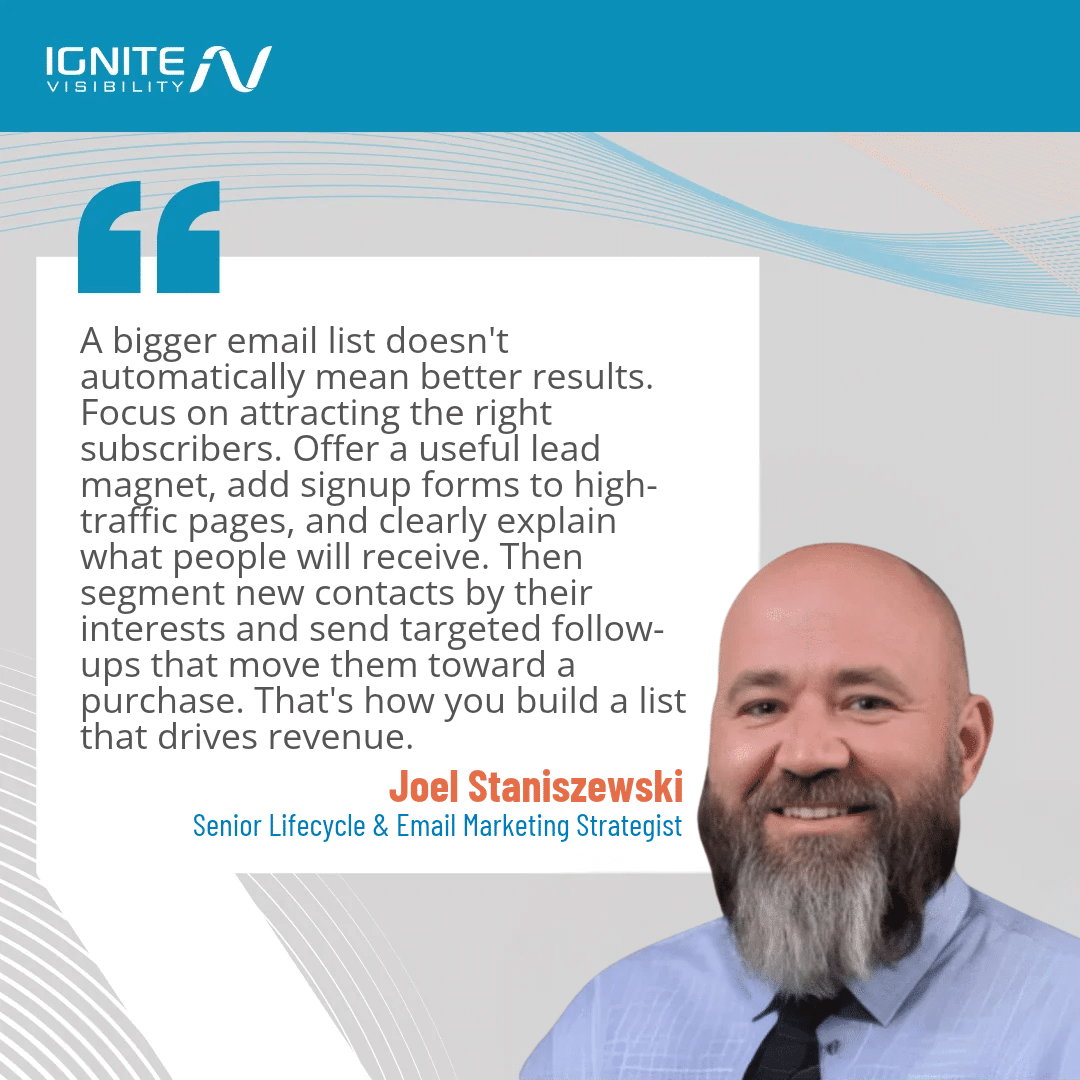
My Expert Opinion on How to Build an Email List That Converts
The email marketing landscape continues to change, but one thing remains constant: It’s always important to have a healthy email list. However, you want to make sure your contacts are relevant and likely to convert. You’ll need to grow an email list efficiently to maximize conversions and profitability.
One of the keys here is to understand your audience and what will most effectively engage them when targeting your lead generation efforts. Personalization is critical in today’s environment, helping you make a direct connection with your target market.
You should also integrate and utilize the right email marketing software and services to automate your processes as much as possible, blending accuracy with efficiency to help you get the most from your campaigns.
By taking the right approach to email marketing, you can better determine how to grow an email list and achieve your short- and long-term objectives.
Set Up Your Email List Before Promoting It
Before you promote anything, decide what people are signing up for. A clear plan makes how to grow an email list from scratch much easier. Every page, form, and message then points to the same promise.
Start with these four questions:
- Who is the subscriber? Describe them by interest or need, not by age or gender. “Homeowners who want to prevent costly repairs” is more useful than “women 35 to 54.”
- What problem do the emails solve? Be specific. Saving time, avoiding mistakes, and finding deals are all reasons why people subscribe to your list.
- How often will you send? Pick a schedule you can keep, such as weekly or monthly.
- What is the next useful action? It might be reading a guide, booking a service, or shopping for a seasonal offer.
Here’s how that could look for a hypothetical home-services business:
- Subscriber: A homeowner who wants to stay ahead of seasonal repairs
- Problem solved: Knowing what to maintain and when
- Frequency: One email a month
- Next action: Book a seasonal tune-up
- Promise: “Seasonal home maintenance tips and offers for your area, once a month.
Next, define each type of contact separately:
- Newsletter subscriber: Someone who chose to receive your marketing emails
- Customer record: Someone who bought from you. They expect receipts and service messages
- Sales prospect: Someone you are following up with about a possible purchase
One person can fit in more than one group. But being in one group doesn’t automatically put them in the others. An address collected for a receipt, contest, event, or inquiry isn’t automatically a newsletter subscription.
Choose an Email Platform, With or Without a Website
You don’t need a website to start. If you’re learning how to build an email list from scratch, a hosted signup page can do the job.
Kit, Mailchimp, Flodesk, and beehiiv all offer landing page tools. They can help you grow email lists before you have a full website. A simple workflow looks like this:
- Create a hosted signup page: Use the platform’s template builder. Add your promise, a short benefit statement, and a signup form.
- Connect it to the correct audience: Confirm that signups land in the right list, with the right tags or groups.
- Set up confirmation and welcome messages: Review the wording, sender name, and links.
- Share the URL: Add it to social bios, email signatures, your link-in-bio page, and anywhere your audience already pays attention.
Before you choose a platform, compare the options that matter to your team:
- Consent records: Does it store the signup date, source, and form wording?
- Automation: Can it send a welcome email and basic follow-ups?
- Integration: Does it connect to your website, CRM, and ecommerce tools?
- Reporting: Can you see signups, unsubscribes, bounces, and engagement?
- Exports: Can you take your contacts and records with you if you switch platforms?
- Accessibility: Are the forms and pages usable for people with disabilities?
- Pricing at your expected list size: Costs can change as your list grows.
Free plans can be a good fit, as long as you fall within their limits. Check current caps on contacts, sends, and features before you commit. If you also use email marketing software for automation, make sure it works with your signup tools.
Why Purchased and Prospecting Lists Don’t Belong Here
Sales prospecting databases serve a different purpose than a newsletter. Business to business email lists from these sources can help with sales reach. But they aren’t the same as an audience that opted in to hear from you.
Keep these points in mind:
- Address verification isn’t permission: It can help assess whether an address is valid, not whether the person agreed to receive your marketing.
- A vendor’s compliance claim isn’t a guarantee: It doesn’t mean every use of the data is lawful.
- Platforms have their own rules: Mailchimp’s acceptable use policy prohibits purchased, rented, and scrapped third-party lists.
If you run B2B outreach, treat it as a separate sales program with its own rules. Don’t mix it into your newsletter audience.
Build a Clear Signup Form
A good form tells people what they get, how often, and what you’ll do with their email. It also stays short. Here is a hypothetical example:
Seasonal Home Care Tips
Get a monthly checklist of what to maintain before the weather changes, plus offers from our team for your area.
Email address: __________
Your service area: [Select location]
[ Send Me the Monthly Tips ]
One email a month. Unsubscribe anytime. See our Privacy Policy.
Each part of that form does a job:
- Honest benefit: It describes the emails in plain language.
- Email field: This is the one required field.
- Optional detail: Ask for more only when it helps. A preferred location may matter more than a first name for a franchise brand.
- Descriptive button: “Send Me the Monthly Tips” says more than “Submit.”
- Clear expectations: The form states the frequency and that the person can unsubscribe.
- Privacy link: It shows people how you handle their data.
A dedicated newsletter form can communicate consent through its wording and the submit action. For unrelated transactions, like checkout or event registration, you need a separate, optional opt-in, such as an unticked checkbox.
Rules differ by country and region. Some, including UK and EU rules, generally call for clear, specific consent for marketing emails. If you are serving clients or customers in those areas, review the UK direct marketing guidance and EU consent guidance before sending your first email.
Decide Whether to Use Double Opt-In
Double opt-in adds a confirmation step. After someone submits your form, they get an email asking them to confirm their request. They join your list only after they click the link.
This helps verify that the address works and belongs to the person who signed up. It can also cut down on unwanted or mistyped signups.
However, it adds an extra step. Some people won’t finish it, so you might lose subscribers.
No matter what you do, your reporting should always show the difference between a submitted form and a confirmed subscription. If you only count form submissions, your numbers may look better than your real audience.
Double opt-in isn’t a universal legal requirement. It also doesn’t replace clear consent wording on your form. Think of it as one tool for email list management, not a fix for unclear signups.
If you do decide to use double opt-in, always test the entire path before you launch, including:
- Confirmation delivery: Does the email arrive quickly? Does it end up in spam?
- Instructions: Is the next step obvious?
- Confirmation destination: Does the link lead to a useful thank you page?
- Welcome message: Does it follow right after confirmation?
Practical Ways to Grow Your Email List
You don’t need to use every tactic here. Pick the ones that fit your audience and your team’s capacity.
No matter which tactic you choose, good email lists grow from a clear offer and a clear promise. Each tactic below builds on the setup we talked about above.
1. Offer a Useful Resource or Tool
Best for: Businesses with a repeatable customer problem they can solve in a small, practical way.
How to do it: Pick a resource that fixes a real problem. Good options include:
- A checklist
- A template
- A calculator
- A short email course
- A comparison guide
- A quiz that points people to the right product or service
Then decide what happens after signup:
- Deliver the resource right away: Show it on the thank-you page and send it by email.
- Explain what follows: Say whether more emails are coming and how often.
- Keep permission separate: If the resource is a one-time download, don’t assume the person wants ongoing marketing. Offer a separate, optional newsletter checkbox, and make the download available whether or not they select it.
Don’t gate everything. Free guides that answer common questions can stay open. This helps people trust you. Remember that a free download doesn’t guarantee valuable subscribers. Some people only want the resource.
What to measure: Sign-up rate on the resource page, confirmed subscribers, and how many people open and click your first few emails.
2. Put Signup Opportunities Where They Make Sense
Best for: Any site with regular traffic, especially blogs and service pages
How to do it: Place forms where readers are already interested. Options include:
- Inline forms inside a relevant article
- End-of-post forms after someone finishes reading
- Headers and footers for a simple, always-available link
- Sticky bars that stay out of the way
- Profile and bio links that lead to your signup page
Make sure that your offer matches the page, and that every form works on mobile. Use large tap targets, clear labels, and readable colors. Replace a generic “Subscribe” with a specific benefit, like “Get the Monthly Home Care Checklist.”
Video and testimonials are optional elements to test. They may help, but they aren’t guaranteed to lift signups. Don’t put them on autoplay.
Be selective with your placements. A few well-matched forms beat a page full of signup requests.
What to measure: Signup rate by placement and page, confirmed subscribers by source, and any drop in time on page or conversions.
3. Use Popups Without Disrupting the Visit
Best for: Sites with enough traffic to test timing and offers, and a team that will check results.
How to do it: Popups can work, but they shouldn’t get in the way. Set them up like this:
- Limit frequency. Don’t show a popup again right after someone closes it. Use a cooldown period.
- Add an obvious close button. It should be easy to see and tap, especially on mobile.
- Choose timing carefully. Wait until someone has had time to read or trigger it by scroll depth.
- Hide it from existing subscribers when your tools allow
What to measure: Popup signup rate, dismissal rate, and changes in purchases, inquiries, and bounce rate compared with your test version.
4. Offer Relevant Discounts, Early Access, or Local Benefits
Best for: Ecommerce brands (discounts) and service or local businesses (reminders, alerts, early access)
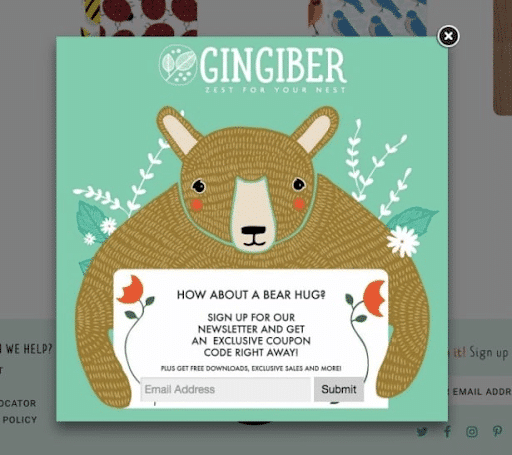
How to do it: Match the incentive to the business:
- Ecommerce: A first-order discount can work well
- Service businesses: Offer seasonal reminders, open-appointment alerts, or early access to booking
- Local brands: Share location-specific events, offers, or availability
State the terms clearly. Include eligibility, exclusions, and expiration dates. Explain that signing up means ongoing emails. Don’t present it as just a coupon swap.
Discounts aren’t necessary for every business, and they aren’t always profitable. Test before you commit to this as an ongoing strategy.
What to measure: Subscriber quality, repeat purchases or bookings after the first order, and the full cost of the incentive
5. Promote the Signup Page Through Existing Social and Video Content
Best for: Businesses that already post to channels their audience uses
How to do it: Don’t try to be everywhere. Pick the channels your audience already uses and then give them a reason to subscribe. Share the link to the relevant destination, such as a page that matches the post.
Don’t assume every account or platform will offer the same sign-up button. Features change, so check each platform. Facebook’s link in bio is going to be different from YouTube’s channel profile links.
What to measure: Signups by channel, using a separate tracking link for each, and confirmed subscribers from each source.
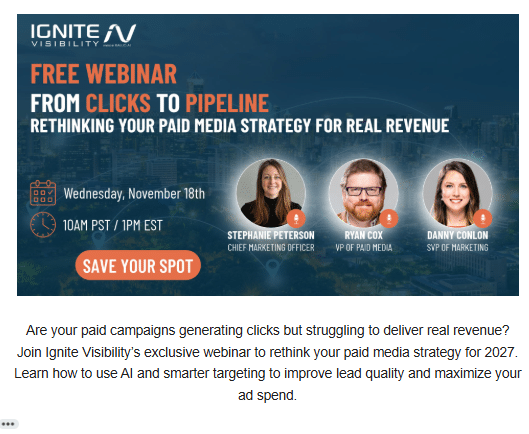
6. Use Webinars and Workshops to Attract Interested Subscribers
Best for: Businesses with expertise to teach
How to do it: Webinars and workshops work because people attend for a specific topic. Choose one that connects closely to what you do. Then:
- Collect registration details: Ask for what you need to send event information.
- Send event details separately: Confirm registration and share the link, time, and any prep instructions.
- Invite them to the newsletter: Add a separate, clear choice during registration or after the event. Don’t treat every attendee as a subscriber.
- Send a useful follow-up: A recording, slides, or a checklist works well.
What to measure: Registrations, attendance, opted-in subscribers, and how those subscribers engage afterward. Registrations alone don’t tell the full story.
7. Collect Signups in Person and Through Direct Mail
Best for: Brick-and-mortar shops, event-driven businesses, and brands that already send packaging or printed pieces.
How to do it: Make it easy to move from the offline moment to your signup page. QR codes work great for this. Put them on counters, event materials, packaging, and printed mailers.
You also need to train your staff so they can clearly explain the subscription when asked. Always keep proof of permission, whether it’s a paper or an electronic form.
Don’t import every collected address right away. First, check that each person gave permission. Then check your suppression list, which includes people who unsubscribed or opted out before. Good email list management starts at intake.
What to measure: Scans or signups by location or event, confirmed subscribers, and how many collected forms had valid permission.
8. Encourage Readers to Recommend the Newsletter
Best for: Newsletters with content worth passing along
How to do it: Make sharing simple:
- Offer a shareable signup link. Put it in every email.
- Create a public preview. A web version of a past issue lets people see what they’re recommending.
- Explain any referral rewards. Spell out the terms, and count only qualifying subscriptions, not submitted addresses.
- Let the person subscribe themselves. Don’t enroll someone because a friend typed in their details.
Don’t assume what worked for a famous newsletter will work for you. Test it with your own readers.
What to measure: Signups from shared links, confirmed referral subscribers, and how referred subscribers engage compared with others
9. Collaborate with Relevant Partners
Best for: Businesses with complementary partners, associations, or newsletters that share an audience
How to do it: Look for partners whose audience would benefit from your emails:
- Guest content: Offer a helpful article or interview, such as through guest posting
- Collaborations: Create a joint guide, podcast episode, or video
- Partner promotion: Ask a newsletter or association to share your sign-up page
- Co-hosted events: Share the planning and the audience
Each partner should send interested readers to a clear sign-up destination. Don’t swap subscriber databases. Permission for one organization isn’t permission for another. For co-branded campaigns, make clear who is sending emails and what subscribers can expect to receive.
What to measure: Subscriptions by partner, and the quality of those subscribers over time
10. Test Paid Acquisition After the Signup Experience Works
Best for: Teams with a working signup page, a clear offer, and a budget to test
How to do it: Use paid social, paid search, and native lead forms as distribution methods. They don’t replace a good offer or clear permission. Before your launch:
- Fix the basics first. Make sure your page, offer, and welcome message all work.
- Test integrations. Confirm leads reach your email platform.
- Check consent-field mapping. The marketing choice should carry through correctly.
- Write clear, accurate ads. Skip clickbait.
What to measure: Cost per valid, confirmed subscriber, and downstream outcomes like purchases or inquiries. Don’t pick the campaign with the cheapest form submissions.
Optional Tactics: Contests and Communities
Contests and communities can work, but they aren’t for everyone. Keep either tactic only if it fits your audience and goals.
- Contests and giveaways: A prize can attract people who only want the prize. Use one only if the prize fits your audience.
- Communities: A group, forum, or channel needs steady moderation. It also needs a reason to exist beyond collecting addresses.
Don’t enroll people in your newsletter automatically after a contest entry or community signup. Offer a clear, separate marketing choice. Review the promotion rules for contests, too. Some platforms, like Mailchimp, have specific rules for contests and email marketing.
What to measure: Opted-in subscribers (not entries), engagement after signup, and the cost and time you spend.
How to Keep New Subscribers Interested
The signup is only the start. What happens in the first few minutes sets the tone for every email after it. A good first message keeps email list management simple because people know what they signed up for.
Send a welcome message right after signup (or right after confirmation, if you use double opt-in). It should do four things:
- Deliver what you promised. If the signup offered a checklist or a discount, include it in the first email.
- Identify the sender. Use a name people recognize and say who the email is from.
- Restate expectations. Repeat what you’ll send and how often.
- Offer one useful next step. Link to a popular guide, a booking page, or a short preference form. Pick one.
Next, invite subscribers to share what they care about. Keep it light. Preferences can be based on:
- Topic: “What tips do you want most?”
- Customer stage: New customer, current customer, or still researching
- Location: Helpful for franchise and local brands
You don’t need a separate list for each preference. You can use one primary audience and organize with tags or segments. This simplifies reporting and keeps duplicate contacts from inflating your count.
As your email lists grow, keep these rules in mind:
- Avoid duplicate sends. One person shouldn’t get the same campaign twice because they sit in two places.
- Preserve unsubscribe records. Keep someone who opted out opted out across the same marketing scope.
- Check before merging audiences. Review consent and what data you might lose first. Don’t merge by default.
- Plan ongoing work. Automation can send the welcome message. It can’t decide what’s worth sending next. Review your content, tags, and results on a regular schedule.
Protect List Quality and Email Delivery
A bigger list isn’t better if people don’t want your messages or they don’t arrive. A few safeguards protect both.
When your list is in trouble, there will be warning signs. Watch for these on a regular basis:
- Invalid addresses: Hard bounces, typos, and fake signups.
- Complaints: People marking your email as spam.
- Unsubscribes: A spike after one campaign tells you something.
- Suspicious signup activity: Many signups in a short time from the same source can mean bots.
Protecting your list quality and email delivery also requires you to:
- Keep suppression records. A suppression list holds contacts who unsubscribed, complained, or bounced. Check it before every import so you don’t re-add someone who opted out.
- Know the sender requirements. Mailbox providers publish rules for senders. For Gmail, every sender needs authentication and low complaint rates.
- Use SPF, DKIM, and DMARC. These settings help prove an email really came from your domain. Bulk senders (roughly 5,000 or more messages a day to personal Gmail accounts) must use all three.
- Include one-click unsubscribe. Have your email platform add the required unsubscribe headers, and include a clearly visible unsubscribe link in the email body.
You don’t need to become a technical expert. Ask the person who owns your email platform and domain settings to confirm that everything is set up. Then keep an eye on it. A larger list isn’t useful if messages are unwanted or can’t be delivered reliably.
Understand Permission and Applicable Email Rules
A privacy policy and an unsubscribe link aren’t enough on their own. The applicable rules depend on where your recipients live and who they are. Individuals and companies have different requirements.
Here’s a general overview of requirements you should be aware of:
- United States: The US has the CAN-SPAM law, which includes rules for commercial email. It requires accurate sender and subject information, a valid postal address, a clear opt-out, and prompt honoring of opt-outs. Don’t skip this even if you work with business to business email lists.
- United Kingdom: Under PECR, marketing emails sent to individuals generally need consent or a qualifying exception, such as the ‘soft opt-in’ for existing customers.
- European Union: GDPR applies to how you handle personal data. Country-level electronic marketing rules may also apply.
- Canada: If you email people in Canada, CASL generally requires express or implied consent before you send commercial messages. It also has sender identification and unsubscribe requirements.
Typically, you need to pay attention to three things when sending emails: legal requirements, platform policies, and recommended practices. These may differ, but they often overlap.
Following the minimum legal rule isn’t the same as building a healthy list. Permission-based practices protect your reputation and your results, which is the heart of email list building that lasts.
Measure Useful List Growth
Subscriber totals can look good while the list quietly stops working. Track a few defined metrics instead, such as:
- Signup conversion rate = valid subscriptions ÷ relevant signup-page visitors
- Cost per subscriber = attributable acquisition spend ÷ new valid subscribers
- Net list growth = new valid subscribers – unsubscribes – other removals
If your tracking supports it, always compare sources by quality, not just volume. Look at what happens after they subscribe. Track engagement after the first few emails, qualified inquiries, purchases or bookings, and revenue earned.
A source with fewer signups may bring in better subscribers. That’s important to keep in mind as you grow your email list.
Be careful with open rates. They aren’t necessarily a full measure of readership. Some automated security tools can trigger clicks, which can skew your open rates.
FAQs: How to Grow Your Email List
1. How do I start an email list from scratch?
When learning how to build an email list from scratch, start small and keep the steps simple. Define the offer, choose a platform, publish a signup page, and promote it to relevant people, such as your existing customers, site visitors, or social followers. Make sure to confirm the signup with a welcome message.
2. Can I grow a list without a website?
Yes. A hosted signup page works as your home base. Platforms like Kit, Mailchimp, and beehiiv offer landing-page tools, so you can grow email lists before you even have a full site. You can share this page URL in your social bios, email signatures, and link-in-bio pages. If you’re in person, put the link on a QR code.
3. Can I grow a list for free?
Partly. Organic promotion costs no ad spend, and many email platforms have free plans. But “free” email list building still has limits. Consider the time you’ll spend creating and sharing resources, plus growth costs and platform limits, such as caps on contacts, sends, and features.
4. Should I buy an email list?
No. Buying personal or business to business email lists creates nothing but problems. You’ll run into permission issues and may violate platform policy. You could also be purchasing lists with outdated, mistyped, or irrelevant addresses.
5. Is double opt-in necessary?
Not always. Double opt-in sends a confirmation email after someone submits your form. It can help verify that the address works and give you a clear confirmation record. But it also adds a step that some people won’t finish.
6. How do I know which tactic works?
Compare your sources by quality, not just volume. A source with fewer signups may bring better subscribers. Give each test enough time and data before you decide. If it’s not working, change one thing at a time until you find the formula that works for your audience.
Start Small and Build an Email List People Want
The best way to grow your email list is to start small. You don’t need to use every single tactic. Start with one relevant offer, a working signup experience, and a few suitable promotional channels.
Then improve the process over time. Look past the subscriber total. Compare sources by valid subscribers, engagement, and business outcomes. Make changes and test them one at a time. Over time, this is how to build an email list that stays healthy and useful.
Do you need some help? Our email marketing services include strategic audits, list health and deliverability work, and automated email flows. Our team can review where your program stands and offer options to help you improve your list. Request a free proposal to get started!
