

Bold, true, statement.
You should bring the MAJORITY of your television advertising budget online for a better ROI.
There is a reason companies everywhere are doing it.
Here is how to make that happen.
You won’t be alone if you do so. In fact, according to one projection, digital ad spend will exceed TV ad spend this year.
There’s a reason why marketers are flocking to Internet advertising. It’s because it’s effective, targeted, and measurable.
In this article, we’ll look in some detail at why you should bring your TV dollars online and where you should spend your marketing budget.
Online Marketing Brings A Better Return
As Shark Tank’s Kevin O’Leary says: at the end of the day, the only thing that matters is money.
If you can find an advertising channel that offers a better return than television, would you use it? Of course you would.
That’s why you should take a look at online advertising if you haven’t done so already. Consider the following stats:
- Businesses earn an average of $2 for every $1 they spend on Google AdWords.
- 72% percent of AdWords marketers plan to increase their budgets. That means they find online advertising profitable.
- Digital ad spend increased 15.9% last year, reaching $83 billion. That’s further evidence that marketers are flocking to digital.
- The auto industry, no stranger to reaching customers, increased digital ad spend by 22% last year.
Nobody can tell you definitively that Internet advertising will work better than TV advertising for your business. But there’s plenty of evidence that professionals have seen positive returns online. It’s likely that your company could profit as well.
Online Marketing Reaches the Right People
One of the biggest problems with TV advertising is that it’s not typically easy to reach a specific market segment with a targeted message. You can do that online.
How? By running ads that target people based on interest and demographics.
In fact, Facebook ads let you define your audience with nearly laser-like precision. If you have an ad you’d like to show to Midwestern married women who like yoga, you can do that. If you have an ad you’d like to show to saltwater sport-fishing enthusiasts who live in New Jersey, you can do that.
Google AdWords gives you yet another way to reach people in your target market: based on their search terms. For example, if you’re running an accounting app as a service online, you can show an ad whenever somebody uses Google to search for “online accounting app.”
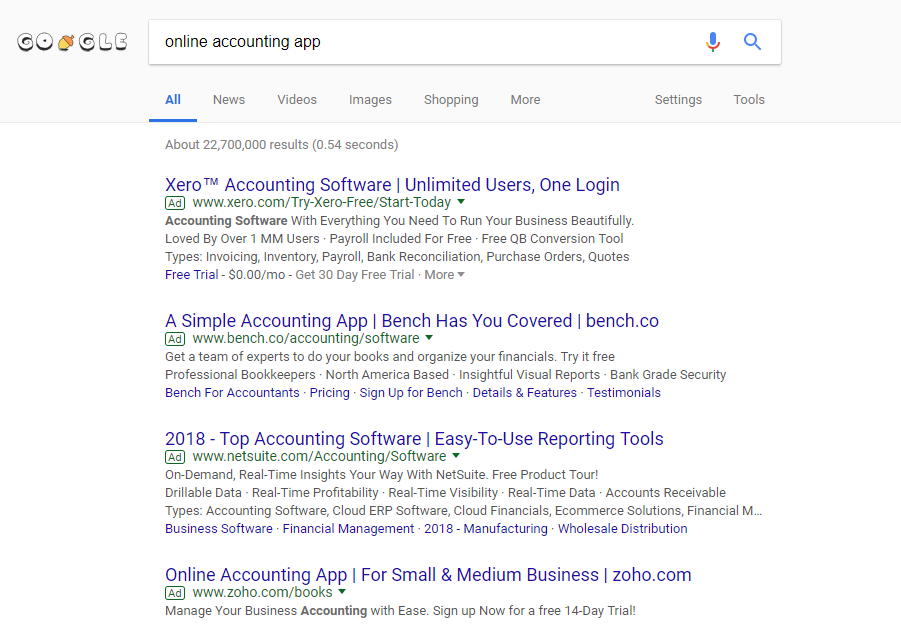
Many of the online advertising platforms allow you to define your audience so that you don’t waste your advertising dollars on people who will never become customers. That’s a far superior advertising model than mass marketing.
It gets better. You can also check your analytics (reports about your advertising efforts) to learn more about the people who’ve clicked on your ads and became customers. In doing so, you might (and probably will) uncover new market segments that you didn’t even know about.
Let’s go over analytics in some detail.
Measuring Your Results with Online Marketing
Consider this: you run an ad on TV for a few weeks, and your sales go up slightly. How do you know it was because of the TV ad? How do you know it wasn’t just a coincidence?
You can poll customers, but many will find that annoying. Some will just tell you what they think you want to hear.
The bottom line is that it’s tough to measure the effectiveness of TV advertising.
Not so with digital advertising. You can run ads online and then check your metrics.
Specifically, you can learn:
- How many people saw your ad
- How many of those people clicked on your ad
- How many of those people purchased your product or service
You can also run tests with different ad copy and see which one performs best. Digital marketers call that split-testing or A/B testing.
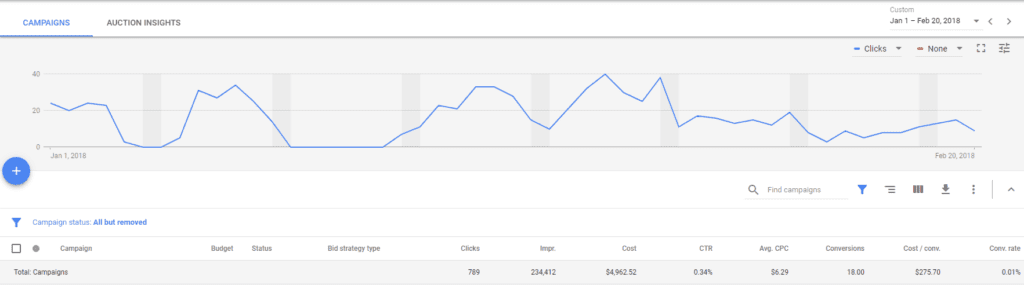
Once you’ve checked your analytics, you can adjust your ad spend accordingly by putting more money into winning strategies and cutting loose the losing strategies.
Advertising Formats
Now that you know more about why online advertising is so attractive, let’s take a look at the different ad formats.
For starters, there’s the text ad. Although that might seem boring in this visual climate, text ads can earn you a lot of revenue.
Why? Because they’re the kinds of ads that Google AdWords displays in the search results.
If you’re targeting people who search for terms related to your niche, then you’ll need to pick up a copy of “Words That Sell.” As of this writing, you can’t include any visuals in your search ads.
Next is display ads. Those are the banner ads you see on blogs in the sidebar or at the top.
Marketers tend to use display ads for retargeting. That’s a clever strategy that enables professionals to reach people who’ve already connected with their brand.
Finally, you can also run video ads. More than half (52%) of marketing professionals see video as the type of content with the best return.
Also, video ads give you an excellent reason to move into the digital space. Think about it: you can run the same 30-second commercial but target it to a more well-defined audience. That will give you a better ROI.
Online Marketing Covers Many Advertising Goals
Before we get into the different online platforms, it’s important to go over advertising goals. That’s because the ad solution you select depends on what you’re trying to accomplish.
Here are a few advertising goals:
- Build brand-name awareness – you’re letting people know that your brand is “out there” so they’ll remember it when they’re ready to make a purchase
- Land a sale – you’re going for the hard close right up front
- Find new customers – you’re trying to reach people in your target market who aren’t yet paying customers
- Find leads – you’re trying to get contact info from potential customers so you can follow up with them later
- Find repeat business – you’re trying to close a new sale on an existing customer
Think about the nature of your business and what you’re trying to accomplish in your upcoming marketing efforts. Then, you’ll be in a better position to pick the right advertising platform.
Advertising Platforms
There are countless advertising services online. You can get lost trying to go through the pros and cons of all of them.
We won’t be able to cover all of the options here, so we’ll just go over the most popular.
Online advertising channels are broken down into categories:
- Search Engine Marketing – your ad appears when somebody searches for a term related to your business
- Display Advertising – your ad appears on blogs and websites throughout cyberspace
- Social Media Marketing – your ad appears on social media, usually in the middle of a user’s feed
- Native Advertising – your ad looks like native content on a blog so that people are more likely to click on it
Let’s take a look at each of those categories in detail.
Search Engine Marketing
Search Engine Marketing (SEM) is the kind of advertising you’ll use if you want to show your ad to somebody who searches for a term related to your business. It’s a great way to reach people who are on the verge of making a purchase.
Why? Because people will often search for terms that carry purchase intent.
For example, if somebody searches for “discount running shoes” then you can be sure the person is looking to buy running shoes. If you’re selling running shoes, you’d want your ad to appear in front of a person who used that search term.
You don’t have to use SEM solely for finding people who are ready to buy, though. Sometimes, you might advertise a blog post that identifies you as an authority in your space.
Let’s say you’re running a digital marketing agency. If somebody searches for “maximize video engagement,” you could show an ad that links to one of your blog posts that explains how to improve YouTube video engagement. People who read the article will understand that you’re an expert in marketing and might pay for your service at some point in the future.
By far, Google AdWords is the most popular SEM platform. That’s because Google is the most popular search engine in the world.
However, Bing does have its own ad platform as well.
Use SEM if people in your target market tend to search for your kind of business online. For example, if you’re offering software-as-a-service (SaaS) and you expect people to search for it with relevant terms (“online accounting”), you should run an ad for your service.
Also, SEM is great if you’re selling a product that people tend to research before they buy. Use the ad to brag about why your product is superior to the same kind of product offered by your competitors.
Finally, use SEM if you’re running an e-commerce shop and looking for a quick close. You can run product listing ads (PLAs) right from Google search to show your product to likely customers.
Display Advertising
Display advertising shows your ad to people who visit websites or apps. Although the ad is usually an image, you can also run text or video ads as well.
As we’ve seen, display advertising is often used for retargeting. Here’s how that usually works:
- Somebody visits your website
- You website puts a “cookie” (a digital footprint) in the person’s browser
- The person leaves your site and goes to another site participating in your ad network
- The ad network checks the person’s browser for the cookie and finds it
- The ad network displays your ad because the person visited your site
In that scenario, you get a second chance at marketing to somebody who “got away.”
Plenty of marketers use remarketing. That’s why you see banner ads for websites you’ve visited after you’ve left them.
You don’t have to use display advertising strictly for remarketing, though. You can just run ads to everybody who visits websites participating in your ad network.
Google AdWords offers display ad opportunities in addition to SEM. That’s a particularly attractive option because you can use it to target in-market audiences.
What are in-market audiences? They’re people who are actively browsing around cyberspace for the types of products that you sell.
Google determines who is part of an in-market audience by examining their clicks on relevant ads, recent conversions, and content of websites that they’ve visited.
So you can reach people in your target market with display ads to in-market audiences.
Besides AdWords, you can also select from a variety of other display ad platforms as well.
Social Media Marketing
Social Media Marketing (SMM) is attractive because of its targeting options.
Facebook advertising is the best example. It lets you specify who will see your ad based on demographics and interests.
That means you can segment your market, create ad copy for each of the segments, and then run a separate ad to each segment on Facebook alone. Try doing that with TV advertising.
The drawback with SMM is that you usually won’t find people at the lower end of the sales funnel. In other words, people who are scrolling through their Twitter feed aren’t likely looking to buy a pair of shoes.
That’s why it’s usually best to run brand-name awareness campaigns on social media. Use the ad to generate a little bit of buzz about your brand.
Also, be sure to run ads on the right social media channel for your business. For example, if you’re in the B2B space, you should probably focus on LinkedIn. If you’re targeting millennials, go with Snapchat.
In addition to Facebook, LinkedIn, and Snapchat, you can also advertise on YouTube, Instagram, and Pinterest.
Instagram has a neat feature that allows you to run an ad as a Story. If you’re unfamiliar with Instagram, a Story is a slideshow that strings together a collection of videos and photos.
The trick to creating a great Story ad is that you have to show the user an image or video in the first slide that’s guaranteed to get the attention of people in your target market. That way, they tap through.
If possible, it’s also a great idea to use influencers in the Story ad. Wild Turkey has a Story ad that features Matthew McConaughey with the caption “He Leaves the Bourbon to Us.” That’s going to tempt pop culture junkies to tap through.
Pinterest is a great advertising choice if your marketing involves a lot of visuals. For example, if you’re in the fashion space, Pinterest is a great place to run an ad.
Also, keep in mind that Pinterest 81% of Pinterest users are women. So if your target market consists of women, get on Pinterest.
On YouTube, you can video ads that appear before the target video (“pre-roll”) or in the middle of the video (“mid-roll”). You can also run text ads that appear at the bottom of the video.
There’s a targeting feature that stands out with YouTube advertising: life events. You can reach people who are going through a major change in their lives such as:
- They’re about to graduate college
- They just graduated college
- They’re about to move
- They just moved
- They’re about to get married
- They just got married
Remember, YouTube is owned by Google. So you’ll set these targeting options within Google AdWords when you create your ad.
Native Advertising
Native ads look like “normal” content on a blog or website. They’re usually identified as ads, but it’s easy to miss the label.
You can also find native ads at the bottom of the content. You’ll typically see them under a heading that reads “See Also” or words to that effect.
As a rule of thumb, native ads are well-suited for catchy headlines from the Ogilvy era of advertising. For example, if you’re thinking about running an ad with a headline like “You’ll Never Believe What 93% of Nutritionists Said About This New Diet Pill,” native advertising is likely your best bet.
Also, if you’re running a blog, native ads can get you clicks. And bookmarks.
If you’d like to run some native ads, have a look at the two most popular platforms: Outbrain and Taboola. They’re not cheap, but they’ll give you some great targeting options and likely help you boost your brand.
Wrapping It Up
Online advertising offers you an opportunity to target your ads to just the right people. Even better, it can improve your bottom line. If you haven’t yet invested in digital ads, why not get the ball rolling today?
