As part of its latest AI updates, Google now offers agentic booking for users. This feature makes it easy for users to book appointments with local and service-based businesses directly through Google, eliminating the need to book on a business’s website.
There are many elements to keep in mind if you want to optimize for this feature, but knowing how this function works and the steps to appeal to it can help you keep your brand in the spotlight in both traditional and AI search results.
In this blog, Monique De Leon, Associate Director of SEO, will look into Google agentic AI and how businesses can get more instant bookings by optimizing for Google AI agents.
What’s Covered:
- What Are Google’s Agentic Booking Capabilities?
- Why Agentic Booking Matters for Marketers
- How Users Search in an Agentic Booking Journey
- Industries Most Affected by Agentic Booking
- The Optimization Framework: Be Discoverable, Understandable, and Bookable
- How to Track Agentic Booking Readiness and Performance
What Are Google’s Agentic Booking Capabilities?
Using agentic AI, Google can now enable users to instantly book appointments with businesses, going beyond its basic “search and compare” capabilities.
Now, users can state a specific goal, and Google AI agents can do the work of finding bookable options directly in AI Mode.
For example, someone might want to book a local lawn mowing service for a particular time or day. In AI Mode, Google will pull booking information from multiple local businesses and detail booking options and contact details, among other relevant information.
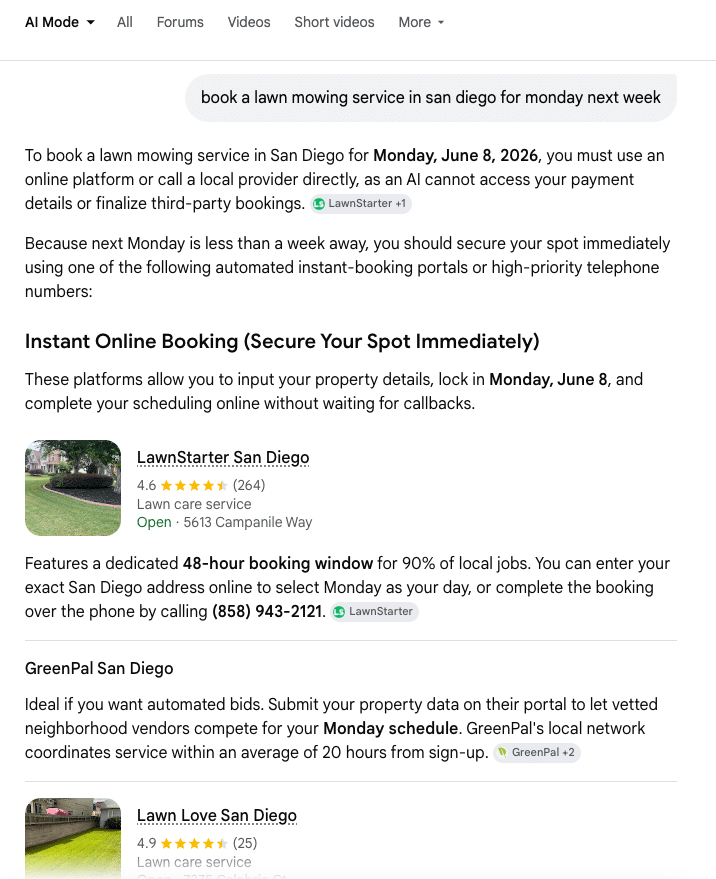
In some cases, Google agentic AI will even include direct booking options within the results,
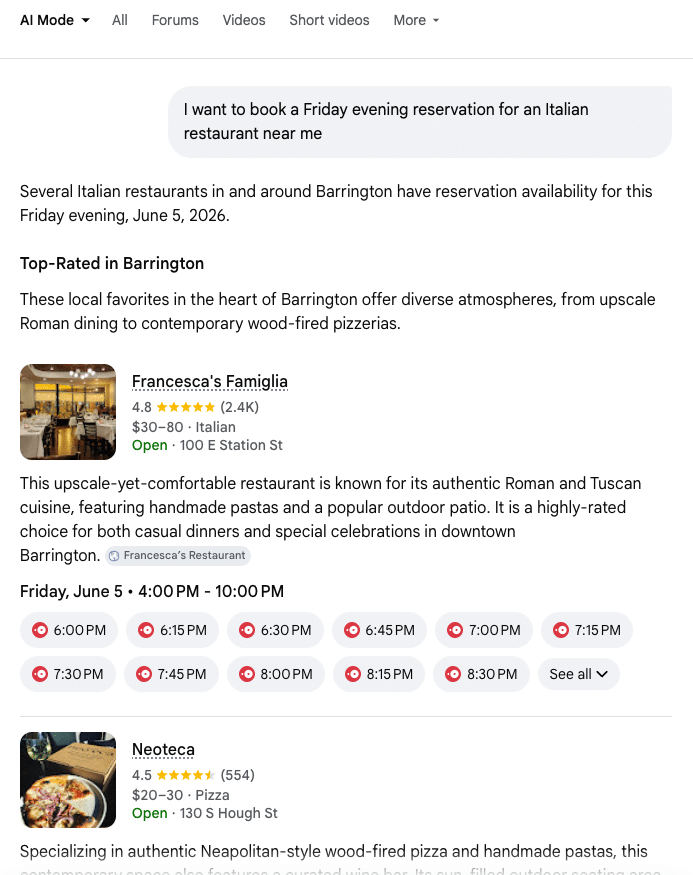
Users can then click or tap on a specific time to “Reserve with Google,” bypassing the need to even visit the restaurant’s website or call a phone number.
In this instance, Google connects with OpenTable to allow users to instantly book in AI Mode.
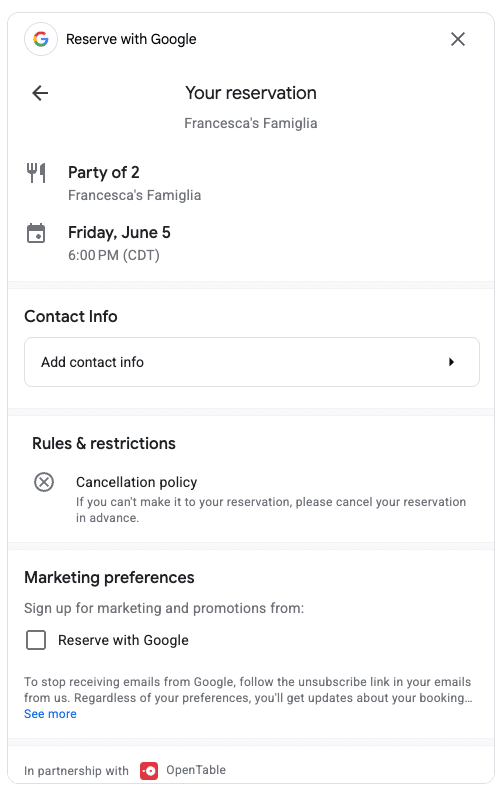
Ultimately, Google AI agents make booking entirely convenient for users as soon as they need to make an appointment or reservation.
Why Agentic Booking Matters for Marketers
Normally, the sales funnel works in defined stages from top to bottom, but agentic AI is changing this process.
With the introduction of Google AI Overviews and AI Mode, the discovery, comparison, and conversion phases could happen closer together, maybe even simultaneously.
This change means that increasing visibility is no longer only about ranking pages with traditional SEO and high-quality content. You also need to integrate accurate, structured, and bookable business data that AI systems can pull from and present.
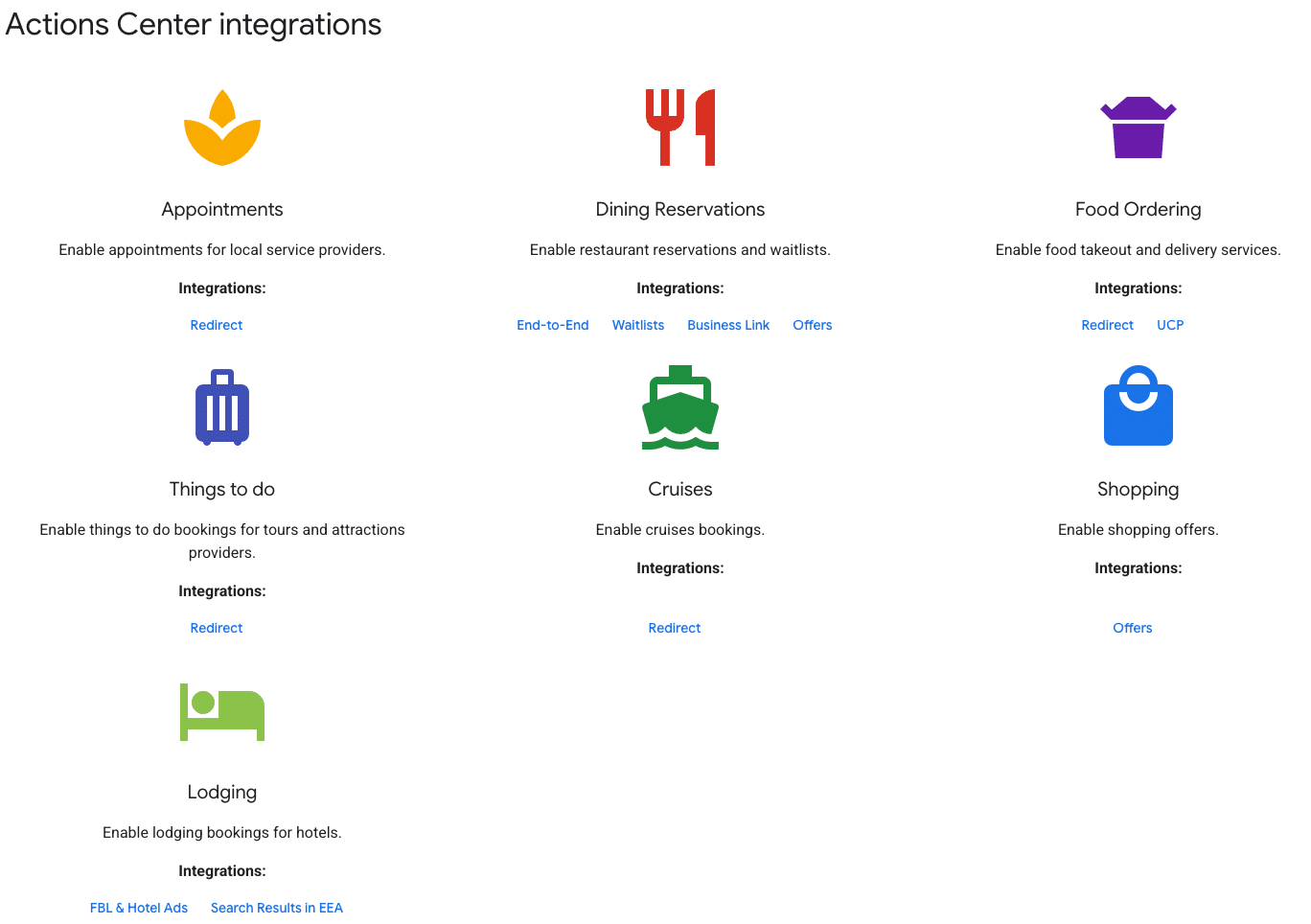
According to Google’s Actions Center, businesses can appear in AI-driven results to allow users to complete actions like reserving, ordering, and booking appointments. This capability extends across Search, Maps, Assistant, and other Google platforms with agentic experiences.
So, with properly structured business data and a well-optimized site, you can maximize AI visibility, not just search rankings.
My Expert Opinion on Google Agentic AI
Google’s AI experiences have continued to evolve in recent years, with some of the biggest updates taking place within the last year.
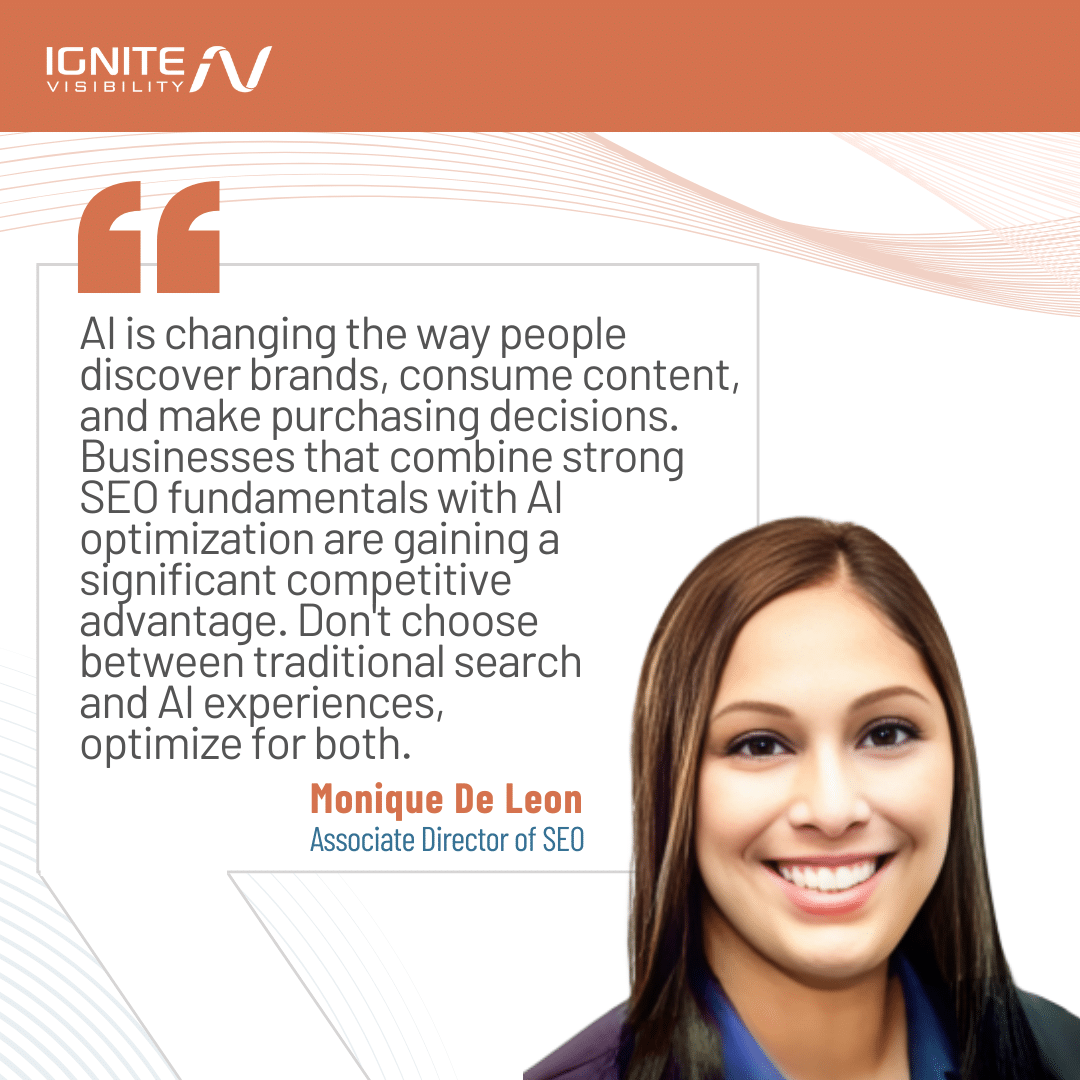
I’ve seen how AI is changing not only the SEO landscape and how businesses optimize content, but also how users interact with brands and convert into leads and customers. To adapt, marketers need to continue to provide their audiences with helpful content and convenient brand experiences that regularly engage potential customers and drive conversions.
At Ignite Visibility, we’ve worked to help our clients get the most from AI optimization strategies. For one home services franchise with over 5,500 locations, we developed a strategy that managed to increase AI visibility by 458%, combining traditional SEO tactics with AI search and lead conversion optimization. In addition to increased overall visibility, our strategy yielded over 20% more leads and 60% faster content deployment.
Results like these highlight the importance of optimizing for Google AI agents as much as traditional results, and the new booking capability is especially crucial for local and service-based brands.
Here’s some guidance on how to successfully optimize for Google AI Mode booking in addition to other AI experiences.
How Users Search in an Agentic Booking Journey
What really makes the Google AI agent booking experience different from traditional search is the customer journey that people take when using it.
Instead of entering simple keywords like “best pizza place near me,” AI agents encourage a deeper exploration with constraints that refine each search.
These constraints could apply to components like:
- Time
- Location
- Price
- Availability
- Category
- Ratings
- Amenities
- Accessibility
- Cancellation policies
- Booking methods
For instance, someone might enter a query like the following to get the most precise results based on their goals:
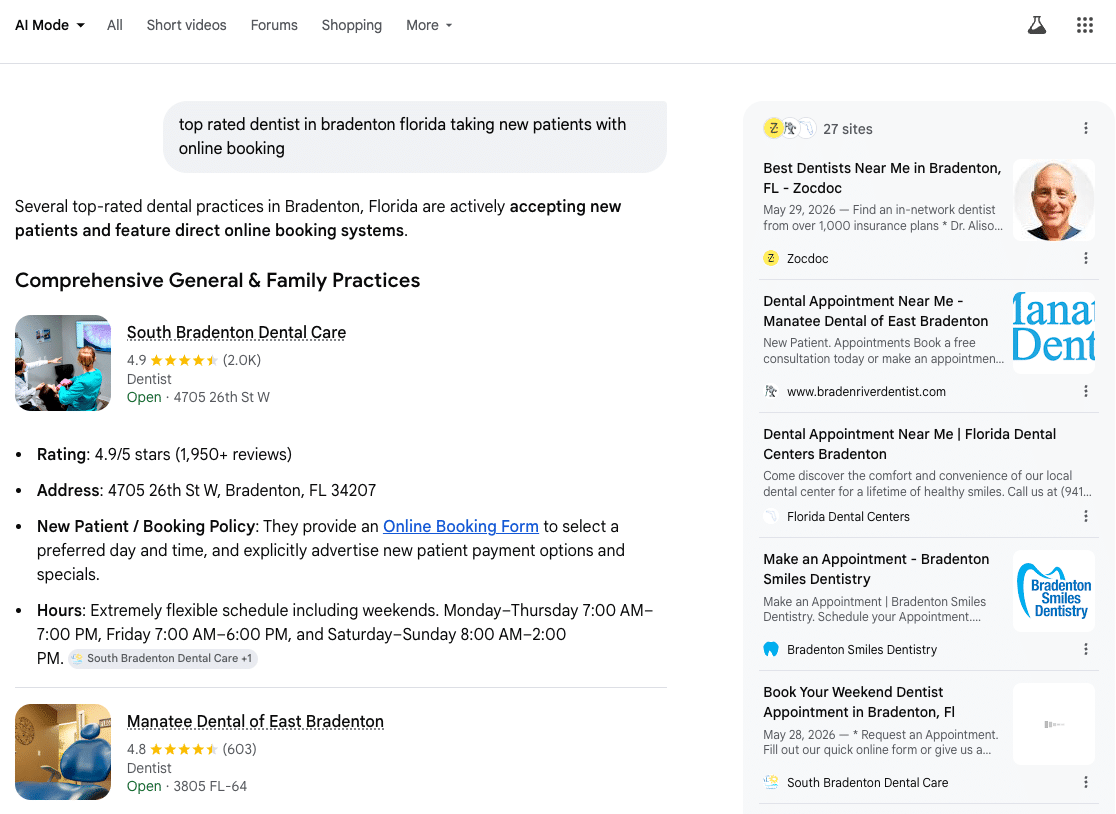
Whenever users enter a query like this and instruct the AI to book a particular service, the system develops a “Pattern of Consensus.” This process involves crawling multiple digital surfaces to find businesses that are reliable, legitimate, and open.
Keep in mind that there is a risk rule dictating that if AI identifies any conflicting data, such as inconsistently listed hours or services, or if the system detects a technical dead-end like a static contact form, the business is considered a “risk.” Subsequently, the AI agent moves to a competing business.
Industries Most Affected by Agentic Booking
Certain industries will benefit from optimizing for agentic booking more than others. These include businesses with one or more physical locations or locally focused service areas, such as:
Restaurants
These are the businesses that show up most prevalently for agentic booking results, though Google intends on opening this up to broader use cases, including travel.
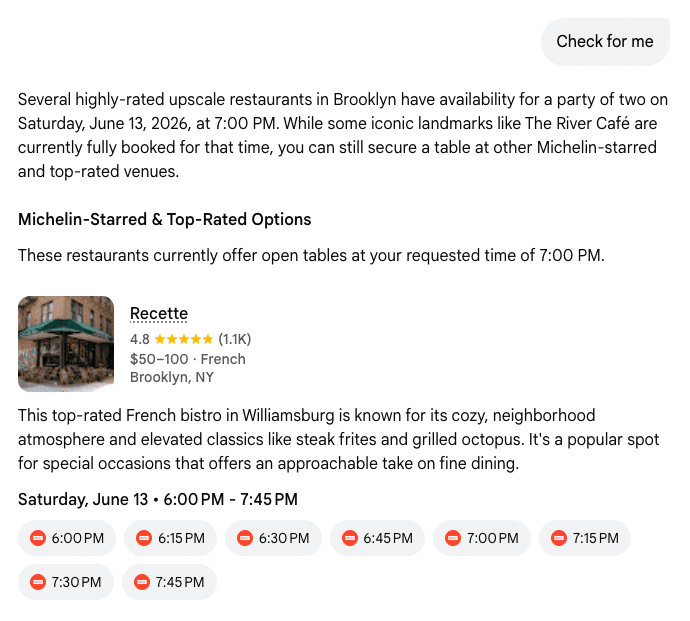
Let’s look at an example of someone seeking reservations for a specific type and quality of restaurant for an equally specific time and day, and how the AI handles that journey:
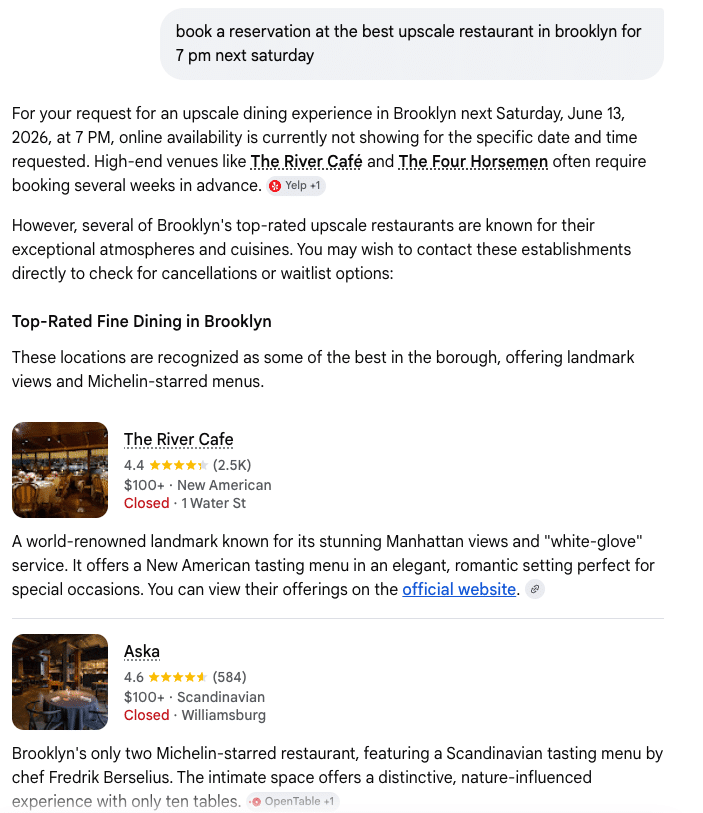
At the bottom of this list is a “Check reservations for me” option to check for availability and other information, which enables the user to book specific times.
Clicking this leads the AI agent to synthesize another list with clickable booking options.
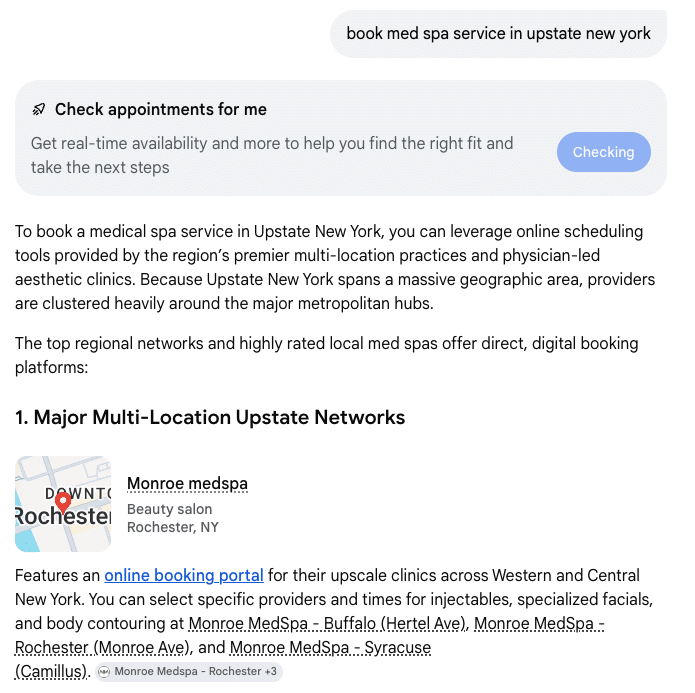
Beauty and Wellness
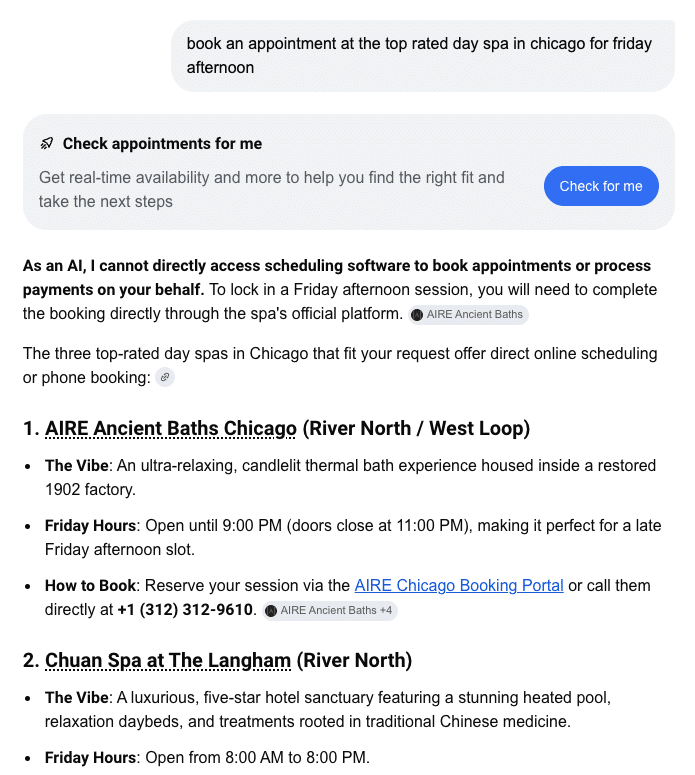
People can also book appointments with Google AI Mode booking for spas and wellness centers.
Event Venues and Ticketing
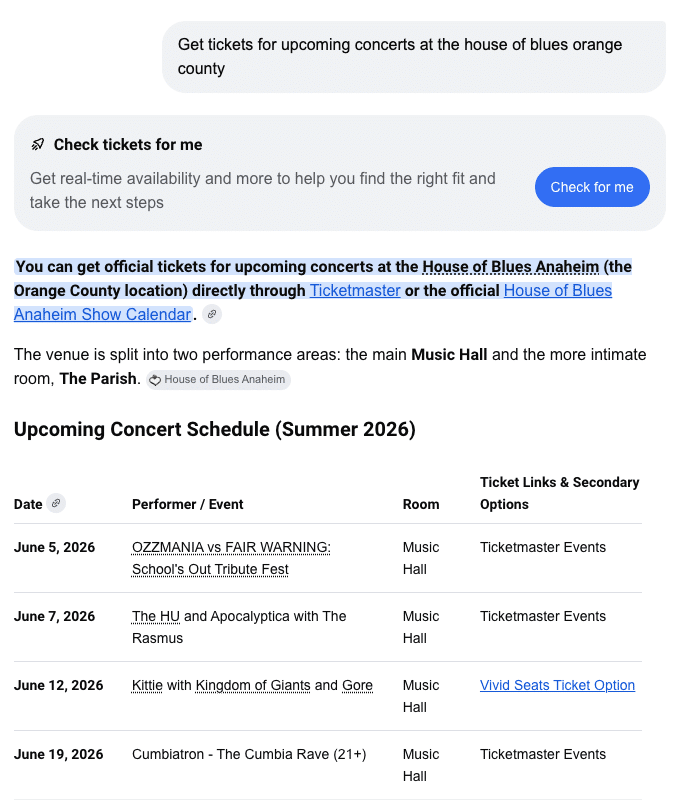
Another use case involves finding tickets and shows at venues like concert halls and movie theaters.
Hotels and Travel
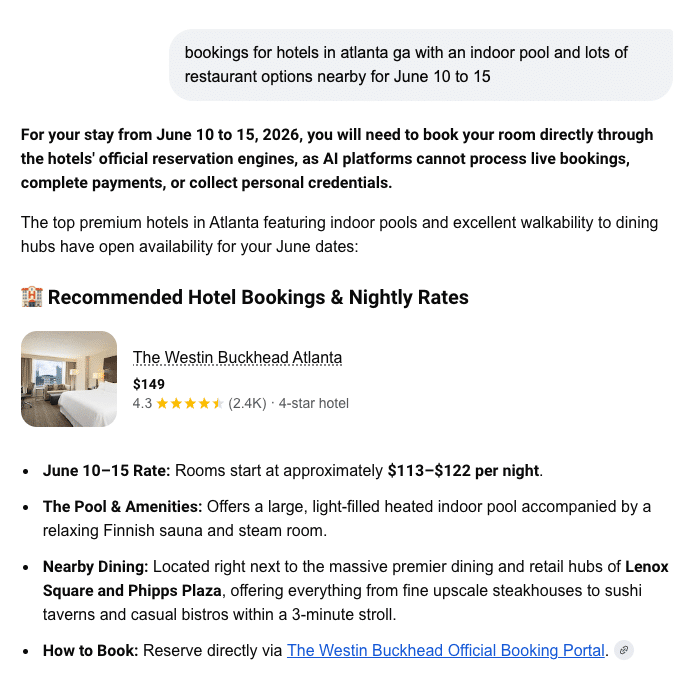
Travelers may also begin booking hotel rooms and travel plans through agentic AI. However, booking options for these venues are still fairly limited.
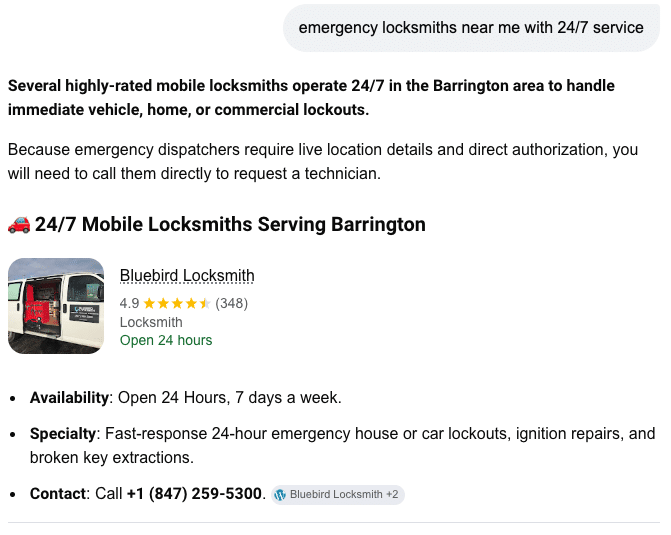
Local Services
Users can book local services for many types of local businesses, like:
- Plumbers
- HVAC
- Electricians
- Locksmiths
- Towing companies
- Auto repair
- Emergency restoration
Healthcare-Adjacent Appointment Businesses
Where allowed, healthcare and healthcare-related practices can appear in agentic booking options.
These businesses could include:
- Aesthetic and med spas
- Cryotherapy and IV therapy lounges
- Physical therapy and sports rehab facilities
- Mental health counseling practices
- Acupuncture and holistic medicine
- Weight loss clinics
Multi-Location Brands
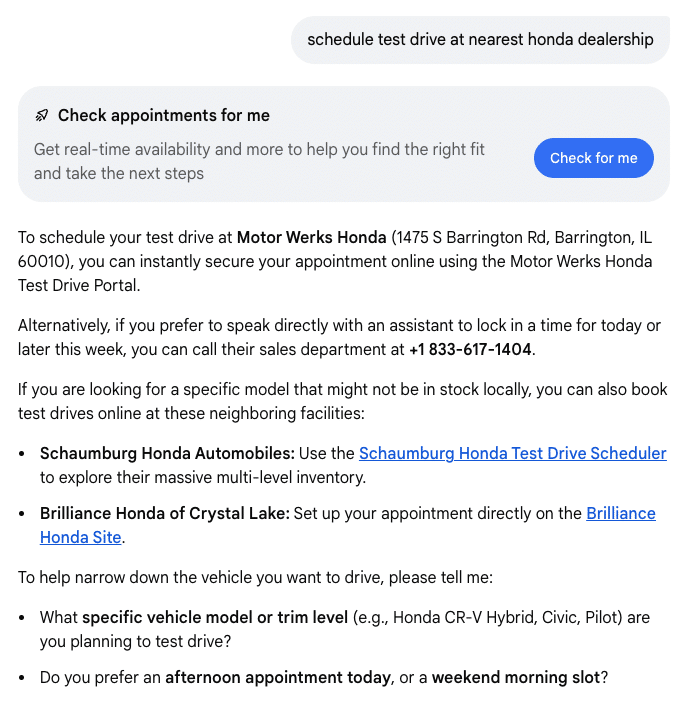
Many multi-location brands will benefit from enabling agentic booking, from franchise restaurants to auto dealerships with many locations.
The Optimization Framework: Be Discoverable, Understandable, and Bookable
There are a few key steps you’ll need to take to optimize for agentic bookings. These entail:
1. Maintain Discoverability in Google Search and Maps
The first step is to make your brand and details discoverable across Google platforms.
Doing so will involve maintaining in-depth and consistently accurate business data like your name, address, and phone number (NAP) and offerings. This information should be consistent on your Google Business Profile (GBP), Yelp, Apple Maps, Facebook, website footers, and other placements.
Considering your GBP is the primary source from which AI will pull, you need to optimize it carefully. Go beyond the main business category and include every service and micro-service you offer in its own line item with detailed descriptions. In addition, include any operational attributes that might affect results, such as 24/7 emergency services, brand certifications, and pricing models.
2. Make Your Data Understandable to AI Systems
With the help of high-quality, rich content and schema structured data, you can ensure that AI agents understand your business and can show relevant data for booking-related searches.
For instance, standardize the wording for your services across platforms to avoid conflicts with AI, such as using the term “Water Heater Repair” instead of “General Plumbing and HVAC” on every site.
You should also avoid using static web forms that AI systems can’t read or use, securing client approval with Google-partnered scheduling software when appropriate.
These solutions could include:
- Jobber: Ideal for solo business operators and small teams in industries like lawn care, painting, pressure washing, and landscaping.
- Housecall Pro: Suitable for mid-size home service businesses, pest control, carpet cleaners, and window washers.
- ServiceTitan: Works best for enterprise-level commercial and residential trade businesses, e.g., HVAC, electrical, and plumbing.
- Boulevard: Compatible with businesses in the beauty, health, and wellness industries, such as hair salons, med spas, and wellness centers.
- Mindbody: Offers scheduling for fitness studios, holistic health practices, day spas, and yoga centers.
Also, don’t forget about structured data. Technical SEO is essential in giving AI agents context regarding what your content is about, with structured data specifically telling agents what type of content is on a page.
The primary types of schema you’ll want to use are “LocalBusiness” and “Service,” with a “ReserveAction” allowing for a nested “potentialAction” block.
You can also add code like:
- priceRange (baseline fee)
- areaServed (specific zip codes)
- knowsAbout (specialties)
- urlTemplate (points to the live scheduling endpoint)
3. Ensure Bookability
One last step entails making sure people can book appointments or reservations with clean booking links, the above solutions allowing for “Reserve with Google,” Actions Center integrations, and reliable booking pages.
How to Track Agentic Booking Readiness and Performance
To make sure you’re achieving your business goals with AI SEO, there are multiple metrics to track:
- GBP booking clicks
- Appointment URL clicks
- Call clicks
- Direction requests
- Booking platform source reports detailing where bookings come from
- GA4 events like AI referral traffic from Google, ChatGPT, or Perplexity
- UTM-tagged booking URLs (when applicable)
- Local rankings for geo-targeted keywords
- Branded vs. non-branded discovery
- Conversion rates
- No-show rates
- Review velocity tracking the volume of GBP and other reviews
It’s also in your best interest to monitor AI Mode and AI Overview visibility manually. For example, you might enter a specific query you want to target most and see if AI agents cite your business and include the right information.
If you notice that your business isn’t showing up, check all of your content to ensure relevant information appears with consistency and accuracy on all platforms. If information is inaccurate, identify the source from which AI extracts the incorrect information and update as needed.
Additionally, remember to check to see if your scheduling software allows for convenient booking through “Reserve with Google,” if it applies to your business.
Perform regular audits to see if results change, especially if you notice a gradual or sudden drop in AI referral traffic or conversions. Weekly or monthly audits can help keep you on top of your strategy as you work to dominate results for all target queries and their variations.
Optimize for Google Agentic AI Booking With Ignite Visibility
If you own a local or service-based business and want to take advantage of Google’s AI booking capabilities, there are many elements to balance if you want to get the best results.
Ignite Visibility has plenty of experience with AI optimization for brands across many industries, with the ability to optimize for booking experiences along with other AI results.
With our help, you’ll have the chance to:
- Develop high-quality content that appeals to AI systems
- Incorporate a well-optimized GBP and structured data to maximize discoverability
- Maintain consistent business data across platforms
- Measure the results of your strategy with detailed reports and analytics
- And more!
Ready to drive engagement and conversions through AI agents? Take a look at our AI SEO services to find out precisely how our team can help you get the most from your AI optimization efforts.