Want to grow your insurance business and attract more qualified leads online? Search engine optimization (SEO) is one of the most effective ways to increase your visibility in search results and drive consistent, long-term traffic to your website.
At Ignite Visibility, we help insurance agencies build tailored SEO strategies that connect them with the right audience. Whether you’re looking to reach local prospects or stand out in a competitive market, our approach focuses on improving your online presence where it matters most, when potential clients are actively searching for coverage.
Here’s an effective plan can help your insurance agency generate more leads, build trust, and support sustainable growth.
What’s Covered:
- Why Insurance Agents Need SEO
- The 9 Pillars of Insurance SEO
- When to Hire an Agency for Insurance SEO
- FAQS
What Is Insurance SEO?
SEO for insurance companies and agents entails optimizing website content with keywords, links, and other elements to appeal to both search engines and readers to appear in top search results for relevant search queries.
The type of approach to SEO will depend largely on your business model, whether you’re an insurance agent or a carrier. Agents will tend to develop more locally focused campaigns for lead generation in their region, while carriers likely want to reach audiences with broader, nationwide campaigns.
Why Insurance Agents Need SEO
If you’re not sure why SEO for insurance agents is so important, the following are some key benefits of implementing these strategies.
Reduced Cost Per Lead (CPL)
Although pay-per-click (PPC) advertising is great for generating leads in the insurance industry, it can come with high costs, especially when displaying ads for competitive terms. SEO can help you optimize for organic search results and establish a long-lasting presence in search engines for high-value keywords while driving conversions, leading to an overall decreased CPL.
Higher Call Volume
With the help of a well-optimized Google Business Profile and generally strong local SEO, agencies can receive more calls from prospects. This is especially the case when offering a simple “click to call” option via search.
More Quote Starts
With the right approach to SEO, you’ll also be able to make it easier for prospects to compare your company and policies with others as they prepare to request a quote. Optimizing for Google’s Core Web Vitals and generally creating the perfect user experience can also supplement other SEO efforts and reduce friction to increase quote starts.
More Appointment Bookings
SEO is also essential for increasing appointment bookings, as around 69% of insurance consumers conduct a search prior to scheduling an appointment. People want to learn more about insurance options online before they commit to any agency or carrier.
The 9 Pillars of Insurance SEO
There are multiple elements that factor into good SEO for insurance brokers and agents, including:
- Local SEO comprising Google Business Profile optimization, reviews, and citations
- Site architecture that facilitates good technical SEO
- On-page optimization of content
- Content strategy, from blog posts to landing pages
- Authority that establishes credibility among prospects and search engines
- Measurement of ROI and other key metrics to gauge progress
Here is a deeper dive into all of the main components of SEO for insurance companies:
1. Local SEO for Insurance Agents
To optimize insurance broker SEO to reach local audiences, you’ll want to incorporate local SEO. Building your Google Business Profile will be a big step here, along with encouraging more client reviews and appearing in local listings across the web.

In your GBP, you need to optimize your business title and description, along with the following key elements:
- Categories
- Services
- Photos
- Google Posts
- Q&As
You should also ensure review cadence by consistently collecting authentic reviews from your customers, with responses to them that help establish you as a thoughtful business owner, especially if you receive any negative reviews that warrant a response.
Using Google Business Profile Insights, Google Search Console, and Google Analytics, you can also track the performance of your profile over time to see if it’s helping you achieve your goals.
Just be sure to maintain consistency across all of your locations, with accurate and up-to-date details for each.
Deliverables for Local SEO:
- Google Business Profile optimization
- Consistent details and SEO audit cleanup
- Local citation building
- Location pages
- Local keyword research
2. Review Strategy
Another critical element of strong insurance SEO is review management.
You should regularly acquire reviews from clientele, such as when meeting clients in person, getting ready to renew their policies, or resolving a claim.
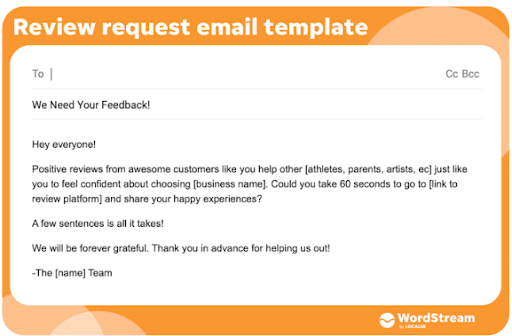
There are multiple channels you can also use to request reviews, including SMS text messages and emails. However, you should ensure your requests contain compliant language and no gating to avoid potential legal issues.
Also, make sure you respond to reviews, whether positive or negative.
For instance, you might respond to a negative review with something like:
“Hello [Reviewer Name],
Thank you for sharing your thoughts and feedback. We apologize for the poor experience you had with our agency and the failure to meet your expectations. Please reach out to us to discuss where we went wrong and how we can make things right.”
Conversely, for a positive review, you might respond with the following:
“Hello [Reviewer Name],
We’re ecstatic that you had such a good experience with us, and we hope to continue providing services that leave you satisfied.”
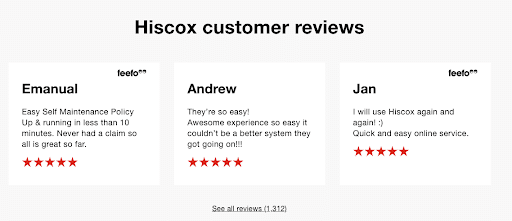
You can also highlight positive reviews on your website in blurbs, supplementing more detailed testimonial pages.
Deliverables for Review Strategies:
- Platform targeting
- A feedback collection plan
- Consistent monitoring system reviews
- Response templates
- Internal reports
3. NAP Consistency and Citations
Every location should have citations, and the name, address, and phone number (NAP) should be consistent for each location.
Here are some steps you can take to maintain consistent NAP and citations to boost insurance agency SEO:
- Audit Citations: Thoroughly audit your online presence with the help of Moz’s Check Listing or other tools, identifying any errors and inconsistencies in the process.
- Fix Inconsistencies: If you notice any inconsistencies in your NAP or other information, correct them as needed on each platform.
- Prioritize Major Platforms: Focus on the platforms that matter most in your industry, which can include Google Business Profile, Facebook, Yelp, and other data aggregators for insurance agents and brokers.
- Create a Single Source of Truth: Develop a master document that centralizes all NAP data and other critical details in one location for ease of access, navigation, and auditing.
- Track Updates: If you make any changes to your citations, track those updates and, through regular audits, ensure those changes have been properly implemented.
Deliverables for NAP Consistency and Citations:
- NAP audit reports
- Standardized NAP format
- Citation tracker spreadsheet
- Regular monitoring reports
- Platform prioritization
4. Site Architecture for Insurance Agencies
A website’s architecture will also influence SEO for insurance agents and brokers, making it important to develop a site that offers clear navigation for users along with XML or HTML sitemaps, which can make it easier for search engine bots to crawl and index pages.
Here are some guidelines for your information architecture (IA):
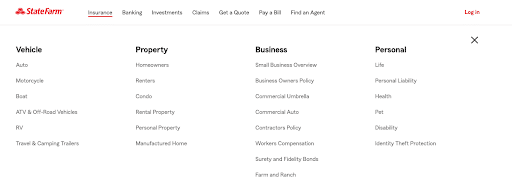
- Personal Lines: Create dropdowns for personal lines like auto, home, or life insurance pages where users can find more information.
- Commercial Lines: If you offer policies for business entities, you might include dropdowns for pages covering property and casualty coverage, or other industry niches. Also, develop pages for specific industries that you cover.
- Locations: To boost local SEO for insurance agencies, develop and link to location-specific landing pages for each location.
- Resources: Include resource pages, including a blog, articles, guides, or quote calculators for different types of insurance, with designated categories for each.
- Reviews: Incorporate a section of your pages or a dedicated page for client reviews.
- Contact/Get a Quote: Make it easy for people to request a quote or get in touch with your agency with a “Contact,” “Get a Quote,” or “Find an Agent” page, which could attract more searches toward the bottom of the funnel.
Deliverables for Site Architecture:
- Architecture maps
- Process models with flowcharts
- Integration models
- Compliance and audit controls
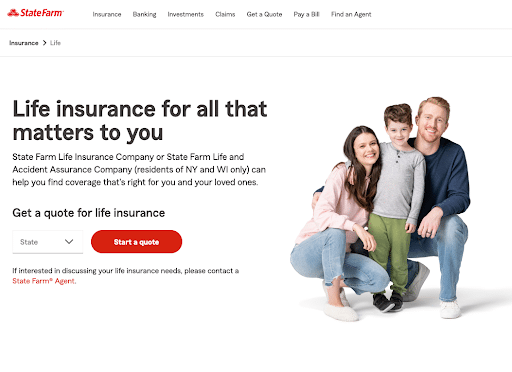
5. “Money Pages” That Rank
When optimizing SEO for insurance brokers and agents, there are certain “money pages” that perform better than others.
- Service Pages: These pages will cover the different types of insurance policies you offer, whether personal or commercial.
- Quote Pages: Develop various pages making it easy for individuals or companies to request a quote for specific types of insurance.
- Niche Pages: More specific pages might target particular types of insurance for certain industries, e.g., “Commercial Auto Insurance for Contractors.”
You can use tools like Google Analytics to determine which pages qualify as “money pages” based on keyword rankings, click-through rates, traffic, and other critical metrics.
Deliverables for Money Page SEO:
- Money page identification using Google Analytics and other tools
- Technical SEO audits
- On-page optimization
- Conversion rate optimization (CRO)
- Interlinking strategies
6. Content Strategy
You must also develop a strong content strategy to optimize SEO for insurance companies and agents, with topic clusters that help establish authority in your industry.
Topic clusters will group multiple related topics into a single page, which you can then use to branch out into subpages that discuss each subtopic in depth, with links going back to the main page and vice versa.
There are three core topic clusters that work best for insurance:
- Insurance 101: At the top of the funnel, you might cover more high-level topics, educating audiences about insurance, including deductibles and premiums.
- Coverage Scenarios: At the next level, you could go over specific types of coverage scenarios. For example, a company offering auto insurance might create a page reviewing “how to find an auto insurance policy for teen drivers” or “what to look for in a rental insurance policy.”
- Local Risk: If applicable, you might create pages discussing certain risks associated with specific service areas, such as pages mentioning home insurance coverage for hurricanes along the Gulf coast or the risks of getting into car accidents in a particular city based on recent statistics.
Each of these topics and subtopics can then include an internal link to a relevant service page.
Deliverables for Content Strategy:
- Keyword research report
- Audience personas
- Competitor analysis
- Editorial calendars
- Content mapping
- Technical SEO audit
- On-page optimization plan
7. Link Building for Insurance Agencies
When it comes to off-page insurance agency SEO, link building is essential. This process will entail getting high-quality backlinks on other websites, including local directories, review sites, and industry-related online publications.
Some industry-specific places to obtain backlinks could include:
- Chambers of commerce
- Community sponsorships
- Carrier partner pages
- Local news sites
- Scholarships and events, like local marathons or food drives
- Niche associations within your industry
Deliverables for Link Building:
- Initial strategy and link profile audits
- Monthly link building reports
- Link prospecting lists
- Performance dashboards
- Content pieces like guest posts
- Digital PR assets, such as press releases or industry insights
8. Technical SEO for Insurance Sites
Good insurance agency SEO will also optimize for the following technical SEO elements:
- Core Web Vitals: Your site must meet the guidelines in place under Google’s Core Web Vitals metrics, which measure loading performance (i.e., page load speed), responsiveness on different devices, and visual stability.
- Mobile UX: Mobile responsiveness is crucial for individuals accessing your website using smartphones or tablets, creating a seamless experience across devices.
- HTTPS: To protect user data and maintain compliance with current privacy regulations, make sure your site offers a secure connection with an SSL certificate that uses HTTPS instead of unsecured HTTP.
- Form Tracking: Keep track of conversions through “Get a Quote” and other forms with Google Analytics and Tag Manager.
- Indexation: Make sure robots.txt and other parameters enable search engine crawlers to easily index your website, ensuring pages optimize crawl budget.
- Schema Validation: Structured data like schema gives search engines more context regarding your site’s content via code, potentially helping with indexing and ranking.
- Content Duplication Checks: Identify and eliminate duplicate content, especially across location pages, as duplicate content can lead to a penalty in search rankings or cannibalization.
- Accessibility: Use alt text and other features to maximize your site’s accessibility, which will help you comply with W3C guidelines and the Americans with Disabilities Act (ADA).
Deliverables for Technical SEO for Insurance Agents
- Technical SEO audits
- Crawl audits
- Site Speed analysis
- Mobile Usability Reports
- Structured data audits
- XML sitemap and robots.txt management
- Core Web Vitals optimization
- URL structure and canonicalization
- Internal linking and site architecture
- Duplicate content resolution
9. Measuring ROI
To determine whether SEO for insurance companies is getting real results, you need to measure key performance indicators (KPIs) that align with your goals.
Some key KPIs to track include:
- Google Local Pack visibility
- Organic leads from search results
- Calls
- Quote starts
- Booked appointments
- Cost per lead (CPL)
- Close rate, if accessible
Through tracking, you should also be able to establish clear attribution to various touchpoints across the client journey. You can do so in part through call tracking, assigning specific phone numbers to your SEO strategy to help measure performance.
When to Hire an Agency for Insurance SEO
To get the best results with SEO for insurance companies, you’re likely better off working with experts who can provide you with a comprehensive strategy.
Not sure when to hire an SEO company? Here are some compelling reasons for outsourcing SEO for insurance agencies:
- You Don’t Have the Time: If you don’t have enough time to handle SEO internally, your campaigns won’t get the kinds of results you want. Having a company behind your strategy can give it the attention it needs while you can focus on client intake.
- Not Enough SEO Expertise: Experts in this industry will have the knowledge needed to help you get the most from SEO for insurance companies.
- Slow Website Traffic: Outsourced SEO for insurance businesses will also help you appear in top searches within your industry, bringing much more traffic to your site much faster.
- Budgetary Constraints: Don’t have the money to hire an in-house specialist? There’s no need to do so with the help of experts who serve as an extension of your business, providing you with a more cost-effective solution without compromising quality.
- You Require a Scalable Solution: Reliable SEO experts keep services scalable, ensuring you can grow your campaigns with your business and adapt to changing demands.
- You Need to Stay Ahead of SEO Trends: A good SEO strategy with experts will also ensure your campaigns adhere to changing trends and rules in the SEO landscape.
- You Need Someone who Understands Local SEO: Standing out in your local market is especially important for insurance agents. A great agency experienced in local optimization knows how to enhance your visibility in local search results.
- You Need to Address Technical SEO Needs: Technical SEO aspects, such as website speed optimization, mobile responsiveness, and secure connections (HTTPS) are incredibly important, but also can be overwhelming to deal with. SEO professionals are trained to know how to effectively manage each technical element.
- You Need to Consider Content Marketing Strategies: Content marketing, like blogging, creating informative articles, and designing client resources, is essential for SEO. An SEO agency can help you develop and execute a robust content strategy.
When seeking insurance SEO services with the right company, here are some questions to ask during a consultation:
- What are the deliverables you offer for SEO strategies?
- What tools do you use for reporting, and how frequently will you provide a report?
- How do you implement quality control for content?
- What steps do you take to maintain industry compliance with insurance SEO?
FAQs
1. What is insurance SEO?
SEO for insurance agents will help local agencies achieve top rankings for critical keywords in their locations. Using optimized Google Business Profiles, keyword-rich and high-quality content, topical authority, and a well-structured website can help these businesses dominate search results and connect with prospects organically.
2. How do insurance agents rank in the Google Map Pack?
Using Google Business Profiles and other local citations with consistent NAP and other information can help boost SEO for insurance agencies, particularly when it comes to ranking for the Google Map Pack as people search for insurance agents in your niche.
3. How long does SEO take for an insurance agency to see results?
The answer here will depend on the size of your agency and the scope of your SEO strategy, but insurance agents, brokers, and companies can see results in months after initial implementation. Continual optimization can also help maintain those results in the long term.
4. What pages should an insurance agency website have to rank?
There are numerous pages that can help boost SEO for insurance brokers and agencies, including:
- Service pages covering personal or commercial lines
- Industry niche pages discussing policies for particular audiences
- Resources like blog posts and articles
- “About Us” pages
- “Get a Quote” pages
- Location pages targeting specific service areas
5. How do you measure ROI from insurance SEO?
Using tools like Google Analytics and Google Search Console, you can consistently track your SEO strategy’s performance to identify weak areas and potential opportunities for continual optimization. Measuring metrics like click-through rate and conversions will ultimately help gauge overall profitability.
Supercharge Your Insurance Agency SEO With Ignite Visibility
When looking for dependable SEO for insurance agencies, look no further than Ignite Visibility. We offer some of the best insurance SEO services available, along with a suite of other insurance marketing services, to fully develop your online presence.
With SEO for insurance agents from Ignite Visibility, you’ll get:
- Detailed keyword research to help optimize content
- A complete content marketing strategy that integrates all on-page SEO elements
- Off-page SEO strategies that incorporate link building and other key components
- And more!
Learn more about what we can do for your insurance company by reaching out to us today.