The phrase “Google it” has become increasingly popular over the last decade, as the search engine has solidified its position as the go-to source for instant information.
But behind this simple phrase, lies search intent.
What You’ll Learn
- What is Search Intent?
- Search Intent vs. Search Query vs. Keywords
- What Does Search Intent Affect?
- 4 Types of Search Queries and How to Target Each
- Tools to Help You Decipher Search Intent
- FAQs: Search Intent
What is Search Intent – And Why Does it Make a Difference for SEO?
While keywords are the actual words that go into a search query, there’s a deeper meaning behind that press of the enter button.
Put simply, search intent refers to someone’s goals when entering search queries into Google and other search engines.
Optimizing for search intent is essential to maintain relevance across your SEO strategy. The content you produce and the keywords you target will speak more directly to audiences and search engines like Google, which already know which format satisfies searcher intent.
Our Expert’s Insight on Search Intent
Our Digital Marketing Manager, Nicole Garcia, says, “Understanding search intent is crucial for any digital marketing strategy, especially in the realm of SEO. Search intent refers to the purpose behind a user’s query on a search engine. By comprehending and aligning your content with this intent, you can significantly enhance your website’s relevance, user experience, and ultimately, its ranking on search engines.”
4 Types of Search Queries & How to Target Each One
With a better idea of what search intent is, you should know about the different types of search queries, based on the intent behind them. You can then determine how to optimize search intent targeting to perfect your SEO strategy.
1. Informational (Know)
- Type of Search Query: Informational
- Searcher’s Intent: To learn something
- Search Terms: “What is,” “How to,” “Who is,” “Where did,” and “Why is”
- Content Ideas: Guides, tutorials, resources,Ideas, Tips and Examples
- Best CTAs: “Learn More,” “Download Guide,” “Read More”
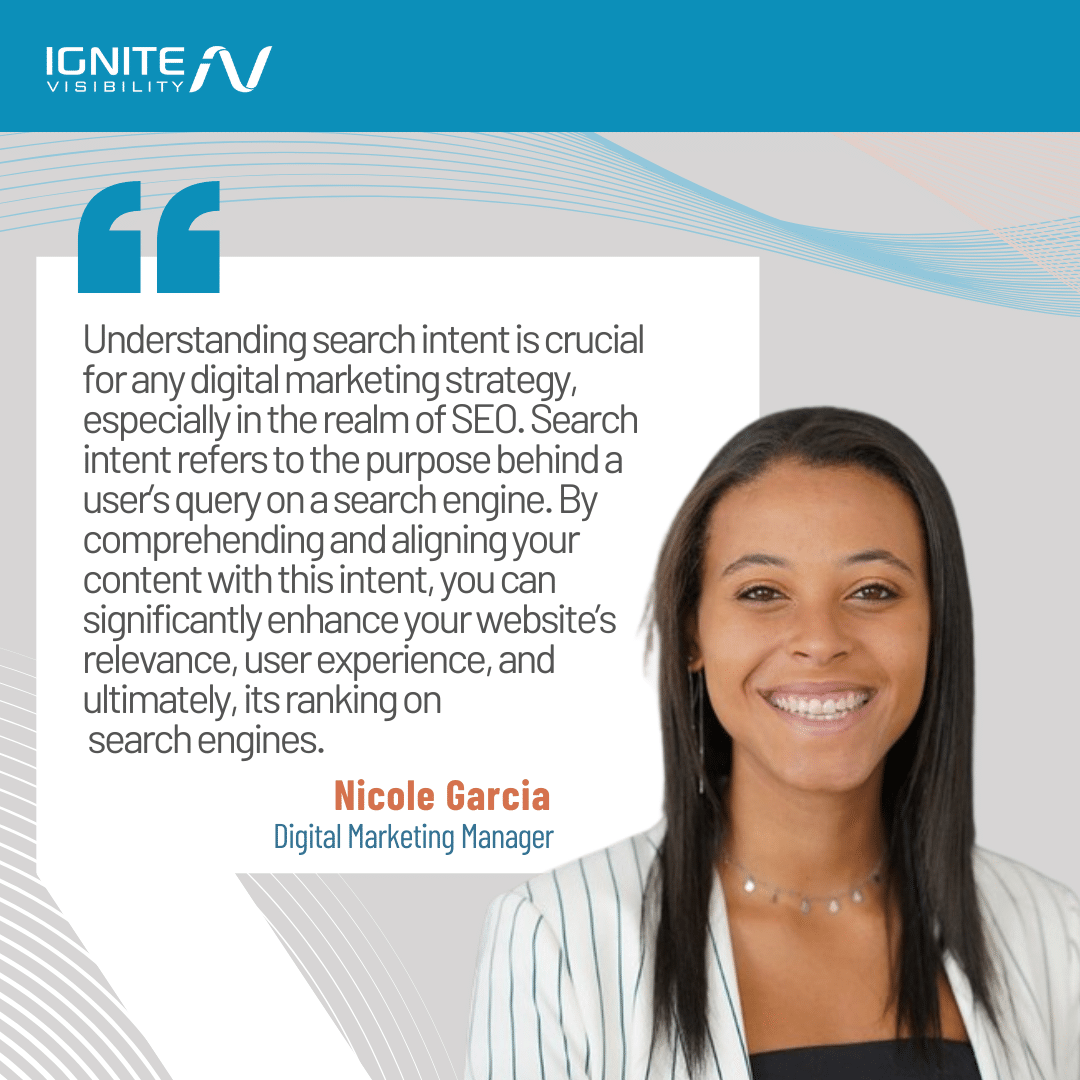
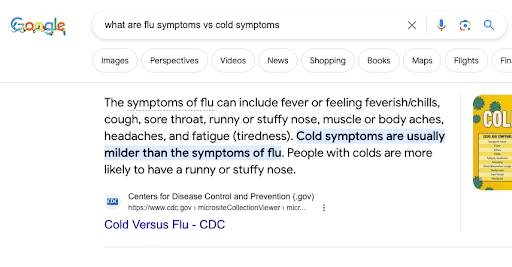
- Common SERP Features: Featured Snippets, People Also Ask, Videos, Knowledge Panels
- Example Headline Formulas: “How to [Achieve Goal] in X Steps,” “What Is [Topic]?”, “The Ultimate Guide to [Topic]”
At the beginning of the buyer’s journey, people want to learn about problems they’re having or the products they might need. They’ll enter informational search queries into search engines during this phase to know more.
You need a strong content strategy that provides a solid user experience and answers top-level questions. Avoid simply stuffing keywords into content. Instead, provide meaningful info for customers in need of help.
Pro Tip: Try to rank for Featured Snippets at this level. Snippets are highlighted sections of content that appear right in the middle of search results, and they can immediately grab people’s attention over generic results.
As an example, consider potential patients in the healthcare and dental industries. People at this stage will want to learn more about symptoms and conditions they may be experiencing. To target these people, you’ll want to rank for queries like “What condition causes [symptom]” or “Why does my tooth hurt?”
Having a blog rich with this information can hook prospective patients and establish you as a worthwhile authority and knowledge leader. As potential patients continue their journey, they’re more likely to come back to you because of the wealth of info you provide.
2. Navigational (Go)
- Type of Search Query: Navigational
- Searcher’s Intent: To go somewhere
- Search Terms: Brand names, product names, service names
- Content Ideas: Company-branded content like contracts, policies, terms and conditions
- Best CTAs: “Visit [Brand] Site for More Information”
Common SERP Features: Links to brand sites, branded Knowledge Panels - Headline Formulas: “[Brand] Official Site,” “[Brand] Login,” “Contact Us at [Brand]”
At this stage of the customer journey, people are looking for a particular source to research, whether it’s a website, app, or service from one or more brands.
The person may have an idea of what to look for, including the specific website, but uses search engines to simplify things over entering a URL into their browser’s address bar.
This stage can present a challenge for businesses to rank in search. To appear in front of users with this search intent, it’s best to own the brand that people are entering in search queries.
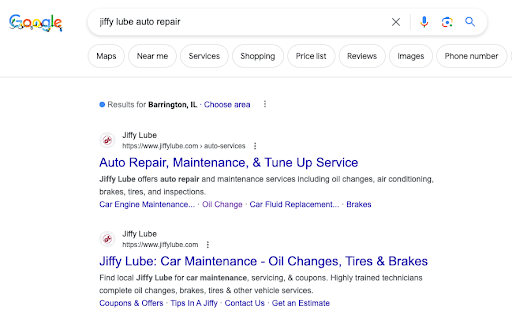
For instance, if you own an automotive company, people near your locations might search “[your brand] automotive parts” or “[your brand] auto repair.”
At this point, you would want to focus more on the optimization of branded and other “go” keywords that help you appear in organic results. Not only would this involve SEO, but you would also want to bid on valuable navigational terms in PPC ad campaigns to get on top.
3. Commercial (Do)
- Type of Search Query: Commercial
- Searcher’s Intent: To seek out further information
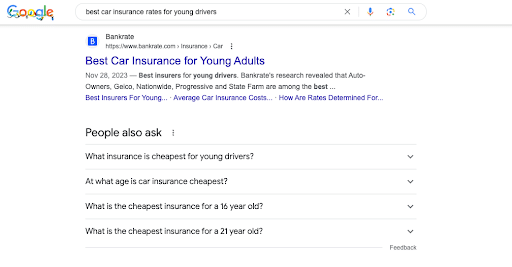
- Search Terms: “Best,” “Top”
- Content Ideas: Reviews, product comparisons, product attributes
- Best CTAs: “Compare Features,” “See Pricing,” “Read Reviews,” “Explore Options”
- Common SERP Features: Shopping Ads, Top-Rated Lists, Product Rich Snippets (e.g., carousels)
- Headline Formulas: “Best [Product Type] of 2026,” “Top 10 Providers of [Service],” “[Product A] vs. [Product B]”
As people approach the bottom of the funnel (BOFU) and prepare to make a buying decision, they’ll reach the transactional stage in their searches.
These users are interested in what you have to offer but want to learn more before committing to a purchase. In other words, they’re at the consideration stage of the buyer’s journey and getting closer to the decision stage.
Some of the key terms that people will search at this point include modifiers like “best,” “top,” “alternative,” and “reviews for.”
As with navigational campaigns, you’ll want to supplement SEO efforts with PPC ads at this stage.
To give you an idea of what this would look like, let’s consider how an insurance company might approach this strategy. At this stage, people might be comparing insurers and enter keywords like “best auto insurance rates” or “reviews of [insurance company].” The insurance company would create landing pages highlighting why their insurance is affordable and reliable compared to competitors, with ads targeting these and other transactional terms.
4. Transactional (Buy)
- Type of Search Query: Transactional
- Searcher’s Intent: To buy a product or service
- Search Terms: “Buy,” “Purchase,” “Near me ___” “Town/City and (type of merchant)
- Content Ideas: Coupon or discount code
- Best CTAs: “Buy Now,” “Shop Now,” “Get Started,” “Request a Quote”
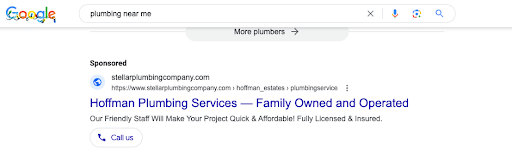
- Common SERP Features: Shopping Ads, direct purchase buttons, Local Pack for services
- Headline Formulas: “Buy [Product] Online,” “Get [Service] Today,” “Limited Time Offer on [Product]”
When search engine users reach this point, they’re ready to buy and commit to a brand.
People at this point might enter terms like “buy [product]” or “best deal on [product].” They know what they want, and they want it now.
During this BOFU stage, you’ll want to ensure products and landing pages are fully optimized with action keywords. In your efforts, you should also optimize for technical SEO using Schema.org markup. This structural data gives search engines more context as to what your pages are about, indicating whether you have items like:
- Product availability
- Limited-time offers
- Images and videos
- Reviews, ratings, and FAQs
For example, a home services company might target terms such as “schedule HVAC services near me” or “[brand] plumbing services in [town].” They’re ready to get the services they need and know what kind of issue they’re experiencing.
Search Intent vs. Search Query vs. Keywords
When going into SEO and how search intent fits into it, it’s important to know the difference between this concept and its components.
Search Intent
Search intent specifically refers to what users want when they search for something online. Do they want to learn more about a given topic? Maybe they’re looking for a potential solution to a problem. Search intent will inform the kind of terms they enter into search engines.
Search Query
Search queries are the specific phrases that people enter based on their intent. They can include full sentences or a couple of key terms with broader intent. Sometimes they are even questions.
The query the person enters will depend on what they want to achieve with the search, whether it’s information or help with making a decision.
Keywords
At the lowest level below queries and intent are keywords, which factor into search queries. You can classify keywords based on length more than intent, with short-tail keywords consisting of one to two works, while long-tail keywords get more specific with three or more words.
Often, long-tail keywords tend to make up search queries with a clear intent behind them. For example, someone intent on buying new shoes might enter something like “new black [brand name] shoes for sale,” which would be a long-tail branded keyword doubling as a search query with the intent to buy.
An example of the relationship between these concepts could start with targeting a specific search intent, such as someone seeking information about home insurance at the top of the funnel.
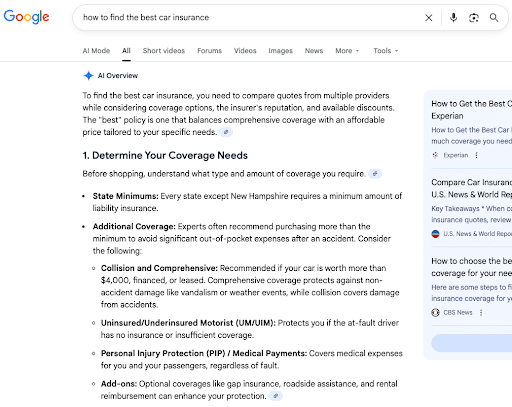
Here, someone might search for “how to find the best home insurance policy” as an intent-based search query.
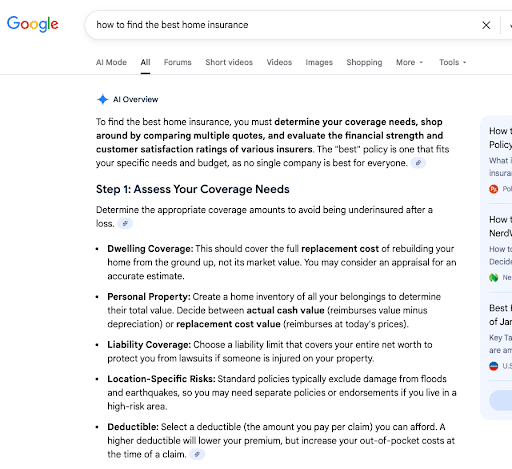
As you can see, this leads to an extensive result comprising multiple steps and factors to consider, which could then inform a topic cluster and a pillar page covering these steps and several related keywords. From there, multiple blog posts could cover each aspect more in-depth, such as how to choose liability or personal property coverage.
Search Intent in the AI World
Search intent plays an important role in optimizing content for search engines in a few main ways. Today, AI is heavily impacting the way people engage with search and how content ranks for various queries based on intent, making it important to optimize content to account for features like AI Overviews and AI Mode.
The following are some of the elements of the search experience that search intent impacts, which ultimately affects your SEO strategy and website rankings.
1. SERP Experience
The overall search engine results page (SERP) experience undergoes changes based on what people want.
Additionally, search engines include certain features to connect with audiences at different stages of their journey. An example of this would be a Knowledge Panel that summarizes information about a specific subject in a bite-sized, convenient format or as a Rich Result, providing extra visual or interactive features.
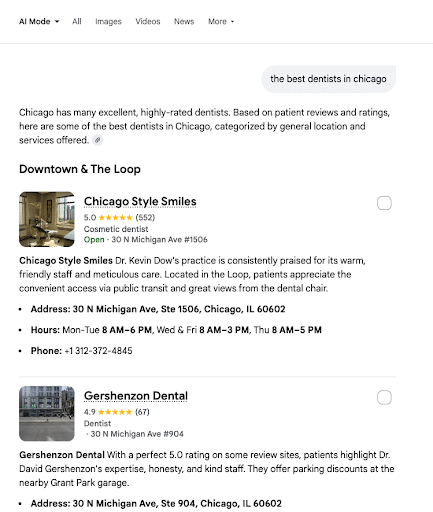
AI Overviews and AI Mode results also provide summarized information in a convenient format for users to digest. These results appear at the top of SERPs and supplement other organic and paid results, often giving enough information to keep people from moving beyond the results page.
2. Rankings
The development of AI in search is also affecting rankings based on the different types of search intent, determining which pages rank highest and in AI results based on how relevant their content is in response to queries.
To achieve top rankings, you should see what kinds of content ranks highest for intent-based search results, which could give you some guidance on how to prioritize content ideas based on search intent.
3. Click-Through Rate (CTR)
Search intent and AI will also affect your click-through rate in different ways. For example, many people today can find all the information they need in AI Overviews and other AI-powered results, which can lead to fewer clicks at the informational stage. These interactions are subsequently known as “zero-click searches.”
However, if you rank highly for organic and AI results at the informational stage, you could boost your brand awareness and ultimately lead more people to trust you over competitors, especially if AI cites your content.
As people move down the funnel toward the commercial and transactional stages, they’ll be more inclined to click through results and visit your site over less trustworthy competitors.
4. Engagement
Different types of search intent will also affect overall engagement with your brand and content.
Toward the top of the funnel when conducting more informational searches, people might not leave SERPs. If they do visit your site through search results, they’ll likely want more information, giving you the opportunity to push gated content like ebooks and guides or link to additional informational content.
As people move along the customer journey, they’ll continue to engage with your brand and eventually convert, which brings us to the next element.
5. Conversion Rate
Additionally, intent will impact conversion rates for your site, as people are far less likely to complete conversion actions at the beginning of their journeys when entering informational queries.
The key is to tap into users’ interests at the start of their journey and establish your brand as a topical authority, which can boost engagement and lead to more conversions as people move down to the commercial and transactional stages.
6. Content Strategy Decisions
You must figure out how to prioritize content ideas based on search intent, as well as how to ensure updated content matches search intent.
Take a close look at the different types of content that appear for queries at each stage of the customer journey, which can help you figure out the best way to structure content at every touchpoint.
For example, you might develop a pillar page covering a specific informational query in depth, while comparison pages and other content help people make buying decisions when entering commercial and transactional searches.
Intent Is Not Always One Type
In some cases, a search query might account for two or even more types of search intent, depending on the nature of the term and its implications.
For example, a term like “best gym membership” could be both informational and commercial, requesting what to look for in the best gym membership and the best option near the searcher.
People could also have layered needs when conducting a search, with some searches requesting “how-to” guides while others seek troubleshooting for products they already have.
You might also see that intent shifts over time with new trends or seasonal changes. For instance, people might seek more information about “best summer apparel” in the colder seasons, with more transactional intent as the summer approaches. During the fall and winter, you might push content targeting this keyword detailing what to look for in the best apparel for hot and humid weather, while the spring and summer months will provide more information about specific products with the goal of boosting sales.
Another example could include “used [car model] reviews,” which could be informational or transactional, in which case you might see which results rank highest for this term to decide whether to simply provide informational reviews or more commercially driven comparisons of models to increase purchases for the vehicles a dealership offers.
How to Identify Search Intent
If you want to know how to determine search intent for a particular term, here are some key steps to take:
- Google the Term: The first step to take is to enter the query into Google, where you’ll be able to determine how to prioritize content ideas based on search intent through search results.
- Note the Content Type: Looking at the results, you can see which types of content rank best based on Google search intent, whether you see blogs, landing pages, tools, or other content.
- Check the Results Formats: Also, consider the format of the content you see, which could include everything from listicles and how-to guides to product or service comparisons and product pages.
- Consider the Angle: Think about the kinds of modifiers that could impact results based on more specific needs, such as “free,” “2026,” “near me,” or “beginner.”
- Check SERP Features: Look out for Featured Snippets, Shopping Ads, carousels, Knowledge Panels, and other content to help determine how to ensure updated content matches search intent.
- Summarize What Google Expects: Based on the kinds of snippets and other results you see, optimize your search intent marketing approach to appeal to these results, often through short answers to questions and generally concise and helpful content.
Intent Mapping
What is search intent at the various stages, and how can you optimize search intent marketing to appeal to it? Here’s a table to give you a little more guidance:
| Query Cluster | Dominant Intent | Recommended Page Type | Primary CTA | Supporting Content | Internal Links |
| Broad Industry Topic | Informational | Pillar Page / Content Hub | “Learn More” or “Subscribe” | Educational guides, infographics, and explainers | Links to subtopics in a “hub and spoke” format with descriptive anchors |
| “How-To” / Problem Solving | Informational | Detailed Tutorials / Video Guides | “Get Tips” and “Download Resources” | Step-by-step checklists, troubleshooting guides, and FAQs | Links to main pillar pages and related guides |
| Comparative Research | Commercial | Listicles / Comparison Pages | “View Demo” or “Compare [Products/Services]” | Comparison reviews, including comparisons of products, services, features, or brands | Links to specific product and service pages or pricing details |
| Product-Specific Queries | Transactional | Product or Service Landing Pages | “Get a Quote” or “Buy Now” | Trust signals, pricing, or customer reviews | Links to shipping details, customer support, or purchase forms |
| Brand Name / Support | Navigational | Home Page / Help Desk / Login | “Access Tool” or “Log In” | Brand mission, documentation, and contact portals | Links to primary site categories and conversion points |
Optimizing Content for Intent
To get the most from your content when appealing to search intent, implement the following best practices:
- Use the Dominant Format: Always target the dominant format for a keyword at a given time, potentially updating content as intent shifts.
- Match Depth: Also, look at the top results for target queries and match the level of depth the top results go into, or, when appropriate, cover topics in even greater depth, such as covering subtopics in a pillar page that top competitors neglect.
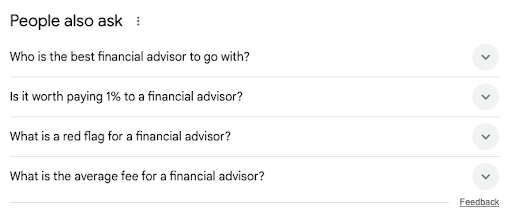
- Answer “People Also Ask”: The People Also Ask section is crucial for developing FAQs and generally short and helpful answers to certain questions.
- Add Comparisons for Commercial Terms: When people search for “top [product]” or other similar commercial queries, create detailed comparisons that position your brand and offerings as the most favorable options over competitors, which can provide people with more information while boosting conversions.
- Add Frictionless CTAs for Transactional Queries: At the bottom of the funnel, make your CTAs as simple and straightforward as possible to drive conversions and sales; a simple “Buy Now” or “Request a Quote” with an appropriate link often suffices.
Tools to Help You Decipher Search Intent
Want to master your SEO strategies by targeting the best intent-driven search queries? Here are some helpful tools that you can use to optimize your campaigns.
1. Google Ads
One of the most essential tools for marketers is Google Ads, which enables you to easily set up PPC ad campaigns and get on top of search results. Find the right keywords to bid on based on search intent for PPC while also picking keywords for SEO.
2. AI Search Results
With the continual development of AI search experience, AI Overviews and other types of AI-powered search results are getting better at appealing to search intent.
When researching keywords and discovering how to determine search intent, take a look at these results and their structure, which could supplement other results to inform your content strategy.
3. Featured Snippets
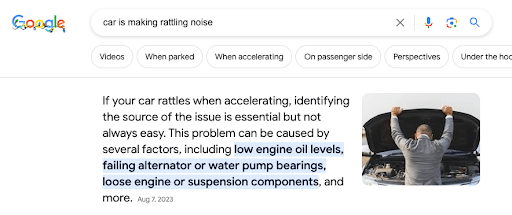
Using structured data like schema markup on your web pages, you can optimize for Featured Snippets on Google. These are paragraph-long excerpts that people would see when searching, ideally during the informational stage of the buyer’s journey.
Here’s an example of a snippet people would see when learning more about a specific car problem:
4. People Also Ask
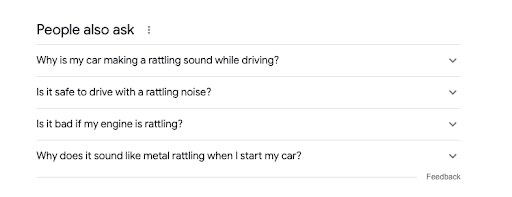
Answering FAQs on your page and indicating them with schema markup on your website could help you rank for Google’s “People Also Ask,” which is an FAQ section of results with drop-down paragraphs answering various related questions.
Looking at this section when conducting your searches can also help with finding new keywords to target that you might have overlooked.
Stemming from the above Featured Snippets example relating to car troubles, the person could also see this section below:
5. Local SEO Analysis
Another method you can use to optimize search queries is local SEO analysis. You can use keyword research tools to find popular locally targeted keywords, which people will most likely enter during the commercial or transactional phase of the buyer’s journey.
In addition to using the best keyword tools like Google’s Keyword Planner to conduct local analysis, you can simply enter related terms like “home services in [city]” and see what kinds of results pop up. What are your competitors doing to get on top of these searches?
6. SERP Ranking Analysis
Take a look at some of the top-ranking pages your competitors are getting for different types of search intent.
You can do so by simply entering popular terms with different intents and seeing which pages are on top. Analyze these pages using SEO checker tools or by manually reviewing them, and see what steps they’re taking to maximize visibility.
Consider what keywords they’re using and how along with the specific content these pages feature. From there, you can determine how to optimize your pages to perform better in SERPs.
FAQs About Search Intent
Want more information about search intent and how to target it? Check out our FAQs below.
1. How does search intent impact click-through rates (CTR)?
Generally, appealing to searcher intent and getting on top of search results will lead to higher CTR. However, people are more likely to click through terms that are long-tail and branded over broader short-tail keywords. Also, the CTR will vary based on the industry.
2. What other tools can help me identify search intent for specific queries?
Multiple tools exist to help analyze search intent based on particular queries, including:
- Google Search Console, where you can use tools like Search Analytics and Performance Reports
- SEMrush, which offers features like the Content Analyzer and Keyword Gap Analysis
- Ahrefs, with features like the Keyword Explorer and Content Gap
3. How does search intent vary across different industries?
Depending on your industry, the nature of search queries will vary. For instance, if people are interested in a big investment like a new vehicle, they’ll likely want to do a lot more research. As a result, they’ll spend more time in the informational and commercial stages before getting into navigational and transactional intent.
Conversely, industries like ecommerce may see more search intent in the transactional and navigational areas where people are ready to purchase shortly after researching different products.
4. How do long-tail keywords play into the search intent equation?
Typically, when targeting for searcher intent, you’ll want to optimize for long-tail keywords overbroad, short-tail terms. The reason for this is that people tend to get very specific with their searches when looking for more information, seeking comparisons, and making buying decisions.
5. What are the common mistakes to avoid while targeting search intent?
Some common mistakes that marketers make with search intent targeting include:
- Targeting short-tail keywords that are too broad
- Neglecting to perform in-depth keyword research and analysis
- Focusing more on the brand over the customer experience
- Emphasizing keywords over user experience and content quality
6. How can I measure the effectiveness of a search intent-focused campaign?
When you’re gauging the success of campaigns focusing on search intent, you’ll want to look at certain key metrics, including:
- Click-through rates
- Bounce rates
- Time on page
- Conversion rates
7. How can semantic search improve search engine targeting?
By targeting people’s intent with SEO and PPC, you can maximize your website’s visibility and relevancy, ensuring you’re at the forefront of people’s searches across the buyer’s journey.
8. What is search intent in SEO?
Searcher intent refers to the specific goal that a person has when conducting a search on Google or other search engines. This intent could involve seeking more information about a particular topic, or it could be more transactional with the aim of finding the best products or companies.
9. What is mixed search intent?
Google search intent could be mixed if a single keyword or phrase accounts for multiple types of search intent, such as “best banking services” potentially aiming to seek more information about what to look for in the best services as well as the best provider of these services.
10. How do you identify a keyword’s search intent?
In determining how to determine search intent, it’s best to analyze search engine results after entering a particular keyword. Here, you can see the types of content that appear, snippet features, and related questions in “People Also Ask.” Tools like Semrush also indicate the searcher intent behind a keyword.
11. How do you optimize content for search intent?
As you determine how to ensure updated content matches search intent, you should see what other types of content rank well for a particular keyword and provide helpful content that appeals to that intent, often through topic clusters and a central page.
Target Search Intent Correctly With the Help of Ignite Visibility
If you want to succeed with SEO and PPC campaigns by targeting search intent, Ignite Visibility is here to help.
We offer SEO, PPC, and other comprehensive digital marketing solutions for customers across a range of industries, including healthcare, dental, finance, automotive, insurance, and home services industries.
Based on your unique needs, we can:
- Conduct a thorough analysis to find the right keywords based on your target searcher’s intent
- Develop high-quality optimized content that connects with audiences
- Map the customer journey and establish effective touchpoints throughout
- Help you get the most from your marketing campaigns
- And more
To learn more about what we can do for you and to get started on a campaign today, reach out to us, and we’ll connect you with an expert.