Forty-nine percent of marketers say that organic search has the highest ROI of any of their marketing efforts. How do you tap into that type of success? With search engine optimization, or SEO.
A strong SEO strategy can mean the difference between dominating search engines and suffering from low brand visibility.
So, what is SEO, and why do you need it?
In this blog post, Seth Kluver, AVP SEO/AISEO, will dig into the fundamentals of SEO, its importance, and how you can incorporate certain best practices into a winning strategy.
What We’ll Cover:
- What is SEO?
- Why Does SEO Matter or Your Business?
- 3 Types of SEO to Pay Attention To
- Black Hat SEO to White Hat SEO
- How Do Google Algorithm Updates Affect SEO?
- SEO Ranking Factors
- SEO and Content Marketing
- FAQs: What is SEO?
What is SEO?
SEO, or search engine optimization, is the strategy of optimizing web pages to rank higher on search engines like Google and Bing. It includes on-page, off-page, and technical SEO, plus content marketing, all working together to earn top rankings on search engine results pages (SERPs) without paid placements.
Expert Insight On SEO
If you’re not optimizing for SEO, you’ll struggle to get ahead of competitors in search engines, which is just going to hurt you in today’s highly competitive online environment. People want to find the solutions they need as quickly as possible, and they’re going to use Google to look for them.
SEO is how you’re going to get in front of those searchers. We saw it firsthand recently when we built a full-funnel SEO strategy to help target investor intent for a popular Health and Wellness franchise. In the time that we worked with them, they saw an over 10% increase in organic leads YoY, and 43% – nearly half! – of all signed deals came from those leads.
Thanks to our focus on high-converting, non-branded keywords and aligned SEO goals with franchise development goals, we helped them drive clicks that really mattered.
Expert Tip: Focus on user-friendly content that prioritizes quality over quantity, something Google cares more about today and for which Google ranks content. Regardless of how many keywords, backlinks, or technical SEO elements you optimize for, your efforts won’t get you far without developing content for the user first.
Why Does SEO Matter?
In short, SEO matters because it’s one of the most effective ways to climb to the top of SERPs, helping you reach your target audiences and attracting high-quality traffic to your website.
According to Monster Insights, pages that rank in the first position on Google attract around 28% of all clicks in SERPs, with the top five results getting about 70% of clicks, as people rarely explore below these rankings.
That kind of visibility translates directly into business outcomes. More clicks mean more traffic, and more qualified traffic means more leads, more conversions, and a stronger return on investment.
Unlike paid ads that stop the moment your budget runs out, SEO efforts build compounding momentum over time. This means that the effort you put in today keeps paying off for months and even years down the road. For ecommerce brands, service providers, local businesses, and everything in between, SEO is one of the few marketing channels that scales with you.
Beyond traditional blue-link rankings, there’s a whole ecosystem of SERP features that give your brand even more real estate on the page and more opportunities to connect with your audience. These include:
- Featured snippets that summarize the content of a certain result, encouraging people to click through to learn more.
- People Also Ask sections answering commonly asked questions in a list format.
- Knowledge panels include information that people want to learn in a bite-sized format.
- Sitelinks that list the different web pages for a specific website.
- Rich snippets that can include product images, ratings, and other details.
- Carousels displaying multiple products in a side-scrolling format.
Each of these features represents an opportunity to stand out, earn trust, and drive more qualified traffic before a user even clicks a single link.
Step-by-Step Look at What SEO Is and How it Works
For a lot of people, SEO seems like magic, but when you really look at it, what SEO is is a pretty logical path.
At its core, search engines follow three fundamental steps to determine what ranks where: crawling, indexing, and ranking. Understanding how each step works gives you a serious advantage when it comes to optimizing your site.
Step 1: Crawling
It all starts with crawling. Search engines like Google use automated bots, commonly called “crawlers” or “spiders,” to continuously browse the web and discover content.
These bots follow links from page to page, scanning your site’s content, structure, and code to understand what each page is about. If your site has broken links, poor internal linking, or pages blocked by your robots.txt file, crawlers may never even find your content, which means it has zero chance of ranking.
Step 2: Indexing
Once a page is crawled, Google decides whether to add it to its index — essentially a massive database of web content that it pulls from when generating search results.
Not every page gets indexed. Pages with thin content, duplicate content, or certain technical issues may be skipped altogether.
This is where technical SEO and content quality come into play. They’re fundamental pieces of your SEO strategy that make sure your pages are even eligible to rank.
Step 3: Ranking
Ranking is where the real competition begins. Once your pages are indexed, Google evaluates them against hundreds of ranking factors to determine where they should appear for any given search query.
These factors include:
- The relevance and quality of your content
- The authority of your domain
- Your page’s user experience
- Loading speed
- Mobile-friendliness
The pages that best satisfy a user’s search intent and meet Google’s quality standards earn the top spots.
Think of it this way: crawling gets you in the door, indexing gets you on the list, and ranking determines where you stand. A strong SEO strategy addresses all three stages to ensure your content gets found by those who are looking for it.
Major Types of SEO
SEO isn’t a single task you check off a list. It’s a framework composed of distinct disciplines that work together to improve your search visibility.
Think of it in three pillars: technical foundation, content, and authority. When you can align all three, your SEO strategy will really take off.
Most SEO efforts fall under three core categories:
- On-page SEO
- Off-page SEO
- Technical SEO
Almost every type of website, from ecommerce stores to local businesses to large enterprise sites, needs all three to compete.

3 Types of SEO To Pay Attention To
On-Page SEO
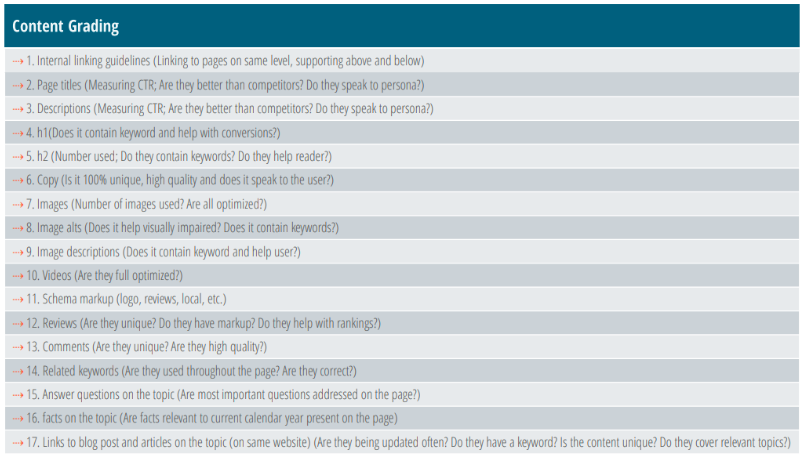
On-page SEO, or on site search engine optimization, covers everything you can directly control on your website. It’s the foundation of your content strategy and signals to search engines what your pages are about, who they’re for, and why they deserve to rank.
When done well, on-page SEO efforts make your content more relevant, more readable, and more crawlable — all at the same time.
Key on-page SEO elements include:
- Title tags & meta descriptions: Your first impression in search results
- Headings & subheadings: Help search engines and readers understand your content structure.
- Relevant keywords: Naturally woven throughout your content to match search intent.
- Internal links: Connect your pages together and guide users deeper into your site.
- External links: Linking to credible sources builds trust and context.
- URLs: Clean, descriptive URLs tell both users and crawlers what a page is about.
- Image alt text: Describes images for search engines and improves accessibility.
The best part about on-page SEO? You own it entirely. Every improvement you make here has a direct and measurable impact on how your pages perform.
Off-Page SEO
Off-page SEO is everything that happens outside of your website that influences your rankings. While you can actively work to build it, you can’t fully control it, but that’s actually what makes it so valuable.
When other reputable websites, media outlets, or institutions link back to your content, it signals to Google that your site is trustworthy and worth ranking.
The core elements of off-page SEO include:
- Backlinks: Links from other websites pointing to yours; quality matters far more than quantity.
- Guest posts: Contributing content to other sites in exchange for a backlink.
- Social media shares: Amplify your content’s reach and drive referral traffic.
- Forum & community links: Relevant mentions and links in niche communities.
- Reviews: Platforms like Google and Yelp factor into local SEO authority.

Technical SEO
Technical SEO is the behind-the-scenes work that makes sure search engines can actually access, crawl, and understand your site.
You can have the best content in the world, but if your technical foundation is shaky, your rankings will reflect it. This pillar is closely tied to on-page SEO but focuses specifically on your site’s infrastructure.
The following are some of the main components of technical SEO:
- Page load speed
- XML sitemaps
- Duplicate content elimination
- URL structure
- Security through SSL certificates and HTTPS
- Structured data and schema markup
- Redirects
While a strong technical foundation will help with rankings, it also creates a better experience for your users. When your users are happy, so are the search engines, which supports everything else you’re doing across your on-page and off-page efforts.

Moving From Black Hat to White Hat
The internet was a different place back in 1991 when the first website was created. There were few rules, even fewer consequences, and plenty of bad actors willing to game the system with spammy tactics. This practice became known as Black Hat SEO. Keyword stuffing, manipulative link schemes, and other shortcuts were rampant because search engines simply hadn’t caught up yet.
Eventually, they did. As Google and other search engines grew more sophisticated, the risks of Black Hat SEO became very real. Sites using these tactics faced serious consequences, including:
- Manual penalties: Google can manually demote or completely remove your site from search results.
- Algorithmic penalties: Updates like Google Panda and Penguin were built specifically to target spammy content and manipulative backlink profiles.
- Complete deindexing: In severe cases, your site can be removed from Google’s index entirely, wiping out your organic visibility overnight.
Eventually, we saw the birth of White Hat SEO. This is the practice of optimizing a website by focusing on quality content, genuine authority building, and a great user experience. It’s a longer game, but it’s the only one worth playing. The risks of cutting corners simply aren’t worth it when your entire online presence is on the line.
Google Algorithm Updates For SEO
To combat Black Hat SEO, Google introduced several algorithm updates. Since the search engine giant quickly established itself as the go-to site, its changes affected the internet entirely.
Google changes its algorithm often. Bookmark this page to keep up with all of the changes.
SEO Ranking Factors and Search Intent
With Google’s algorithm consisting of over 200 ranking factors, it can feel overwhelming to know where to focus. The good news is that you don’t need to master all 200.
Understanding the most impactful factors and the search intent that ties them all together can help you create an SEO strategy that will actually work.
Understanding Search Intent
Before diving into ranking factors, it’s worth calling out search intent specifically, because it underpins everything. Search intent is simply the why behind a search query. It’s what the user actually wants to find when they type something into Google.
Google’s entire mission is to match results to intent as accurately as possible, which means your content needs to do the same.
There are four main types of search intent:
- Informational: The user wants to learn something. (e.g., “what is SEO?”)
- Navigational: The user is looking for a specific website or brand. (e.g., “Ignite Visibility blog”)
- Commercial: The user is researching before making a decision. (e.g., “best SEO agencies”)
- Transactional: The user is ready to take action. (e.g., “hire an SEO agency”)
Matching your content to the right intent will help your content land in front of the right people. Even a perfectly optimized page will struggle to rank if it doesn’t align with what searchers are actually looking for.
Key SEO Ranking Factors
Keeping search intent in mind, here are the most impactful ranking factors to prioritize:
- Content Quality: Google rewards content that is accurate, comprehensive, and genuinely useful. Thin, generic, or outdated content is one of the fastest ways to lose rankings.
- On-Page SEO: Title tags, headings, meta descriptions, internal linking, and keyword placement all play a direct role in how search engines interpret and rank your pages. Optimize them intentionally.
- Referring Domains & Backlinks: Both the number and quality of websites linking to yours signal authority and trustworthiness to Google. A handful of links from highly reputable sites will outperform hundreds of links from low-quality sources every time.
- Domain Authority: Domain authority is a cumulative measure of your site’s overall credibility based on its backlink profile, age, and history. The stronger your domain authority, the easier it becomes to rank new content.
- Mobile Usability: Google uses mobile-first indexing, meaning it primarily evaluates the mobile version of your site when determining rankings. If your site isn’t optimized for mobile, you’re fighting an uphill battle regardless of how good your content is.
- Page Speed & Core Web Vitals: Users expect fast experiences, and so does Google. Core Web Vitals measures official ranking signals such as loading performance, interactivity, and visual stability.
- Organic Click-Through Rate (CTR): A high CTR signals to Google that your result is relevant and compelling for a given query. Optimizing your title tags and meta descriptions to be engaging and accurate can meaningfully improve your CTR and your rankings.
- Dwell Time: Dwell time refers to how long a user spends on your page before returning to search results. A high dwell time tells Google your content delivered on its promise. Engaging, well-structured content keeps people on your page longer and sends positive signals back to the algorithm.
When you combine a clear understanding of search intent with a focused approach to these core ranking factors, you’re building a better experience for your users. This is exactly what Google wants to reward.

How Content, Backlinks, and Social Media Affect SEO
When they’re aligned, your content, backlinks, and social media all impact your SEO by increasing your topical authority.
One really good article is great, but Google wants to see that your site is a credible, comprehensive resource on a subject. Building that authority is a long game, and these three pillars are how you play it.
Content and Topical Authority
Great content covers your subject matter so thoroughly that Google recognizes your site as a go-to resource in your space. That means going beyond individual blog posts and building out content clusters: a strong pillar page supported by a network of related, in-depth articles that all link back to it.
For example, an SEO agency might have a comprehensive pillar page on “SEO Services” supported by cluster content covering keyword research, link building, technical audits, local SEO, and more. Each piece reinforces the others, signals depth of expertise, and creates a web of internal links that helps Google understand the full scope of your authority on the topic.
When creating a content plan, every piece should be evaluated against Google’s E-E-A-T framework: Expertise, Experience, Authoritativeness, and Trustworthiness.
This is especially critical for YMYL (Your Money or Your Life) pages. Google holds any content touching finances, health, legal advice, or safety to a higher standard. Accurate information, writer credentials, and proper sourcing are mandatory if you want to rank well.
A successful content strategy:
- Knows your audience
- Maps content to intent
- Builds topic clusters
- Optimizes every element
- Measures and refines
Backlinks as Votes of Authority
Google treats backlinks like third-party endorsements. A link from a high-authority, reputable site in your industry carries far more weight than dozens of links from low-quality sources. Quality will always trump quantity here.
The most effective link-building strategies focus on earning links organically by creating content worth citing, such as original research, comprehensive guides, or data-driven studies.
You can also try tactics such as guest posting on niche-relevant sites, reclaiming unlinked brand mentions, and replacing broken links on external sites with your own.
Always be sure to audit your backlink profiles regularly and track everything. You can also conduct a competitor gap analysis by identifying who’s linking to your competitors but not to you, and build a strategy to close that gap.
Social Media’s Indirect SEO Impact
Social media is not a direct ranking factor, but don’t dismiss its impact on SEO. When your content gets shared across social platforms, it increases visibility, drives referral traffic, and expands the chances of earning backlinks from people who discover it there. That traffic and those links absolutely do influence rankings.
Beyond link acquisition, social media plays a meaningful role in building brand authority. When users consistently engage with your content on social platforms, it strengthens brand recognition, and branded search volume is something Google takes into account. A brand that people are actively searching for is a brand Google is more inclined to trust.
The strategic takeaway: use social media to amplify your best content, build relationships with creators and publications in your space who might link to you, and drive qualified traffic back to your site.
AI and Modern SEO
SEO has always evolved alongside technology, but the rise of AI in search is arguably the biggest shift the industry has ever seen.
Search engines used to match keywords to pages, but now, they’re synthesizing information, generating direct answers, and deciding whether your content even needs to be clicked on at all.
For marketers and businesses, that means the rules of the game are being rewritten in real time. The question most marketers are asking themselves now is will this be cited?
Generative Engine Optimization (GEO)
GEO is the emerging practice of optimizing your content to be surfaced and cited by AI-generated search responses. Think Google’s AI Overviews or Microsoft’s Copilot in Bing.
Where traditional SEO focuses on ranking in link-based results, GEO focuses on making your content the kind of clear, authoritative, well-structured resource that AI systems pull from when generating answers.
Key principles of GEO include:
- Clarity and directness
- Structured formatting
- Topical depth
- Brand mentions across the web
Answer Engine Optimization (AEO)
AEO focuses on optimizing content to appear in direct-answer features, such as featured snippets, People Also Ask boxes, and voice search results.
As AI search expands, AEO and GEO are increasingly overlapping disciplines centered around the same core idea: structure your content so search engines can easily extract and serve it as an answer.
Effective AEO strategies include:
- Question-and-answer formatting
- Schema markup
- Conversational, long-tail queries
- Concise answers first
What This Means for Your Strategy
Traditional SEO fundamentals such as content quality, backlinks, technical health, and search intent are still the foundation. But layering GEO and AEO on top is no longer optional for brands that want to stay competitive.
The brands that win in modern search are the ones building genuine authority, producing content worth citing, and staying agile as the technology continues to evolve.
How to Start SEO – A Checklist
Now that you know the answer to what is SEO marketing, let’s talk about how to build a successful SEO strategy. The key is knowing where to focus first and building a solid foundation before layering in more advanced tactics.
Use this checklist as your starting point to get your site optimized and moving in the right direction.
SEO Starter Checklist
Research & Strategy
- Define your target audience and their search behavior
- Conduct keyword research to identify high-value, relevant terms
- Analyze top competitors to identify gaps and opportunities
- Map keywords to specific pages based on search intent
Technical Foundation
- Ensure your site is crawlable and properly indexed by Google
- Submit an XML sitemap to Google Search Console
- Fix broken links, redirect errors, and crawl issues
- Confirm your site is mobile-friendly and loads fast
- Install an SSL certificate (HTTPS)
On-Page Optimization
- Optimize title tags and meta descriptions for every page
- Use proper heading structure (H1, H2, H3)
- Incorporate target keywords naturally throughout your content
- Add descriptive alt text to all images
- Build out a strong internal linking structure
Content
- Audit existing content for quality, accuracy, and relevance
- Create or update cornerstone pillar pages for your core topics
- Develop a content calendar built around keyword and intent research
- Optimize content for E-E-A-T standards
Authority Building
- Conduct a backlink audit to assess your current link profile
- Identify link building opportunities through competitor gap analysis
- Begin outreach for guest posts and niche-relevant partnerships
- Claim and optimize your Google Business Profile (if applicable)
Tracking & Measurement
- Set up Google Search Console
- Set up Google Analytics
- Track keyword rankings with a reliable SEO tool
- Establish baseline metrics and set realistic growth benchmarks
FAQs: What is SEO?
1. What is SEO in simple terms?
SEO, or search engine optimization, is the process of improving your website so it shows up higher in search engine results like Google. The goal is to attract more organic traffic, or visitors who find you through search without you having to pay for ads.
2. How does SEO work?
Search engines crawl your website to discover content, index it in their database, and then rank it based on hundreds of factors, including relevance, content quality, and authority. The better your site satisfies those factors, the higher it ranks.
3. Why is SEO important?
SEO puts your business in front of people who are actively searching for what you offer. The top five organic results capture roughly 70% of all clicks, making high rankings a direct driver of traffic, leads, and revenue, with results that compound over time.
4. What are the types of SEO?
There are three core types: on-page SEO (content and page-level optimizations you control), off-page SEO (backlinks and external authority signals), and technical SEO (site infrastructure, speed, and crawlability). A strong SEO strategy addresses all three working together.
5. How long does SEO take?
Most sites begin seeing meaningful results within three to six months, though competitive industries can take longer. SEO is a long-term investment. Results build gradually and compound over time, making it one of the highest-ROI marketing channels when approached with consistency and strategy.
6. Is SEO better than paid ads?
They serve different purposes. Paid ads deliver immediate visibility but stop the moment your budget runs out. SEO takes longer but builds lasting, compounding results. The most effective digital marketing strategies use both: paid for short-term wins, SEO for long-term, sustainable growth.
7. What are SEO ranking factors?
Google uses over 200 ranking factors, but the most impactful include content quality, backlinks, domain authority, mobile usability, page speed, Core Web Vitals, organic click-through rate, and dwell time. Search intent alignment ties them all together. Your content must match what the searcher actually wants.
8. How do beginners start SEO?
Start with the basics: set up Google Search Console and Analytics, conduct keyword research, and fix any technical issues on your site. From there, focus on creating high-quality content optimized for search intent, building internal links, and earning backlinks. Consistency and patience are everything.
Get Help With Your SEO Strategy From Ignite Visibility
Whether you’re looking to develop high-quality SEO-friendly content on a regular basis or overhaul your entire website using on-page, off-page, and technical SEO tactics, Ignite Visiblity can make it happen.
We’ve helped hundreds of clients across industries, including healthcare, automotive, and financial services, revamp their strategies, improve their rankings, and increase their organic traffic.
Are you ready to become one of our successful clients? Explore our SEO services to see how we can ignite your business goals!