


As the digital landscape continues to evolve and you need to shake things up to get and hold your audience’s attention, native advertising is now more important than ever in building a meaningful connection.
In this blog, Meghan Parsons, SVP of Paid Media, will take a deep dive into native display advertising, the benefits of native advertising, some popular native advertising platforms, and examples of native content.
What’s Covered:
- What is Native Advertising?
- How Does Native Advertising Work?
- How Can You Tell What a Native Ad Is?
- Native Advertising Statistics
- Best Practices for Native Ads
- Examples of Native Advertising
- Examples of Ineffective Native Advertising
- Native Advertising FAQs
What is Native Advertising?
So, what is native advertising? Native advertising is a form of paid advertising. But it functions differently than traditional paid advertising.
Native advertising uses written content and is essentially an ad that’s disguised as original content.
Like traditional PPC ads in the Google SERPs, they’re clearly labeled “ad,” and are still interspersed with other non-ad content in the results.
Another great example of this is a sponsored influencer post on Instagram. Think about it: you’re scrolling through your feed, seeing updates from friends and family, and then—bam!—there’s a post from someone you follow promoting a new product.
It looks just like their regular content, right? That’s native advertising in action! It’s designed to fit naturally within the existing flow of Instagram, making it feel less like a blatant ad and more like a genuine recommendation. This seamlessly integrated approach is what makes native advertising so effective in the digital age.
My Expert Insights into Native Advertising
You might be familiar with the concept of ad fatigue—the dreaded effect of a market that’s oversaturated with ads. However, that isn’t really the core issue when it comes to ads.
Instead, people don’t want to see disruptive ads that hurt the user experience. In short, ads should complement people’s browsing experience, not detract from it.
This is where native display advertising comes in, as these solutions can keep your ads relevant through contextual advertising without being too obnoxious to users. The right native advertising platforms could also help you stand apart with high-quality, appealing ads that drive engagement with your brand.
By using native advertising effectively, you can differentiate yourself from competitors while creating a seamless experience for the users who come across your ads, boosting brand awareness, recognition, and trust.
Let’s look at how native advertising works and how to use it in your digital marketing media mix.
How Does Native Advertising Work?
First, a brand pays to place its content on native advertising platforms of its choosing.
Just like any other advertising venture, picking the correct platform is a crucial step.
This could be on a specific social media platform such as Facebook, Twitter, Instagram, or TikTok, or on a different platform like Google or a third-party site.
Next, the content is created to mimic the look and feel of the content that surrounds it on the platform. What brands are actually paying for is the ability to “rent” the platform for their own distribution.
Once the content’s approved, it’s tagged with a “warning” of sorts that may say something like “Advertisement” or “Paid Advertisement.”
This creates some transparency within the native advertising platform and the user, so they know ahead of time that the content they’re looking at paid to be there.
How Can You Tell It’s Native Advertising?
For the trained eye, it’s easy to spot an ad.
Here’s some guidance on how to spot native advertising:
- Do the words “Suggested Post” or “Recommended For You” appear anywhere on the content?
- Check the upper right-hand corner of the content block. Is there a small icon with a question mark and an X?
- Is the word “sponsored” on the post?
- Does it have a sponsorship credit anywhere on the block — i.e. “Sponsored by Ignite Visibility”?
- Is it recommended or suggested?
If so, you’re probably looking at native content. Knowing how to spot native advertising could give you some ideas based on what your competitors are and aren’t doing with their native advertising campaigns.
How Does Native Advertising Look On Mobile?
Like any other type of digital marketing, you should ensure your native ads are mobile-friendly.
Native ads take on the look and feel of a mobile app interface on a mobile device.
Using native direct ads through an app is a win-win situation for all parties involved.
Developers don’t mind them since they appear as part of their app. Unlike traditional advertising mediums, native advertisements offer a minimal perceived disruption to their user.
Users enjoy them for the same reason: they don’t like ads. But they do like content.
Another great example of this is a sponsored article on Yahoo News.
Imagine you’re catching up on the latest headlines, reading about politics or entertainment, and then you see an article that looks just like any other news piece. But, on closer inspection, it’s marked as ‘Sponsored Content’ or ‘Paid Advertisement.’ That’s native advertising at work!
It blends right in with the editorial content of Yahoo News, making it feel like a legitimate article rather than a blatant ad. This seamless integration with trusted news sources is one reason why native advertising can be so powerful.
Who Benefits from Native Advertising?
The main reason to use native ads is to reach audiences using some of the most relevant and high-quality content available on trusted platforms.
Your ads will connect with people who are more likely to be interested in your offerings, mainly because the ad content will match the surrounding content.
Advertisers benefit by pushing highly relevant ads to potential customers on some of the best platforms they trust, encouraging more people to click through and engage with the brands using those ads.
At the same time, publishers benefit from a streamlined user experience that keeps people engaged with their content. Meanwhile, ads naturally appear within the content and can help publishers earn additional revenue.
The following are some of the specific advantages of native vs. display ads:
- Improved User Experience: Unlike traditional ads, native ads blend into surrounding content to make them less disruptive. In fact, they tend to topically match the surrounding content for maximum relevance.
- Increased Brand Awareness and Recognition: One of the other benefits of native advertising is the ability to significantly boost brand awareness and visibility with naturally embedded ads that show up in the middle of content, and people are more likely to associate your brand with the surrounding content to increase brand recognition.
- Enhanced Perceived Credibility and Clout: This is a HUGE advantage. When your native ad is placed within a reputable news article or alongside high-quality editorial content, your brand benefits from a “halo effect.” The credibility and authority of the publication or source rub off on your ad. Readers are more likely to see your ad as trustworthy and valuable, boosting your brand’s perceived clout. This association positions you as an authority in your field, making your message more impactful.
- Optimized Campaign Performance: Because of their relevance and appeal, you’re more likely to see higher click-through rates (CTRs) and conversion rates with native vs. traditional ads, translating into high ROI.
- Enhanced Reach and Targeting: More precise audience targeting and the ability to partner with many partners across multiple platforms can help you hyper-target your ads with greater reach.
- Flexibility: You can use many types of ad formats and platforms, with the ability to place in-feed and other ads on platforms like social media, blogs, news websites, and mobile apps.
Why is Native Advertising Effective?
The reason why native advertising has proven to be so effective is that they are usually better received by their target audiences.
Because they don’t “feel” like advertisements, people are more inclined to view them and consume their content.
Traditional ads are easy to ignore, as people are constantly exposed to marketing ads throughout the day. Because people don’t skim over native ads so easily, they allow brands a greater opportunity to get their message across.
In order to keep up with the changing digital landscape, brands are embracing content marketing and/or native advertising as the means for getting their marketing messages across.
Over time, consumers have learned how to “tune out” unwanted ads and marketing messages.
You can see the evidence of this in the growth of ad-blocking software, as well as subscription models (Spotify, Pandora, etc.) that allow consumers to pay a higher fee in order to disable advertisements.
The old way of forcing marketing messages is no longer as effective, leading many marketers to opt for native advertising instead.
How is Native Advertising Different From Content Marketing? (and Sometimes Controversial)
What are native ads compared to content marketing?
The main difference between these two is that native advertising is a “pay to play” service.
Brands pay for the ability to put their content in places where they think their target audience will find it.
Content marketing focuses on owned media, rather than paying to place it somewhere.
Content marketing is not advertising, while native advertising very much is.
So, if it’s a format designed to look like non-promotional content, how can users tell it apart?
Generally, it will either contain markers like “sponsored post,” “promoted post,” or something similar. Or, it will have a small clickable icon that separates it from non-promotional content.
How Do SEO and Native Advertising Fit Together?
How do search engine optimization and native advertising fit together? Like this.
With content marketing generating more exposure for brands, the driving theory is that SEO is moving away from explicit link-building, and more towards a content marketing approach.
And because native ads mimic content, they’re likely to drive more exposure.
For small businesses with a strong SEO and social media base, native advertising would be well worth experimenting with.
I think of native advertising a bit like guest posting but without the outright benefit of links. Native ads are simply another place for you to get your content into the hands of the right audience.
Native Ad Formats
Now that you know what native advertising is, let’s look at some of the different native advertising platforms out there that you can use.
Native advertisements are usually presented in one of three ways:
In-Feed Ads
These ads appear in line with other types of content in a feed, such as a feed on a news website. These typically take the form of “sponsored posts.”
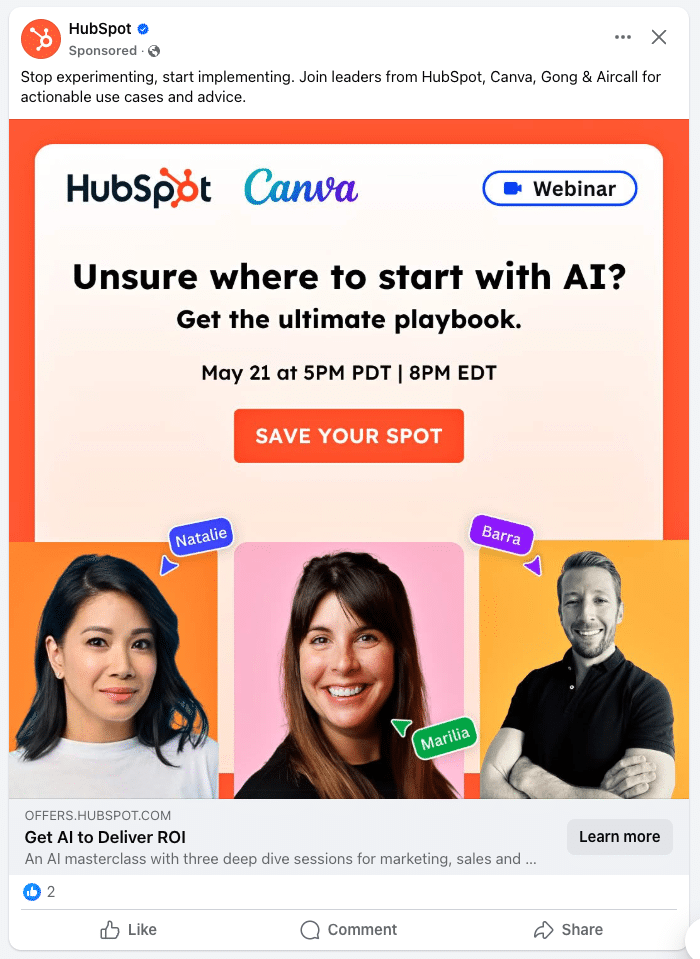
They also may appear on social network news feeds (think Facebook, Instagram, etc.) based on users’ interests, typically appearing like conventional posts with a “Sponsored” label.
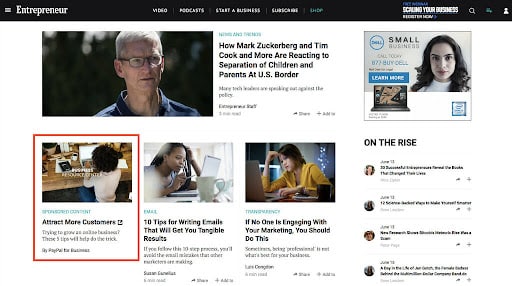
An example of an in-feed ad could look like this PayPal ad on Entrepreneur’s website. It fits naturally within the content and doesn’t look as much like an ad as it does a thumbnail for another article.
Search & Promoted Listings
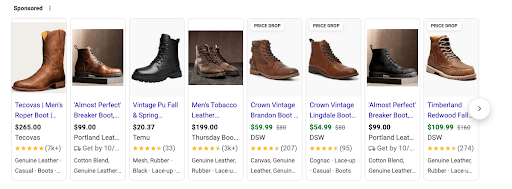
Advertisers can also get ads in search results through search and promoted listing ads. These ads show up in search results and often resemble typical organic results, or they could show up in images above or beside other content.
Ads appear at the top or sidebar of the Google SERPs, such as business listings labeled as “sponsored” results above organic results.

For example, here’s what comes up when you search “boots for sale.”
Content Recommendations
Another form of native advertising involves content recommendations. These ads normally appear at the bottom or side of other content, recommending people to view other related content.
For instance, an article might link you to similar recommended content in a “Related Topics” section after reading. You could also see “Reco Ads” appear as recommended articles, often using widgets on native advertising platforms like WordPress.
Example of Native Content Recommendations in Native Display Advertising Using the Outbrain Widget.
Some Native Advertising Statistics
Here are some additional statistics highlighting the benefits of native advertising:
- People actually look at native ads 53% more often than traditional display ads.
- Native ads generate 18% more purchase intent.
- The native ad market is expected to increase to an impressive $251.4 billion by 2032.
- Mobile native ads account for over 84% of all mobile ad spend.
- 90% of the top publishers out there use native advertising.
- In-app native ads also see a 60% higher click-through rate compared to mobile web ads.
- 75% of consumers tend to trust content and recommendations appearing in native marketing, as it naturally integrates into the surrounding content.
- Native video advertising comprises 56% of all video ad spending.
- 70% of people are more likely to actually engage with a native ad over a traditional banner ad.
- Native ads can also increase brand lift 82% more than banner ads.
- In addition, they can increase message association lift by 87%.
- Native advertising can also yield a CTR that’s 8.8 times higher than traditional display ads, driving conversions.
Best Practices for Native Ads
As discussed, there are many benefits of native advertising that make this strategy more ideal in many cases than traditional display ads.
However, to reap those benefits, you need to know how to create the perfect native display advertising.
Here are some native advertising best practices to incorporate into your next strategy:
1. Start With a Great Headline
What is a native ad without a strong headline to reel in viewers? The headline could ask a question that compels viewers, followed by content that answers that question. The headline should also be clear and leave no doubts as to what the message is.
2. Match the Language With the Surrounding Content
The kind of messaging you use in your ads should work naturally with the surrounding content. For example, if people are going to see your ads in an entertainment blog, a more fun and casual language will appeal to readers. Meanwhile, on a more formal news site, you would want to use language that’s formal and direct.
3. Add a Specific Call to Action
Your ads also need a clear and effective call to action (CTA) to drive clicks to your site. People should know what they’re going to get when they click on your CTA, whether it’s to sign up on your site, schedule an appointment, or get a free trial.
4. Direct People to a Solid Landing Page
Every ad should connect to a high-converting landing page that gets results. It could be a blog post expanding on the ad topic, a lead generation form attempting to convert more people, or other relevant content.
Native Advertising Examples
What are native ads that have worked in the past? Here are a few native advertising examples that you may have seen before.
#1 — Allbirds
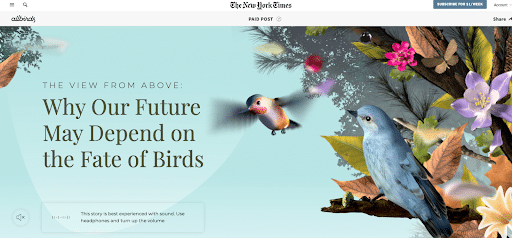
One example of effective native advertising is from shoe manufacturer Allbirds, which created a colorful animated post for The New York Times as a paid post.
The post focuses on the risk of endangerment that different birds face because of climate change and how Allbirds is working to mitigate that risk. Specifically, the article discusses the effects various bird species have on the environment and how Allbirds works to produce shoes using sustainable, eco-friendly processes and materials.
#2 — Forbes
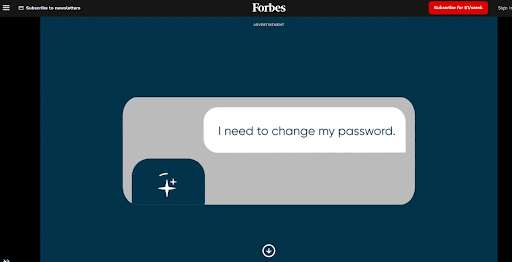
One notable example of a site that uses native ads frequently is Forbes, which includes a variety of ads. For example, the ad in the image above fills the screen when you load the page, and it advertises a generative AI program that many professionals (and active readers of Forbes) would likely find helpful.
Other ads come in the form of informational ads that educate and inform readers while advertising a particular brand.
#3 — Buzzfeed
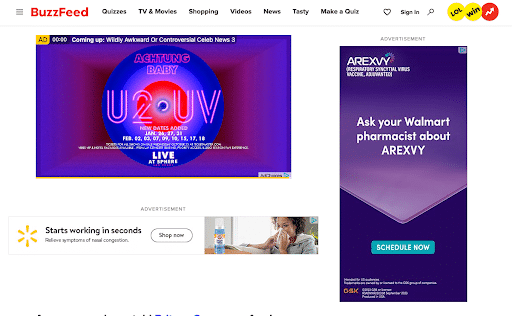
Buzzfeed is a great example of a publisher that’s all about native ads. The platform, as you can see in the image above, has many spaces for different brands to advertise.
First, there’s the video ad that plays before the actual video at the top of the article. Right below that is a small banner ad for Walmart, and to the right is another ad. While the last two aren’t necessarily native, if you keep scrolling to read the article, you’ll come across other naturally incorporated video ads that blend right in with the surrounding content.
#4 — Facebook
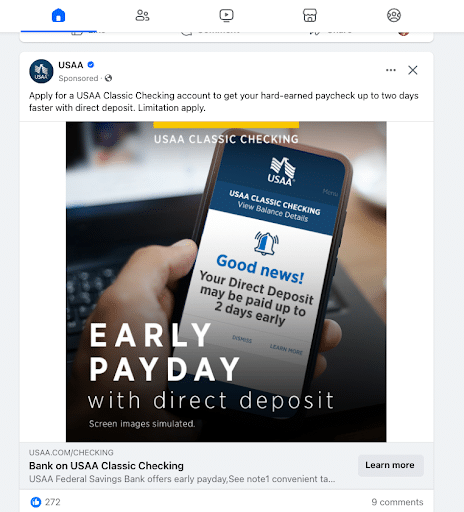
Facebook remains a champion of native in-feed ads. As you scroll down your feed on the website or the app, there are many sponsored ads that look just like regular posts, making people less likely to zip past them when scrolling.
#5 — Washington Post & Mercedes-Benz

This is another example of a big visual post like Allbird above, only this is a collaboration between The Washington Post and Mercedes-Benz.
This native ad campaign titled The Rise of the Superhuman goes into the many different technologies that will eliminate the risk of human error. As you scroll down, you get info about everything from robotic exoskeletons to Mercedes-Benz’s latest E-Class line of vehicles that include a variety of safety features.
#6 — Google Sponsored Ads
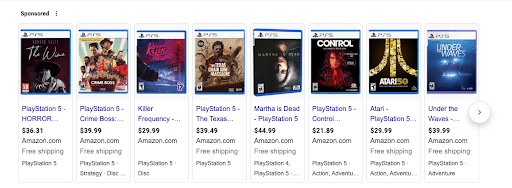
Google pushes relevant ads when you conduct a search for specific products.
In this example, searching “Playstation 5 games” brings up a list of games for sale on Amazon. Seeing as it’s October at the time of writing this, some horror games automatically display to fit the theme of Halloween.
#7 — Instagram Carousel Ads

Scrolling through Instagram, you may find carousel ads that appear in your feed, like this one from Temu.
These ads include multiple images or slides that you can go through to look at different products. They also include a convenient “Shop Now” button if you want to purchase a product quickly.
#8 — Croatian Lottery

Croatian Lottery actually won the Native Advertising Awards in 2022 with this campaign, which includes native ads discussing how gambling has negatively impacted young people’s lives in Croatia.
It details how gamification can help inform Croatian youth about the potential dangers of gambling while still enjoying the game. The campaign itself used gamification to keep people engaged once they landed on the microsite dedicated to the campaign.
#9 — Michelin
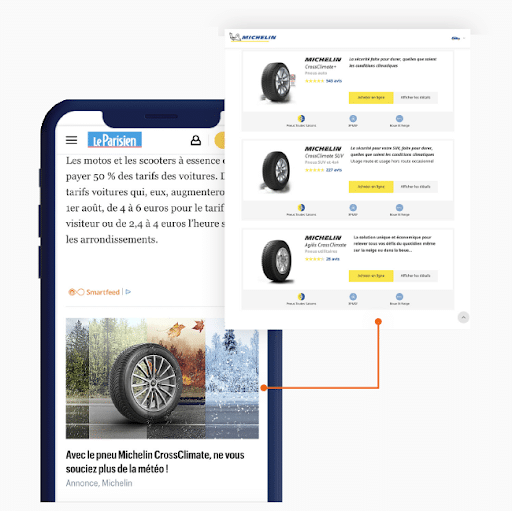
Tire manufacturer Michelin launched a campaign that promoted the brand’s winter tire products. The ads reached relevant audiences through relevant publishers, connecting with people who would most likely want to buy winter-proof tires ahead of winter.
The campaign was a success, leading people to stay on Michelin’s websites for longer periods while minimizing the company’s cost-per-visitor.
#10 — Walpole

One last example is from the UK brand Walpole, which advertises itself as the official sector body for UK luxury. The company’s “Love Letters from Britain” campaign, as featured on BBC StoryWorks, explores nine different stories about all types of luxury brands and products, including everything from luxury vehicles to fashion.
This campaign was particularly good for building brand awareness, whereas many native ads tend to be geared more toward making a sale.
Keep in mind that there are plenty of opportunities to push native ads in affiliate marketing. Bloggers, vloggers, influencers, and other publishers could partner with you to promote relevant native ads in affiliate marketing content, ensuring your ads are compatible with the respective site.
Building a personal connection with publishers can help you get the most from these opportunities.
At the same time, it’s often best to partner with a native advertising agency with experience handling these types of strategies. A dependable and resourceful native advertising agency will be able to provide full-service implementation of native display advertising, integrating it into a well-rounded digital marketing solution that works for you.
What is an Example of Ineffective Native Advertising?
Let’s look at a few more examples, ones that aren’t so successful.
#1 — The Church of Scientology
Many widely criticized this notorious ad from the Church of Scientology for promoting the church while appearing to look like a normal piece of native content published by The Atlantic.
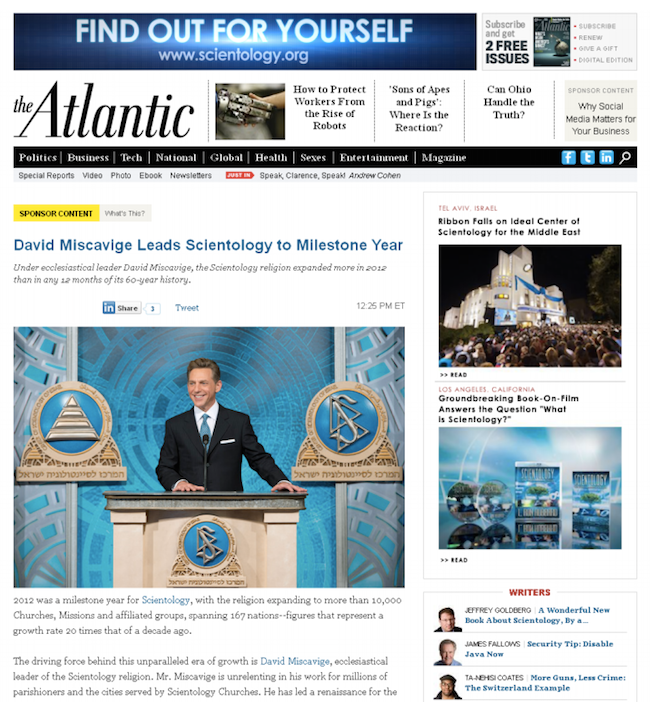
This highlights an important criticism of native advertising: that many use it as a sneaky way to prompt your agenda.
The Atlantic took a lot of heat for this native ad and eventually took it down altogether.
The lesson learned here? Make sure your ad matches the platform it appears on. The Atlantic suffered because it ran an ad preaching a subject its readers didn’t care about–and because it blended into the site’s usual content, it was easy to think the publication was simply running an article to support Scientology, rather than hosting an ad.
As mentioned earlier, the first step in successful native advertising is choosing the proper channel. Make sure you do so wisely.
#2 — “King of the Nerds”
Another notoriously failed native marketing campaign is the “King of the Nerds”-sponsored Gawker article, “How to Transform into a Total Nerd-Babe.” It was tone-deaf and did not come across well to its audiences.
Not only did many argue that it was offensive and vapid, but it was also difficult to determine who even sponsored the campaign, making it overall ineffective. The ad came from PBS TV reality show “King of the Nerds,” but it looked like it was just another Gawker article without any clear distinction.
The problems seen with this campaign led Gawker to carefully choose its sponsored content and effectively distinguish it as “sponsored” by a specific entity.
#3 — Weather Underground
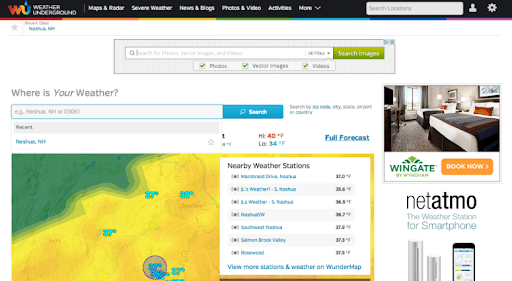
Weather Underground is another example of a native ad failure, one that entailed deceiving audiences. In an article for McDougall Interactive, Bob Rustici detailed how he had visited the Weather Underground website to check the local weather, only to enter his location into a search bar, which was actually part of an ad.
As the image details, you can see two search bars, one at the top of the page and one below. The top happened to be an ad for an image site, but you wouldn’t know it unless you looked closely at the buttons and checkboxes.
After entering the location, the ad redirected Rustici to the advertiser’s site, which led to understandable confusion and frustration with both the publisher and the advertiser.
In short, this ad shows how deceiving your audiences with your ads could merely hurt your reputation.
FAQs on Native Advertising:
1. Is native advertising more effective than content marketing?
Short answer: no.
While it certainly has its advantages, it’s not meant to replace content marketing. Native advertising is typically a one-time thing; it’s a great way to introduce yourself and your business to an audience and to give them a reason to dig deeper into what it is you offer.
Content marketing, on the other hand, is all about the long haul. It’s meant to solidify a brand’s reputation and create an ongoing relationship with customers through different media and channels (which could include native advertising.)
2. Are there different native advertising formats?
Yes, there are different formats, including:
- In-feed ads: promote sponsored content in natural feeds
- Recommendation widgets: these appear at the end of articles in the “recommended for you” or “you may also like” sections
- Promoted listings: used to promote sponsored products and appear with other listings
- Paid search ads: similar to promoted listings, but appear at the top of search results
3. Is native advertising affected by AdBlocks?
One advantage of native ads is that they rarely get caught in adblocking software. This, of course, is because they’re served along with regular content.
Most ads that get caught by ad blocks are ones that are flagged as overly annoying or intrusive. However, in February 2018, Google blocked certain ads in the Chrome browser, including some native ads.
4. How do you measure native advertising?
Just like other digital marketing channels, you can measure native advertising’s effectiveness in terms of data. You can measure impressions, click-through rate, clicks, etc. There are tools created specifically to track your native ad analytics, such as SpyOver and Parse.ly.
5. Can a user tell if they’re clicking on a native ad?
Not necessarily. In fact, studies have shown that consumers often identify native ads as articles. That same study revealed some other interesting facts about native ads:
- Consumers often have a difficult time identifying the brand associated with a piece of native advertising (but it varies)
- Consumers who read native ads that they identified as high quality reported a significantly higher level of trust for the sponsoring brand.
- 48 percent have felt deceived upon realizing a piece of content was sponsored by a brand
6. Why should you use native advertising?
There are four stages of a sales funnel: attract, convert, close, and delight.
The attract stage is when people are first introduced to your content. While this might seem like the appropriate place to utilize the benefits of native advertising, it actually isn’t.
The proper time to execute native ads is somewhere between the convert and close stages. You want to target people who are already familiar with your brand and who may have already consumed your products/services in the past.
7. How can I start using native advertising?
Now that you understand the theory behind native advertising, you probably want to put this new knowledge into practice.
If you have already begun a strong content marketing campaign, congratulations! You’re already on your way to native advertising.
The next step is to take these engaging stories that you have created for your brand and pay native advertising platforms to promote them. Research the best native ad vendors in your industry and collect pricing information and offers from them. Once you decide on the right platform to reach your target audience, you can utilize your existing native content to run a profitable native advertising campaign.
8. What trends are shaping the future of native advertising?
You might want to know what kind of digital ad trend you can use to supercharge your native ad campaigns.
A few key trends to consider include:
- More personalization that uses high-quality data to deliver the most relevant content to the right audiences
- A better blend of content and ads to make the user experience even more seamless when encountering native advertising
- Increased transparency allows for more ethical ads that build trust among users.
9. Can native advertising be used for any type of business or industry?
Because it’s a more narrative-focused form of advertising using native content, the industries that benefit most from this type of advertising are those with a focus on storytelling and visual elements. However, it can work for any industry with the right approach.
10. How do native ads perform in comparison to traditional display ads?
Unlike traditional ads, native ads are compatible with their corresponding platforms’ design and content. As a result, they’re more likely to blend in with surrounding content and drive more engagement. They also appear right in the middle of content as opposed to the periphery, grabbing people’s attention more effectively.
11. Do native ads require continuous texting and optimization?
As with any other type of ad, you should continually test and optimize your native ad campaigns. Based on the results you want and the goals you have set, you can take steps to perfect your campaigns and drive even better results.
Consider using methods like A/B testing, which involves running two instances of the same ad using a different element, such as a visual or message. You can then determine the benefits of native advertising with one version or the other.
12. How does native advertising uphold or challenge ethical advertising standards?
Native marketing can remain ethical with the right approach, but it’s important to remember that native ads often look much like the content around them.
Because of their stealthier nature, you should ensure your native content is ethical by labeling it as “sponsored” or otherwise indicating that it is, in fact, an ad.
Native Advertising in the Future
Native advertising is exploding in popularity.
I think that most brands can benefit from using native advertising as a tactic, but it shouldn’t inform your whole online marketing strategy. Anything that allows you to get your content in front of the right audience is something you should embrace.
It will be interesting to see how native advertising influences the way we consume content in the future.
Want to thrive with a native ad campaign? The team at Ignite Visibility is here to help. We offer some of the most reliable ad services available to help you develop campaigns using a combination of native and other ad forms.
With the help of our solutions, you’ll benefit from:
- Increased ad relevance, which leads to more engagement and higher purchase intent
- Better brand awareness and credibility as your ads appear in high-quality content from leading publishers
- Improved cost-effectiveness with high-performing native ads
Want to discover what Ignite Visibility can do for you with native ads and more? Reach out to us today to get started on your next campaign.
