Multi-location businesses face unique challenges when marketing their brands and offerings on social media. While single-location or solely online businesses focus on a singular campaign to drive engagement and sales, multi-location companies need to cater to the needs of each market location.
In this blog, Katelyn Baginski, our Social Media Manager, will look into multi-location social media management tools you can use to overcome these challenges and streamline your social media strategy for every location of your business.
My Expert Opinion on Multi-Location Social Media Management
When a business with multiple locations uses social media, it’s crucial to maintain a balance between consistent branding and unique content for all locations. Not every audience will be the same, but you must create a cohesive and coherent brand identity that resonates with all audience segments as you build trust.
With effective multi-location social media management, including sufficient strategies and tools, you can get the most from your social media marketing efforts. These campaigns can then effectively tie into other marketing campaigns for every location and your brand as a whole.
Understanding the potential challenges you might face and which solutions to look for can help you bolster your social media marketing efforts as you continually optimize them over time.
The Challenges of Multi-Location Social Media Management
Inconsistent Branding
One of the biggest challenges multi-location owners face is keeping their global and local messaging connected and consistent. When your messaging is inconsistent, it could lead to disjointed strategies that fail to connect with all of your target audiences.
Coordinating multi-location strategies takes a collaborative effort. You’ll often need to tailor messaging to each location’s communities when promoting a new product or service launch.
However, this can sometimes lead to inconsistent branding and messaging that is off-target. When that happens, the general public can start to lose trust in your brand. After all, if you’re all supposed to be one brand, why are you saying different things?
To overcome this challenge, establish and enforce brand kits and standards consistently across all locations. While some local details can change, it should be mandatory to keep all other details (including colors, logos, and messaging) the same. Make sure all locations are following the same overall approval process to ensure consistency.
You can track your progress by monitoring your brand consistency score. If you see that score start to dip, you’ll know it’s time to remind every location to stay on brand and use your specific branding manual.
Managing Multiple Platforms & Accounts
When using several social media platforms, you may also struggle to effectively manage these platforms and their respective accounts without consolidating them into a single dashboard.
Without a single dashboard, it becomes difficult to ensure that every location is posting similar content on the same platforms. Again, this leads to confusing messaging and content that is inconsistent with the brand.
You can overcome this by using multi location social media management software that will streamline everything into one tool.
Track this progress by measuring KPIs, including content consistency score, cross-platform engagement comparison, and content calendar adherence by location.
Measuring ROI
Multi-location businesses may have a hard time measuring the ROI of each location and factoring each location’s revenue into the company’s based on local and overarching goals.
Maintaining accurate and up-to-date data will help you overcome this challenge. Be sure to regularly review all of the data to ensure that your social media strategy is resonating with audiences across your brand – not just in one specific location.
Looking at business impact KPIs, like conversion rate by location, location-based attribution, local promotion performance, and social media ROI by location, will help you understand what is working and what needs to be fixed.
Tools and Platforms for Multi-Location Social Media Management
There’s plenty of multi-location social media management software you can use to effectively monitor and optimize your campaigns.
The ideal tool will allow for centralized control with localized flexibility to help you manage every aspect of your brand and each location. A cohesive and central dashboard can make managing all social media accounts and profiles significantly easier.
You should also select a multi-location social media management scheduler that automates every aspect of your campaigns. For example, your solution should help automate post scheduling to ensure consistent engagement with national to local audiences. Reporting and content approval workflows will also be simplified, making management even easier.
Robust software will give you what you need to take full advantage of social media.
Need help scaling your visibility locally as well as nationally? Check out our National to Local Marketing offerings.

Best Multi-Location Social Media Management Tools
Struggling to find the right multi-location social media management platform to meet your requirements? Here are some of the best options on the market for small to large businesses:
Rallio
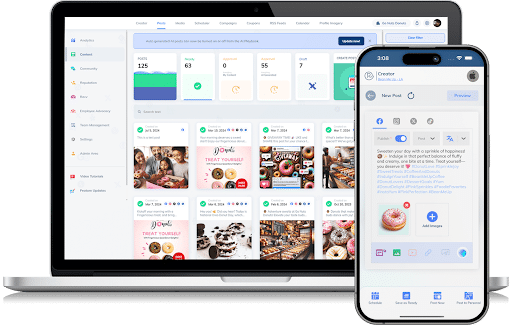
Rallio is a multi-location social media management tool designed exclusively for business owners who need to create content for multiple platforms. One of the biggest highlights of this tool is the Employee Advocacy program, which allows staff and team members to share brand-specific content directly with their own audiences.
The platform also features a post library, AI-generated social content assistance, and a comprehensive analytics dashboard.
Hootsuite
Hootsuite is an ideal platform for managing multiple social media accounts. With some additional configuration, it can work for location-specific campaigns. It includes a unified dashboard, bulk scheduling capabilities, social listening, and plenty of other features for effective management.
Sprout Social
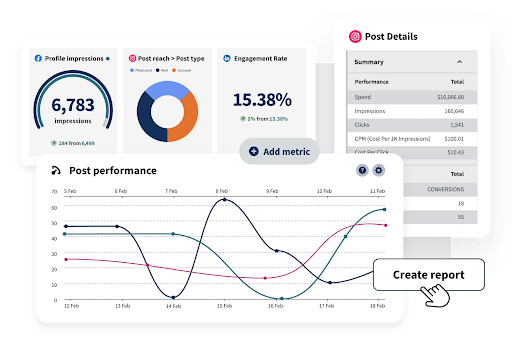
If you need multi-location social media management software that can provide in-depth reporting and analytics for all locations, Sprout Social is a great tool to use.
You’ll be able to see precisely how each location is performing as part of your overall social media strategy, helping you determine how to progress and improve your efforts.
Agorapulse
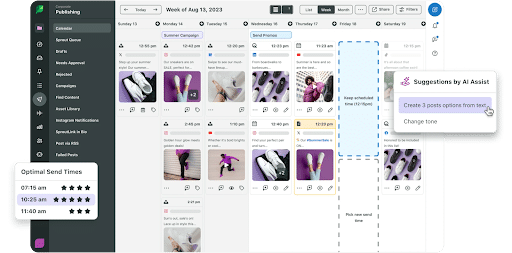
Agorapulse makes it easy to customize social media posts across all of your locations. The tool allows you to quickly customize fields for each post and schedule them, whether you need to customize addresses, dates, or signatures.
The platform also offers numerous reports that provide in-depth insights into each location’s performance and allow for comparison.
SocialPilot
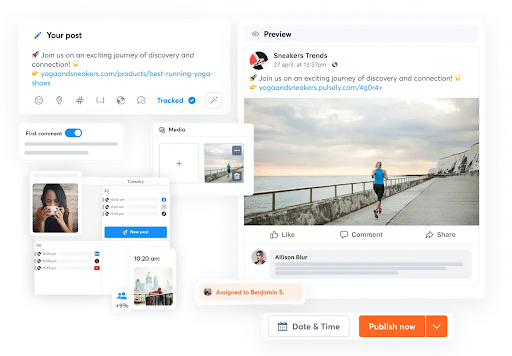
Another great option for multiple locations is SocialPilot, which offers several critical features that can help your campaigns excel. Some of these features include bulk scheduling, collaboration tools, inbox messaging access, and AI-powered content suggestions, helping automate and simplify various processes.
This tool makes it easy to foster collaboration amongst all franchise stakeholders. You can also white label their platform to create a franchise-specific dashboard.
Sendible
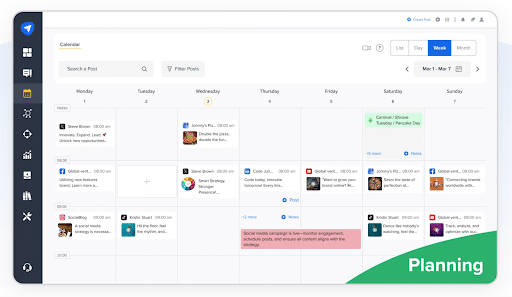
Sendible is an all-in-one multi-location social media management solution that allows you to manage all social media accounts with a single tool. Using this solution, you can make content creation easy by using a single content calendar that schedules posts for all platforms, including Instagram, LinkedIn, Facebook, TikTok, YouTube, and Google Business Profile. Sendible also allows you to white label their platform to help build trust among your franchise locations.
Sked Social
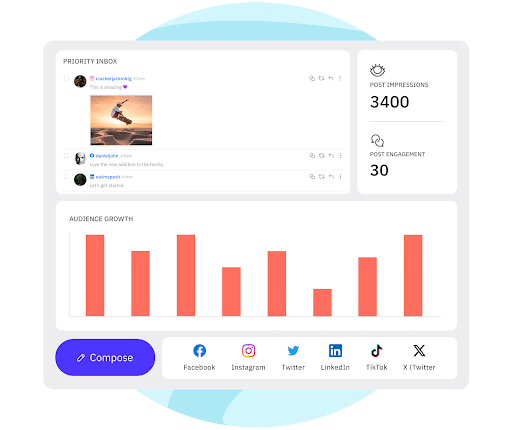
Sked Social is a tool specifically intended for multi-location businesses. It allows you to automatically schedule posts on Facebook, Instagram, and other platforms, with integrations to Dropbox, Canva, and other third-party services to simplify content management and development.

Local Engagement Strategies for Multi-Location Brands
It’s not enough to have the best multi-location social media management tool—you must know how to properly use it to engage with your audiences.
Social media is all about building relationships with your target audiences. The right approach will help you better understand and consistently interact with local communities, showing that you value them and the people who inhabit them.
In the process, you need to know how to empower location managers to become social media champions. Foster good communication with all of your prospects and customers via the platforms they use, and have management put a more human face to your brand and each location.
Strategies That Really Work
To help your location managers make the most of social media channels, here are some effective local social media engagement strategies for multi-location brands:
- Hyper-localized Content Creation: Each location will have its own unique flavor. No two towns are quite the same, making it important to understand the needs and preferences of audiences at all locations. Through your market research, and with the help of local management, you can develop hyper-local content that really resonates with each audience segment. For instance, you might highlight certain local personalities or other landmark locations or events unique to each community, showing your willingness to participate and not just infiltrate.
- Encouraging User-Generated Content (UGC): Another way to connect with local communities is to entice them with contests and show that you value their input, encouraging them to create UGC in the form of posts discussing their experiences with your brand or showing how they use your offerings in creative ways. You can then repurpose this UGC for your own marketing and advertising purposes, which could further imbue your brand with a sense of personality and community.
- Collaborating With Influencers: Local influencers, especially smaller nano- and micro-influencers, tend to have loyal followings that you can connect with through them, whether it’s via product recommendations or sponsorships. These audiences will be much more likely to trust your brand if an endorsement comes directly from these personalities.

Measuring Success With Multi-Location Social Media Metrics
You won’t be able to tell how well your campaigns are doing at each location without specific measurable metrics. The goals you set will help you determine which key performance indicators (KPIs) and metrics to track with your tools.
There are plenty of goals you might have in place, whether they’re for your encompassing social media strategy or individual campaigns at specific locations. For instance, you might want to boost brand awareness, increase engagement, or maximize sales for a particular location.
Depending on your goals, you could then track one or more of the following metrics for multi-location social media campaigns:
- Engagement Rates: This KPI tracks how often people interact with social media posts, whether it’s via likes, comments, or shares. The specific type of engagement will depend on what you want to achieve, with more shares helping contribute to increased awareness.
- Sentiment Analysis: The right tools can also perform sentiment analysis, which can indicate how people perceive individual posts and your brand overall. This type of analysis uses a combination of AI and natural language processing (NLP) to “read” the emotions behind social media comments, posts, and mentions. This element is crucial in reputation management.
- Conversion Tracking: Keep track of how many people perform a desired action for each post and location. For instance, a conversion could count as someone completing a contact form, making a purchase through a shopping post, or subscribing to your newsletter to contribute to franchise email marketing campaigns.
Be sure to regularly check reports for each location and compare their performance against each other based on your goals. If you notice that any particular location is underperforming, use actionable insights in your reports to determine the next approach.
Over time, as you allocate your budget and optimize accordingly, you can get all of your locations on the same page and ensure they contribute to your base strategy.
Also, make sure you have a good handle on the patterns for each location, as they are likely different and will require different maneuvers based on past performance. For example, the sentiment analysis for one location might differ considerably from another, indicating a need for a different approach to communications for an area with poorer sentiment.
Best Practices and Next Steps
Using the right multi-location social media management platform and strategies, you can get the most from your multi-location campaigns on all social media channels.
To further secure long-term success with your efforts, here are some additional best practices and next steps to take:
Create Strong Brand Guidelines
In keeping your branding consistent across all locations and social platforms, develop solid brand guidelines for every location to follow. These will serve as instructions to help turn each location’s management team into ambassadors for your brand, spreading your message to each location’s community.
Your employees could then adapt these guidelines accordingly to fit in with the culture of each community without losing sight of the bigger picture.
Create a Central Content Calendar
Determine when is the best time to post across all platforms with a set content calendar. For instance, you might want to post about new product launches, brand updates, or other content that can go out to every branch of your business.
At the same time, certain tools can help you personalize these posts for each location using custom fields and dynamic posting features. In turn, you can speak more directly to every community while ensuring each post gets out there.
Take a Customer-Centric Approach
Always focus on the customer’s needs and wants in your communications and branding. To keep your customers content with your brand, practice responsiveness; respond to people’s comments and show that you truly care about your customer base.
Make Data-Driven Decisions
Through regular data monitoring and social listening, you can make informed decisions. Reliable tools will provide you with in-depth reports and actionable insights that help you stay on your toes. You can then compare current data to past performance to gauge progress and determine how to continually improve your social media efforts.
Common Pitfalls and How to Avoid Them
Even with the best multi-location social media management tools at your disposal, several common pitfalls can undermine your efforts. Here’s how to identify and overcome these challenges:
Over-Centralization
The Pitfall: Maintaining strict corporate control over every post and interaction across all locations leads to generic content that fails to resonate with local audiences. This one-size-fits-all approach prevents locations from showcasing their unique personalities and connecting with their specific communities.
The Solution: Implement a balanced “hub-and-spoke” model where corporate provides brand guidelines, templates, and pre-approved content libraries while giving location managers freedom to create locally relevant content. Use permission-based tools that allow different access levels so local teams can post within defined parameters without lengthy approval chains.
Rogue Posting
The Pitfall: Without proper oversight, local managers may post off-brand content, outdated promotions, or inappropriate material that damages your brand reputation. These unauthorized posts can create inconsistency across locations and potentially lead to PR disasters.
The Solution: Deploy management tools with content approval workflows that allow for local creativity while maintaining brand standards. Create a clear social media policy outlining what’s acceptable, and invest in training for local managers. Use scheduling tools with built-in approval processes to prevent last-minute, unvetted posts.
Missing UGC Rights
The Pitfall: Sharing user-generated content (UGC) from customers without proper permission can lead to legal issues and damaged relationships. Many multi-location businesses repurpose customer photos without realizing they lack the legal rights to do so.
The Solution: Implement a systematic approach to UGC collection that automatically requests permission through comments or direct messages. Use multi-location social media management apps with integrated rights management features that track permission status for each piece of content. Create standardized templates for requesting usage rights that local managers can easily deploy.
Lack of Crisis Playbook
The Pitfall: When a crisis hits, whether it’s a negative review that goes viral or a local incident affecting one location, teams without clear guidelines scramble to respond, often making the situation worse through inconsistent messaging or delayed action.
The Solution: Develop a comprehensive crisis response playbook that outlines specific scenarios and appropriate responses for different severity levels. Ensure your social media management app includes alert systems that flag potential issues before they escalate. Train both corporate and local teams on crisis protocols, including who has authority to respond and when to escalate to higher management.
By anticipating these common pitfalls and implementing the right combination of tools, training, and protocols, you can develop a multi-location social media strategy that strikes a balance between brand consistency and local authenticity, without compromising efficiency or control.
FAQs About Multi-Location Social Media Management Apps
1. What is multi-location social media management?
Multi-location social media management coordinates brand presence across multiple physical locations on various platforms. It balances corporate oversight with local relevance, using specialized tools to manage content distribution, maintain brand consistency, and enable location-specific engagement while centralizing reporting and strategy.
2. How should franchisors structure corporate and local social pages?
Franchisors should maintain strong corporate pages for brand-wide announcements and campaigns while supporting location-specific pages for local engagement. The ideal structure uses a hub-and-spoke model where corporate provides templates, guidelines, and shareable content, while local pages highlight community involvement and store-specific offerings.
3. What roles and permissions do multi-location teams need?
Effective multi-location teams require tiered permissions: corporate admins with full system access, regional managers with oversight of location groups, local managers with posting/engagement capabilities for their location only, and content creators with limited publishing rights. Each role needs clearly defined approval pathways and emergency protocols.
4. What KPIs matter at the location level?
Location-level KPIs should focus on local engagement rate, response time to customer inquiries, store visit attribution, local audience growth, location-specific promotion redemptions, local search visibility, community sentiment, and direct business outcomes like appointment bookings or in-store sales driven by social efforts.
5. Which tools support multi-location workflows?
Top multi-location social media management tools include Hootsuite, Sprout Social, Agorapulse, SocialPilot, Sendible, Sked Social, and Rallio. Look for robust permission structures and location-specific analytics.
6. How do you keep brand voice consistent while localizing?
Maintain brand consistency with templated content, style guides, and pre-approved asset libraries while enabling localization through customizable sections addressing community events, local team spotlights, and regional promotions. Regular training and feedback sessions help location managers understand when and how to adapt content appropriately.
7. Should every store have its own account?
Not necessarily. Consider market density, management resources, and audience overlap. In concentrated areas, a regional approach prevents audience cannibalization. Individual accounts work best for locations with distinct communities, adequate management resources, and unique offerings. Always prioritize quality engagement over quantity of accounts.
8. How do you handle UGC rights?
Establish a systematic approach to user-generated content rights by using platforms with integrated permission-request workflows. Create template messages requesting usage rights, document all permissions received, maintain a database of approved content, and train local teams to properly tag original creators when resharing content.
Connect With Ignite Visibility for Multi-Location Social Media Management
If you’re in need of effective management for multi-location social media campaigns, Ignite Visibility has the resources and expertise to help your business thrive. We can provide you with a comprehensive multi-location digital marketing strategy, whether you’re a small business looking to expand or a large franchise with hundreds of locations.
We’ll work closely with you to determine your unique needs and help put together a winning strategy using the best solutions available.
With Ignite Visibility by your side, you get:
- Access to some of the best multi-location social media management platforms
- Help from industry experts who know what local audiences want from branded social media
- Content development to put together successful social media posts, landing pages, and more
- Continuous monitoring and reporting for all locations and regular updates
- And much more!
To get a start on your next campaign with us and see what sets us apart, get in touch with us and we’ll discuss your specific needs.