Most franchise digital marketing guides are organized by channel. Search, then paid ads, then social, then email. That structure is easy to write and almost useless to run, because it never answers the question that actually stalls franchise marketing programs: whose job is this?
Corporate believes the franchisee should be posting to local social. The franchisee believes corporate is spending marketing-fund money on things they cannot see. Both are partly right, and the argument repeats every quarter because nobody wrote the ownership rules down.
In this guide, VP of Franchise Development, Mark Renehan, breaks franchise marketing into three categories: Franchisor-owned channels, Franchisee-owned channels, and Shared channels. You’ll learn who should manage each channel, how national and local teams should work together, what marketing funds should cover, and what each side should expect to see in the reporting.
What’s Covered:
- The Ownership Matrix: Who Runs What
- What is Franchise Marketing?
- The Franchise Marketing Ecosystem
- Franchisor-Owned Channels
- Franchisee-Owned Channels
- Shared Channels: Where the Handoff Breaks
- What Changes With AI Search
- Measurement: Proving Per-Location ROI
- Technology, Tools, and Innovation
- Email Marketing Campaigns and Lifecycle
- Franchise Development and Recruitment Marketing
- National-to-Local and Industry-Specific Strategies
- Consumer Journey in Franchise Environments
- Common Challenges for Franchise Marketing
- FAQs About Franchise Marketing
TL;DR
- A successful franchise marketing program needs more than the right channels. It needs clearly defined ownership.
- Corporate should own brand strategy, national SEO, the primary website, creative standards, and national campaigns.
- Franchisees should manage activities that require current local knowledge, including profile updates, community engagement, and location-specific content.
- Shared channels need written handoff rules so tasks do not get delayed, duplicated, or ignored.
- National and local marketing budgets should remain separate and transparent.
- Reporting should show both system-wide performance and results for each location.
- The best technology supports location-level permissions, brand governance, and operator adoption.
The Ownership Matrix: Who Runs What
This is the section to print and bring to your next franchisee advisory council meeting.
| Channel | Franchisor owns | Franchisee owns | Shared |
|---|---|---|---|
| National SEO and site authority | ● | ||
| Brand content and creative | ● | ||
| National paid media | ● | ||
| Brand compliance and asset library | ● | ||
| Google Business Profile | ● | ||
| Reviews and responses | ● | ||
| Local social and community | ● | ||
| Local landing pages | ● | ||
| Local paid media | ● | ||
| Marketing fund allocation | ● | ||
| Measurement and reporting | ● |
The single-owner rows are the easy ones. The shared rows are where programs break, and each one needs a written handoff rule: who builds it, who approves it, who pays for it, and who sees the results.
Three tests tell you which column a channel belongs in. Does it require physical presence in the market? That is franchisee-owned. Does it build equity every location draws on? Franchisor-owned. Does the answer change depending on which location you ask about? Shared — and it needs a rule.
The matrix is not a one-time exercise. Rows migrate as a system matures. A 15-location brand where corporate runs everything centrally will find that model breaking somewhere around 50 locations, when the volume of local decisions exceeds what a head-office team can make well. Conversely, a system that started fully decentralized usually needs to pull brand compliance and the technology stack back to corporate once inconsistency becomes visible to customers. Revisit the matrix annually, and always when the network crosses a size threshold or adds a materially different concept.
One more rule worth stating: every row needs exactly one accountable owner, even the shared ones. Shared does not mean jointly decided. It means both parties contribute and one of them is accountable for the outcome — usually corporate for the system, the operator for the local result. Name that person when you fill the matrix in, because a row with two accountable owners is functionally a row with none.
In-House, Agency, or Hybrid?
Most systems land on hybrid, and the split usually follows the matrix. Corporate keeps brand, national demand, and governance in-house or with one agency partner. Location-level execution goes to whoever is closest to the market.
The failure mode is a system that hires an agency for “franchise marketing” without first deciding which rows of the matrix that agency owns. The predictable result is overlapping spend and coverage gaps in the same quarter, with nobody able to say which was supposed to be whose.
Multi-Unit Operator vs. Single-Unit Franchisee
These are not the same customer and should not receive the same marketing support. A single-unit franchisee needs turnkey local execution and templates. A multi-unit operator running eight or eighty locations has their own marketing staff, their own budget and their own opinions — and they will opt out of corporate programs that ignore that.
Systems that treat both identically lose the multi-unit operators first, which is expensive, because they usually represent the largest revenue concentration in the network.
“I’ve watched this exact moment kill momentum in a dozen systems: corporate keeps running local decisions past the point where it works, operators stop waiting for approval, and now nobody’s actually in charge of anything. Fifty locations is roughly where you feel it. Give operators the local calls before your franchisees force the issue.” — Mark Renehan, VP of Business Development, Franchise Division
What Is Franchise Digital Marketing?
Franchise digital marketing is the coordinated use of online channels to build demand for a franchise brand and turn that demand into customers at individual locations. Unlike a single-location business, the brand and the point of sale may be managed by different people. That makes clear ownership essential.
To start our business franchise guide to marketing, let’s look at the fundamentals of franchise marketing.
What Is Multi-Location Franchise Marketing?
Franchise establishments in the United States are projected to reach 845,000 in 2026, up from 832,521, producing $921.4 billion in economic output and employing nearly 8.9 million people. They span quick-service restaurants, fitness, home services, healthcare, automotive and finance.
Service-based franchises are also expanding beyond traditional retail and food-service concepts. Demand for convenience, lower inventory requirements, and the potential for recurring revenue continue to make categories such as home services, wellness, pet care, senior care, and education attractive.
Regardless of the industry, multi-location franchise marketing must accomplish two goals at the same time:
- Keep the brand recognizable and consistent across every location.
- Adapt the message to the needs of each local market.
Consistency without local relevance produces campaigns that do not connect with the community. Local flexibility without brand standards produces an experience customers may not recognize or trust.
National marketing gives every location an important head start. When a recognized quick-service restaurant opens in a new market, it arrives with an established name, visual identity, menu, and reputation. The same applies to a branded urgent care network opening near an independent clinic.
That inherited awareness is what the franchisor builds. Local execution is what converts it into business.
The Franchise Marketing Ecosystem
Every franchise marketing system needs a few foundational components. The key is assigning an owner to each one.
Target audience analysis comes first, and it is shared. Corporate builds the brand-level personas; the operator knows why their market differs from the model. Segment audiences by demographics and psychographics, build a persona for each, and pay particular attention to the pain points that vary by location, for instance, what a suburban market wants promoted is rarely what an urban one does. Modern ad platforms use machine learning to predict behavior and refine targeting automatically, but they optimize toward the audience definition you give them.
Goal setting is franchisor-led and franchisee-validated. Brand awareness, customer acquisition, sales and retention are the usual four. The goals determine the KPIs, and the KPIs determine whether the program can be defended to the network.
Budget allocation is where the ownership question becomes financial. You need two budgets, not one: a national budget and an individualized budget for each location. Establish both before launch, including initial and ongoing costs against revenue projections. Blending them is the single most common cause of franchisee disputes.
Brand consistency is franchisor-owned. A unified brand message across every location builds trust and recognition. Digital asset management platforms have become close to essential for systems above a few dozen locations, because they let a marketing team centralize, organize and distribute approved creative without fielding individual requests.

Local marketing is franchisee-owned. Localized effort ensures each location speaks to its immediate community, using tools like geofencing and location-based offers to reach people who are physically nearby.
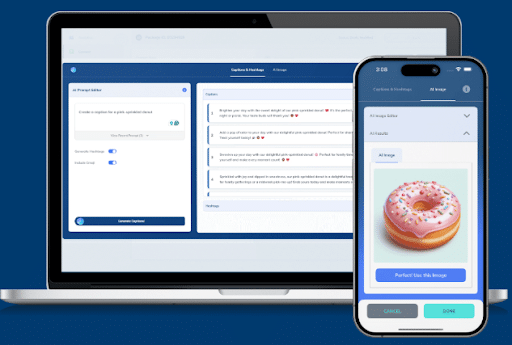
Brand guardrails are shared, and increasingly automated. AI-assisted review of franchisee social posts can check brand compliance before anything publishes, which lets a system give operators genuine latitude without accepting genuine risk.
For example, Rallio’s Post Library & Scheduling System provides a repository of pre-approved content, allowing users to tailor and schedule posts effortlessly. This helps maintain consistent brand messaging across various channels, streamlining the content distribution process into one social media management platform and ensuring timely interactions with the audience.
Two components most systems skip belong here as well. Onboarding determines whether a new franchisee ever engages with the marketing program at all, the first 90 days set the pattern, and an operator who never logs into the content library in month one rarely starts in month twelve. Build marketing onboarding into the opening checklist alongside operations training, with a named person responsible for confirming the profile is claimed, the location page is populated and the operator has run at least one local campaign before the doors open.
Feedback flow is the other. Operators are the closest thing a franchisor has to live market research, and most systems have no channel for what they observe, which competitor just opened, which promotion is landing, which question customers keep asking. A standing item on the monthly call and a shared channel for market intelligence costs nothing and consistently surfaces things no dashboard reports.
Franchisor-Owned Channels
These are the channels where corporate should hold the pen. They build brand equity every location draws on, and they are exactly the wrong things to delegate to individual operators.
National SEO and Site Authority
National SEO builds the domain authority every location page inherits. It covers the homepage, regional pages, service pages and any content not controlled at the franchisee level. Keyword research, internal and external linking, backlink acquisition, image alt text, and title tags and descriptions all sit here.
Search remains the largest single brand-discovery channel worldwide, with 32.8% of consumers saying they find new brands and products through online search, which makes national organic visibility a demand-generation channel rather than a technical exercise.
Google’s guidance has moved steadily toward genuinely helpful, firsthand content backed by real operating experience. For a franchise system this is a structural advantage: you have hundreds of locations generating real operational detail that a competitor with one office cannot manufacture. Most systems fail to use it because that detail never travels from the operator back to the content team.
A well-written national site that uses links, alt text, and keywords will help you rank on search engines. You can also boost your national SEO by incorporating blogs into your marketing strategy, such as this one from Anytime Fitness.

Branding And Creative Services
National content should address the questions, needs, and interests shared across the brand’s audience. Local content should focus on what is unique to a specific market.
For example, a national fitness brand can publish broad content about workouts, nutrition, and recovery. Details about the staff, equipment, classes, and events at one specific club belong on that location’s page or local social channels.
Useful national content formats may include:
- Core website and service pages
- Blog posts and educational guides
- Videos, tutorials, and service demonstrations
- Customer testimonials
- Case studies
- Guest contributions and digital PR content
- Brand photography and approved creative templates
Video deserves a dedicated place in the national budget. Explainers, advertisements, how-to videos, tutorials, and service introductions can be created once and adapted across the network.
Pay-Per-Click Advertising and Paid Media
National paid media should build brand awareness and capture high-intent demand.
Paid search reaches people already looking for a relevant product or service. Display, social, and video campaigns build awareness earlier in the journey. Retargeting helps bring back visitors who did not convert during their first interaction.
The most important rule is to separate national and local campaigns before launch. When both teams draw from the same budget or bid on the same terms without clear controls, the franchise system can end up competing against itself.
Paid campaigns should combine centralized and localized creative:
- Brand campaigns reach people interested in the broader category.
- Regional campaigns respond to differences between markets.
- Location-level campaigns reach nearby customers with a timely reason to act.
Website Design & Development
The main site is a franchisor asset. It carries the brand, the location finder and the template every local page is built from.
In most cases, franchisees should not build separate websites. Independent sites can fragment authority, create inconsistent customer experiences, and expose the brand to compliance issues corporate cannot easily monitor.
That does not mean locations should have no individual web presence. Each location should have a useful, locally relevant page on the primary brand domain. Corporate manages the platform and template; the franchisee provides current local information.
Our franchise web design team builds this type of centralized structure specifically for franchise and multi-location systems.
Franchisee-Owned Channels
Franchisees should own the channels that depend on immediate, location-specific knowledge. Corporate can provide the tools, standards, and training, but the local operator is best positioned to keep the information accurate and authentic.
Google Business Profile (GBP)
A Google Business Profile is one of the highest-impact digital assets an individual location can manage.
Every location should have a claimed and verified profile with:
- An accurate name, address, and phone number
- The correct primary and secondary categories
- Current operating hours
- Recent photos from the actual location
- Up-to-date products or services
- Active posts, questions, and responses
Google Business Profile management belongs primarily to the franchisee because local information changes quickly. Hours shift, services change, new photos become available, and customers ask location-specific questions.
Corporate should set the standard, provide training, and audit profiles across the network. The operator should keep the information current.
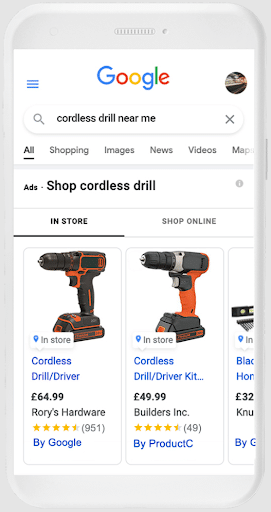
For product-based franchises, local inventory listings can also show customers what is available at a nearby store. This helps prevent locations from promoting products they do not currently stock.

Map Pack Visibility and “Near Me” Search
The Google Map Pack is where a large share of local intent turns into calls, directions, bookings, and visits.
Local rankings are influenced by relevance, distance, and prominence. You cannot control where the searcher is located, but you can improve the signals that show Google the business is relevant and trustworthy.
Focus on:
- Complete and accurate Google Business Profiles
- Consistent business information across directories
- A steady flow of authentic customer reviews
- Relevant local pages
- Accurate service areas and categories
- Current photos, posts, products, and services
A multi-location fitness brand, for example, should target broad category searches as well as queries that include a city, neighborhood, or “near me” modifier. These searches may involve different competitors and require different local signals.
Our franchise SEO strategies account for both national visibility and location-level search demand.
Reviews and Reputation at the Location Level
Reviews are a per-location metric and a per-location responsibility. They also travel, a cluster of poor reviews at three locations shapes perception of the whole brand.
Build a review request into the natural end of the service interaction. Respond to every negative review promptly and without defensiveness, showing what will change.
Never offer discounts, gifts, or other incentives in exchange for positive reviews. This may violate platform policies and put the location’s profile at risk.
The ownership split should be clear:
- Corporate establishes the review strategy, templates, monitoring, and escalation process.
- Franchisees request reviews, respond consistently, and address service issues locally.
Social Media Strategy
Local social works when it looks local. Photographs of the actual team, actual customers, actual community involvement. National content pushed unchanged to 200 local pages reads as corporate wallpaper and earns nothing.
Platform choice follows the audience. A gym reaches people on visual and short-form video platforms; a financial services franchise reaches decision-makers on professional networks. Short-form video continues to carry the highest organic engagement, and influencer partnerships at local scale often outperform national ones on cost per impression.
The workable operating model is a pre-approved content library the operator personalizes, which is what our own Rallio platform was built to do, brand-approved posts a franchisee can tailor and schedule without waiting on an approval cycle.
Community engagement belongs here too. Sponsorships, charity events, food drives and seasonal activities associate the brand with the place, and they are the one marketing activity a national competitor genuinely cannot replicate from a head office.
For example, Carl’s Jr.’s Super Bowl ad with TikTok influencer Alix Earle shows how well brand storytelling works in current influencer campaigns.

Shared Channels: Where the Handoff Breaks
Shared channels are often the most difficult to manage because both corporate and the franchisee contribute to the outcome. Without a written handoff rule, two things tend to happen: both sides complete the same work, or neither side completes it.
Marketing Fund (or Co-Op): What It Buys
Almost no franchise marketing guide discusses the marketing fund honestly, which is strange, because it is the most common source of friction between franchisors and franchisees.
Most franchise agreements require operators to contribute a percentage of gross revenue to a national or regional marketing fund, and the Franchise Disclosure Document defines what that fund may be spent on. Disputes rarely concern the percentage. They concern visibility, the operator watches money leave every month and cannot connect it to anything happening in their market.
Three rules prevent most of it:
- Publish what the fund buys. A plain list (national campaigns, brand creative, the technology stack, agency fees) updated quarterly.
- Separate fund spend from local spend explicitly. The operator should know which campaigns they pay for directly and which the fund covers.
- Report fund-driven results at the location level. Not national impressions. What the fund produced in their market.
Local Pages: Subdirectory, Not Subdomain
Location pages are shared: corporate builds and controls the template, the franchisee supplies the local content.
Build them as subdirectories on the main domain, not subdomains and not standalone sites. A subdirectory (`brand.com/chicago`) inherits the authority of the whole domain. A subdomain (`chicago.brand.com`) is treated as a substantially separate property and starts closer to zero.
This is worth stating plainly because the opposite advice circulated widely for years and still appears in older franchise marketing material. It is wrong, and following it fragments authority a national program spent years building.
Each location page needs genuinely unique content: real address and phone, service area, staff, hours, local photographs and specifics only that location can supply. Templated pages differing by city name alone are the fastest route to a duplicate-content problem across an entire network.
A workable standard is roughly 60% templated and 40% genuinely local. The templated portion carries the service descriptions, brand messaging and conversion elements that must stay consistent. The local portion carries the team, the service area, local landmarks and directions, community involvement, and answers to questions specific to that market, a home-services franchise in Phoenix fields different seasonal questions than one in Minneapolis, and a page that reflects that reads as genuinely local to both readers and search engines.
Assign the local 40% to the franchisee with a simple intake form and a deadline. Systems that leave it optional end up with 200 identical pages, which is measurably worse than 20 good ones. For example, a network launching 50 location pages where only 12 operators complete their local content has effectively published 38 near-duplicate pages competing with each other for the same regional queries.
The other decision to make early is what happens when a location closes or changes ownership. Redirect the page to the nearest active location or the regional page — never leave it live with stale information, and never delete it without a redirect, since both outcomes waste authority the network spent years accumulating.
Schema (Structured Data) for Multi-Location Brands
Structured data tells search engines what each location is. Every location page should carry LocalBusiness schema with the address, phone, hours and geographic coordinates for that specific location; the main site carries Organization schema.
This is a template-level decision. Build it once into the location template and it maintains itself as locations are added, which is precisely why it belongs to corporate even though the data belongs to the franchisee.
Ready to see how this maps to your own network? Our franchise marketing services team runs the shared rows of this matrix for multi-location brands.
What Changes With AI Search
Search results are increasingly generated rather than listed. For a franchise system this is a bigger shift than it first appears, because generated answers compress ten options into two or three recommendations.
Generative Engine Optimization (GEO)
Generative Engine Optimization (GEO) is the practice of structuring content so AI systems can extract and cite it. The mechanics differ from classic SEO: generated answers favor content that states a claim directly, defines terms in complete sentences and can be lifted as a self-contained passage.
The practical implications for a franchise system are concrete. Answer questions in the first two sentences of a section rather than building to a conclusion. Keep entity names explicit instead of relying on pronouns. And maintain consistent business information everywhere, because generated answers assemble from multiple sources and contradictions get resolved unpredictably.
For example, a home services business partnered with Ignite Visibility to increase visibility in AI-driven search through content optimized for Google’s AI Overviews and generative intent. We were able to achieve 15 additional placements in just 3 months through effective AI SEO strategies.
Zero-Click Search and the AI Answer Layer
A growing share of searches end without a click. For a national brand-awareness query that is a real loss. For a local query it often is not, the searcher who reads your hours and address in the result and then drives to the location has converted perfectly well without ever touching the website.
This changes what you measure. A franchise system judging local performance on website sessions alone will conclude its local program is failing while calls, direction requests and walk-ins are growing. Track profile actions and calls alongside sessions, or you will defund the thing that is working.
The Role of AI, Automation, and Data Privacy
AI is genuinely useful for the repetitive work in franchise marketing: generating first-draft local content, checking franchisee posts against brand rules before publication, triaging reviews, and responding to inbound leads within minutes rather than days.
The constraint is data. Franchise systems handle customer information across many legal entities, and the franchisor rarely holds clean rights to all of it. Decide who controls customer data before deploying anything that centralizes it, that question is answered in the franchise agreement, not the marketing plan.
Measurement: Proving Per-Location ROI
Measurement is a shared channel, and it is the one that determines whether franchisees trust the program.
Reporting Across Locations
Reporting across locations has to work at two altitudes simultaneously. The franchisor needs the roll-up: total demand, cost per lead by market, which regions underperform. The franchisee needs their own numbers and does not care about the roll-up.
Most systems build one of these and hope it satisfies both. It never does. The roll-up reads as corporate self-justification to an operator, and location-level detail is unusable at portfolio scale.
Track at minimum, per location: profile views and actions, calls, form submissions, booked appointments or transactions, cost per lead, and review volume and average rating. Track them monthly, and against the same month last year rather than last month, most franchise categories are seasonal enough that month-over-month comparison misleads.
For example, Ignite Visibility helped a home services franchise turn fragmented paid media campaigns into a scalable strategy across more than 90 locations. By consolidating campaigns, localizing targeting, and applying insights from across the network, the strategy generated over 25,000 leads, increased lead volume by 72.7%, and reduced cost per lead by 8%. This shows why franchise reporting must provide location-level visibility while helping corporate identify opportunities that can improve performance across the entire system.
Reporting and Analytics: What Each Side Sees
Write down who receives what and how often. A workable default: franchisees get a monthly one-page location scorecard; multi-unit operators get that scorecard plus a portfolio view; corporate gets the full roll-up weekly.
The scorecard should answer one question, “did marketing produce more business here this month than the same month last year?” before it shows anything else.
Analytics platforms and search consoles supply the raw measurement, but the reporting layer is a design decision, not a tool decision. Unified attribution is where this is heading: connecting a national campaign to a local walk-in through privacy-compliant tracking. It is not fully solved anywhere, and any partner claiming otherwise is overstating the state of the art. Progress is incremental and worth the investment regardless.
Financial Planning and ROI Expectations
Set the payback expectation before the program starts, because the two halves of the matrix return on very different timelines. National SEO and brand content compound over 6 to 12 months. Local paid media and Google Business Profile optimization can move calls and bookings inside 30 to 60 days. A franchisee judging a 9-month SEO investment on 60-day data will conclude the program failed, and a franchisor judging local paid media on annual brand-lift studies will miss what is actually working.
Publish the expected timeline for each row of the matrix alongside the budget. For example, a system launching location pages across 50 markets should tell operators that meaningful organic visibility typically takes two to three quarters, while their profile and review work should show measurable movement within the first quarter. Setting that expectation costs nothing and prevents the mid-program loss of confidence that kills more franchise marketing initiatives than poor performance does.
Technology, Tools, and Innovation
A franchise marketing stack needs four capabilities, whatever products deliver them: a digital asset management system so approved creative is available without an email request; a local listings and review platform covering every location; a social scheduling tool with a pre-approved content library; and analytics that reports at both altitudes.
Marketing automation handles the repetitive layer, email sequences, scheduled social, content distribution. A customer relationship management system underpins all of it, tracking customers from first touch through retention.
The recurring franchise-specific problem is that operators are reluctant to push their customer data into a corporate CRM. That resistance is rational, it is their customer relationship, and it is resolved with a data-sharing agreement, not a software purchase. Systems that try to solve a governance problem by buying a platform end up with an expensive platform and the same governance problem.
Buy for the ownership matrix. Tools that assume a single marketing owner will fight your operating model every day.
Two practical selection criteria save systems from expensive mistakes. First, ask whether the platform supports location-level permissions natively, can an operator see and edit only their own data without an administrator intervening? Platforms retrofitting this after the fact tend to be fragile at scale, and a system with 200 locations will find the limits within a quarter. Second, ask what happens at renewal when a location changes hands. Ownership transitions are routine in franchising, and a platform that treats each location as a manually provisioned account creates administrative drag every time a territory sells.
Budget for adoption, not just licenses. The most common failure pattern is a well-chosen platform that a large share of operators never log into, which produces a reporting layer with holes in it and a franchisor conclusion that the tool failed. Training, a named internal owner and a simple monthly usage report typically cost a fraction of the license and determine whether the investment returns anything at all.
Email Marketing Campaigns and Lifecycle
Email is shared and usually underused. Corporate owns the brand-level program: welcome sequences, loyalty communications, national promotions. The franchisee owns local list building and location-specific offers.
The mechanical issue is list ownership, and it should be settled in writing before the first send. Most systems land on a shared list with a franchisor-managed platform and location-level segmentation, so the operator can reach their own customers without exporting the database.
Lifecycle sequences, post-visit follow-up, reactivation of lapsed customers, seasonal reminders, reliably outperform one-off promotional sends, and they can be built once centrally and deployed across every location. See our franchise email marketing approach for how this is structured across a network.
Franchise Development and Recruitment Marketing
Marketing to sell franchises is a different job from marketing to sell the product, with a different audience, funnel and timeline. It is included here because the two are constantly confused, and running them as one program serves neither.
Franchise development marketing targets prospective franchisees with content explaining the investment, the support model and the unit economics, gated appropriately so interest can be qualified. The sales cycle runs months, not days, and the content that works is educational rather than promotional, a prospective owner is evaluating a career change, not a purchase.
Organic search can also become a powerful franchise recruitment channel. Ignite Visibility helped a health and wellness brand build a full-funnel SEO and CRO strategy that connected organic visibility with qualified franchise interest. During the measured period, organic traffic generated 43% of all signed franchise deals, showing that SEO can influence more than awareness, it can help drive high-value ownership decisions throughout the franchise development funnel.
What New Franchisees Expect From Marketing Support
Prospective franchisees evaluate the marketing program as part of the investment decision, and by 2026 they arrive far better informed than they did a decade ago. They ask what the marketing fund buys, what corporate provides on day one, what they are expected to run themselves, and what results comparable locations achieved in their first year.
A development program that answers those questions concretely converts better than one selling brand vision, for a simple reason: the ownership matrix is exactly what a prospective owner is trying to understand. Publishing it during recruitment does double duty, it qualifies candidates who want turnkey support versus those who want autonomy, and it sets expectations you will not have to renegotiate in month six.
Emerging Niches and Specialized Franchise Models
Franchise growth is concentrating in specialized service categories rather than traditional retail and food service. Home services, health and wellness, pet care, senior care and children’s education have all expanded materially over the past five years, and each carries different marketing economics, a home-services franchise competes on local search and response speed, while a fitness concept competes on community and retention.
Multi-brand ownership is the other structural shift. Operators increasingly run two or three complementary concepts in a single market, sharing staff, real estate knowledge and back-office capability. Marketing support built on the assumption of one brand per owner does not fit that operator, and the systems adapting fastest are the ones treating the portfolio, not the unit, as the customer.
Opportunities for Multi-Unit and Multi-Brand Ownership
Existing operators are the most efficient development channel in most systems. They have proven they can run the model, they need no education about the brand, and they finance faster than first-time buyers.
Development marketing that speaks only to first-time owners ignores the segment most likely to convert, and multi-brand ownership, an operator running two complementary concepts in one market, is a growing pattern that most recruitment programs do not address at all. Our franchise development work covers this recruitment side specifically.
National-to-Local and Industry-Specific Strategies
The bridge between the two halves of the matrix is what most systems get wrong, and it is worth naming as its own discipline.
A working national-to-local program requires three things: localized content that stays aligned with national branding, advertising that adapts to local demographics without diverging from brand standards, and centralized analytics monitoring performance across every location rather than the national site alone.
Done well, it improves local relevance, raises return on investment and simplifies oversight, because the franchisor can see what is happening everywhere without having to approve everything everywhere.
For example, Ignite Visibility helped a multi-location franchise brand increase organic bookings by 38% and page-one rankings by 28% through a scalable local SEO strategy. Google Business Profile optimization, localized content, and citation building improved visibility for high-intent searches in each market. The results show how a coordinated national-to-local strategy can strengthen search performance while generating more revenue-driving actions at the location level.
Consumer Journey in Franchise Environments
Another key part of a successful franchise marketing strategy is understanding the consumer journey.
For more franchise customers, there are four journey phases:
- Awareness
- Consideration
- Conversion
- Retention
Awareness is largely franchisor-owned: national campaigns and brand building, supported by paid advertising that reaches people who do not yet know the category. Consideration is shared, as national content answers the category question, while local pages and profiles answer “which location”. Conversion is mostly franchisee-owned, decided by profile quality, reviews, response speed and the local page. Retention is shared, running on brand-level loyalty programs executed through local relationships.
You need to develop ads and content that reach your target audience at each phase of their journey. Running paid ads is a great way to reach those still in the awareness phase, while keyword-optimized landing pages will connect with those in the consideration phase. Promotions and discounts are effective in connecting with those in the conversion phase, while reviews and excellent customer service will inspire customer retention.
Mapping your channels to these four phases usually exposes a gap. Most systems are heavily invested in awareness and thin at conversion, which is precisely where the franchisee experiences the program’s value or fails to. For example, a system running a $2 million national brand campaign while 40% of its locations have incomplete profiles is paying to send customers toward a broken final step.
Common Challenges for Franchise Marketing
Brand consistency remains the most cited challenge. Consistent branding across the website and every marketing asset builds trust and recognition, and the mechanism that delivers it is onboarding and training rather than enforcement after the fact.
Communication between franchisors and franchisees is the second. Regular scheduled contact (a monthly call, a quarterly review) prevents most of the misalignment that otherwise surfaces as a dispute.
Remaining competitive requires ongoing market and competitive research, and keeping pace with changing consumer behavior requires actually asking customers rather than inferring from dashboards.
Brand consistency deserves more detail, because it is where most systems lose ground quietly. The mechanism that delivers it is onboarding and training at the point a new franchisee joins, not enforcement after a violation. Give operators a brand kit, a content library and a short, genuinely usable set of rules, then audit quarterly. Reputation management belongs in the same discipline: address negative reviews humbly, demonstrate what changed, and use press releases and owned content to respond to anything that reaches a public level.
Communication failures usually have a structural cause rather than a personal one. When a franchisee does not know who to ask about a co-op campaign, the problem is an unassigned matrix row, not an unresponsive manager. Scheduled contact — a monthly location call, a quarterly business review, an annual planning session — converts most of these into routine conversations.
Competitive pressure is the challenge most improved by research. Study what competitors in each market are doing, and pay particular attention to what they are *not* doing: an underserved audience segment or an unaddressed local need is usually easier to win than a head-to-head fight on the same terms.
Consumer behavior shifts faster than most annual marketing plans assume. Customers increasingly research a local business online before their first visit, which means the profile and the location page are doing work the storefront used to do. Ask customers directly — surveys, review text, and the questions arriving through profiles are all free research.
Data silos are the challenge most specific to franchising: getting local operators to share customer data with corporate systems. Without it, system-wide measurement is guesswork. For example, a franchisor unable to see which locations generate repeat customers cannot tell whether a national loyalty campaign is working or whether three strong markets are masking twenty weak ones.
Red Flags and Pitfalls to Avoid
The recurring failure patterns are consistent across systems and industries:
- Franchisees building independent websites. Fragments domain authority and creates compliance exposure. Prevent it in the agreement, not after the fact.
- Marketing fund spend with no location-level reporting. The fastest route to franchisee distrust.
- Templated location pages differing only by city name. A duplicate-content problem across the whole network.
- Neglected Google Business Profiles. The highest-leverage local asset, most often unattended.
- Treating multi-unit operators like single-unit franchisees. Loses your largest operators first.
- Data silos between local operations and corporate systems. A governance problem, not a technical one.
- Incentivizing reviews. A guideline violation that puts location profiles at risk.
Each of these becomes tractable once channel ownership is explicit. Most “communication problems” in franchise marketing are unwritten ownership rules.
FAQs
1. What is franchise digital marketing?
Franchise digital marketing is the coordinated set of online channels a franchise system uses to build national brand demand and convert it into transactions at individual locations. Franchise digital marketing differs from single-location marketing because the brand and the point of sale are owned by different parties, which means every channel needs an explicit owner: the franchisor, the franchisee, or both.
2. Who should pay for marketing: franchisor or franchisee?
Both, on clearly separated budgets. The franchisor funds national brand building, the technology stack and governance, typically through a marketing fund the franchise agreement defines. The franchisee funds local execution in their own market. Disputes almost always come from the two budgets being blended without written rules about what each one covers.
3. How much should a franchise system invest in digital marketing?
Marketing fund contributions generally range from 1% to 4% of a franchisee’s gross revenue, with local marketing spend required on top of that. The right total depends on category competitiveness and unit economics rather than a benchmark percentage. The more useful question is allocation (what proportion goes to national brand building versus local conversion) which the ownership matrix answers.
4. Why is my “near me” ranking dropping?
“Near me” rankings decline for diagnosable reasons: new competitors opening within the search radius, incomplete or outdated Google Business Profile information, inconsistent business details across directories, a drop in review volume or velocity, or a search algorithm update. Audit profile completeness and citation consistency first, since those are the causes a location controls directly.
5. What is the most important KPI for a franchise?
The specific KPIs that matter most for a franchise will depend on business goals, but two of the most important tend to be net profit for the overall franchise and gross sales that gauge market penetration. Other KPIs worth tracking might include brand awareness, customer retention, and website traffic, depending on your objectives and whether you’re a franchisor or franchisee.
Develop a Successful Franchise Marketing Strategy With Ignite Visibility
Now that you understand the importance of developing two different franchise marketing strategies (one for franchisees and one for consumers), as well as the importance of both a local and a national plan, it’s time to get to work and design a solid strategy that helps your business thrive. However, you may also benefit from some extra help, especially if you want solutions that allow for long-term growth.
With Ignite Visibility, you’ll get a complete franchise marketing plan that fuels your business’s success. Specifically, you’ll benefit from:
- National-to-local strategies that connect with local audiences while maintaining consistent branding
- High-quality content across multiple relevant marketing channels
- Consistent communications between franchisors and franchisees
- A strong presence on social media, Google, and other platforms
- And more
Want to find out what our experts can do for you? Learn more about our franchise marketing services.