

Are you familiar with Baidu SEO?
As more and more western companies are expanding into Chinese markets, it’s becoming more important than ever to consider Baidu and its role in driving relevant visits from users in China to your websites.
In this article, I’ll go over everything you need to know about this concept – how it’s different, how it ranks, and how you can optimize your content for the search engine.
What We’ll Cover:
- What Baidu is
- How Baidu differs from Google
- Baidu ranking signals
- How to optimize content for Baidu
- Baidu SEO FAQs
What is Baidu?
Now, you’re probably wondering what is Baidu.
Baidu is the undisputed king of search and SEO in China.
It holds roughly 68.5% of the Chinese search market and is the favorite when it comes to Chinese search engines.
You could very well call it the Google of China.
If you haven’t heard of it, don’t worry; you’re certainly not alone.
But have no doubt, this search engine is pretty major.
As you may be aware, China is home to a huge chunk of the world’s population (over 1.4 billion). And any chance to get your content in front of an audience that size is clearly worth exploring.
This is especially true for any brand looking to target an international audience or break into the market overseas. In fact, it’s not really an option if reaching China is your objective, as only 2.3% of searches in China happen on Western search engines.
So if you haven’t already, it’s time to give Baidu SEO some serious consideration when it comes to your SEO strategy.
At first glance, a Baidu search will look pretty similar to a Google search (albeit, in Chinese). You have your ads, organic listings, and SERP features to the right-hand side.
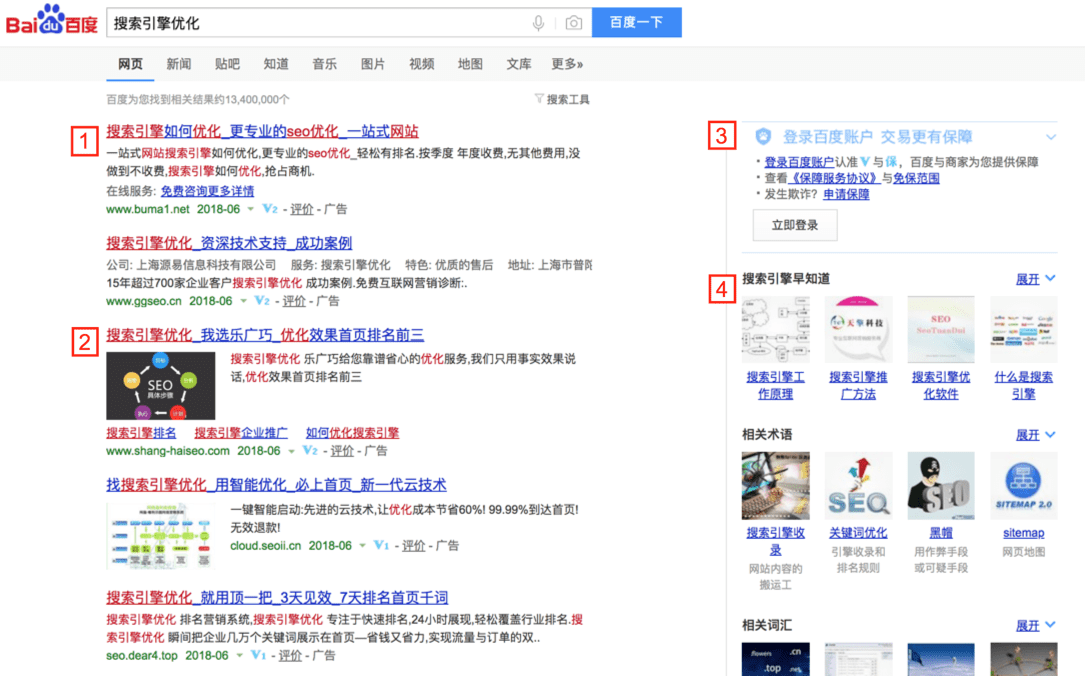
For local searches, you’ll also see the Local 3-Pack and map you’re accustomed to.
But ranking Baidu is a different beast than Google or Bing.
In fact, many classify Baidu as a sort of Google 2.0 – it adopts many of the same principles as Google, just slightly behind the curve.
That’s really good news if you’re already practicing solid SEO techniques and tactics (and if you need a refresher, check out our updated guide here.)
Many practices that we would classify as Black Hat SEO are similarly frowned upon – and punishable – by Baidu, which means Google rules regarding high-quality content and links still apply.
But, while there are (thankfully) many similarities, you’ll still need to take some key differences into account when approaching Baidu SEO.
Differences Between Baidu and Google
Some of the biggest differences you’ll find regarding Baidu and Google are:
- Languages – This one will quickly become the most apparent. Baidu’s interface is in Simplified Chinese only. While this means its extremely proficient at processing and understanding Chinese content, it doesn’t rank content in other languages high in its SERPs.
- Structured Data – All rich results must be submitted directly through Baidu Search Console; schema markup is not supported on Baidu.
- Image-heavy SERPS – Baidu provides a good amount of images in their search results, but because it’s not quite as sophisticated as Google you’ll need to pay special attention to optimizing your alt tags, image URL, and descriptive text. Baidu optimization is quite different from Google.
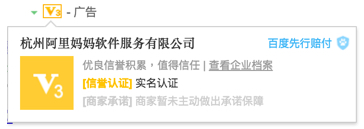
- Trust System – While Google relies heavily on domain authority and links for trust signals, Baidu uses an additional credibility system that displays the level of trust it places on a site in its SERP snippet. To display this, a site must pay a fee to apply for the badge. This can go a long way in building credibility with searchers, but Baidu hasn’t officially stated that its Trust system counts as a ranking factor. That’s something to keep in mind when learning about this topic.
- JavaScript and Ajax – These have never been a favorite of Google, but they’ve come a long way in crawling this kind of content. Baidu, on the other hand, still struggles with it.
- Link quality – Though it has made strides in identifying bad links, Baidu is not yet as proficient as Google at determining link quality. This is one of the Baidu webmaster tools that still needs improvement.
- Domain age – Though it’s hard for brand new domains to take top rank on either search engine, it’s typically a bit harder for new domains on Baidu, as it gives more weight to older, established domains.
Ranking Signals
So, what kind of ranking signals do you need to consider when building Baidu SEO? The answer is not quite so simple.
No search engine is ever totally upfront about their rankings (I’m looking at you, Google).
So take the following tips with a grain of salt. That said, these are some of the ranking signals we believe Baidu takes into consideration.
- Server location – Being a Chinese network, Baidu prefers a server that’s located in China. If possible, try to do so, or use a Chinese content distribution network (CDN).
- Business address – Though you may not have a physical location in China, we recommend adding an address on mainland China if you have one. Again, Baidu SEO will give preference to brands with a Chinese location.
- Language – Simplified Chinese takes priority here.
- Backlinks – Like Google, backlinks are a big help for results. Unlike Google, you’ll want to focus on getting links from Chinese sites to your content.
- Top level domain – In some cases, it may be beneficial to migrate to a .cn domain (the top level domain used in China). This will tell Baidu that your content is meant for a Chinese audience, though it’s not explicitly labeled a ranking factor by Baidu.
- Mentions and citations – Features like reviews, star ratings, high-quality backlinks, and citations are all important factors in ranking in Google. Same goes for optimization. As you produce more Baidu-optimized content, you’ll need a strategy to gain as many of those reviews, mentions, and citations as possible.
- HTTPS – Baidu has stated that it does give a ranking boost to sites on HTTPS, though it’s not yet as sophisticated at crawling HTTPS sites as Google.
How to Optimize Your Content
But before you jump into Baidu SEO optimization, your first step should be to make sure your content is actually accessible in China.
Content listed on Baidu has to adhere to what we call the Great Firewall, which is used to regulate and censor the information available in the country. It’s intended to block access to selected foreign websites.
It specifically targets content deemed inappropriate, and it blocks tools like Google, Facebook, Twitter, and Wikipedia entirely.
Additionally, it targets news sources that cover any topics considered defamatory against China (which includes the Chinese version of BBC News and Voice of America), and any websites linked to criminal activity.
This also has a lot to do with the higher rankings attributed to Chinese sites. Many sites outside China find their rankings generally suffer in China’s attempt to promote domestic companies over foreign competitors.
To find out if your site is blocked or not, check out a Baidu webmaster tool like GreatFire.org Analyzer.
If you find that your site’s good to go, great! Now it’s time to talk Baidu optimization.
Produce Unique Content Regularly
Like Google, Baidu likes fresh content. Maybe even more than Google.
Sites that produce unique, frequently updated content will perform better than those that fail to do so.
For businesses, that means having a current content strategy in place will help you rank higher in the Baidu SERPs.
We recommend a publishing schedule with new content produced at least 2x a month (though the more, the better).
Just like with Google SEO, a focus on high quality and informative content is your best bet for reaching top ranks of Baidu SEO.
Interestingly, Dragon Metrics reports that optimal content length for Baidu is between 200-800 Chinese characters. While Western search engines like Google tend to favor long-form content, it’s easier for Baidu to process shorter content.
They also point out that keyword density isn’t as big of a factor for Baidu SEO.
It’s also a good idea to keep a close eye on your content. Content scraping and other black hat tactics are a more common occurrence in China.
And keep in mind, you’ll need to be producing content in Chinese to suit the Baidu search algorithm. I probably don’t need to tell you, but it’s an incredibly complex language and will require some serious thought into who you hire or task with translating your content.
Optimize Meta Keywords Tag and Meta Description
For Baidu SEO, you’ll want to optimize your meta keywords and descriptions, as there’s evidence that SEO Baidu uses both as a ranking signal (unlike Google).
While meta keywords are widely considered useless regarding Google, they may play a part with SEO Baidu, so don’t skip this part. These will contain your primary and secondary keywords and only be visible to the Baidu search engine itself.
Because Baidu descriptions appear to be a similar length as those in Google, it’s a good idea to stick to general search engine optimization practices here.
That means you’ll want to include the primary and secondary keywords targeted on the given page, and keep them in the 50-300 characters range.
Optimize Image URLs & Alt Tags in Simplified Chinese
We touched on this one above, but it’s worth mentioning again if you want your images to pop up in Baidu’s image search.
Because Baidu still relies heavily on image URLs and alt tags to properly identify images, it’s important that you have yours accurately written and translated to Simplified Chinese.
As always, your alt tag should be descriptive and contain the target keyword associated with the image.
Remember, the goal of good alt tags and titles is to explain what’s in the picture without a search engine having to look at it. Keep that in mind when writing yours.
Keyword Research and Optimization
We’ll start with the good news: your usual keyword research process applies (read all about that here).
But, being an entirely separate search engine, there will be some important differences when it comes to Baidu optimization.
The language barrier comes into big play here. Even after you’ve done your initial research, you’ll want someone who speaks the language to come up with a list of related keywords for you rather than relying on translation tools.
Outside of that, you’ll need to enlist the help of a whole different set of Baidu webmaster tools to help you conduct your research.
Like Google, Baidu has its own set of resources for keyword planning and trend spotting, which include tools like Baidu Index (equivalent to Google Trends), Baidu Keyword Planner, and Baidu Webmaster Tools.
I highly suggest taking a look at this comprehensive list of tools to see what each can do for you and how to use them properly in your keyword strategy.
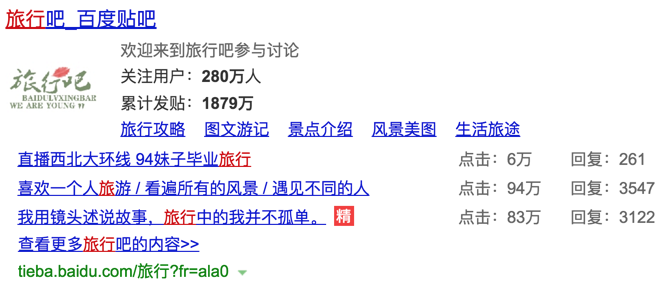
Engage With Tieba
Tieba is the largest Chinese communication publication platform, hosted by Baidu.
Essentially, it’s an online forum or message board where people search for topics. If the topic hasn’t been created before, it will be after the search.
Because it’s hosted by Baidu, Tieba content tends to be easier to rank. That’s why brands should definitely consider posting helpful to the site to boost brand mentions.
Reply to threads related to your industry with any helpful insights, ask questions, and post related content.
Upload Relevant Case Studies, Slideshows or Whitepapers to Wenku
Wenku is similar to SlideShare, but bigger. In fact, it’s the biggest document sharing platform in the world.
Everything from stories to presentations to law documents can be found there, making it an ideal platform for almost any kind of brand.
Wenku is heavily used by businesses in China to upload product information and content, and should be incorporated into your strategy as well.
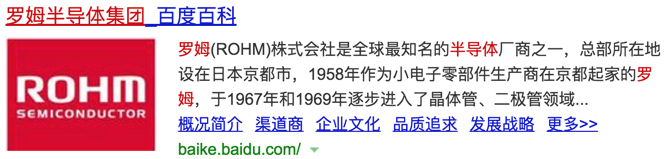
Create a Corporate Page on Baidu Baike
Baidu Baike is the Wikipedia of China (remember, Wikipedia itself is banned).
Like Wikipedia, it’s a giant resource dedicated to content of almost any kind, all available to users to edit as they like (with, hopefully, accurate information).
For optimal Baidu SEO, it’s recommended that all businesses set up corporate pages on the platform. This will help consumers find the company and learn more about it.
Set up an Account in Baidu Webmaster Tools
Just as Google Webmaster Tools are to Google, Baidu Webmaster Tools are a critical part of Baidu.
The platform is your one-stop shop for keeping tabs on and optimizing your site for the Baidu search engine – the only caveat being, it’s available only in Chinese.
Naturally, a native speaker will be extremely helpful in this particular area, though comprehensive guides like this one do exist to help you navigate the platform’s many features.
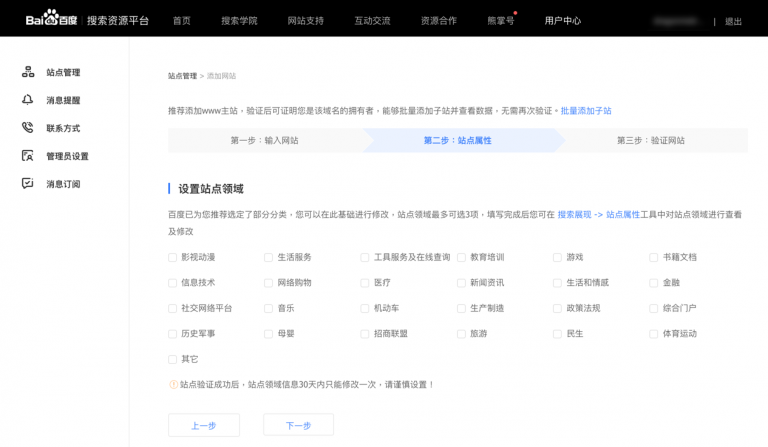
Do note that to sign up for an account, you’ll need a phone number located on Mainland China and a Chinese email address for verification.
Once your account is set up, you’ll be able to register your site by adding in your main domain and choosing an industry category. You can then verify your site via file upload, HTML tag verification, or CNAME settings.
After your site is successfully verified, you’ll be able to track your site’s indexation on Baidu, track any crawling errors, track broken backlinks, update robots.txt file, optimize for mobile, and much more. Baidu Webmaster Tools is a well-rounded suite of systems that will help boost your SEO.
Include Appropriate Hreflang Tags
A hreflang tag tells Google which language you are using on a given page. And as you can imagine, it’s a pretty important part of international SEO.
So, if you have multiple versions of a page for different languages, this will tell the search engine which version they should be directing searchers to, based on where they’re searching.
A hreflang tag for Simplified Chinese will look like this, though you can use a hreflang tag generator tool to help.
<link rel=”alternate” href=”http.example.com” hreflang=”zh-hans” />
Generally, a hreflang tag will be placed in either the on-page markup, the HTTP header, or the sitemap.
Baidu SEO FAQs
1. How can I optimize backlinks for better Baidu SEO?
Anytime you are searching for sites to give you effective backlinks, it can be a tedious process. You want to find websites that are relevant to your brand.
Tips for finding the best sites for backlinks include the following:
- Keywords – Choose sites that rank well for your targeted keywords.
- Value – Analyze the benefits you will get from a backlink with these sites.
- Competition – Scope out your competitors to see which sites are giving them backlinks. They may be open to giving your company backlinks as well.
- Replacement – Better yet, check to see if the sites have any broken backlinks to competitor sites. A link to your website could actually replace them.
2. How do I figure out which keywords will resonate with the Chinese market?
You will need to build a keyword strategy with the help of a native speaker. Hiring Chinese employees who understand marketing tactics in their own country will be well worth the investment.
You can also enlist the assistance of a keyword planning tool. Here’s a list of the best keyword planners for Baidu SEO:
- Baidu Top Keywords – Live Keyword Feed
- Baidu Index
- Baidu Keyword Research Tool
It’s also important to note that Baidu appreciates keywords a bit more than Google. You can use specific keywords inside your copy more often than with Google without being penalized.
Baidu SEO favors keyword density of about 8% to 12%.
3. What website elements should I focus on to make my site rank higher with Baidu SEO?
If you are familiar with Google, then you know that the homepage isn’t always the most highly trafficked section of your website. With Google, you can put more focus onto other pages throughout your site to boost SEO.
However, this is not the case for Baidu.
Baidu loves homepages.
In fact, Baidu SEO gives more weight to homepages than other internal site pages. This means that the page that will show up in Baidu search results will typically be your homepage.
In this case, you will need to give a lot of thought to your homepage layout and prioritize keyword use.
4. What is Baidu Spider?
Baidu Spider is simply a website crawler or automated search engine program.
Essentially, it crawls to your site and collects information to put into the Baidu SEO database.
Wrapping Up
Having a site optimized for Baidu can be incredibly useful for any brand looking to expand into the Chinese market.
But to do so, you’ll need to make sure you’ve taken into account the major differences in Baidu SEO and optimized accordingly.
Need more information on international SEO? We’ve got you covered. Head over to our page here for more resources.
