

Have you had a PPC audit recently? If so, it’s incredibly important that it’s done correctly. After all, when it comes to PPC, it’s very easy to waste money.
A PPC audit can help you determine how effective (or ineffective) your efforts are and identify opportunities to optimize your ad strategy. The key is to take the right approach to your audit and avoid certain critical mistakes that might compromise the results, with the greater need for proper conversion values and signals to help AI optimize your campaigns for success.
In this blog, Milton Lu, Paid Social Strategist, will discuss how to conduct a complete PPC audit, red flags to look out for, and the benefits of a reliable PPC auditing service.
What’s Covered:
- What a ‘Good’ PPC Audit Report Includes
- Inputs You Need Before Auditing
- 8 Steps for Conducting a Complete PPC Audit
- Common PPC Audit Red Flags
- PPC Audit FAQs
What Is a PPC Audit?
A pay per click audit is a systematic review of paid ad campaigns that can help you figure out how to optimize performance, cut down on ad spend, and maximize your return on investment (ROI).
This process will consist of a paid search audit and an audit of display ad campaigns across all relevant channels that your business uses, including Google Ads on Google and Google Partner sites, Microsoft Ads via Bing and LinkedIn, and, if you advertise on Facebook or other social platforms, paid social campaigns.
It’s best to conduct PPC audits regularly, often quarterly, to identify any potential issues with your campaign, especially when taking over an account, prior to launching campaigns, when changing leadership, or if you detect a decrease in ad performance.
My Expert Opinion on What Makes a Strong PPC Audit
To measure the results of your advertising strategy, you need to conduct an exhaustive pay per click audit that tracks performance against your goals. Otherwise, you won’t get a complete picture of your campaign and determine the next steps to take for continuous optimization.
With the right strategy and regular reviews using cutting-edge PPC audit software, you can gain the insights you need to get the best possible results from your campaigns. The process begins with a pre-audit checklist to ensure access to everything you need, followed by a step-by-step process that covers all bases.
Following a PPC audit, our team was able to help our clients develop solid strategies to get the most from their efforts. One multi-brand enterprise client implemented our proprietary RevIntel attribution and revenue optimization platform, which helped optimize PPC ads through Performance Max, Microsoft Ads, and other campaigns to yield a 32.73% increase in revenue, an 18.01% boost in qualified leads, and a 5.40% decrease in spend.
After we conducted a PPC campaign audit for a home services franchise, we uncovered issues like fragmented paid media for 90 locations, budget dilution, and a high cost per lead with a low lead volume, all of which we were able to remedy with Meta Ads to help generate over 25,000 more leads across locations, a 72.7% increase in lead volume, and an 8% lower cost per lead.
There are also some key mistakes to avoid that might otherwise set you back, from neglecting campaign and budget analysis to failing to look at critical elements like ad rank and Google Quality Scores. We’ll also look at these to help ensure you conduct a PPC audit the right way for the best possible results.
Audit Deliverables: What a ‘Good’ PPC Audit Report Includes
There are multiple deliverables to track with a paid or free PPC audit, including:
Executive Summary
Start with a high-level overview of the campaign, including its current performance, existing and anticipated issues, and prospective ROI and the financial impact of any changes made.
Key Risks
Account for all potential issues that could affect your campaign, from low Quality Scores and compliance issues to tracking inconsistencies.
Wasted Spend Sources
Detail potential “budget bleed” along with the cost of keywords that fail to convert, poor location targeting, and irrelevant ad placement.
Growth Opportunities: Your audit could help identify any areas where you can scale, whether it’s through new keyword opportunities, audience segments, or certain ad formats.
Tracking Plan
Make sure your PPC audit software tracks the right metrics, including basic and enhanced conversions.
PPC Account Audits
Your overarching PPC audit should also incorporate different types of PPC audits within it, including:
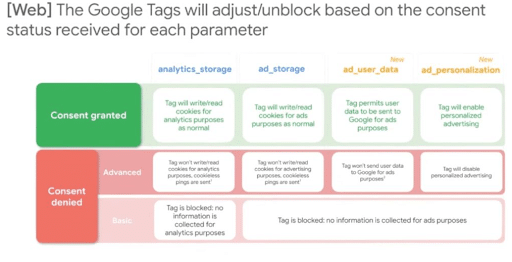
- Consent Mode Audits: This type of PPC account audit will help confirm whether your website respects user privacy laws when collecting user data. For instance, this audit could determine whether tags require users to accept cookie tracking before firing cookies.
- Conversion Modeling Audits: Without cookies, you can still use machine learning and ad networks to predict missing sales data. Audits here will assess the accuracy of “modeled conversions” within your ad dashboard, preventing systems from ignoring customer actions or the over-reporting of fake sales.
- First-Party Data Audits: This type of PPC campaign audit will help gauge the effectiveness of uploading offline customer lists into your ad channels through your CRM, testing if “Enhanced Conversions” or other features are securely hashing customer emails before they funnel into your ad networks.
- A PMax and AI Max signal audit. This involves checking the audience signals, asset group completeness, and conversion goals you’re feeding the algorithm, not just the bids you’re setting.
- A brand vs. non-brand incrementality check. Here, you flag when Performance Max or AI Max is leaning too hard on warm branded traffic, since that inflates blended ROAS without actually growing the account.
Source: Google
Quick Wins
Look for quick wins that you can earn within a day to 14 days, such as eliminating non-converting keywords, adding negative keywords, and fixing any broken or ineffective landing pages.
Mid-Term Optimizations
Every 30 to 60 days, conduct an analysis to guide mid-term optimizations, like ad copy refreshes, bid strategy adjustments, and structural optimization.
Strategic Rebuild
Every 90 days, it can help to implement a more exhaustive strategic rebuild based on the data collected, which could entail realigning campaign settings with changing business goals or developing new campaigns.
Testing Roadmap
A good audit will incorporate a strategy that involves A/B testing of ad messaging, creative elements, calls to action (CTAs), and landing pages for continuous conversion rate optimization.
Prioritized Action Plan
Based on all of the data gathered and analyzed, you can finish the process by prioritizing the actions to take based on urgency and potential impact.
Inputs You Need Before Auditing
Prior to conducting your audit, here are some key inputs to put into place.
Here is a PPC audit checklist for implementing those inputs:
- Google Ads access for all relevant staff
- Google Analytics 4 tracking setup
- Clear conversion definitions
- CRM and offline conversion data access
- Live landing pages that correspond to each ad
- Past performance reports for baseline establishment
- UTM tracking parameters and a GLCID strategy to enable effective auto-tagging
Now, let’s get into each of these items in the PPC audit checklist:
Google Ads Access
The people on your team should have access to the campaign’s Google Ads account to begin tracking conversions and other critical data.
Google Analytics 4 (GA4)
In addition to Google Ads, your team should implement GA4 to track metrics from conversions and engagement rate to clicks, cost-per-click, and revenue.
Conversion Definitions
Clearly define all conversions across the customer journey to determine whether your ads are achieving your goals.
CRM/Offline Conversion Access
If applicable, connect your campaigns to customer relationship management (CRM) solutions and offline conversions via other channels in the sales funnel.
Landing Pages
Match your ads to highly optimized landing pages that move people down the funnel, with unique tracking for each landing page that enables clear attribution to corresponding ads.
Past Reports
To get the full picture of ad campaign performance and where you want to be, integrate historical data that may help you identify certain patterns and missed opportunities to jump on in the future.
UTMs/GCLID Strategy
For more in-depth tracking of conversion data, you will want to use either Urchin Tracking Modules (UTMs) or Google Click Identifier (GCLID), with UTM tags allowing for more flexibility across all channels while GCLID enables automated tracking in Google Ads.
8 Steps for Conducting a Complete PPC Audit
Now let’s dive into how to conduct a pay per click audit with the following main steps:
Step 1: Prepare Analytics With a Tracking and Measurement Audit
The very first step should involve an audit of tracking and measurement capabilities to ensure you’re tracking everything you need throughout your campaigns.
A quality assurance workflow here might look like:
- Confirming primary conversions like lead form submissions and purchases that directly move you toward your business goals
- Verification of deduplication (deduping) and counting to eliminate any duplicate data, which will improve accuracy and save more storage
- Checking attribution settings to connect ads with specific conversion actions
- Testing lead quality and spam mitigation to make sure all leads are valid and marketing- or sales-qualified
- Aligning GA4 events and Ads conversions, creating a cohesive analysis of the Google PPC ecosystem
- Confirming UTMs and naming for effective tracking and connecting ads to landing pages
Step 2: Ensure Proper Campaign Setup With an Account Structure and Settings Audit
You must also complete a pay per click account audit and check your settings to properly prepare your ad campaigns.
This aspect of the auditing process will consist of:
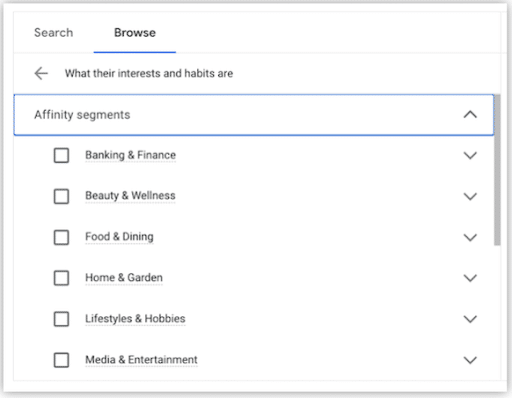
Campaign Segmentation
Ad campaigns should segment paid traffic data into specific groups based on certain shared attributes.
Campaign segments will consist of groups broken down based on:
- Data segments like website and app visitors or customer matches
- Custom segments
- In-market audiences
- Affinity audiences
- Detailed demographics
- Life events
- Device
- Time
- Location
- Click type
Branded and Non-branded Terms
Campaigns should also track search terms based on whether they include your brand name.
Identify branded and non-branded terms, creating separate campaigns for each, adding branded terms as negative keywords in non-branded campaigns.
Network Separation
Ad groups should separate into different network types, which will offer more control and prevent competition between ad types.
Separate your ad groups into search and display network campaigns to develop unique campaign structures and keyword strategies for each.
Geo Targeting
Another aspect to consider is geo targeting, which will help you reach people in specific locations.
Develop geo-targeted ads and location-based landing pages that connect with local customers. In the process, you might target specific cities or use geofencing to connect with audiences near your locations.
Language Analysis
Ads and landing pages must connect with people in their native language.
Localized keyword research and independent campaigns for each region can implement regional languages and content to speak more directly to target audiences across the globe.
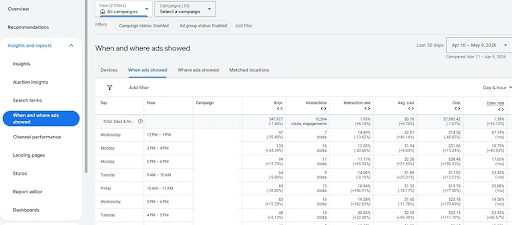
Ad Scheduling
For more effective targeting, schedule ads appropriately with the right timing.
Highly targeted ads will reach people at the right time of day and on the right platforms to maximize conversions.
Device Targeting
People could see ads on a variety of devices, making it important to account for different types of traffic.
Campaigns will measure traffic and separate it based on the specific type of device used, including desktop computers, smartphones, and tablets, helping indicate which users are most likely to encounter and click on your ads.
Audience Observation vs. Targeting
In Google Ads, you have the option of using “Observation” or “Targeting” settings to target your ad groups.
Use the “Targeting” option for campaigns or ad groups if you want to only show specific content or audiences for more restrictive reach. Conversely, use “Observation” if you want to see how ads are performing for particular topics, audiences, or placements in your campaign without affecting reach.
Budget Distribution
Proper allocation of budget will help ensure ad spend goes to the right place in your campaigns.
Strategically distribute funds based on performance, business goals, and audiences, channeling your budget to channels like branded and non-branded campaigns, Google Ads or Performance Max, or other campaigns.
Step 3: Avoid Overspending With the Right Budget and Pacing
When auditing budget and pacing, consider the following:
Limited by Budget
This status would indicate your budget is too low to capture high-intent traffic, preventing ads from appearing prematurely. Quick win: Increase your daily budget for campaigns that are performing well to avoid missing critical opportunities and keep ad delivery consistent.
Impression Share Lost
Metrics here will show the percentage of impressions your campaigns missed because of an inadequate budget or a low Ad Rank. Quick win: Increase your campaign’s daily budget if you lose impression shares because of a low budget, or improve your Quality Score and ad relevance in the event of a low Ad Rank.
Marginal Returns
This is the point where each added dollar of ad spend sees diminishing returns, resulting in a higher cost per acquisition (CPA). Quick win: If you notice marginal returns in one area, reallocate your budget to better-performing campaigns, platforms, or ad groups.
Reallocating to the Highest Intent
This process involves shifting your budget from a broader top-of-funnel strategy to individuals who are most likely to convert, usually toward the bottom of the funnel. Quick win: Pause generic display campaigns and move a percentage of their budget to a search campaign reaching high-intent keywords like “buy now” or branded terms.
Step 4: Optimize Targeting With Search Terms, Keywords, Match Types, and Negatives
The next step involves organizing and targeting all relevant keywords for your display and paid search audit.
This process will begin with developing a standard operating procedure (SOP) for search term mining. This SOP could cover:
- Defining specific objectives, such as targeting high-intent keywords when people are looking to make a purchase
- Determining existing keywords that people use to trigger ads
- Analyzing customer language
- Selecting the right tools to mine search terms, such as Google Keyword Planner, Semrush, and Answer the Public
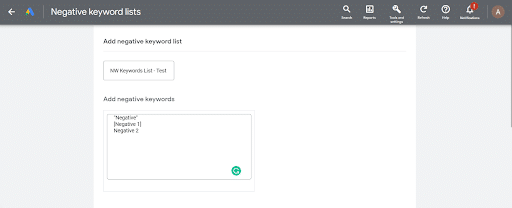
Additionally, you should put a negative keyword strategy in place to identify keywords that should not connect with your ads, which might include certain branded or non-branded terms or low-intent keywords that don’t drive conversions. Within Google Ads, you can use the Shared library to create, edit, and remove negative keywords across accounts.
You also need to audit for effective match type and intent mapping, ensuring keywords align with search intent along the funnel.
This might look like:
- Broad Match: The broad match keyword type is great for discovery at the broadest level, but you’ll need to include certain negative keywords to avoid irrelevant traffic.
- Phrase Match: For more specific intent, you might target phrase match keywords like “buy [product name]” or “best [company type] in [city].”
- Exact Match: These terms would show ads for searches that match precisely with your target keywords for more control.
Another aspect to think about is brand protection. Trademark infringement is a real problem that many brands face, with recent data finding brands losing up to 21.5% of their normal clickshare to competitors.
Establishing codes of conduct for partners to follow with ads and mitigating the risk of ad hijacking can keep competitors from stealing traffic while ensuring you only pay for the traffic you win.
Also, consider query expansion and query control.
- Query expansion is a method used to maximize search effectiveness by broadening queries to include related words, synonyms, or variations of concepts.
- Query control refers to strategies used to manage, regulate, and monitor database queries to improve security, performance, compliance, and version management.
Step 5: Boost Performance With an Ads and Assets Audit
Here, you will closely examine your ad content and assets to optimize ad performance.
This element will look at:
RSA Structure
Responsive Search Ads (RSAs) can implement multiple headline and description variations to help you personalize ads for each audience; you’ll want to ensure these ads contain relevant and high-quality assets that result in favorable combinations.
Asset Variety
Using a variety of images and creative can help you effectively target your ads, with relevant keyword matches, unique value propositions, CTAs, and promotions.
Pinning Guidance
In some cases, you might want to pin ads to limit the ability to mix and match headlines and descriptions, but you want to avoid excessive pinning that might otherwise limit optimization. Pinning is ideal for situations like ensuring brand names or core messages appear in specific positions or incorporating legal text and disclaimers.
Messaging Alignment With Intent
The audit should also evaluate whether ad copy aligns with search intent, which may include informational intent at the top of the funnel, navigational intent as people navigate your site, commercial intent as people compare brands or offerings, or transactional intent when people want to make a purchase.
Competitive Differentiation
Make sure your ads stand apart from competitors with unique messaging, visuals, and offerings that build more brand awareness and recognition among your audiences.
Asset Coverage
Check the implementation and overall performance of ad assets. These may include sitelinks that link to various parts of your site, callouts that implement short and descriptive phrases to supplement core messaging, and structured snippets that give more context about your brand or offerings.
Step 6: Maximize Conversions With a Landing Page and Funnel Audit
Assessing landing page and funnel performance is also crucial. The following are some of the main components of this audit element:
Message Match
Make sure your ad copy and the content of your landing page match.
Speed/Mobile
Page loading speed and users’ mobile experience should enable a desirable user experience that contributes to a higher Quality Score and more conversions, with good Core Web Vitals metrics. Sites must also be mobile responsive for different screen sizes, whether on tablets or smartphones.
Form Friction
Also check for any friction that might keep people from entering information on forms, such as too many fields, the wrong field types, or a lack of error messages informing users of incomplete or incorrect information.
Intent-Specific Landing Pages
Develop and connect landing pages that appeal to people’s intent across the customer journey, from the awareness stage when people seek more information to the bottom of the funnel when people are ready to buy.
Tracking Consistency
Check for the proper implementation of conversion pixels, data accuracy, and goal mapping to track ad performance, conversions, and more.
A/B Testing Plan
Determine which assets to A/B test for your landing pages to help optimize their performance beyond the ad. You can then see which landing pages yield the highest conversion and click-through rates.
Step 7: Continually Optimize Campaigns Through Automation and Platform Changes
There are multiple features you can use in Google Ads and other tools to automate optimization and modify platforms as needed. These could include:
Auto-Apply Recommendations
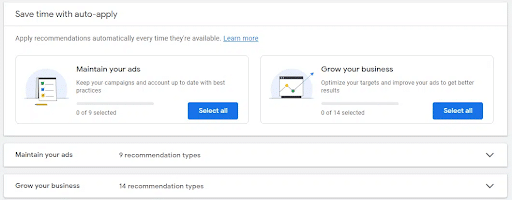
In Google Ads, you can use auto-apply recommendations to automatically implement any suggestions the algorithm makes to optimize campaign performance, but be sure to review the options available before approving the recommendation.
Instead of blindly enabling auto-apply recommendations, look at “Maintain your ads” or “Grow your business” bundles, or manually choose specific recommendations from either drop-down menu.
Change History Review
The Change History report in Google Ads indicates all changes made to accounts, including automated changes. Using this function, you can see which keywords were added or removed, altered settings, and the individuals or systems behind them.
Smart Bidding Prerequisites
Through Smart Bidding, you can automatically optimize bids when auctions occur, but you need to set up conversion tracking, ensure there’s sufficient conversion data to inform the Smart Bidding algorithm (e.g., 30 conversions within the last 30 days for most strategies), and provide high-quality conversion signals.
Broad Match Usage Guardrails
Set specific limits in place to maintain control over broad match keywords, such as pairing with Smart Bidding, accurate conversion measurement, and the use of negative keywords for refining traffic.
Experiment Approach
Before rolling out any changes, try to experiment with them in controlled settings. In doing so, you might develop experimental campaigns that implement the changes to gauge performance before applying them to the original campaign.
Step 8: Campaign-Style Checks
Finally, there are some checks that can complete the auditing process and keep your campaigns on the right track.
PMax Inputs
If you decide to run a Performance Max (PMax) campaign, make sure the right inputs are in place. PMax uses AI to run ads across Google and Google Partner sites, and you should give the algorithm as many as 15-20 headlines, 20 images, and 5-10 videos for ample variety.
In addition, consider Customer Match lists and other high-intent data signals like website visitors and custom intent segments to inform the system.
Brand Exclusions and Controls
Include branded keywords in an exclusion list to prevent certain ads from appearing for them, which could help optimize campaigns to focus on acquiring new customers at the top of the funnel.
Placement Exclusions
At the account level, you can use placement exclusions to prevent ads from appearing on irrelevant apps or low-quality websites. In Google Display and YouTube settings, you can also use the “Content Suitability” setting to exclude ads from unsuitable content.
Goal Alignment
Make sure all ad placements and metrics tracked align with your specific goals. For instance, if you want to bring in more people at the bottom of the funnel, focus on meaningful metrics like qualified leads and purchases over clicks or impressions.
AI and Automation Audit
To get the most from AI capabilities in marketing with your paid media, your PPC audit must also feature an AI and automation audit.
Here are some specific elements to look at here:
Smart Bidding Review
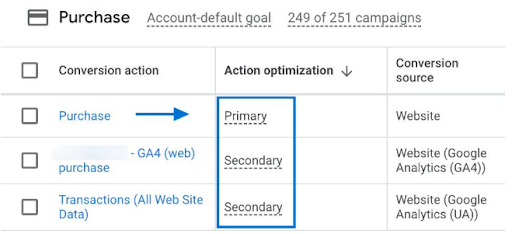
In Google Ads, Smart Bidding uses AI to automatically adjust bids for every auction, which can maximize conversions or conversion value according to your specific settings.
Here, you’ll want to evaluate primary vs. secondary goals, confirming that a macro-conversion like a completed purchase serves as your “Primary” goal, while a micro-conversion such as page views counts toward your “Secondary” goal.
AI-Generated and Automatically Created Assets
If you use any AI-generated content in your ads, you must balance automation with compliance and ethical use.
Using PPC audit software, you can make sure your assets and text customizations adhere to your brand voice and guidelines. At the same time, you can eliminate any unwanted automations that lead to redundant or irrelevant copy.
Search Term Visibility Limitations
Certain AI-driven matching tactics and privacy restrictions can lead to a decrease in search queries that connect with advertisers.
Maximize your search visibility by tracking visible search terms; if you see a high percentage of irrelevant queries, optimize keyword match types and implement negative keywords.
Consent Mode Audit
Let’s expand on consent mode within your PPC audit checklist, which the right PPC audit tool will help you complete in the following ways:
Consent Mode v2
Google Consent Mode v2 enables Google tags to connect with a website’s cookie consent request banner, which usually appears toward the bottom of the page when a new visitor lands on your site.
Your PPC audits should help ensure that users can consent to cookie tracking and that this decision connects to both Google Ads and GA4.
Check for tagging parameters like:
- “ad_user_data”: Confirms whether a user permits their data to go to Google for advertising purposes.
- “ad_personalization”: Determines whether a user allows a website to collect their data for personalized targeting and remarketing efforts.
Modeled Conversions
Not every user will approve cookies, in which case you’ll need to close any gaps that might otherwise appear in your conversion tracking.
Google’s platform uses machine learning to develop modeled conversions, helping to predict user behavior based on previous data from people who consented to cookie tracking.
With your PPC audit software, make sure your account meets the minimum data thresholds in place for conversion modeling, which will usually look like a certain number of daily clicks and conversions for ads to train machine learning models.
Also, your PPC audit should compare your CRM data with Google Ads conversions to make sure predictive modeling is accurate.
Cookie Consent Compliance
Your cookie tracking setup must also comply with current privacy laws, including General Data Protection Regulation (GDPR) and the California Consumer Privacy Act (CCPA), allowing for clear consent while keeping user data secure.
Your PPC audit tool can confirm whether your site uses a Google-certified CMP to keep track of user choices, assist with banner setup with the right language to allow for real consent, and avoid automatically loading cookies before a user gives consent.
Common PPC Audit Red Flags
Now that you know more about how to approach an audit, here are some red flags indicating an inadequate analysis in five main categories: tracking, structure, targeting, keywords, and creative.
Tracking
No Budget Analysis
When it comes to investing in any aspect of your business, you’re looking for a positive return on investment (ROI). Online advertising is no different.
That’s why a good PPC audit will let you know if you’re spending money efficiently. It will show you how much money you’re wasting and how much more you could add to your bottom line by adjusting your ad spend for certain campaigns.
No Ad Rank Analysis
Your Ad Rank determines where your ad appears, and it’s still worth checking. I look at Quality Score, ad relevance, and expected click-through rate, since those are what drive Ad Rank in an auction run mostly by automated bidding.
A rookie audit stops at a position number. A strong one tells you why: weak landing page relevance, a low expected CTR, or ad copy that doesn’t match search intent. That’s the difference between a number and something you can fix.
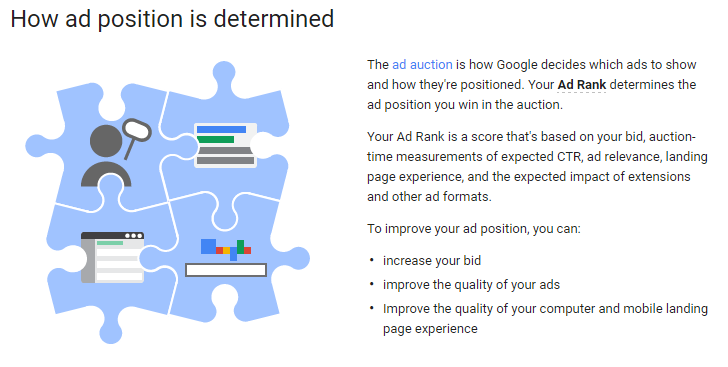
If your ad is ranking below the second position, it’s probably not getting enough attention.
A good pay per click audit tells you where your ads are ranking and offers advice about how to improve the Ad Rank.
No Quality Score Analysis
Speaking of Ad Rank, that’s determined in part by your Quality Score. A rookie audit team won’t tell you that.
A professional team will, though. They’ll give you insight as to what you can do to improve your score so that your Ad Rank improves.
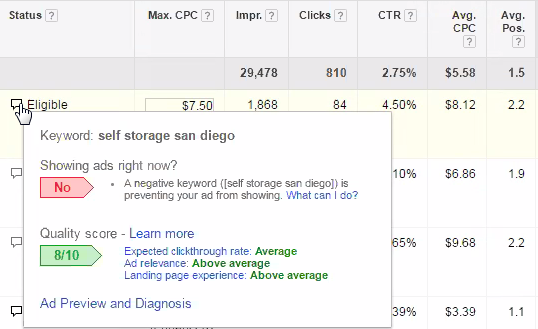
That advice will usually include optimizing your ad and/or your landing page for the keyword that you’re using.
No Multi-Channel Funnel Analysis
Your PPC campaign shouldn’t run in a vacuum. It should be linked to your Google Analytics account.
A great audit team will not only pay attention to your PPC analytics, but also check your GA account to get a better understanding of your multi-channel funnels. They’ll also provide you with a report so you can see where you’re getting the most bang for your buck.
No Goal Analysis
Last, but certainly not least, it’s a sign of a bad audit when the analysts didn’t even ask you about your PPC goals.
Why are you running PPC ads? To build brand-name awareness? To get some immediate sales? To gather leads?
If your PPC auditors didn’t even ask you about your goals before starting the analysis, then they’re probably part of a rookie team. They can’t possibly give you the kind of info you need about how to improve your PPC efforts if they don’t even understand why you’re running ads in the first place.
A great PPC audit, on the other hand, will deliver a report that shows you what you need to do to reach your goals.
Structure
No Campaign Theme Analysis
Many PPC ad networks organize ads by ad groups and organize ad groups by campaigns. That’s certainly the case with search engine marketing channels, such as Google Ads, Performance Max, and Bing Ads.
A great PPC audit will evaluate those campaigns to ensure that they’re optimized.

For example, each campaign should have its own theme. Also, branded keywords should be in campaigns separate from non-branded keywords.
If you didn’t get any feedback about campaign themes, it’s a sign that your PPC audit wasn’t handled by a professional.
No Bid Analysis
Most accounts run on Smart Bidding now, so the real question isn’t what you’re bidding. It’s what signals you’re feeding the algorithm to bid with. A strong audit checks your conversion values, bid strategy settings, and whether you have enough conversion volume for the algorithm to optimize accurately.
If you’re still setting manual bids, top-notch PPC audit team will tell you whether that’s still the right call for your account, or whether it’s time to shift to automated bidding.
No Asset Analysis
Google Ads uses Assets (formerly known as extensions) to supplement your ads with extra real estate and relevant information. If your PPC audit doesn’t prioritize a healthy mix of assets, you’re leaving performance on the table.
Today, AI-driven campaigns like Performance Max and Responsive Search Ads (RSAs) rely on asset variety to identify winning combinations and boost your Ad Rank.
Good PPC auditing digs deeper than just checking if assets exist. It evaluates whether they are actually relevant, high-performing, and driving engagement. During your PPC campaign audit, look for the following:
- Sitelink Assets: Do these drive traffic to relevant deep pages, or are they just generic? Ensure they match the specific intent of the ad group.
- Callout Assets: Are you highlighting unique selling propositions (e.g., “24/7 Support,” “Free Shipping”) to add value to the ad copy?
- Structured Snippets: Are you clearly categorizing your services or products to help users qualify themselves before the click?
- Image Assets: These are crucial for visibility. If you aren’t including high-quality, relevant visuals, your ad performance will likely suffer.
- Call & Lead Form Assets: Do these provide a direct path to conversion, or is the user forced to navigate a landing page that may have friction?
No Account Structure Analysis
There are countless online marketers who don’t even know the proper way to run a PPC campaign. They can’t explain the difference between campaigns and ad groups.
A good audit report will explain that difference to you and give you advice about how to structure your campaigns so that you can improve your reach and get a better return.
Targeting
No Network Analysis
What networks are you running ads on? A great PPC audit will tell you where your ads are appearing. That includes search networks, display networks, or both.
No Location Analysis
Where are your ads performing best? In the Southeast? In the Midwest? In specific states or cities?
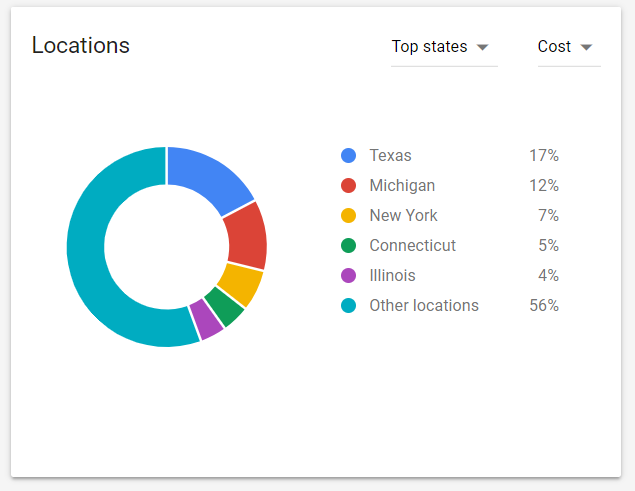
A good PPC audit will show you where you’re likely to get more business with increased ad spend. It will also tell you where you should avoid spending marketing dollars so that you don’t waste money.
No Device Targeting Analysis
Perhaps your ad performs better for people on a tablet than people on a smartphone or desktop. You won’t know that, though, if you hired a rookie PPC audit team that doesn’t even look at ad performance per device.
No Ad Scheduling Analysis
You also need to know when your ad performs best. It might be during business hours or it might be during non-business hours.
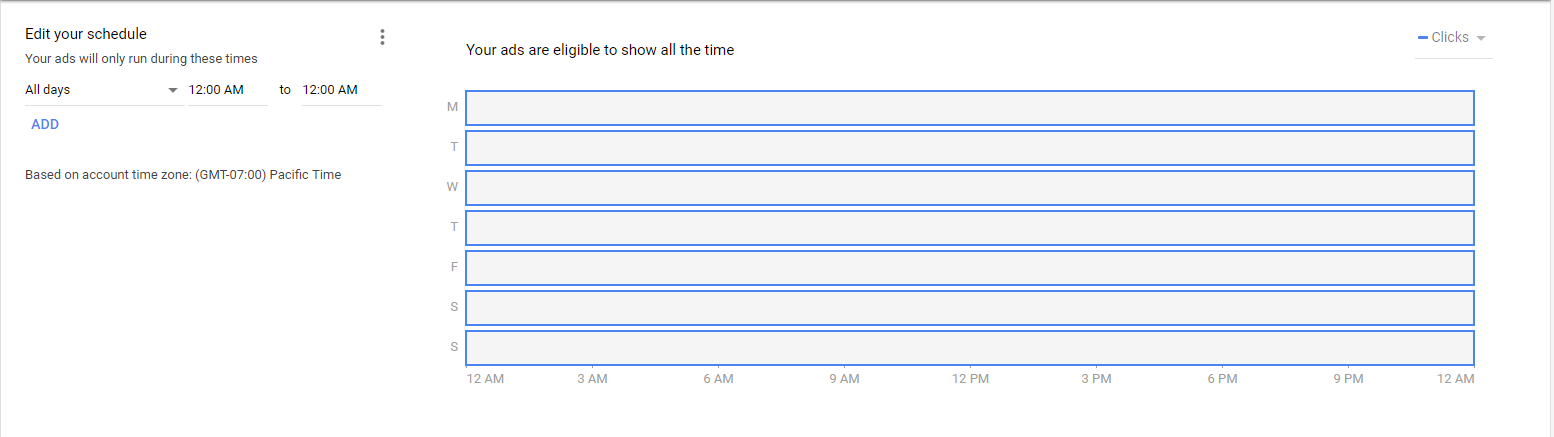
A good audit team will deliver a report that shows you when people are likely to click on your ad.
No IP Exclusion Analysis
Do you want to see your own ad when you search for a term related to your brand? Probably not.
That’s why it’s a great idea to use IP exclusions. You can exclude your own office network from showing your PPC ads.
When you do that, you’re saving ad impressions for those who really matter: potential customers.
A rookie PPC audit won’t give you any info about IP exclusions.
No Remarketing Analysis
A strong audit reviews your remarketing performance, or flags the opportunity if you’re not remarketing at all. It should show ROI by segment, since past customers convert differently than site visitors who never purchased.
It should also check frequency capping. Showing the same person the same ad too many times wastes budget and can push potential customers toward a competitor instead of back to you.
No Display Network Analysis
Are you running ads on display networks? If so, then a good audit will show you how well that’s working and what you can do to improve.
Specifically, you should see an analysis of banner sizes, automatic placements, and targeting.
Keywords
No Display URL Analysis
Although you should include your keyword in your ad copy, that’s not the only place where you should include it. You should put it in your display URL as well.
No Search Term Analysis
Your search terms report shows the exact queries triggering your ads, not just the keywords you targeted. A good audit reviews this regularly to catch irrelevant matches, spot new keyword opportunities, and confirm your match types are pulling in the traffic you actually want.
No Match Type Analysis
Google Ads gives you three match types to work with:
- Broad Match – matches on related searches, synonyms, and intent, not just your exact keyword
- Phrase Match – matches your key phrase and close variations
- Exact Match – matches only the exact key phrase and its close variations
Rather than shunning broad match, successful audits focus on whether you have the clean conversion data needed to power Smart Bidding. Without those signals, broad match can quickly drain a budget, but with the right data, it serves as an efficient driver for expansion.
No Search Volume Analysis
If you’ve hired a poor audit team, they probably won’t give you any info about low-volume search terms that you’re using. That’s too bad.
A PPC Audit Should Include Keyword Analysis
Why? Because it’s easier to manage campaigns when you don’t have to track keywords that aren’t doing anything for your business.
No Keyword Number Analysis
Your ad groups probably shouldn’t contain more than 30 keywords. If they do, that’s a sign that you might need to split the ad group.
A good audit team will know that and check the number of keywords you have in each ad group.
No Negative Keyword Analysis
A bloated ad group with dozens of loosely related keywords makes it hard to tell which ones are actually driving performance, and it dilutes the signal Smart Bidding needs to optimize well. A good audit checks whether keywords are grouped tightly around a shared theme or intent, not just counted.
Creative
No Evaluation of Ad Content
Some audits focus on facts and figures but not on the actual marketing itself. If that’s what your team did, then it’s likely they’re part of a rookie outfit.
A great audit, on the other hand, will also look at your ad copy. It will answer questions like:
- Does it appeal to people in a specific market segment?
- Does it answer the WIIFM (what’s in it for me) question?
- Does it have a clear call to action (CTA)?
- Does it make proper use of keywords?
- How does it stand out from competing ads?
- Are there any typos?
- Are there any grammatical errors?
No Landing Page Analysis
In addition to skipping out on the audit of the ad copy and display URL, a novice audit team will also neglect to evaluate your landing page.
Why is landing page analysis important? Because your landing page is where you “seal the deal” with people who’ve shown an interest in your ad.
Good PPC auditing will show you the current conversion rate of your landing page and offer actionable insights about how to improve it.
No Language Analysis
In this global economy, it’s especially important that you speak to people in their native language. A good audit will ensure that all your ads are running in the right language.
FAQs
1. What is a PPC audit?
A pay per click audit is a structured analysis of every aspect of a paid advertising strategy, including:
- Keywords and search terms
- Ad networks
- Geographical targeting
- Ad content and creative
The goal is to measure performance against goals and come away with insights that can inform optimization efforts.
2. How often should you run a PPC audit?
The answer here will generally depend on the complexity of your campaign and the size of your account. Audit frequency could involve:
Quarterly analysis for smaller accounts and simpler campaigns
Monthly audits, including a pay per click account audit
A comprehensive annual audit.
3. What does a PPC audit report include?
A strong audit report includes:
- Executive summary
- Key risks
- Wasted ad spend sources
- Growth opportunities
- Consent Mode and conversion modeling audit
- First-party data audit
- AI bidding and signal audit
- Quick wins
- Mid-term analysis
- Strategic rebuilds
- Testing roadmap
- Tracking plan
4. How long does a PPC audit take?
The length of your audit will vary based on numerous factors like account size, campaign complexity, and data volume. A general audit timeframe could look like:
- Basic Audit: 30 minutes to a few hours
- Standard Audit: One to several hours for small to medium accounts
- Comprehensive Audit: A few days to weeks, involving a deep dive
- Professional PPC Auditing Service: Several days to multiple weeks, particularly for a complex pay per click account audit
Comprehensive PPC Auditing Service From Ignite Visibility
Although PPC audits are essential in helping marketers assess the performance of ad campaigns and optimize them, you need to take the right approach to every PPC audit to avoid potential errors and wasted time and money.
Ignite Visibility provides a PPC auditing service to help steer your strategy in the right direction, supplementing other services from paid advertising and SEO to content marketing and social media management.
With our experts behind your marketing, you’ll be able to:
- Conduct regular in-depth audits of your PPC campaigns with actionable, meaningful insights
- Effectively target your ads to reach the right audience at the right time
- Develop high-quality and relevant ad content that resonates and converts
- Integrate your ads into a comprehensive digital marketing campaign
- And much more!
Like how that sounds? Learn more about our PPC services and find out how to conduct a complete PPC audit with our help.

