

This article takes a look at how consumer psychology can be used to power up your copywriting strategy– tips, tricks and all.
What does science have to do with copywriting?
Turns out, everything.
What We’ll Cover:
- How emotions affect decisions
- How to identify the feelings that motivate your audience
- Getting to know the different buyer types
- Understanding what motivates your audience to buy
- Consumer psychology: Human Motivation Theory
- Consumer psychology tactics:
Let’s back up a step: A marketer’s real job is to find a way to stand out from the crowd.
In this case, the crowd is the 4,000-10,000 advertisements consumers are exposed to every day. Of that number, only about 100 will make an impression on the average consumer.
Becoming one of those 100 means learning a few basics about consumer psychology.
Because when it comes to copywriting, the trick isn’t putting words on a page. It’s finding the right words to persuade your readers to click, share or buy.
A basic understanding of human psychology can transform your content from average to out-of-this-world in your customer’s eyes.
And it all starts with emotions.
How Emotions Affect Decisions
Think buyers’ decisions are based on rational, thought-out decisions?
Think again.
A few years back, neuroscientist Antonio Demasio ran a study focused on individuals with damage to the area of the brain where emotions are generated.
He found that not only did they feel a lack of emotion, but each struggled with making even the simplest decisions.
That’s because people’s emotions are directly linked to their decision-making process, which means that they play a huge role in how we market products and services.
It means that rather than focusing on the facts and logic to sway consumers, we need to focus on the feelings we want to elicit. Which, of course, is why one of the first things any aspiring marketer learns is, “always lead with the benefits.”
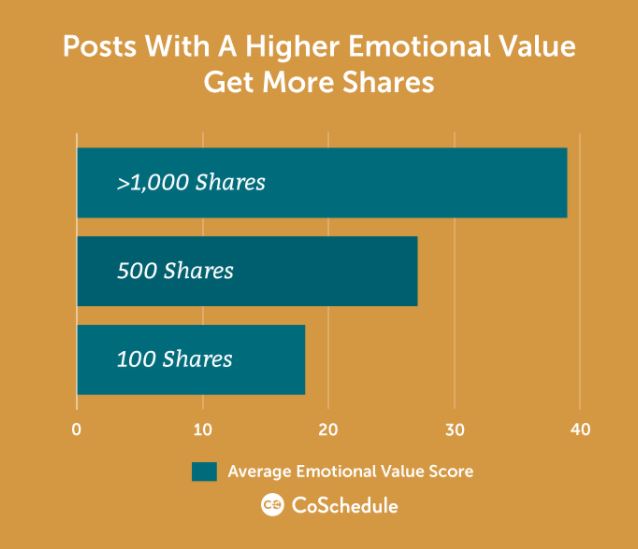
This may sound like advanced voodoo marketing, but injecting emotion into your messaging is easier than you think.
Thanks to science and consumer psychology, marketers can sell more by pulling the right emotional levers.
Below are a few of our favorites.
Know Which Feelings Motivate Your Audience
Before we talk tactics, it’s important to understand that not every emotional selling strategy works for every buyer. We’re all motivated by different factors, be it the fear of missing out or wanting to save money or having the latest and greatest version of a product.
The difficulty comes in understanding the impact emotions have on selling depends not only on in-depth persona research, but also the many ways that emotions play out during the decision-making process.
Keep in mind, that even within a persona group, you’ll find a mix of spenders and savers, a blend of people motivated by loss aversion and the promise of raising their status.
Here, we’ll look at a few things to consider about how consumer psychology works on an individual level.
Consumer Psychology: Get to Know the Different Buyer Types
Buyer types represent the spending habits of consumers, based on whether they prefer to spend, save, or fall somewhere in between. Here’s a quick rundown of the three different buyer types
- Spendthrifts—This group is prone to impulse buying and tends to purchase anything that catches their eye. Spendthrifts require minimal convincing and often respond to ads that trigger positive emotions and feature appealing visuals.
- Average Spenders—This group spends their money more cautiously than the spendthrift group, weighing decisions about purchases based on research, their budget, and return on investment. Selling to the average spender means appealing to emotions, while also presenting data that backs up claims.
- Frugalists—Frugalists are big on saving and often, aim to avoid purchasing altogether. This group is not easily swayed by the promise of pleasure or emotional appeals, instead, advertisers will do better by appealing to what the frugalist stands to lose by missing out on this offer.
Understand What it Takes to Make a Buying Decision
According to sales expert Geoffrey James, customers make decisions based on the following six emotions.
- Greed—Motivated by the possibility of a reward.
- Envy—Motivation comes from not wanting the competition to come out on top.
- Fear—Decisions are based on trying to avoid a negative situation.
- Altruism—The driver here is the possibility of helping others.
- Pride—Decisions are based on the desire to look smart.
- Shame—Or, motivation comes from not wanting to look stupid.
Okay, while this sounds like a rundown of deadly sins (sloth, where are you?) James states that when enough of these feelings are present during the buying cycle, making a decision becomes inevitable.
Consumer Psychology: Human Motivation Theory
According to psychologist David McClelland, human emotion boils down to three fundamentals—power, affiliation, and achievement. McClelland’s Human Motivation Theory posits that we all have a dominant motivator—which is influenced by cultural factors and life experience.
Those motivated by affiliation value a sense of belonging and prefers collaboration, not competition. Power-driven people are more competitive, value status, and want to influence others. The achievement group is more goals-oriented, enjoys working alone, and likes receiving feedback as they work toward their goals.
Though these are broader representations of how people make decisions, it’s worth considering these different motivators of consumer pscychology as you build out your marketing campaigns.
Building on this theory, PersistIQ has put together a comprehensive post on using emotions to sell, this time with five emotional motivators:
- Status
- Reassurance
- Pleasure
- Convenience
- Empowerment
The post recommends using words like “delight” or “opportunity” to connect with pleasure-seekers, whereas words like “gain,” “reward,” or “exclusive” generate interest among those who value status.
Now, these personal motivators speak more to the individual than the group, but you should keep them in mind when creating marketing materials.
You might find that some customer segments respond better to words associated with convenience. Maybe you’ve got a high-volume of frugalists in your system. You get the idea—while Facebook Insights and Google Analytics will tell you a lot about your users, you’ll want to keep track of the copy you use to get a sense of your audience’s emotional state.
Now, let’s move on to some ways you can use basic consumer psychology to drive more clicks, downloads, and views.
1. Present Something Unexpected
The Science: People are more likely to take notice when presented with something they don’t expect.
Psychology Today breaks it down like this:
“Memory for anything is dependent on how deeply it is “processed”. People have to notice the ad, pay attention to it, understand the central message of it and integrate it into their personal “knowledge bank and system…the more the advertisement catches your attention and interest the more you are likely to devote energy and capacity to processing it and the stronger the memory trace will be.”
In other words, in order to use consumer psychology to sell, you’ll need to stand out.
How to Use it: To elicit the feeling of surprise, you’ve got to push the right button.
Mark Hughes, author of Buzz Marketing, identified six topics proven to get people talking, liking, and sharing, regardless of your business’ niche.
They are:
- Taboo
Allow me to emphasize that this doesn’t mean it has to be taboo in the most shocking sense; word choice alone is enough to make this concept work.
Ramit Sethi’s “Watch Me Take a Bath” headline is a great example.
While it’s not actually leading to anything racy or NSFW, it attracts clicks because it still triggers the impulse.
- Unusual
We’re all suckers for the unusual.
Anything that challenges the norm is something that will gain attention, which is exactly why you should try to incorporate it into your strategy.
- Outrageous
This goes right along with unusual, only it’s so far from the norm that consumers need proof to believe it.
Which makes it an ideal way to entice consumers.
- Hilarious
No brainer here. People like funny things.
But be careful; an article in Experience points out that “humor in advertising tends to improve brand recognition, but does not improve product recall, message credibility, or buying intentions.”
Use it for brand awareness, but don’t expect it to sell the product.
- Remarkable
Traditional marketing doesn’t always cut it.
That’s why Seth Godin wrote an entire book on it, the now-famous Purple Cow: Transform Your Business by Being Remarkable.
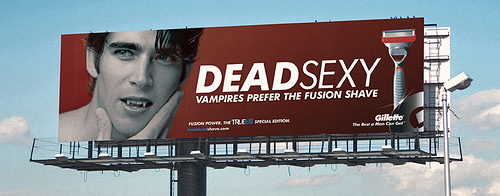
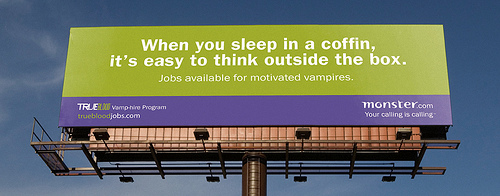
While being remarkable may be easier said than done, these brands may be able to give you some inspiration.
- Secrets
These obviously don’t have to be earth-shattering secrets.
But something as simple as implying that you have a secret to share can entice people to read.
(Hint: see this article title.)
2. Consumer Psychology: Scare Tactics
The Science: Sometimes negative messaging can have a positive impact.
In a study of 65,000 headlines, Outbrain found that “the average click-through rate on headlines with negative superlatives (never or worst) was a staggering 63% higher than that of their positive counterparts.
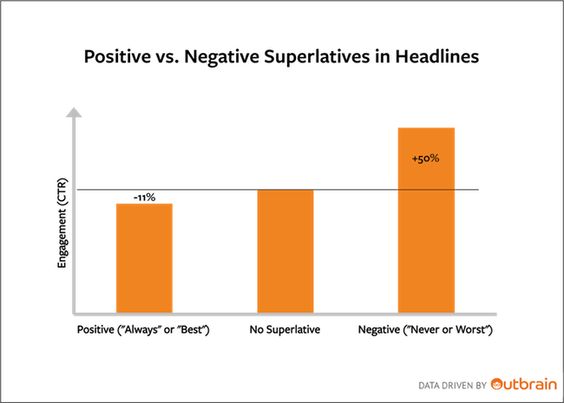
Why? People detect negative words more quickly than positive ones.
This is what psychologists call a “negativity bias” theory, which says negative outcomes tend to show up on our radar, as they have a larger impact on our physical and mental health.
As the theory goes, we’ve evolved to react to potential threats and adapt to protect ourselves from danger.
How to Use It: Obviously, you’re not trying to scare your audience away from your product.
Instead, identify possible weaknesses that your company can fix.
We’ve all seen posts like:
- Why You’re Doing Social Media Wrong
- 10 Copywriting Mistakes to Avoid
- The One Thing Savvy Marketers Never Do
These work with the negativity bias because it taps into our instinct to adapt and change what we’re doing wrong in order to thrive.
3. Start Headlines With an Action Verb
The Science: We call these power words. And they directly stimulate a little part of our brains called Broca’s Area.
Now, we could get pretty technical about this, but for our purposes we’ll simply define it as the part of the brain that processes language.
It’s stimulated by the unexpected and startled by power words, and it’s what compels people to keep reading.
How To Use It: Use your verbs. Wisely.
The right power verbs give life to your words. They paint pictures and inspire action, and they stand out to readers.
If you really want to capture attention, try moving the action verb to the beginning of your sentence.
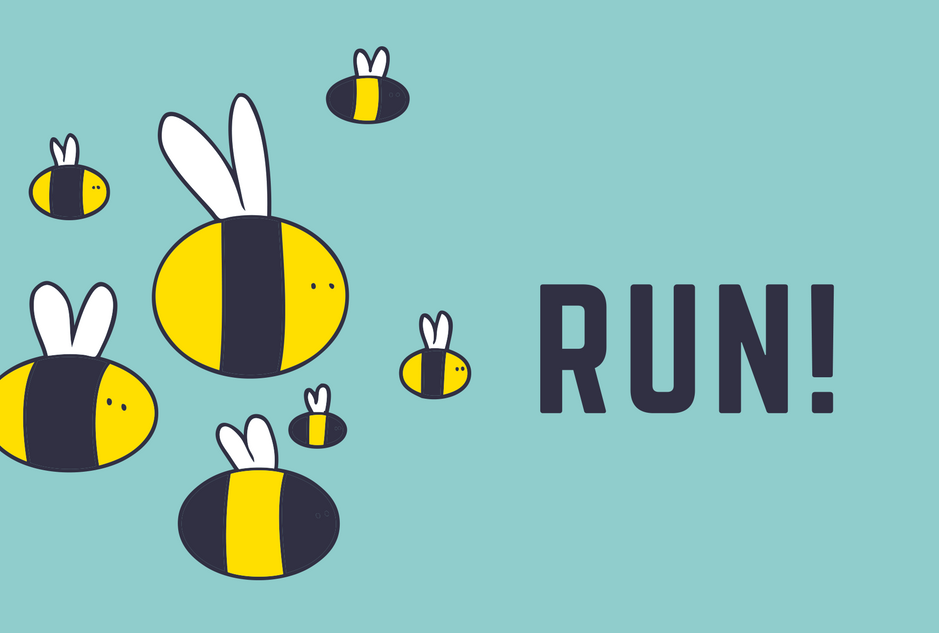
Because saying “You should run,” when a swarm of bees approaches may get someone’s attention, but yelling “RUN!!!” will get them to act. Fast. That “should” implies that you don’t have to take action and weakens the sense of urgency.
4. Consumer Psychology: Create an Information Gap
The Science:
The Science: We call it a tease. And while it may be somewhat insufferable, there’s no denying that creating curiosity gap works. Why? Because we just can’t resist a little mystery.
Carnegie Mellon’s George Loewenstein developed the “curiosity gap” theory, which states that curiosity stems from two steps.
Initially, some situation uncovers a gap in our knowledge (the headline.) Then we feel the need to fill the gap (that’s the click through.)
Loewenstein notes, “Such information gaps produce the feeling of deprivation labeled curiosity. The curious individual is motivated to obtain the missing information to reduce or eliminate the feeling of deprivation.”
How to Use It:
Tapping into consumer psychology and curiosity doesn’t just apply to headlines.
It can be used in opening sentences, sales copy, advertisements, etc. Keep in mind, there’s a fine line between piquing your audience’s interests and being deceptive.
If you use this tactic, be sure to double-check that what happens after the click or the scroll matches up with what was promised in that initial lead-in.
Upworthy is the reigning king of the curiosity gap. They frequently post this type of headlines, and generate about 75,000 Facebook likes for each article.
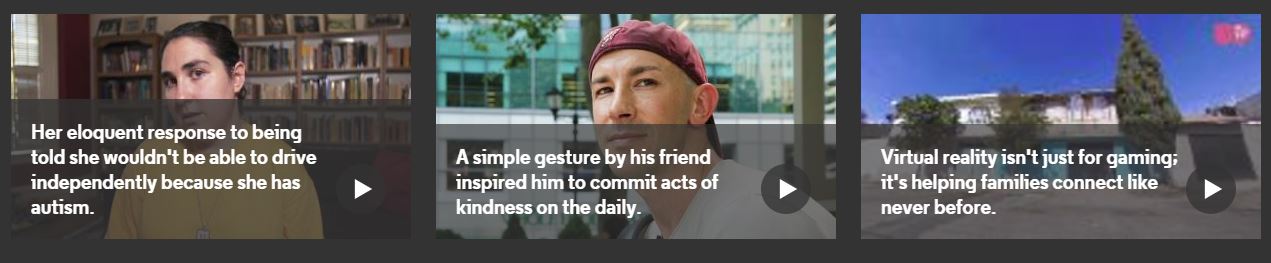
Their most popular headlines back in 2013 look something like this:
- This Kid Just Died. What He Left Behind Is Wondtacular. Pageviews: 17 million
- See Why We Have An Absolutely Ridiculous Standard Of Beauty In Just 37 Seconds. Pageviews: 11.8 million
- Dustin Hoffman Breaks Down Crying Explaining Something That Every Woman Sadly Already Experienced. Pageviews: 7.8 million
- 9 Out Of 10 Americans Are Completely Wrong About This Mind-Blowing Fact. Pageviews: 6.3 million
They routinely utilize the information gap approach. And routinely, they see great results.
5. Use Numbers
The Science: This one’s pretty simple: people like predictability.
Take the psychology of waiting lines, a study that found that people experience time differently when they don’t know long something will take.
Given a wait time of 30 or 45 minutes, people could cope and deal with the wait. But when presented with an indefinite amount of time, most are unable to relax.
People like to know what to expect, and posts with numbers deliver just that.
How to Use it: Again, one of the simpler science tricks.
You’ve probably noticed the abundance of list posts on the internet. It directly correlates to consumers love of numbers.
Make the effort to turn your blogs, articles or newsletters into lists.
Many sites are even including estimated reading times in their posts. So next to the blog title, you’ll find “3 minute read.”
It’s a direct link to the findings in the waiting lines study and sets the clear expectations that consumers love.
6. Consumer Psychology: Make it Scarce
The Science: This builds on something called the scarcity principle.
The scarcity principle “describes the urge to purchase, gather, or obtain something that a person feels that they may not be able to get in the future.”
We value what we think is rare or that which we can’t have, and its scarcity alone makes it more desirable.
How to Use It: You’ve undoubtedly seen plenty of examples of the scarcity principle at work.
Take Starbucks’ Pumpkin Spice Lattes. It’s a limited menu item that’s only available seasonally, and the demand for it is off the charts.
Or, if you’ve ever tried booking a hotel through Expedia or KAYAK, you may have noticed that by each room description there’s a message that says “only 1 room left!”
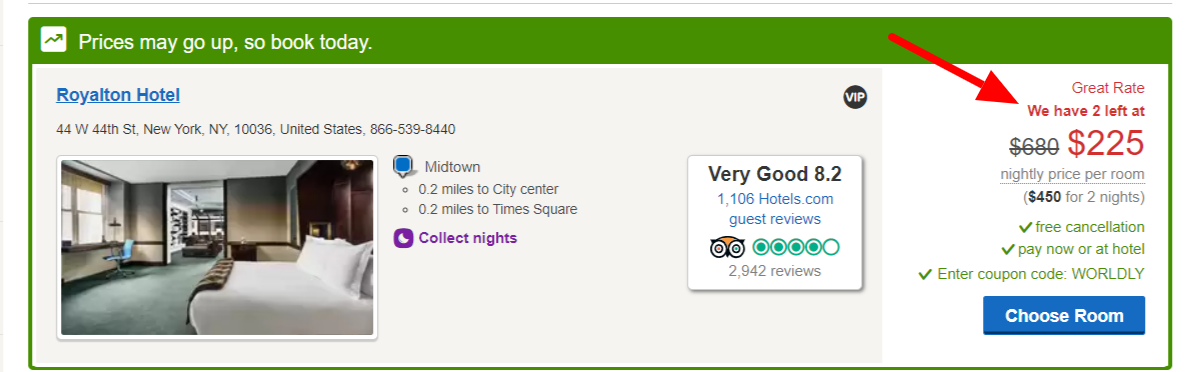
Invitation-only platforms also use scarcity by making services harder and more exclusive to obtain. Spotify used an invite-only method to entice customers when it first launched, as did Google+ (RIP).
Offering a time limit, limited space or one-time offers are all effective ways to use the power of consumer psychology to make your offer seem more valuable to your audience.
Make Consumer Psychology Part of Your Marketing Strategy
Mastering the art of marketing is about more than great writing, it’s about using the right tactics that trigger an emotional response.
These consumer psychology tricks can be adapted to any industry, but you’ll want to make sure that you’re testing different motivating factors in your ad copy, content, and PPC ads to see what clicks with your target market.
