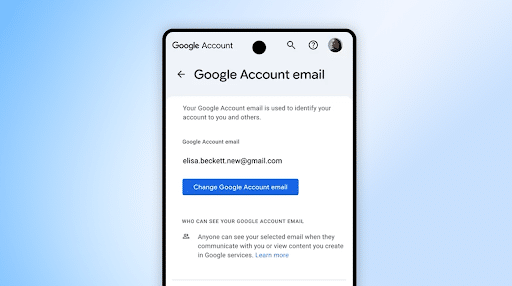
While @gmail.com addresses have remained permanent for the last 22 years, now Google allows Gmail users to change their account email address. Telegram revealed this to the public on April 1, 2026, following a brief, quiet pilot of the feature in India.
Changing a Gmail email address might be a great thing for consumers, but it can present some issues for data hygiene in franchise lifecycle marketing. To account for this change, you need to be able to reach your audiences at every point with an adaptable lifecycle program.
In this blog, Krystal Mango, Ignite Visibility’s Sr. Lifecycle & Email Strategist, will discuss how a Gmail change in email address will impact your lifecycle marketing efforts, along with how to navigate this update in your email marketing strategy.
What You’ll Learn:
- What Actually Changed
- Why Franchise Brands Feel This More Than Most
- How Does Changing a Gmail Email Address Impact Your Brand?
- Why Does It Matter?
- Is Your Lifecycle Program Future-Proof?
What Actually Changed: My Expert Insight into the Gmail Change of Email Address Editing
Many Gmail users may have wondered at one point or another, “Can I change my Gmail email address?” The answer is now yes.
If you want to know how to change your email address on Gmail, you can easily do so by going into your Google Account settings. From there, users can choose a new username instantly if it’s available. Users can do this three times per account, once every 12 months.
All that changes is the email address; the user’s Gmail inbox history, Google Drive, YouTube, Photos, and login touchpoints remain the same.
The ability to change Gmail email address usernames may be helpful to users looking to update their outdated address, but this complicates franchise lifecycle marketing in certain ways.
More specifically, changing a Gmail email address can be detrimental to email marketing efforts due to the fact that the old address doesn’t disappear. Instead, the address becomes another alias for the user, meaning that messages sent to it still go to its inbox.
As a result, there is no indication to marketers that the user isn’t accessing that old address. Sending systems receive no bounces, errors, or other signals.
Although Google does provide guidance on and encourages users to block the old address’s inbox, many users may simply neglect to do so. In turn, you might be sending emails to recipients who could still be interested in your brand but aren’t seeing them.
So, if you notice a sudden drop in email engagement metrics like open rate and click-through rates, it could be that your recipients have merely changed their addresses without making the proper updates to their accounts, not because of a lack of interest or relevance.
Considering Gmail accounts for 75% of all U.S. email respondents, this change could have a huge impact on your campaigns if you don’t take steps to navigate it.
Why Franchise Brands Feel This More Than Most
Many brands are likely to observe a drop in engagement because of this change, but franchises are especially vulnerable.
Franchise lifecycle marketing often works with less organized data than direct-to-consumer businesses.
For example, one fitness studio member could interact with three different studios within the same metropolitan area. Other leads or customers could appear in a national list at one location and a local one at another. Situations like these could result in duplicate email records on parent email service providers (ESPs) and franchisees’ local email marketing tools.
As such, the ability to change a Gmail email address makes addresses an unreliable key for identification. Now it’s more of a snapshot of the person before they updated their profiles, and it can easily become outdated.
The following are some of the main ways a change in Gmail email address can impact your franchise lifecycle marketing strategy:
Local Lists Fall Behind National Ones
Franchises at the corporate level might have more stable data governance and preferences, but local branches could be quite different. Studio managers are typically responsible for managing local email lists using separate tools, and they may only be in this position for a couple of years.
During this time, managers may not properly clean up email lists or make any updates to addresses. As a result, franchises could see an expanding gap between national and local data quality.
So, while franchisors might be more on top of their lists, franchisees could wind up with underperforming campaigns that fail to contribute to local and national business goals.
Win-Back Campaigns Get Buried
Member reactivation strategies won’t work unless you’re actually reaching people.
Now that Google allows Gmail users to change their account email address, you could still be delivering all of your emails to the right people, but you might notice that a lot of “lapsed” members exist when they’ve switched over to a filtered alias.
Subsequently, it could look like your efforts are failing, even if your messaging is perfect and not actively contributing to tanking metrics.
It’s Harder to Track Multi-Location Members
Member identification is already a challenge when people join multiple franchise locations.
One member might join Studio A with one email, for example, and Studio B with another. With the new ability to change a Gmail email address at any time, this level of instability may make it entirely impossible to connect the dots.
Your Sender Reputation Takes a “Silent” Hit
Many people forget about how Google perceives inactive emails and how it can severely hinder franchise marketing strategies.
Subscribers who reroute emails to filtered aliases will still receive your emails, but they’ll experience a complete lack of engagement. Emails could suddenly go from high open rates and click-throughs to nothing.
Eventually, the Gmail system could interpret this drop in engagement as an indicator of a low-quality sender. Google might then punish your domain by sending your emails to people’s spam folders, hurting email deliverability across your entire campaign.
Just remember that people being able to change their Gmail address isn’t the actual issue; it’s that user behavior becomes a “canary in a coal mine” to gauge the overall health of your email list.
How Does Changing a Gmail Email Address Impact Your Brand?
When people change a Gmail email address, it has a “ghosting” effect with the following main consequences:
1. Preference Centers Become Obsolete
Most franchise brands still act like email addresses are permanent ID cards for recipients. However, those people could always change their addresses on a whim without any notification.
Because of this, even if people are still interested in your brand and want to hear from you, they’ll need to sign up as new users. The end result is a duplicate profile and messy data with no real indication of which email the user prefers.
2. Re-engagement Logic Misses the Mark
Normally, 90-day “win-back” flows will automatically mark disengaged subscribers as “lost” after that period closes.
However, many users might not fall under this category as they never really lost interest. They might simply be looking at a different inbox, in which case all you need to do is relocate the primary address for successful re-engagement.
3. Single-channel Strategies Break Entirely
Customer retention efforts often rely on email, meaning that a Gmail change of email address could lead to permanent loss.
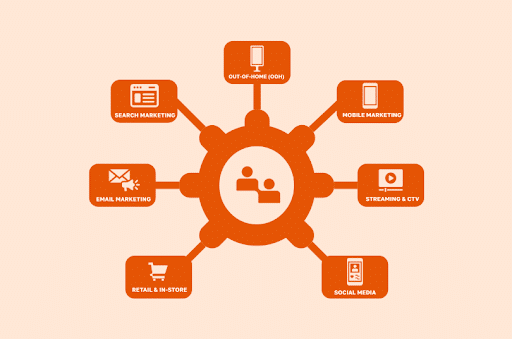
Instead of relying on a single channel, an email change will require you to adopt an omnichannel strategy. If email fails, you’ll then have to fall back on SMS texts, push notifications, direct mail, and other forms of engagement that brands tend to see as “extra features.”
4. Identity Resolution at the CRM Layer Falls Apart
When using a customer relationship management (CRM) platform, email typically serves as the main form of contact.
If that element changes on a platform like HubSpot or Braze, your lifetime value (LTV) calculations, suppression lists, and segment memberships lose stability at all levels.
This leaves you with fragmented data that makes it look as though one customer is two, which might lead you to erroneously personalize for both in different ways.
5. Gmail-specific Reporting Becomes a Lagging Indicator
Pay attention to the specific audiences that display the biggest drops in open rates and other engagement metrics.
Older subscribers with accounts dating before 2015 are the most likely to change at some point, usually because they find those old usernames embarrassing. This kind of shift could show that your email list is only “aging out,” and it’s time to target a different address.
To mitigate these risks, you need an email marketing system that’s flexible enough to pivot and adapt when users change their emails.
Why Does It Matter?
On the surface, this change may appear to be a minor one. In reality, it’s one part of a far-reaching shift in the way email providers are rewriting the rules of franchise lifecycle marketing.
This change comes in the wake of other significant changes that are altering marketers’ approach to email campaigns. For instance, there was the introduction of Apple’s “Hide My Email” option, which gave users the ability to sign up without getting on an email list.
Then there was Gmail’s use of similar privacy walls to preserve users’ control over their data while creating a disconnect between them and marketing teams. Meanwhile, AI summarization gives people a clear window into email contents without ever needing to open them, leading to zero-click interactions in many cases.
These and other updates are breaking the old playbook, reinforcing the need for lifecycle strategies to focus on building genuine, valuable relationships with email recipients that encourage consistent connection long after an address change.
This fact is particularly important for franchises, which must focus their attention on the lifecycle strategies that really work, like:
- Sharp Segmentation: Breaking your audience into specific, unique segments will give you a clear picture of each type of lead or customer you want to target, with detailed audience personas informing your messaging and creative design.
- Meaningful Personalization: Tailoring your emails to speak directly to each recipient will drive more engagement among leads and retain existing customers, with unique product or service recommendations, offers, and other content that keeps people coming back. Backing this need is the fact that 60% of consumers value highly personalized content that matches their interests and values.
- Motivating Subscribers to Stay Connected: The right approach to your lifecycle strategy gets more people to stay in the fold, enticing them to update you on where to reach them across platforms as usernames and profiles change.
Every brand has a story worth telling, but the key is to tell it to the right people who are going to hear it.
Changing a Gmail email address shouldn’t be the block that keeps you from sharing your story. With the right strategies and systems in place, it doesn’t even need to be an inconvenience as your audiences follow you wherever they are.
Is Your Lifecycle Program Future-Proof?
A strong and healthy lifecycle program is essential to acquire and engage your audiences. At the same time, going it alone can be tough, especially if you need to focus on franchise sales, expansion, and growth.
Ignite Visibility offers a free lifecycle audit geared for franchise brands across industries, from fitness and healthcare to dental and quick-service restaurants (QSRs).
Our experts will conduct a deep dive into your ESP setup and Gmail engagement trends. We’ll also review your preference centers to maintain identity flows between all lists at the national and local levels.
Our 2026 lifecycle program audit covers the following:
- AI Summary Optimization: We look closely at your above-the-fold content for each email to ensure both Apple and Gmail summaries highlight vital offers instead of generically summarizing body content.
- Identity Resolution: We’ll also help you move from reliance on email to a solution that uses globally unique identifiers (GUIDs), so you never lose track of where your audiences are.
- Deliverability Protection: Optimize your list hygiene and DMARC settings in line with the latest 2026 bulk sender mandates, ensuring your emails always reach their intended destination with consistent compliance.
To get started on optimizing your lifecycle program, book your free lifecycle audit today.