

Although important metrics, too many organizations obsess over lowering Cost Per Acquisition (CPA) and Customer Acquisition Cost (CAC), celebrating incremental savings as if they meaningfully move the business forward. Cutting a few dollars per lead can feel like progress, but it often suppresses performance. An overemphasis on efficiency can quietly limit growth, reduce the number of qualified leads, and steer teams away from the strategies that actually create long-term value.
In a competitive hyper-local market such as the franchise space, prioritizing cheaper leads often comes at the cost of conversion volume. While a low CPA may look efficient on paper, it frequently means missing out on customers who never see your ads. Meanwhile, competitors willing to invest more are capturing a larger share of the market and driving stronger overall growth.
Ultimately, success is not merely defined by how little you pay for a lead. It is defined by how many customers you acquire over the long term at a profit.
My recommendation is to rethink how you use unit-level economics (ULE). It should not be treated as a constraint that limits spending. It should be used to determine how much you can invest to capture as much of the market as possible.
Shift the focus from the first transaction to customer lifetime value (LTV). The real opportunity lies in acquiring customers who generate meaningful, long-term impact on the business, not just low-cost leads that rarely convert or build lasting relationships. The key is to strike the right balance between CPA, ULE, and lead volume to maximize overall value.
This shift in focus can only be achieved through proper visibility into the performance of your marketing initiatives. It is critical to deploy an analytics system that connects your marketing to your CRM or POS systems. Ignite Visibility’s RevConnect platform closes this loop by connecting lead and sales data directly to your media, enabling clear visibility into which campaigns generate the most profitable growth and where to confidently scale investment.
Let’s dig into how you can ignite your growth by mastering this concept!
Beyond the First Pizza: Why CPA is a Misleading Metric
When acquiring customers, many business owners focus too much on those “one-off” purchases.
While “Cost Per Acquisition” may sound like a great way to measure performance on the surface, given the potential Return on Investment (ROI) of advertising, it doesn’t always account for the long-term or the potential for revenue growth.
Let’s take a pizza franchise that spends $15 to acquire a customer who pays $20 for a pizza. A traditional digital agency might call that a failure due to a thin margin, but it really isn’t if that customer keeps coming back.
The reality is that while the franchise might spend more on that initial purchase, the same customer could have a high “Frequency of Visit.” Following that first experience with a delicious, satisfying pizza, that customer might return 10 times a year, in which case that initial $15 investment turns into a $200 revenue stream.
What this means is that many brands miss out on some of the best deals available because they over-prioritize keeping CPA low. If you ignore your customers’ LTV, you’re essentially underbidding on your future customers.
In short, if you’re optimizing for CPA, you’re playing not to lose. If you optimize for LTV, you’re actually playing to win.
To summarize, here are a few key reasons why CPA can be misleading:
- Limiting scalable growth: By fixating on keeping CPA as low as possible, you may avoid slightly higher acquisition costs that would unlock far greater lead and revenue volume, ultimately capping your growth when you could profitably be winning more market share.
- Ignoring LTV: CPA ignores the full customer relationship, overlooking how repeat purchases and larger future orders drive long‑term profitability.
- Overlooking customer quality: CPA treats all customers as equal, even though their value and behavior can vary dramatically across segments.
- Disregarding churn and retention: A low CPA is meaningless if those customers churn quickly and you struggle to retain them beyond the first purchase.
The Math of Dominance: ULE as a Growth Lever
Unit-Level Economics, or ULE, can help you define “affordable CAC/CPA.” ULE, as it pertains to franchise growth, refers to the direct costs and revenue for a franchise for each unit, that “unit” being a customer.
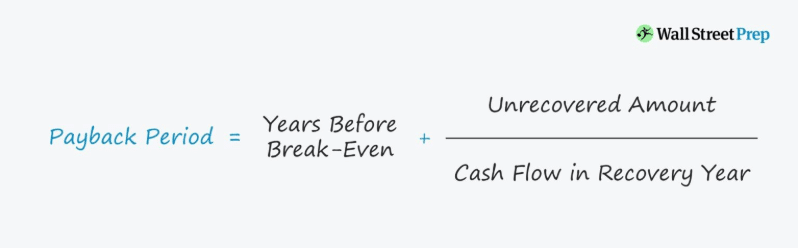
This model can help identify the “Breakeven Point” beyond the first sale, covering the first six months (or beyond) of each customer’s relationship with a brand. Through ULE, you’ll subsequently be able to pinpoint the “Payback Period,” or the number of transactions required to break even on initial marketing spend.
An overemphasis on CPAs can lead to underspending. A system can become less efficient when it cuts advertising too far, as reduced visibility limits conversion volume, weakens platform learning, and erodes market share momentum. Once spend drops below a critical threshold, campaigns lose the data density and reach needed for algorithms to optimize effectively, causing CPAs to stagnate or even increase despite lower spend. The objective is to identify the inflection point at which incremental investment continues to generate profitable lifetime value before diminishing returns outweigh the benefits of acquisition efficiency.
A franchise system and its digital marketing partner that embraces this mindset can build a real competitive edge by being willing to outspend the guy across the street to acquire the same customer, because it recognizes the long‑term value where others don’t
As such, think of your contribution margin as the fuel for sustainable growth. Instead of saying, “We only have $5 to spend on acquiring each customer,” you adopt a more nuanced perspective.
To make it concrete: “Because our operations are efficient and our retention is high, we can afford to spend $25 to acquire a customer, while competitors can only afford $15.”
For a growth‑minded franchise system, it is often better to prioritize conversion volume over short‑term margins. For example, driving 1,000 sales at a higher CPA is objectively healthier for the system than generating 100 sales at an ideal CPA.
The ROI from 1,000 sales in a single region often justifies a higher acquisition cost, as it allows you to dominate your local market and unlock economies of scale in vendor pricing and across your supply chain. By contrast, 100 sales at a “safer” CPA can leave you stagnating over the long term.
ULE doesn’t just help you increase sales from customers; it also ultimately strengthens conversion rates among franchise leads. As more of your locations take root in their markets, your brand reputation improves among qualified franchisee candidates. At the same time, ULE is not a license to overspend; it is a discipline for determining where aggressive acquisition actually produces durable profitability.
Over time, optimizing for growth rather than the cheapest leads makes your system healthier than your competitors’ and helps your franchise locations outperform theirs, earning you better ownership and management.
In summation, ULE offers several key benefits for franchises:
- Identify the most profitable campaigns: Look beyond CPA to see which marketing channels deliver the highest ROI for each location, minimizing wasted ad spend and broader marketing budgets. Unit‑level analytics also reveal which channels attract the most valuable, repeat customers, helping you maximize LTV at the customer level.
- Optimize local franchise marketing: ULE exposes the specific demographics and buying behaviors of customers in each region, enabling franchisees to tailor their marketing strategies and forge more direct, relevant connections with local audiences.
- Improve franchise development: Prospective franchisees often rely on unit economics in Franchise Disclosure Documents (FDDs) to evaluate risk. Demonstrating consistent, proven margins at the unit level makes your system more attractive to new investors and showcases your franchise’s ability to scale
Solving the “Conversion Volume” Problem
Many systems hit a ceiling because they are afraid to sacrifice a “perfect” CPA to gain more volume. This mindset breaks down when you are trying to scale, especially for franchisors or multi-location owners aiming for regional dominance and expansion into new markets.
Ignite Visibility takes a different approach. We do not buy clicks; we buy future cash flows.
We use ULE to help franchisors confidently “turn up the dial” on their marketing. When you understand the LTV for a specific customer type in a given territory, you can bid more aggressively for volume where you will generate the strongest ROI.
For example, a multi-location owner might see that a customer in North Dallas has an LTV of around $300, while a customer in Oak Cliff has an LTV of around $100. In that case, prioritizing volume in North Dallas lets you establish your brand more efficiently as the category leader in that region. These kinds of hyper-local strategies set you apart from competitors.
As you scale, your target customers begin to recognize and trust your brand in their local markets, making them more likely to choose you over competitors. Over time, that recognition lowers acquisition costs and drives more conversions.
That kind of brand equity and loyalty goes a very long way.
There are many ways to ramp up your marketing to solve the conversion problem in franchise marketing, including:
- Using automations to boost speed-to-lead: Many local franchisees are too busy running day-to-day operations to consistently nurture valuable leads, which makes automated answering services, email, and SMS campaigns essential for moving prospects along the customer journey.
- Implementing a shared CRM architecture: Both franchisees and franchisors need access to the same set of performance metrics to understand what is working and what is not, so a unified CRM is critical for identifying winning campaigns and uncovering insights at the location and customer levels.
- Connect CRM data to digital performance: When your CRM is integrated with your digital marketing data, you can directly tie campaigns to pipeline, revenue, and ROI instead of guessing which channels are truly working. Ignite Visibility’s RevConnect platform does exactly this, linking lead and sales data back to your media so you can see which campaigns drive the most profitable growth and confidently reinvest in what works.
- Providing invaluable sales training: Every location should have strong marketing and sales enablement assets, such as email templates, phone scripts, and objection-handling guidelines, so franchisees can adapt materials to local market needs without sacrificing brand integrity.
Operationalizing LTV: How to Scale the System
Your franchise’s sustained growth relies heavily on customer retention. In fact, you should look at retention as an extension of marketing.
Recent statistics further prove the importance of retention, with Rivo finding that a 5% increase in retention can lead to a 25-95% increase in profits. Those retained, loyal customers also spend 67% more than their new counterparts.
If the ULE indicates that your “Payback Period” is too long, your first instinct might be to cut your ad budget. This would be a mistake; opt instead to improve the unit’s “Frequency” strategy by using loyalty apps, email remarketing, and other campaigns to drive retention. (Rivo also found that 83% of loyalty programs often lead to an average 5.2x ROI.)
Enabling Scalability Through Higher Spending
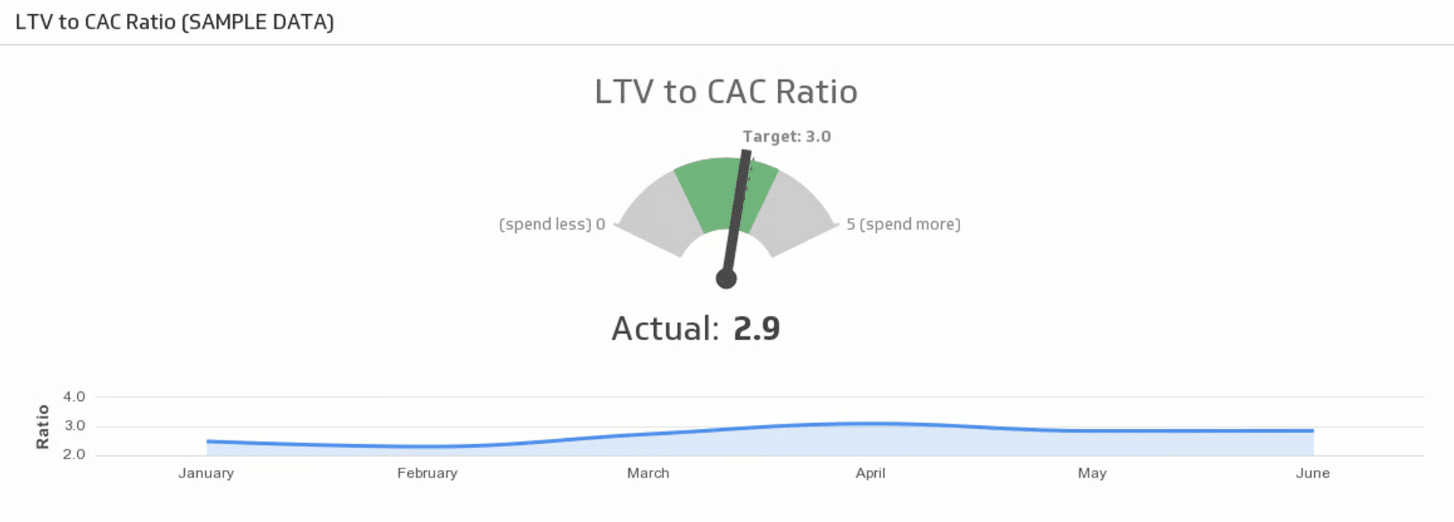
Consider the standard 3:1 LTV-to-CAC ratio: for every $1 spent on acquisition, you should generate at least $3 over that customer’s lifetime. Any lower and you may be underspending; any higher and you might be getting overly aggressive. The goal is to strike the right balance between scalability and cost-effectiveness.
That said, there are times when a more aggressive approach is absolutely warranted. The key is predictive scaling, using data to anticipate which units can successfully absorb a large volume influx. Locations with that capacity tend to have higher LTV, which can justify heavier investment as you work to maximize ROI.
Here are some steps to take for more effective predictive scaling:
- Centralize Historical Data: Develop a single source of truth for your pipeline data by consolidating data from CRMs, point-of-sale (POS) systems, and previous marketing efforts to feed into your predictive model.
- Identify Local Demand Drivers: Predictive models should also account for local nuances that drive demand among new leads. For instance, a home services company might use weather and climate data to pinpoint a seasonal increase in demand for renovations and other services.
- Develop Predictive Franchisee Playbooks: A predictive playbook for your franchisees could help them take the right approach to their marketing and sales efforts, e.g., “We anticipate a high-conversion window in your region next week, leading to a $300 increase in your ad budget to appeal to local search intent.”
- Integrate Tiered Pricing and Promotion Triggers: If you expect a slump, you can get out from under it with predictive scaling through pricing tiers and automations that drive engagement. For example, you may have email promotions and SMS texts in place to engage leads ahead of an anticipated slow point, such as rainy weather that might decrease foot traffic.
- Maintain Shared Accountability: Franchisees should have convenient access to a dashboard with predictive scaling insights. This dashboard could show predicted revenue beside real-world revenue to compare forecasts with actual earnings, while also tracking compliance with a provided playbook to hold units accountable.
- Continually Refine Your Strategy: From the corporate to the local level, be sure to optimize your marketing as needed, informed by both historical data and predictive analysis, learning from past mistakes while pivoting for the future.
Math-Backed Aggression
Many agencies and franchises fixate on reducing marketing costs, but that mindset can be damaging to long-term performance. The most successful franchise systems are those that can confidently outspend competitors because they know the math is on their side.
With a ULE framework, franchisors and multi-location businesses can zero in on the opportunities that drive the highest LTV, rather than obsessing over CPA alone. By increasing customer volume and improving retention, franchises can maximize customer value and rationalize higher CPAs as they pull ahead of the competition.
If you want real growth, stop obsessing over lower CPA targets and focus on using your ULE to double your customer volume while staying within acceptable CPA targets. With the right partner, you can stay focused on the metrics that actually matter as you scale.
In doing so, you unlock sustainable growth by prioritizing loyal, high-value customers over hitting an artificially low CPA
