


Before developing any kind of marketing strategy, you must know how to create a marketing budget that aligns with your goals and can allow for a high return on investment (ROI). A well-structured marketing plan and budget will go a long way in helping your strategy succeed.
In this article, we’ll go over how to create a marketing budget and provide you with a few budget templates.
These templates are used by actual marketers and marketing companies to help them decide how to spend their money in order to receive the highest returns.
Let’s get started with why a marketing budget is essential to your business.
What You’ll Learn:
- Why Develop a Marketing Budget?
- Determining Your Marketing Budget
- What to Include in Your Marketing Budget
- Utilizing Marketing Budget Templates
- Leveraging Marketing Budget Software
- Lean Into Your Analytics
- Do Your Research
- Write Out Your Marketing Budget
- Case Studies and Examples
My Expert Opinion on Digital Marketing Budget Allocation

While many business owners might feel like budgeting for marketing is secondary or even tertiary to core business budgeting, the fact is that you need to focus just as much energy on this area as the rest of your business to ensure sustained success.
Without a structured marketing plan and budget to guide your efforts, there’s a good chance you’ll wind up struggling to stay on top of competitors and get the best possible results from your digital marketing strategy.
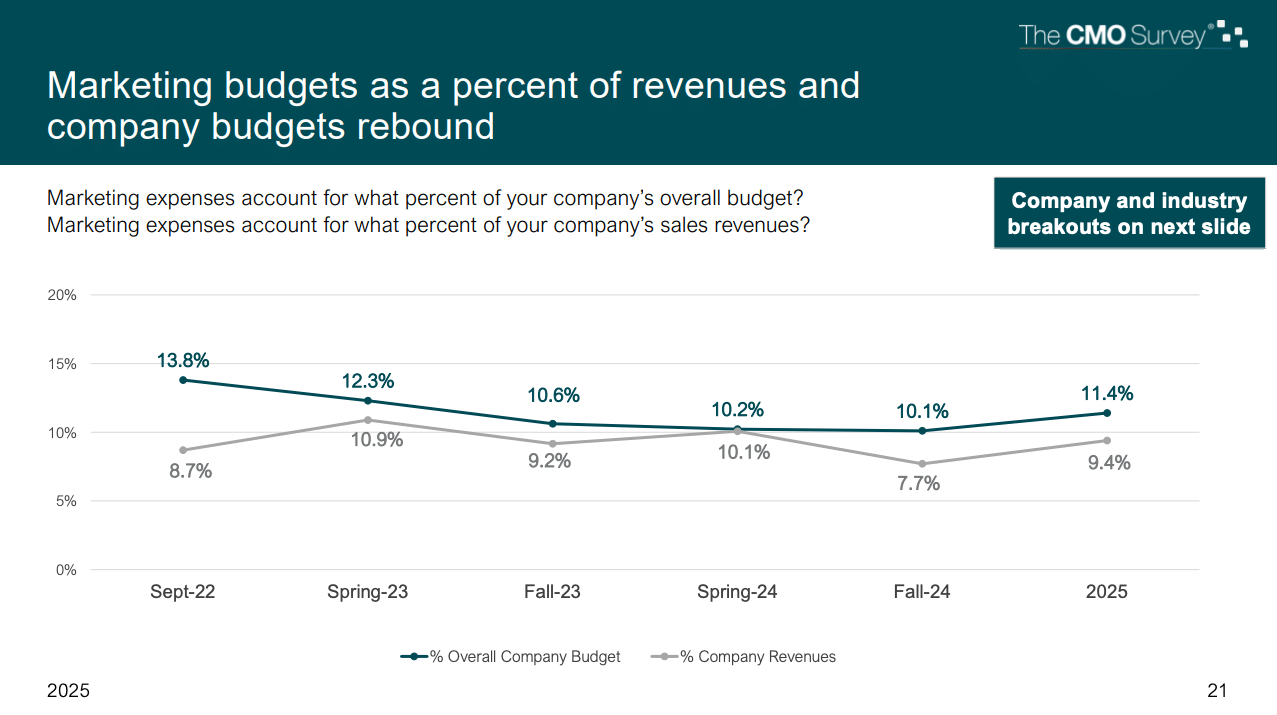
The latest stats also show just how important it is to calculate marketing budgets, with a recent CMO Marketing Budget survey finding that marketing makes up around 11.4% of a company’s budget, and it accounts for about 9.4% of a company’s revenue. That’s not insignificant.
Whether determining the marketing budget for a small business or a large enterprise, it’s essential to know how to create a marketing budget that’s right for your company and goals.
Why Develop a Marketing Budget?
As your business grows, ensuring that you have the proper planning and budgeting in place becomes even more important. A poorly designed plan can lead to a lack of equipment, inadequate funding for staffing, and an inability to serve your clients and customers.
A marketing budget is no different. A poorly designed budget will result in runaway spending and a smaller return on investment. This will increase your staff’s stress as well as decrease your reach and sales. A marketing team with no budget can easily veer out of control, spending money on anything and everything in the hopes of grabbing leads and sales.
You’ll want to design a budget that will effectively cover all of the goals you have for your business while giving your team the funds they need to adequately allocate staff salaries, office space, communications, equipment, and more. Experts estimate that businesses should allocate approximately 10-13% of its gross revenue towards advertising and marketing.
What’s a Common Budget Strategy in Traditional Marketing Organizations?
Many traditional marketing organizations tend to set aside a fixed annual budget that has no flexibility, regardless of changes in demand throughout the year.
Instead of this approach, when budgeting overall, it’s best for companies to carefully determine what portion should be the marketing budget early on and allow for some adjustments based on fluctuating marketing needs, such as seasonal changes and trending customer behaviors.
In establishing your marketing budget, you should also assess your unique business goals and financial health. What kind of traffic do you want to your website or physical locations? How much revenue in sales do you want to achieve? Maybe you want to focus on generating more leads.
Also, ensure your goals align with your overarching business strategy, as you don’t want to find that your marketing efforts aren’t helping your company progress on the whole.
Determining Your Marketing Budget
In learning how to create a marketing budget, it’s important to consider the marketing budget as a percentage of revenue by industry and your own projections.
Take a look at industry benchmarks to see where your budget should be, with the general ideal sitting around 5% to 20%. However, this budget can vary greatly from company to company based on both industry and the company’s current situation; the marketing budget for a tech startup without revenue will be far different from that of an established retail wholesale company with millions in annual revenue.
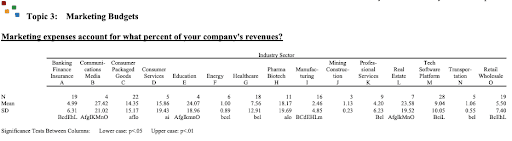
The following are the average marketing budgets as a percentage of revenue by industry for multiple key sectors, based on a Deloitte CMO survey in 2025:
- Banking and Finance: 5%
- Communications: 27%
- Consumer Goods: 14%
- Consumer Services: 16%
- Education: 24%
- Energy: 1%
- Healthcare: 8%
- Pharma Biotech: 18%
- Manufacturing: 2%
- Mining and Construction: 1%
- Professional Services: 4%
- Real Estate: 24%
- Tech Software Platforms: 9%
- Transportation: 1%
- Retail Wholesale: 6%
Once you conduct a marketing budget breakdown and determine how to develop a marketing budget for each area, you should adjust your budget based on your business’s growth stage and market conditions.
Making any necessary incremental changes when you calculate a marketing budget will help maximize cost-effectiveness and efficiency.
What to Include in Your Marketing Budget
When drafting your budget, consider your company’s goals.
- What do you want to achieve this year?
- Where do you want to focus your efforts?
- What return on investment are you looking for?
- How many people do you have to staff your marketing department?
Once you have the answers to these questions, sit down and consider these aspects:
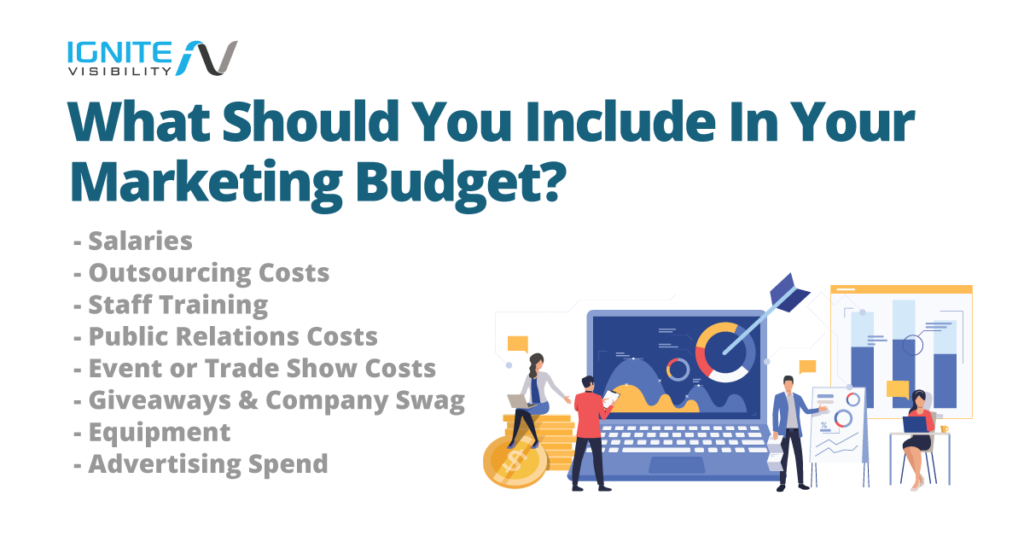
- Salaries: Staffing is one of the most important parts of your budget. You can’t carry out a marketing plan without the staff to do so. Consider your staff’s salaries when starting your budget.
- Outsourcing: If you don’t have the ability to bring on salaried employees, consider what you can outsource. If specific projects need freelancers, temps, or interns to be completed, make sure to consider their compensation in your plan.
- Staff Training: Part of marketing is keeping up on the latest trends. Be sure to include training, continuing education, and subscriptions to relevant industry publications for your staff in your marketing budget.
- Public Relations Costs: Will you need to release press releases? Need a PR consultant? Consider these expenses in your budget, as well.
- Event or Trade Show Costs: These events are great for exposure and networking opportunities but they aren’t free — or even cheap in most cases. Consider which events or shows you want to attend and rank them in order of importance. Only plan to attend the ones with the highest return on investment.
- Giveaways and Company Swag: If you’re attending events, you might want things to give out like branded or custom t-shirts, merchandise, hats, toys, etc. These items excite people about visiting your booth at events but they also work to get your name out and remembered by the public. Everyone remembers the company with the coolest swag!
- Equipment: Creating content for social media? Giving demonstrations at trade shows? Setting up a marketing booth at an event? All of these things require equipment of some type. See what tools and equipment can be reused for different events and projects and which ones will need to be bought multiple times.
- Advertising Spend: Things like Facebook ads, print ads, podcasts, search engine optimization are all a necessary part of marketing but they also all cost money. Consider where your advertising spend is best focused and work this into your budget.
Marketing Budget Breakdown by Channel
So, how do you approach digital marketing budget allocation based on each channel?
The answer will depend on multiple factors, but here is how to develop a marketing budget for each aspect based on a general range:
- Digital Marketing: 40-50%
- Traditional Marketing: 20-30%
- Events/Sponsorships: 10-20%
- Research/Analytics: 5-10%
Factors to Consider When Figuring Out How to Create a Marketing Budget
When deciding how to develop a marketing budget and allocate it, there are also certain specific factors to consider beyond your industry, such as:
- Business Goals: Think about your business goals, as these could significantly impact your budgeting based on the approach you need to take to achieve your goals. For example, if you’re a new business trying to maximize visibility and brand recognition, you would want to allocate 50% to 70% of your budget to brand awareness, while you may want to allocate 60% to 70% to direct lead generation if your brand is more established.
- Company Size: Another critical factor to keep in mind is the size of your company. The marketing budget for a small business will be considerably tighter than a larger company with a stronger presence.
- Location: You’ll also want to consider the location of your target audience. Certain states have different cost-per-click (CPC) metrics than others, with costs generally higher when there’s more local competition.
- Competition: Budgeting will depend largely on the kind of competition your market sees. For instance, B2C brands tend to spend much more than B2B companies on marketing because of the increased competition in the former industries.
- The Lifecycle of Your Offerings: Various products and services have different lifecycles to consider, starting with their introduction and eventually ending with their decline. Your budget will depend on this lifecycle for each offering and how it factors into your growth strategy.
- The Economy: Think about the economic climate and how it’s impacting you and your industry. Generally, it’s best to channel more funds into marketing when there’s a financial decline, as effective lead gen strategies could ultimately drive more sales and revenues during harsher periods.
- Channels That Perform Best: Consider the various channels you use and which get the best results. Take this marketing budget example: The marketing budget for a tech startup without revenue could channel 3% of the company’s budget to marketing, with 50% of that going to brand awareness efforts on platforms like LinkedIn and Facebook where audiences spend a lot of their time, while the other 50% goes to lead generation efforts via paid media advertising. Over time, based on the results,
Utilizing Marketing Budget Templates
For help with developing your marketing plan and budget, consider using a reliable budget template for campaign advertising.
Templates include all of the relevant fields in an organized format, saving you a lot of time and energy on budgeting. Simply download a free template and enter the necessary information, giving you everything you need to determine how to develop a marketing budget.
There are plenty of marketing budget templates out there you can use. Here are a few good examples:
Microsoft Excel Budget Templates
Microsoft Excel still makes for one of the best platforms for measuring marketing budgets.
If you want to know how to create a marketing budget in Excel, you could try some of Smart Insights’s templates, including a helpful Excel monthly marketing budget template. That particular template is very helpful for small to medium businesses, breaking down their budgets and comparing them to their balance to determine profitability.
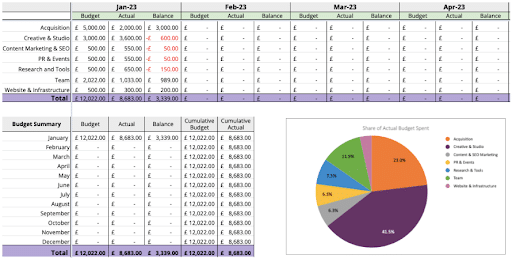
Microsoft also offers plenty of budget templates for campaign advertising and other marketing aspects. These free templates can assist with the entire marketing plan in addition to budgets.
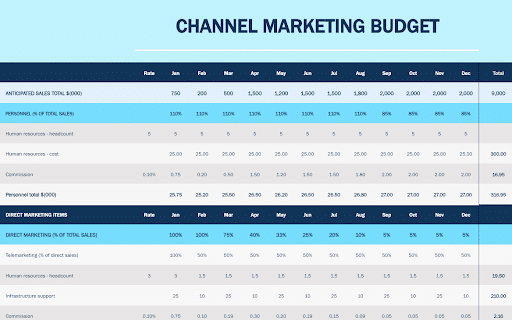
HubSpot is yet another source for some Excel monthly marketing budget templates and others based on your needs, with options that are compatible with both Excel and Google Sheets.
Leveraging Marketing Budget Software
In addition to templates, be sure to make full use of marketing budget software to maintain total control over budgeting with transparent analytics and ease of budget adjustment.
High-quality specialized marketing budget software offers numerous advantages, including improved budget foresight and forecasting, automated expense management, data-driven insights, and effective scenario planning for increased overall efficiency.
Here are a couple of options we love:
- HubSpot Marketing Hub: This tool can develop fully automated workflows to help with everything from budgeting to lead generation and campaign HubSpot Marketing Hub: This tool can develop fully automated workflows to help with everything from budgeting to lead generation and campaign tracking. It also includes plenty of top-quality customizable templates for building landing pages and other content.
- Zoho Marketing Plus: If you’re budgeting and planning an omnichannel marketing campaign, you might opt for this solution. It covers social media, email, and many other channels with in-depth tracking and analytics, as well as campaign management.
Lean Into Your Analytics
You don’t have to recreate the wheel every year when you’re planning your marketing budget. One of the best ways to create a budget is to look at the data from your prior years.
- What worked then?
- What didn’t?
- What could work better if you made some adjustments to the original plan?
Take the data and experience from your previous years’ marketing campaigns to determine your return on investment. Once you have everything laid out in front of you, you can analyze the data and adjust your plans and budget to fit your new business goals. Building off of your prior years is important in many aspects of your business — marketing budget included.
Determining the return on investment is easier for digital marketing strategies, as most of this data is readily available through a variety of different backtesting software. Consider things like your cost per lead, your cost per acquisition, impressions, click-through rate, engagement rate, and customer lifetime value. This will help you determine if you should spend more in a certain area of your digital marketing while decreasing your ad spend elsewhere.
Do Your Research
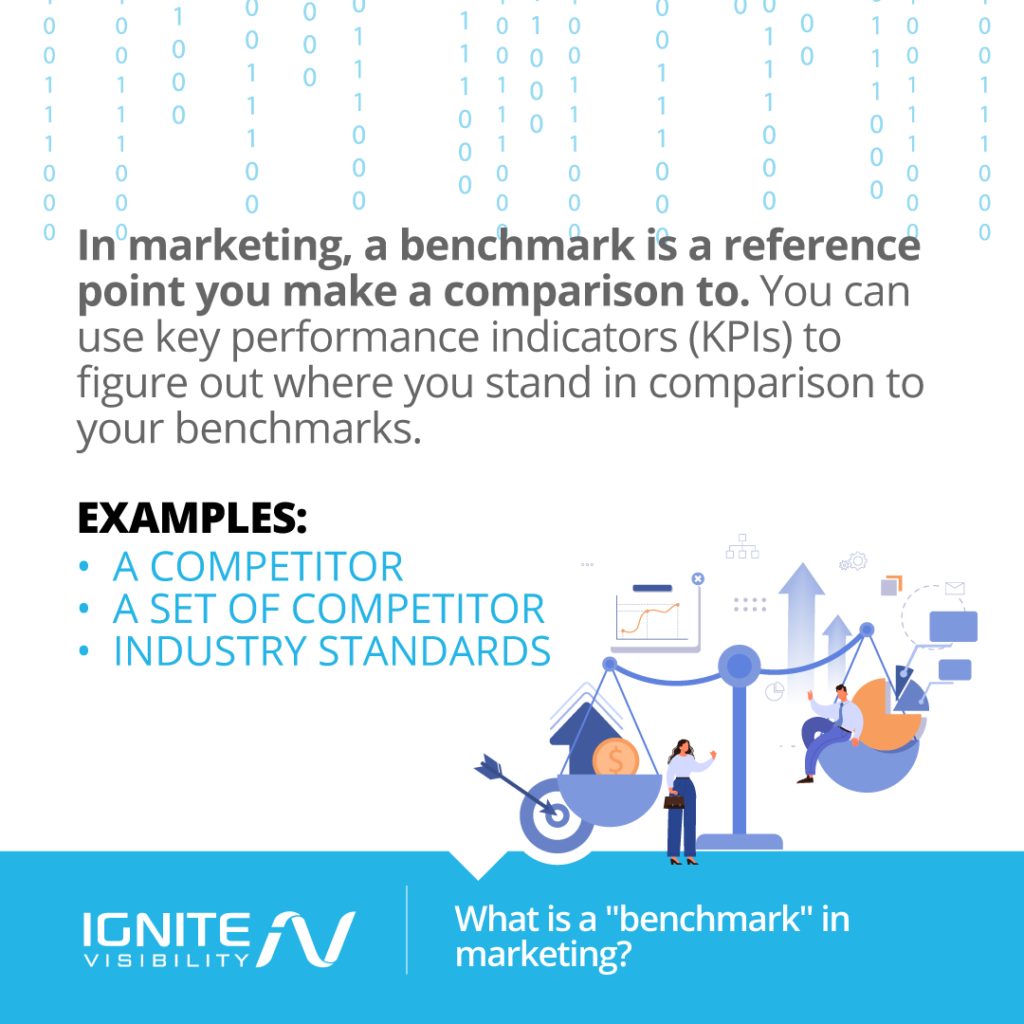
When planning your budget, it’s also a good idea to do some benchmark marketing. Benchmark marketing gives you a reference point to make a comparison of where you’re at versus your competitors.
Use this information to determine where they are excelling and where you can learn from them and improve your own marketing.
There is a variety of software and online research tools available to make this easier for you so take advantage of this to evolve both your marketing and your marketing budget.
Write Out Your Marketing Budget
Now that you’ve thought about your goals, examined data from prior years, and researched to compare your marketing with your competitors’ and others in the industry, it’s time to write out your marketing budget.
Writing out your budget will make it easier for you and your staff to stick to it. Tracking each and every dollar you spend will only help when it comes to examining and learning from your actions.
You don’t have to start from scratch. There are many places where you can get your hands on a marketing budget template. The following sources below are three of our favorites:
The biggest thing to remember about your marketing budget is that it’s okay to adjust it as the year goes on. Staying flexible and adapting to the ebbs and flows of your business and industry is important.
Case Studies and Examples
To give you a better idea of how to create a marketing budget, let’s look at some marketing budget examples from a few top brands:
Abercrombie & Fitch
In the first quarter of 2024, retailer Abercrombie & Fitch reported that it put 5% of its total revenue toward marketing. During that quarter, the company’s net sales reached $1.02 billion.
Ford
Automaker Ford set aside $2.5 billion to go toward marketing and advertising in 2023. By the end of that year, that budget comprised 1.42% of the company’s approximately $176 billion revenue.
Airbnb
According to a Statista report, vacation rental marketplace Airbnb spent a total of $953 million on ads in 2023, making up about 9.6% of the company’s $9.92 billion revenue by the end of the year.
Now, let’s consider what the marketing budget breakdown might be for a small business in the following marketing budget example:
- 70% on Digital Marketing: A small business may spend this much on various channels, including targeted PPC ads, search engine optimization, social media advertising, and content marketing, targeting the channels its audiences uses.
- 20% on Traditional Marketing: Meanwhile, a smaller portion might supplement digital efforts with more traditional marketing materials, including print ads, brochures, direct mail pieces, and billboards or other signage.
- 5% on Digital PR: To promote a brand and its offerings while also assisting with reputation management, a company could divert a small percentage of its marketing budget toward digital PR, which could incorporate media outreach, sponsorships, and press releases.
- 5% on Research, Reporting, & Analytics: A company might spend another portion on audience and market research, data analytics and testing, and reporting.
Find Out How to Create a Marketing Budget With Ignite Visibility
Need some help with your budgeting and planning? The experts at Ignite Visibility can give you some direct guidance on how to develop a marketing budget based on your unique needs.
With our expertise, you’ll be able to:
- Factor in all influencing elements to establish a budget, including your industry, company size, market, and more.
- Make any necessary adjustments to your budget as needs change.
- Develop full-scale marketing solutions that cover all relevant channels to reach your audience.
- Conduct in-depth analysis with transparent reports to make informed decisions on future efforts.
- And more!
Discover what our team can do for you by requesting a free proposal from us at any time.
