

It’s hard to imagine that just decades ago, PPC advertising was still in its infancy.
While it’s come a long way since 2002, click fraud has become a major cause for concern for many pay-per-click (PPC) practitioners.
In this guide, we’ll look at what click fraud is, how to spot it, and how you can avoid it at all costs.

What We’ll Cover:
- What is Click Fraud?
- How Click Fraud Works
- How to Identify Click Fraud on Your PPC Ads
- How to Prevent + Avoid Click Fraud
- How Can You Measure the Impact of Click Fraud on Your Ads?
What is Click Fraud?
As more and more consumers continue to depend on online channels to fulfill their purchasing needs, advertisers are gradually increasing their ad budgets to meet demand. This means that the amount of money being allocated to PPC is also increasing, and PPC scammers are stepping up their game.
Put simply, click fraud occurs when an individual or a bot clicks on your ad in an effort to deplete or reroute your PPC ad spend. This can either be part of a larger organized campaign or it can be due to frequent exposure to bots and web crawlers. Google refers to this phenomenon as “invalid clicks,” which covers everything from unintentional clicks to malicious clicking.
Click fraud is typically driven by one of three motives:
- Advertisers are attempting to sabotage their competitors by driving up costs and having them meet their budget limits earlier on in the day with no intention of ever conducting business with them.
- Ad publishers are clicking on their own ads in order to make the site more appealing for ad placement and generate more revenue for themselves.
- Customers can repeatedly click through on paid search ads to access a website, as opposed to using a search engine or a bookmark.
According to Business Insider Intelligence study, 78% of respondents cited click fraud and bot traffic as major concerns for marketers in the U.S.
How Click Fraud Works
In a PPC model, advertisers will pay publishers when they get clicks on their ads. The cost-per-click ratio depends on how an ad’s content performs on a particular ad space. Since clicks are conceptual representations of action, they are easy to simulate and can be implemented in a number of ways.
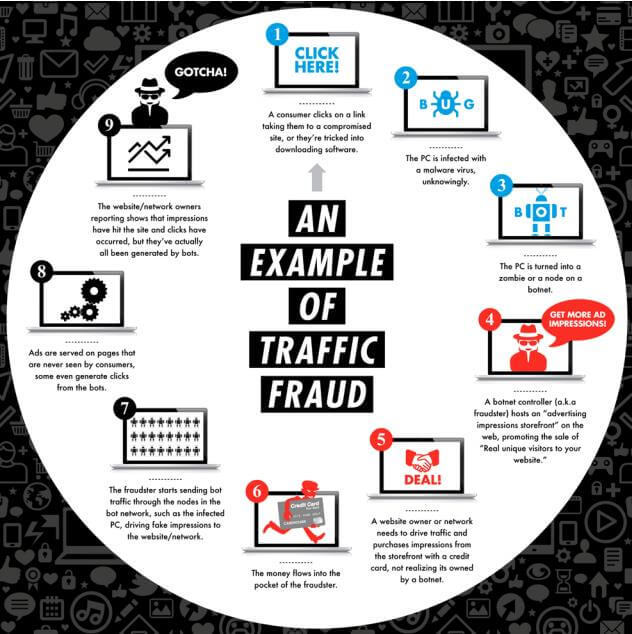
Here’s a rundown of the most common:
Manual
Manual click fraud often involves using real people to click on specific ads to manipulate performance figures and receive a larger cut of the revenue. This type of ad fraud can also be divided into two subcategories:
- Click Farms: With the option to disguise their IP addresses, this takes place when multiple users are clicking on ads all day long.
- Forced Clicks: Because there’s no other way to proceed to the site, users have no other choice but to click on the ad.
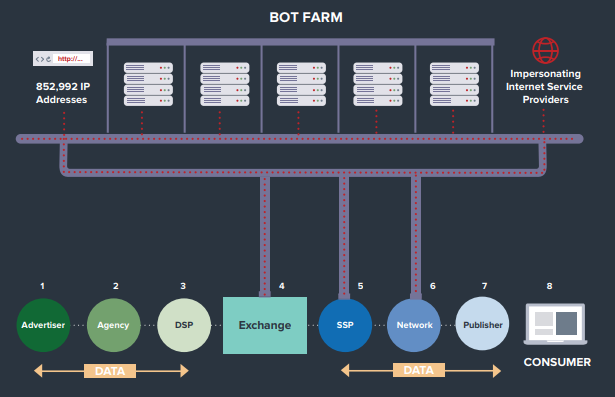
Automatic
With automatic click fraud, networks of bots are designed to perform certain actions that are registered by the system as legitimate clicks. Here are some additional examples of this type of fraud at play:
- Click flooding: In this case, bots bombard an ad with a vast number of clicks. This, in turn, disrupts the analytics and undercuts the performance results of a campaign.
- Cookie stuffing: Used largely in affiliate marketing schemes, fake cookies are derived mainly from scripts, pop-ups, and embedded elements like images.
- Toolbar injection: Here, users try installing a seemingly legitimate browser plugin that contains a small piece of malware. This malware ends up manipulating the page code and includes different ad content, driving away clicks to the other advertisers.
How to Identify Click Fraud on Your PPC Ads
Now that we’ve established what is click fraud, it’s time to dive into the next step—keeping an eye out for the telltale signs of fraudulent activity.
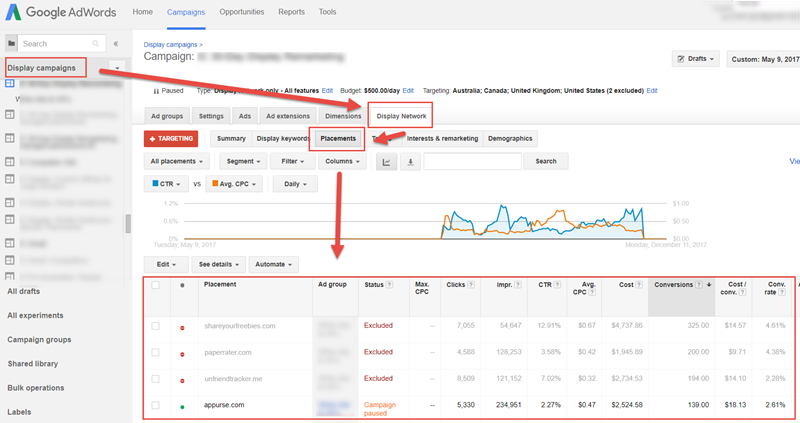
Here are some of the top ways you can assess whether or not you’ve been a victim of click fraud.
Uptick in Clicks
Experiencing an unusual spike in clicks? Click fraud may be the culprit, especially if this suspicious activity is taking place within a shorter period of time or during an odd point in the day.
If you haven’t adjusted your bid or tweaked your ad campaign in a while, you should question why the unusual surge in clicks.
Check IP Addresses
Historically, seeing duplicate IP addresses was a great way to spot whether any type of fraud was taking place. While noticing a pattern of the same IP addresses on your log is a definite red flag, modern ad fraud techniques are a little sneakier.
Instead of using the same computer to click on the same ad over and over again, today’s fraudsters are relying on VPNs, device hijacking, and virtual IP addresses to get the job done.
High Bounce Rate
A larger bounce rate is never good when it comes to PPC campaigns. While determining an acceptable bounce rate for your ad campaign is harder to pin down, anything under 50% is generally deemed good.
If you start noticing that your bounce rates exceed 70%, it might be time to start taking a closer look at your site. All instances may not be fraud-related, but it doesn’t hurt to review your bounce rates just in case.
Peculiar Locations
The global marketplace makes it easy to buy and sell all products and services over the world. But, if you’re starting to get clicks from unusual places that don’t interact with your brand often, it may indicate possible click fraud.
For example, if you notice a ton of clicks coming from Romania when no one from Romania has ever bought anything from your site before, then that should raise alarm bells.
How to Prevent + Avoid Click Fraud
Despite Google’s claims of going the extra mile to reduce click fraud, advertisers still need to take matters into their own hands. The following list of click fraud prevention techniques have been tried and tested.
Exclude Fraudulent IP Addresses in Google Ads
If your internal reporting systems can pull up IP address information, you can add IP exclusions in Google Ads. This means the specific IP cannot detect your ads in the future, and that user will not be able to click on them again.
Conduct Routine Metric Audit
Checking metric accuracy on an ongoing basis is important. By doing so, it’ll be much easier to pinpoint where the problem is and take action before there’s any long-term damage.
Adjust Targeting Plan
Insufficient targeting can lead to unreliable audience segments from geographic areas where click farms usually reside. Try excluding certain countries and languages when configuring your campaign settings. Keep in mind you can go as far as blocking specific cities and zip codes as well.
Limit Ad Spend to Reputable Sites
If part of your strategy involves placing ads on hundreds of different sites, this may not be the most practical option. However, it can be quite a valuable click fraud prevention approach for ad campaigns that go for a smaller number of placements.
Build a Blacklist
One of the most effective ways to prevent click fraud is by keeping a comprehensive list of blacklisted IP addresses, websites, and device IDs. This technique helps prevent future damage from those IP addresses and IDs.
Invest in Click Fraud Protection Services
The market is saturated with third-party services, plug-ins, and software options that aim to reduce fraud and protect your ad campaigns. While they all vary in price and quality, most have the ability to automatically track clicks, detect potential ad fraud, and block bots and fraudulent clickers. Some of the best platforms on the market include ClickGUARD, NS8, ClickCease, mFaas, and TrafficGuard PPC Protection.
How Can You Measure the Impact of Click Fraud on Your Ads?
The impact of fraudulent activity varies from business to business. With so many underhanded and unethical tactics used to generate clicks, it’s hard to quantify how big of a problem it is in the ad world.
But, these stats should help to illustrate how it can affect your business in the long run:
- Half of all online ads are never seen by a human.
- Fake traffic costs businesses roughly $60 billion per year.
- 20% of all clicks on PPC ads are fraudulent.
- Click fraud traffic is projected to be growing at around 50% each year.
- More than 20% of all click fraud occurs in finance-related industries.
As Christian Nicolini, Senior Director of Paid Media at Ignite Visibility, notes, “Our advice to advertisers with smaller budgets: Stick with buying ads on owned properties (e.g., Facebook ads, Gmail, Discovery, search) and monitor your audience targeting in third-party serving environments (e.g., Google Display Network).”
Wrapping Up
The sophistication of cyber-attacks means that detecting click fraud is harder than ever.
To ensure ad fraud doesn’t deplete your ad campaign budget, it may be worth the extra effort to look for unusual patterns in your PPC analytics.
A little diligence can go a long way!
