

AI helps brands scale their marketing without sacrificing quality. These tools make marketing smarter, more efficient, and more comprehensive with minimal investment. AI in marketing today uses technologies like generative AI and plenty of integrations to help marketers make full use of this innovation.
So in this article, Chief Client Officer, Jeff Macgurn, will teach you everything about AI in marketing and 12 proven strategies for applying it to your strategy effectively.
My Expert Opinion on AI in Marketing
AI and marketing work hand in hand as marketers try to learn the ins and outs of their target audiences and work to continually optimize their strategies. As AI continues to evolve and get even more effective and efficient, it will be even more useful. It’s already so effective that 90% of marketers have used generative AI tools in the workplace, according to an American Marketing Association survey.
At the same time, I can’t stress enough the need to balance implementation with responsible and ethical use. While using AI in marketing is fine on its own, you need to be careful with how you use it. Exploiting AI could do more harm than good for your business and reputation.
Let’s look deeper into how marketers are harnessing the power of artificial intelligence in marketing automation, and list some of the best AI tools for marketing to get you started with integration.
What is AI?
Artificial intelligence is technology that simulates human intelligence. In marketing, this means making automatic decisions based on data, evaluation, and careful tracking of larger trends.
How Does It Work?
Artificial intelligence in marketing works by integrating large data sets with fast, continuous processing models.
This lets it recognize patterns or features automatically. And after each round of data processing, it tests and measures its own performance to gain additional insights.
In other words, AI analyzes tons of data constantly to find patterns. These patterns can be speech, fingerprints, KPIs, or anything else.
Because it never needs to take a break, it can constantly test these patterns and refine its output. This lets it learn a massive amount in a short time.
There’s no shortage of AI marketing automation solutions out there. Some of the best AI tools for marketing include generative AI platforms like ChatGPT for research and assistance with content development, Canva for creating graphics for sites and social media posts, and Descript for video editing, among many, many others.
Four Types of AI in Marketing
AI and marketing are increasingly intertwined as technologies continue to advance and more integrations become available. Recent statistics illustrate just how integral AI is to the marketing landscape as both evolve: According to Coschedule, 85% of marketers use AI tools for content development, around 75% of marketers believe they have a competitive advantage when using AI, and 55% of marketers trust AI content and insights highly.
There are multiple ways to implement AI for small business marketing, as well as for large-scale enterprise campaigns.
You can categorize marketing AI based on two different criteria:
- Intelligence grade (does it just automate simple tasks or does it “think?”)
- Stand-alone vs. part of a larger system (integrated)
Combining these two, you get four main types of AI:
Stand-Alone Task Automation
Stand-alone task automation tools are isolated (i.e. not part of a system) programs that handle basic tasks. They’re tools in and of themselves—built to perform specific tasks efficiently.
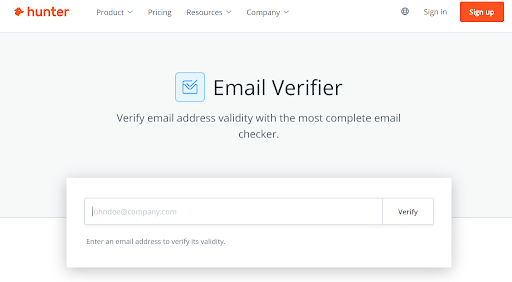
For instance, Hunter offers email verification as part of its task automation portfolio. It pings an email list you supply it with for valid addresses, making a time-consuming task much easier.
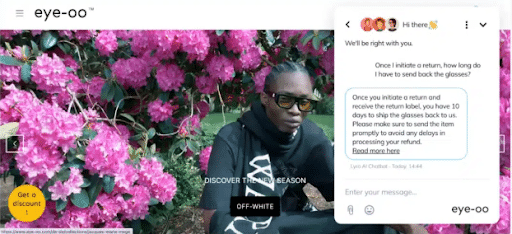
Meanwhile, AI chatbots like Tidio’s Lyro AI Agent automate customer support for brands like eye-oo, which used this agent to boost sales by 25% and get 5 times more conversions.
Integrated Task Automation
Integrated task automation AI exists within larger platforms. It performs basic tasks as part of a larger toolset.
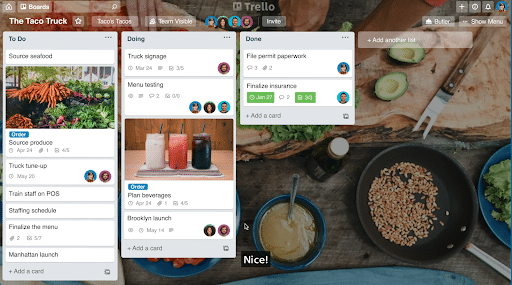
For example, Trello lets users set tasks to move or archive automatically.
Another example is scheduling emails in Gmail.
Another tool you can use for integrated task automation is ClickUp, a project management tool that uses AI to perform various tasks, such as generating content ideas, drafting emails, and summarizing meeting notes. One company, Red Sky, used ClickUp’s automation features to reduce meetings by 80% and automate 42% of HR processes.
Stand-Alone Machine Learning
Stand-alone machine learning apps use massive amounts of data to perform a certain complex task efficiently.
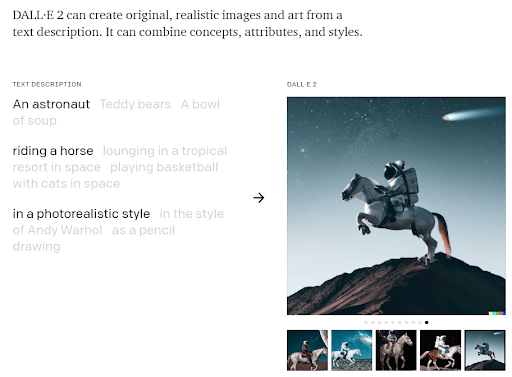
OpenAI trained DALL-E 2 on a massive amount of images to produce its own illustrations based on certain inputs. Since this is its only function, it’s a powerful example of a stand-alone machine learning tool.
Integrated Machine Learning
Integrated machine learning AI uses its deep learning abilities to enhance certain experiences in a larger setting. When Netflix recommends suspiciously accurate shows for your next binge, you’re experiencing an integrated machine-learning tool.

Challenges & Limitations of AI in Marketing
Artificial intelligence is effective for marketing, but it has a few limitations:
- Interoperability: Because AI is designed for its native system, it can be hard to integrate into new environments.
- Implementation Timeframe: AI is difficult to create due to its natural complexity.
- Privacy: Machine learning models need tons of data, so your firm may have to collect more information than consumers are comfortable with.
But these limitations don’t undermine AI’s massive benefits.
At the same time, businesses should stop integrating AI into everything, focusing instead on integrations that automate simple tasks and making their operations more efficient without taking over every aspect of them. Focus instead on strategic use of AI where you need it most, but be careful not to rely on it too much, or it could hurt your business more than anything else.
Think of AI as an assistant who’s there to help handle the grunt work, rather than an executive with the purpose of running your business.
Benefits to Incorporating AI in Your Marketing Strategy
43% of marketers think automation and AI have been the most effective trends for growing their business. It has extensive applications for:
- Advertising: AI can test ads before publishing, provide detailed data, lower costs, and boost conversions.
- Analysis: Machine learning can spot patterns humans can’t because it studies data constantly.
- Social Media: AI can tell you what works from your best-performing content. It listens to conversations across social networks, telling you what customers say about your brand.
However, they’re only as effective as their deployment. AI’s marketing potential will pay off only for brands correctly implement it into their strategy.
A small business using AI for marketing could effectively use these tools without making their martech stack too complicated and difficult to manage. AI for small business marketing can offer numerous benefits, including improved efficiency and personalization of customer experiences. Additionally, combining AI and market research can enable more accurate targeting and segmentation of target audiences.
Incorporating AI in marketing will also keep you competitive. As mentioned, 90% of marketers surveyed have used generative AI, but how many marketers are using generative AI frequently? According to AI in marketing studies using the message to validate claims, 71% of marketers use this technology at least every week, with 20% using it daily.
How to Use AI in Marketing
Next, we’ll discuss how to integrate AI into your marketing step-by-step. By the end, you’ll have a blueprint for scaling your influence to new heights.
Here are 15 examples of artificial intelligence in marketing:
1. Tear Down Software Silos
Many companies collect tons of data across all their software tools but never centralize it so the whole company can use it effectively.
For instance, marketing agencies often consist of teams that work on projects together but operate independently. This type of company can be a disaster when it’s poorly organized.
Imagine that every department creates invoices, data reports, content, and other resources using separate, unintegrated systems. This leads to double entries, buying two different tools for the same thing, and other inefficiencies—all eating into billable hours.
There are two main solutions to siloed software:
- Integrating existing software manually
- Using AI-powered, all-in-one software
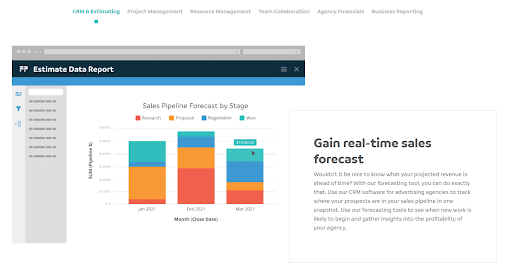
Function Point is an example of the second option. It centralizes every software function of agencies, tearing down siloes in CRM, financials, reporting, collaboration, and more.
Another AI marketing automation tool that can help unify data is Microsoft 365 Copilot, which has helped big companies like Cemex and Dow save more time and money with streamlined operations. Specifically, this solution can assist with cross-app integrations, meeting assistance, and data insights, enabling more efficient workflows.
2. Personalization
Marketing inherently operates at scale. Even if you target a niche market, you’re still pitching your product to hundreds of different people and companies, all with unique qualities.
Addressing these diverse needs means tailoring your message to each prospect. But reaching a large audience makes personalizing all outreach too time-consuming.
AI solves this by automating personalization. It can customize email, push notifications, DMs, segmentation and more based on your input and consumer data.
One of the most relevant examples of AI personalization is email. Marketers use tools like Bloomreach to create personalized campaigns using segmentation
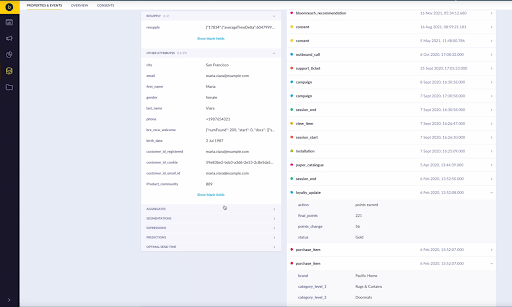
The result is hyper-personalized marketing, with AI leveraging all data available to tweak emails exactly to the recipient’s liking.
Marketing Personalization Software
Kibo
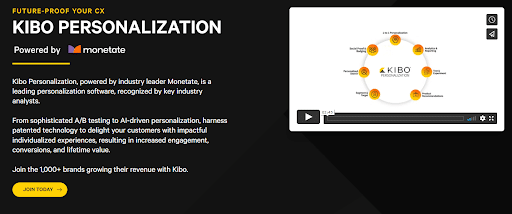
Kibo uses analytics AI to segment customers based on their behavior. Machine learning then optimizes messaging, content, and page layouts based on what fits their activity best.
Instapage
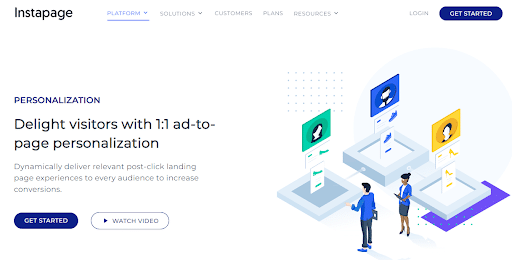
Instapage dynamically shifts landing pages to display different information based on prospects’ personal data. This data can be geographics, traffic sources, or other attributes.
Braze
A customer engagement platform, Braze uses a tool stack called Sage AI that can personalize communications via push notifications, SMS, and email.
CleverTap
Like Braze, CleverTap makes it easy to personalize customer engagement across platforms, but it is even more expansive in its capabilities than Braze, with the ability to personalize website content, mobile contact, and voice calls, with predictive segmentation and A/B testing.
3. Smarter Chatbots
AI chatbots let businesses offer visitors 24/7 support without using humans. These AI chatbots go beyond scripted questions by using machine learning to produce human-like responses.
They have endless uses in marketing, like driving conversions, providing support, and arranging calls.
AI Chatbot Software
Zendesk
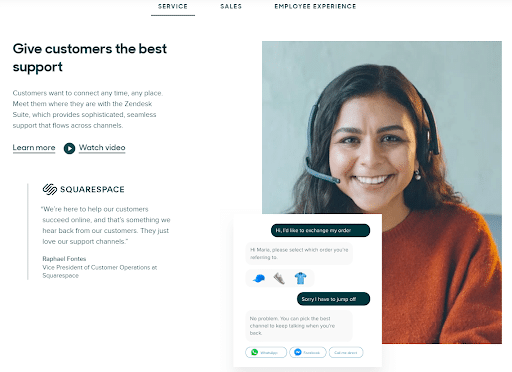
Zendesk combines chatbots with omnichannel support to provide data-driven service. Its AI recognizes user information (area, activity, purchase history, etc.) to provide tailored responses.
Intercom
Intercom creates customer service software, including highly advanced chatbots, as part of its portfolio. Their bots quickly gather lead information from customers, so your brand can score them easily.
Their bots even replace web forms, giving users a dynamic experience instead of a slow fill-out process.
4. Informed Marketing Automation
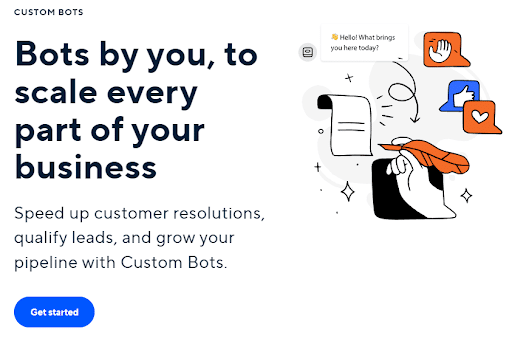
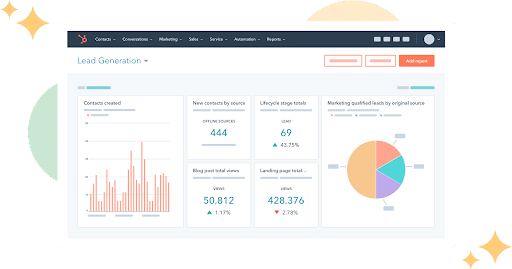
Marketing automation is AI-powered software automating repetitive marketing tasks like social posting and PPC bidding. The most comprehensive automation tools—like HubSpot—include CRM for highly personalized marketing outcomes.
Marketing automation tools make campaigns more effective while reducing the effort needed to run them. These benefits are why 58% of marketers spend at least 10 hours per week using them.
Marketing Automation Software
ActiveCampaign
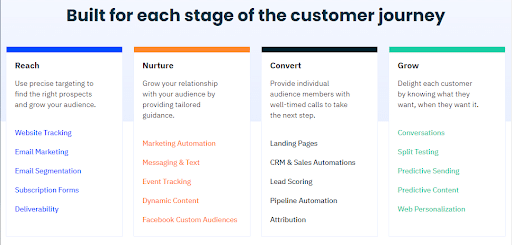
ActiveCampaign streamlines a massive range of marketing work. You can use AI and third-party integrations to make every part of your marketing more efficient.
Klaviyo
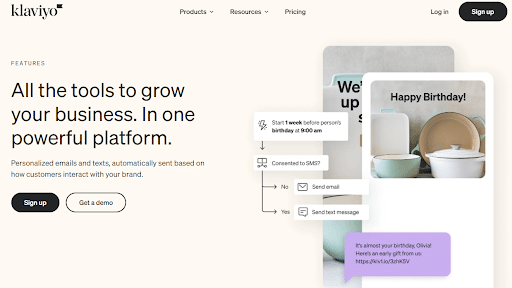
With over 200 integrations, Klaviyo scans an enormous amount of data to provide personalized chatting experiences with visitors. It collects customer data right away, including:
- Contact channels (live chat, SMS, etc.)
- Coupons
- Order history
- Location and timezone
- Purchases and other engagement
Using this information it creates a customer profile to use for ultra-personal interactions.
HubSpot
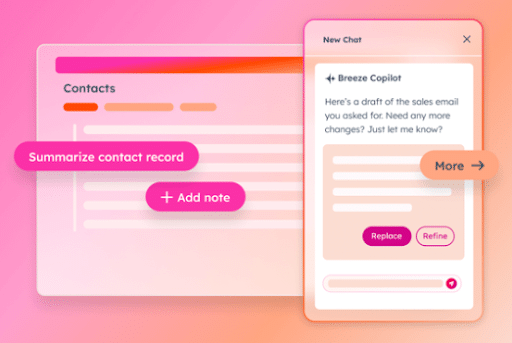
HubSpot is an all-in-one marketing tool that is great for AI marketing automation in just about every area. AI can help with lead nurturing and scoring, among many other aspects to streamline your workflows. Breeze Copilot is one of HubSpot’s effective tools, allowing for ease of content creation, boosted productivity, and more with a customer agent, content agent, social media agent, and more.
5. Social Listening
Social listening is watching social platforms for conversations about your brand.
When someone mentions your brand, you can respond directly (answer questions, handle complaints, etc.) or analyze it for insights. Social listening also monitors other relevant data, like hashtags, industry trends, and competitor mentions.
Modern social platforms host countless conversations. So social listening relies on AI to constantly watch for brand mentions.
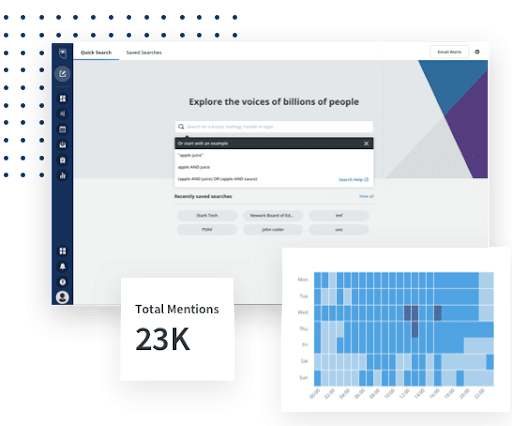
For example, Hootsuite tracks millions of live conversations for mentions of your brand. It then combines this data into a visualization for in-depth analysis.
Social Listening Software
Sprout Social
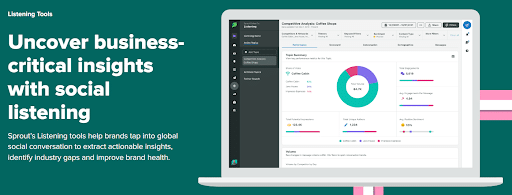
Sprout Social monitors, Twitter, Facebook, Instagram, and several other networks for brand mentions. Combined with dozens of integrations, Sprout lets you gain deeper insights from your customers.
Brandwatch
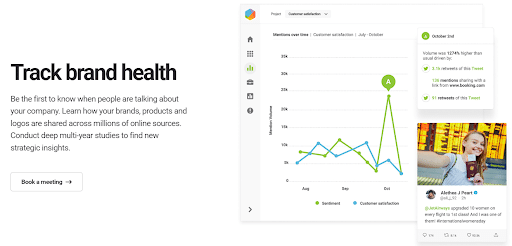
Brandwatch identifies and summarizes key trends around your business in an easy-to-read dashboard. It not only watches for text mentions but products and logos sharing too.
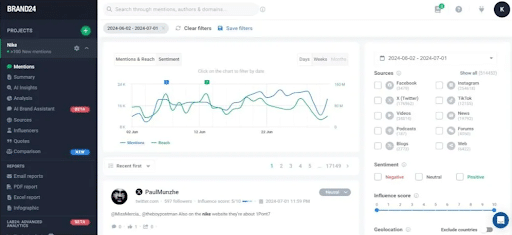
Brand24
Use Brand24 for even more advanced social listening using AI and marketing solutions, with features like:
- Advanced AI tools like Topic Analysis, Event Detector, and Brand Assistant
- A mentions tab that allows you to view all brand mentions using advanced filters
- Customizable alerts for mail, Slack, and more
- AI insights into brand performance
6. Dynamic Product Pricing
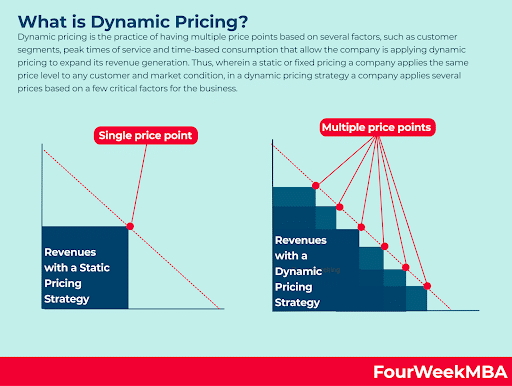
Dynamic pricing is when prices are dynamic, changing based on certain factors. It’s about selling the same thing at different prices to different people.
This isn’t to be confused with price discrimination—the unethical practice of changing prices based on customer identity. Dynamic pricing adjust prices according to supply and demand, location, competition, and other objective factors.
Let’s say you’re booking a last-minute flight to Chicago and use an app to track prices. To ticket starts at $250 but drops to $200 a few hours later.
This is dynamic pricing at work. Because the airline had trouble filling the last few seats, its software dropped the price to get watchers to buy.
Dynamic pricing maximizes sales by operating at different price points. AI optimizes prices by studying industry trends, price surges, and more.
Dynamic Pricing Tools
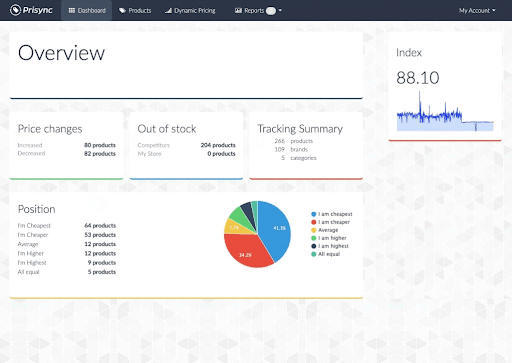
Prisync
Prisync gives you an optimal price tag based on several factors according to your needs. For instance, it might reduce product’s pricing based on competition but always increase when supplies run low to keep it in stock.
netRivals
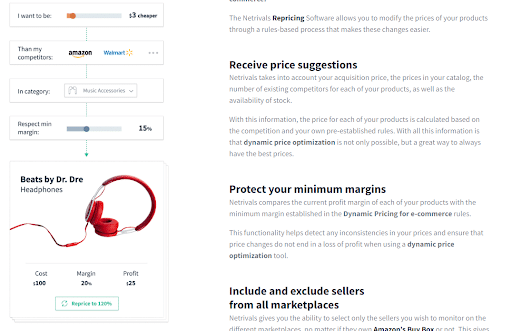
netRival’s repricing AI recommends pricepoints based on cost-per-acquisition (CPA), competitors, plus your average price and availability. You can even set prices to increase when competitors run out of stock.
7. Speech Recognition & Voice Search
Speech recognition software uses artificial intelligence, machine learning, and natural language processing to convert speech into readable text accurately. Its main use is text-to-speech transcription, but it has marketing applications as well.
For instance, consumers use Amazon Alexa and Google Home stations to make searches purely by voice. These voice search tools then fetch quality results from the internet and read them back to the user.
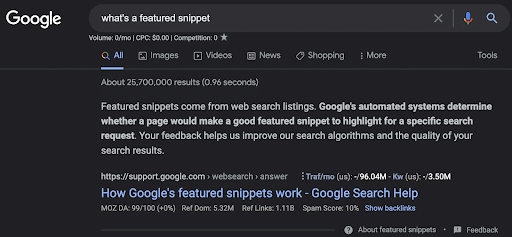
To appear in voice search results, marketers should strive to get the featured snippet on Google. This is the text box that often appears before a search’s first ranking page (for this reason, SEOs often call it “position zero”).
Speech recognition also plays a vital role in optimizing customer experience.
When customers call your company, speech AI can transcript the calls. They can also detect shifts in tone, providing valuable insight into how well your brand serves customers.
Voice Recognition Software
Amazon Transcribe
Amazon Transcribe is world-renowned for its high accuracy and ease of use.
It converts large batches of input into easily-readable transcripts. These transcripts also include timestamps, punctuation, and labels for different speakers.
Deepgram
NASA, Spotify, Citi, and other renowned organizations use Deepgram to transcribe over 30 languages into over 100 file types. Deepgram also offers software development kits (SDKs) to build custom apps using its technology.
And if you’re skeptical, you can demo Deepgram’s transcription AI live on its own page.
8. Programmatic Advertising
Programmatic advertising serves ads to consumers with optimal pricing and timing. Compare this to manual ad placements, which require constant effort to optimize.
Programmatic advertising takes the guesswork out of media buying, outsourcing hours of crunch work to AI. Ad buying tools automate the entire process for you based on your goals, audience data, and KPIs.
These tools are so effective since they work directly with ad buyers and sellers at the same time.
When an advertiser wants to promote their product, they use a demand-side platform (DSP) to automate the buying process. This DSP works with multiple publishers to find the best opportunities across each.
And when someone wants to sell ad space on their website, they use a supply-side platform (SSP). This SSP maximizes the value for each impression served by leveraging AI like DSPs do.
Programmatic Advertising Software
SmartyAds
SmartyAds is a programmatic advertising tool designed for all aspects of advertising. It offers:
- A supply-side platform for sellers
- A demand-side platform for buyers
- Whitelabeling for agencies and ad exchanges
It also supports all media formats (video, display, etc.) across all devices (desktop, mobile, and TV).
Simpli.fi
Simpli.fi is another comprehensive ad automation tool offering both SSP and DSP platforms. Advertisers can use in-depth consumer data (location, browser, device, etc.) to build highly-optimized campaigns.
Simpli.fi also offers dozens of data reporting templates for simple, in-depth performance analysis.
The Trade Desk
This DSP offers AI-powered bidding and ad targeting, with ample transparency and the ability to drive data-driven decisions. If you want to access premium content for your ads, The Trade Desk is among the best platforms.
Google Display & Video 360 (DV360)
Whether you’re a small business using AI for marketing or a large enterprise in need of a robust programmatic advertising platform, DV360 offers a versatile AI-supported solution for advertising on all Google and Google Partner platforms. Get help with all aspects of campaign management, creative design, audience management, and data measurement.
9. Predictive Analysis
Predictive analysis (AKA “predictive analytics”) predicts future marketing trends by analyzing past data. This helps leaders secure the long-term success of their brands with informed decisions.
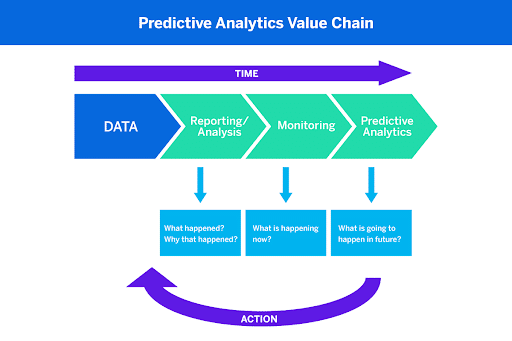
Examples of predictive analysis include:
- Audience segmentation
- Lead scoring
- Finding optimal demographics to target with ads
- Personalizing customer experiences based on segmentation
Predictive AI scans millions of data sets to find patterns humans never could on their own. The result is more informed decision-making across all marketing channels.
Predictive Analysis Software
Alteryx
Alteryx makes it easy to translates massive amounts of data into marketing discoveries. Using machine learning, it builds detailed predictive models and converts them into data reports.
It’s also entirely code-free, making it accessible to all skill levels.
SAS
SAS uses cutting-edge machine learning to cut the guesswork out of your marketing. Its platform uses advanced algorithms to identify intricate patterns within your data.
SAP Analytics Cloud
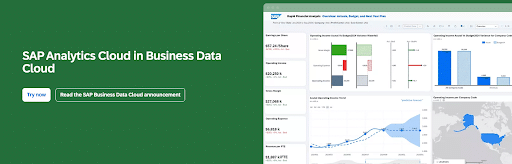
If you require a comprehensive business intelligence platform that offers predictive analytics capabilities, consider SAP Analytics Cloud, which makes it easy to develop custom data visualizations, dashboards, and reports to get the most from the data they collect.
You can also gain even deeper insights by running simulations and developing forecasting models to further equip your business to pivot as needed.
Qlik
Another predictive analytics tool, Qlik can automate various tasks and use natural language features that allow you to view real-time insights and actually ask questions of the tool to make sense of all collected data. It also integrates with Workday and Salesforce to collect and analyze data from these platforms.
10. A/B Testing
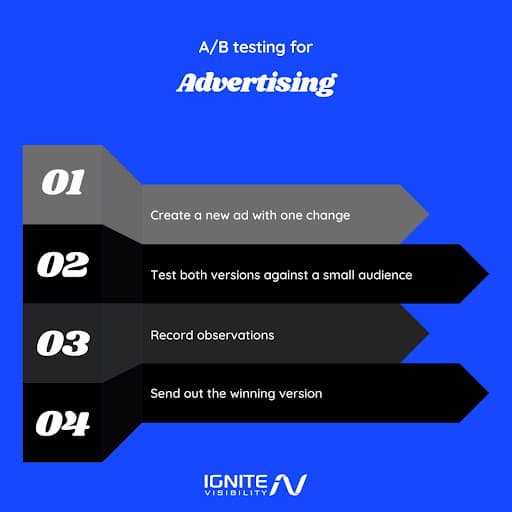
A/B testing is when you run different versions of a campaign to see which performs best with your audience. One half of your audience sees version A, while the other half sees version B.
A/B testing is vital for understanding how audiences feel about your ads. As you no doubt understand, consumer behavior can be radically different from what you expect.
Let’s say you wanted to test two versions of your CTA:
- “Learn more” (Your existing CTA)
- “Download now” (One you think will perform better)
To test these CTAs, send both versions of your ad to a small audience with only that one change. The version that performs best in your KPIs (e.g., downloads) wins.
11. Lead Scoring
Ever began a free trial only to get multiple calls from a sales team afterward? You probably thought, “They’re wasting their time—I was only slightly curious about their product.”
You know as a consumer that not every lead is equal. Sales teams who call every trial signup waste valuable resources on leads who likely won’t convert.
The solution to this inefficiency is lead scoring. Lead scoring lets your brand prioritize leads effectively based on their potential.
It works by assigning a value to each lead, usually in the form of points. You base these off of user data and behavior—info submitted, pages visited, etc.
When you have a system for assigning value for each lead, your sales team can focus on those most likely to convert.
Giving love to the prospects most likely to buy greatly increases your conversion rate. Some leads are highly interested in your product, but need help to move forward.
How AI Enhances Lead Scoring
AI automates the massive workload that large-scale leadscoring requires. Using machine learning, it creates a precise list of qualified leads based on behavior data.
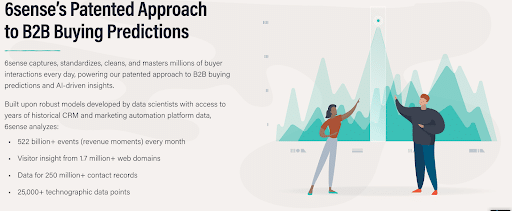
Software like 6sense use a trillions-strong interaction database to determine the buyer intent behind every user action. The result is a constant stream of opportunities for your sales team to convert potential customers.
Many other tools offer lead scoring capabilities, such as:
- HubSpot
- MadKudu
- Marketo
- Warmly
- Salesforce Einstein
- Clari
- Demandbase One
12. Detect Trends
No matter your industry, getting to new ideas first is everything. AI uses machine learning to find relationships between consumers and new ideas across the web.
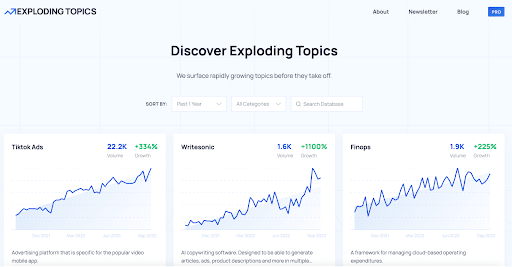
Exploding Topics is a SaaS selling this trending data by itself. It uses sophisticated algorithms to locate trends across the web and sends them to subscribers to use for marketing.
Other services let you use AI to find trends yourself, like Trend Hunter. Marketers use their service to get industry insights based on millions of consumer interactions.
13. Content Ideation and Outlining
While it’s important to stop integrating AI into everything, especially into every aspect of content creation, you can still use it to assist with the content development process.
For instance, a healthcare company might want to develop a blog that covers every industry topic possible, but isn’t entirely sure which topics are trending or what niche subtopics might be worth covering.
Using the right AI content platforms, this company could cover every relevant topic with a relevant blog post, from tips for staying healthy to guides on how to find the right medical professional.
The important thing here is to ensure AI isn’t writing your content, but it can give you ideas and guidance to help automate the process.
Content Creation Software
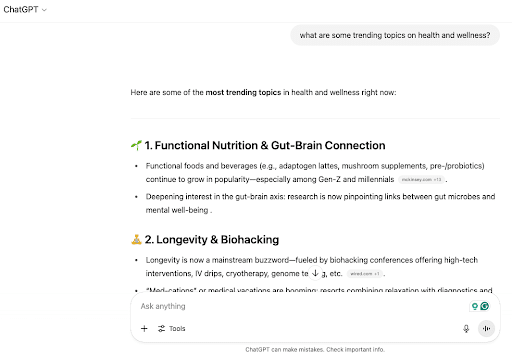
ChatGPT
Use ChatGPT to come up with certain content ideas or create an outline for short- and long-form content. This assistant can also help with research into each topic to make content creation more efficient than ever.
ChatGPT uses AI and market research to identify trending content topics.
Copilot
Microsoft Copilot, like ChatGPT, can outline content and help with outlining, assisting with in-depth research into various topics to streamline content creation.
14. Fraud Detection
Use AI in marketing to detect different forms of fraud that could negatively impact your campaigns and brand reputation. For example, your ad campaigns could be susceptible to bot traffic or click fraud, while some scammers might attempt to flood businesses with low-quality or fake leads in lead generation campaigns.
Certain AI-powered solutions can help detect and prevent instances of fraud from compromising your efforts.
Fraud Prevention Tools
ClickGUARD
This fully automated solution protects PPC campaigns by identifying and deflecting fraudulent clicks in real time. In doing so, the tool analyzes traffic patterns and user behavior, among other types of data, to determine if any suspicious activity could impact your campaigns.
Spider AF
This tool can protect against malicious bots and other forms of invalid traffic on various ad networks and platforms, using a combination of machine learning and behavior analysis.
15. Email Optimization
Another application for artificial intelligence in marketing is optimizing email campaigns, which are integral to today’s marketing efforts.
A blend of tools can help you develop highly effective campaigns as you learn how to segment audiences, generate compelling subject lines and copy, and personalize communications with product recommendations and tailored offers.
For example, you could use a tool like Jacquard to develop optimized subject lines, while ActiveCampaign could enable you to effectively segment audiences and develop fully personalized campaigns. Meanwhile, Inboxbooster could help indicate whether emails are susceptible to being flagged as spam and improve deliverability.
Get the Most From AI in Marketing With Ignite Visibility
Whether you need AI for small business marketing or a more comprehensive solution for a large enterprise, it’s important to work with marketing firms that provide machine learning and AI for marketing. We have plenty of experience working with various AI tools and stay up-to-date with the latest innovations and trends, incorporating them into our clients’ marketing efforts.
With the help of our AI marketing agency, you can:
- Determine which AI tools are right for your campaigns
- Develop highly targeted and segmented marketing strategies
- Continually optimize and analyze campaigns
- Use predictive AI analytics to determine how to progress
- And more!
To discover how our AI marketing agency can help your business get the most from these solutions, contact us today!
