

 Without marketing benchmarks, you’re simply guessing regarding the performance of your campaigns.
Benchmark marketing is essential for effective campaign measurement and comparison with industry competitors. For example, if you’re an enterprise business, you’ll likely want to focus on top-of-funnel marketing, which has a 58% investment among these brands, while retailers comprise 22% of all media budgets.
In this article, James Semczuk, Analytics Strategist, will show you how to improve your strategy through benchmark marketing.
We’ll Cover:
- Understanding Benchmark Marketing
- Types of Marketing Benchmarks
- Key Metrics To Benchmark
- How To Build A Benchmark Strategy
- Turning Benchmarks Into Action
- FAQs
Understanding Benchmark Marketing?
First, you need to know what a benchmark is.
Put simply, it’s a critical step when building campaigns that establishes what kinds of metrics to achieve and measure.
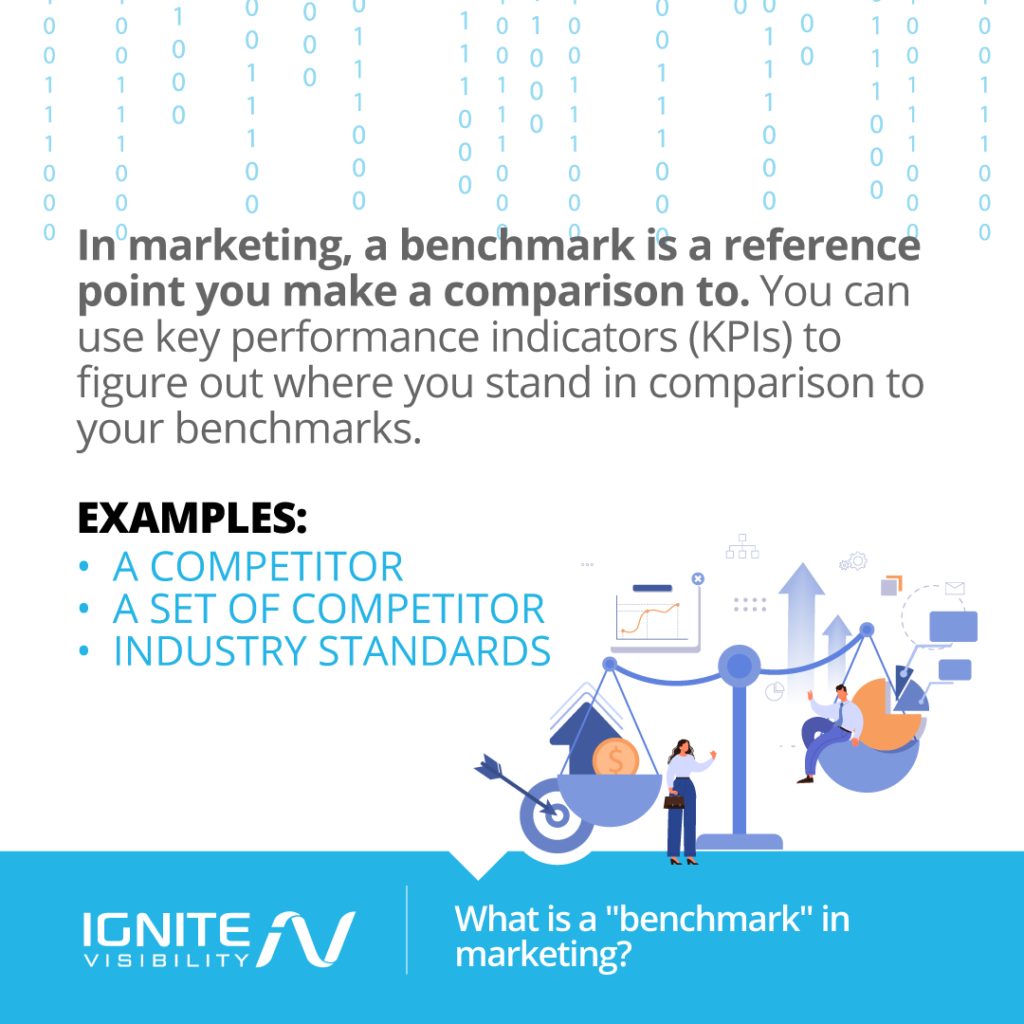
Benchmark marketing is the process of looking at where you’re at versus your competitors. You use the information you gather to fill in and beat any gaps between where you and your competitors stand. Key performance indicators (KPIs) help to identify performance from various angles.
In addition to defining marketing benchmarks based on competitors, you should also practice digital benchmarking going by industry standards and your own internal benchmarks, which you can develop looking at past performance and goals as your campaigns develop.
For example, how much does it cost your business to acquire each new customer? And how much does it cost your competitors? What is the average cost in your industry? How much have you spent on previous campaigns and what was your ROI?
Where are they spending, where are you spending, and what’s the difference in between?
These questions and more help you determine an incremental finish line so you can scale your marketing efforts beyond the status quo.
My Expert Opinion on Benchmark Marketing
When gauging the progress of your marketing efforts, you need to know exactly what to measure based on your goals and certain marketing benchmarks. With the help of digital benchmarks, you can compare your own metrics to industry standards, competitors’ metrics, and your own based on previous campaigns.
Using these metrics and key performance indicators (KPIs), I’ve found my marketing strategies to have much more direction through meaningful data and more informed decisions. I’m also able to get the most from my available marketing budget and properly allocate it to results-driving channels.
With a better understanding of how benchmark marketing works, you can establish your own to help you determine where to take your strategy.

Why Benchmark Marketing Matters
By tracking internal, competitor, and industry benchmarks for digital marketing, you can experience the following key benefits:
- Improved decision-making capabilities with rich data
- Better budget allocation by identifying the channels that get (or are likely to get) the best results
- Performance optimization as you determine what’s working and what needs improvement across your campaigns
- Forecasting as you anticipate new trends, especially based on historical internal data from past campaigns
With effective digital benchmarking, you’ll ultimately be able to more effectively track ROI and experience real growth in your industry, enabling you to get and stay on top of your competitors.
Types of Marketing Benchmarks
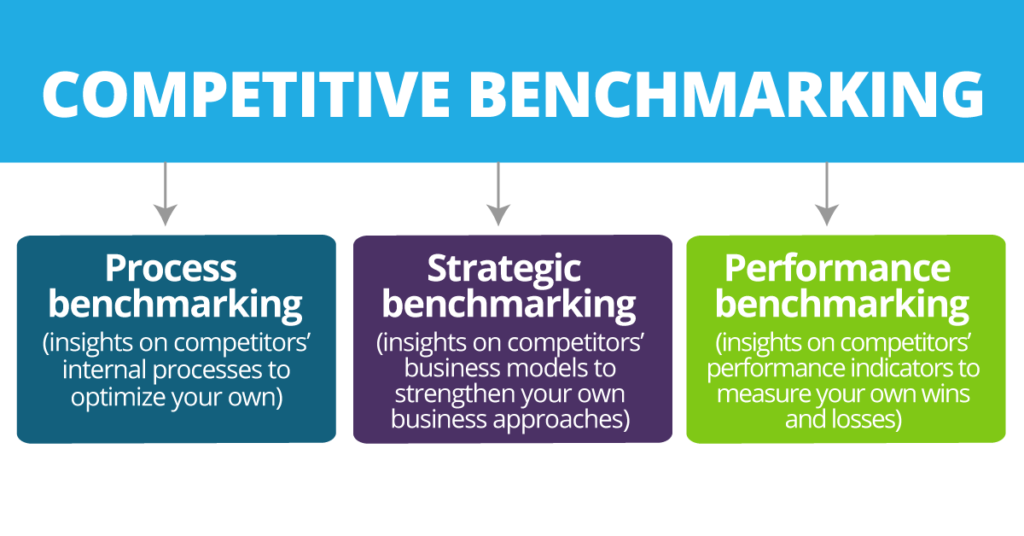
We’re focusing on competitive and industry benchmarking here, but those aren’t the only kinds of benchmark marketing. Let’s look at the different types and how they can play into your digital marketing.
| Benchmark Type | Core Focus | When to Use | Key Metrics |
| Internal | Self-comparison over time based on past efforts | When establishing baseline goals for your business, determining internal best practices, measuring the impact of changes to your strategy | Month-over-month (MoM)/Year-over-year (YoY) growth and team-specific click-through rates or open rates |
| Industry | Standards for similar businesses within your industry | When entering a new market, validating your internal goals, reporting overall health to stakeholders | Average click-through rate and industry-specific conversion rates |
| Competitor | Direct competitors’ performance | When you want to stand out from competitors, close performance gaps, react to competitors’ new campaigns | Market share, estimated ad spend, social engagement, and SEO keyword gaps |
| Platform | Channel-specific performance | When optimizing specific technical tactics like subject lines and ad copy or creative, deciding which channels should get the highest budget | Social media site engagement rates, Google search cost per click, and email deliverability |
| Financial | Business health and ROI | When allocating your budget or proving how marketing is contributing to the company’s total revenue | Lifetime value, customer acquisition cost, and return on ad spend |
Is a Gap Marketing Plan the Future of Marketing?
Benchmark marketing functions as a way to fill the gap between you and the competition. It really is the future of marketing.
For business-to-business (B2B) companies, in particular, making a marketing plan based on the gaps between you and others in your industry can help you soar to new heights.
Key Metrics to Benchmark
Based on digital marketing benchmarks by industry, competitor, or your own benchmarks, you may track the following metrics to measure marketing success:
SEO
When tracking your SEO strategy’s performance, you should track rankings and backlinks. Keep in mind that backlinks should balance quality and quantity, leading to a healthy profile consisting of many high-quality links on authoritative sites.
In addition to traditional SEO keyword rankings, you should also take into account rankings for rich snippets and AI search results based on AI SEO efforts.
Paid
For paid media campaigns, you might measure metrics like cost per click (CPC), cost per acquisition (CPA)/customer acquisition cost (CAC), and return on ad spend (ROAS).
For instance, if you want to use benchmark marketing based on platforms, you might go by the following CPC averages for each:
- Google Search Ads: $2.69
- Google Display Ads: $0.63
- Instagram Ads: $0.40 – $0.70
- Facebook Ads: $0.63
- X Ads: $0.38
- LinkedIn Ads: $5.58
Meanwhile, you might set RAOS digital marketing benchmarks by industry based on the following or other industry Google Ads averages:
- Food and Beverage: $3.45
- Electronics: $3.76
- Healthcare: $2.24
- Sporting and Fitness: $4.35
Website
When measuring your website’s performance, two primary digital benchmarking metrics to look at include conversion rates and bounce rates.
Conversion rates can vary wildly from industry to industry, with averages typically ranging from around 1% to 7+%.
Meanwhile, bounce rates tend to be around 20% to 45% for ecommerce and retail sites, while B2B websites often see higher bounce rates of 30% to 55%. High-quality, engaging content help reduce bounce rates and subsequently boost conversions.
Social
On the social media platforms you use, look for engagement metrics and reach. These social media KPIs can indicate who is interested in your content and whether your targeting efforts are really working.
Average marketing benchmarks for engagement metrics on each platform include:
- LinkedIn: 2-5%
- TikTok: 15-25%
- Facebook: 0.5-1%
- Instagram: 3-6%
- X: 0.09-0.33%
Email is another essential marketing channel to set benchmarks for, with open rates and click-through rates (CTR) being the most important metrics to track here.
Average email open rates for various industries include:
- Retail: 15-20%
- B2B: 39.48%
- Financial Services: 27.1%
- Professional Services: 19.3%
- Healthcare: 20-25%
How to Build a Benchmark Marketing Strategy
For competitive and industry benchmarking, there are certain steps you can take to complete your gap competitor analysis and plan. After these four steps, we’ll cover how to use your findings to scale your digital marketing efforts with a more profitable approach.
1. Define Your Goals
In learning how to benchmark marketing efficiency against peers and your internal performance, you need to begin by setting clear goals for your campaigns.
Looking at industry and competitor averages or historical campaign data, you can pinpoint which direction to go, including which platforms to target and their corresponding metrics.
As you track your progress, you can then continually compare your metrics to those original goals, or you may decide to adjust your goals as needed based on factors like industry trends, budget, or changes to marketing tactics over time.
2. Select the Right KPIs
Let’s get one thing straight: There are thousands of KPIs to choose from. The right selection of benchmarks depends entirely on your short- and long-term business goals. Plus, you need to consider the type of business you run and how your industry operates.
But certain KPIs are almost universally relevant. I’m going to lay out some of the top ones you should consider as you build your benchmark marketing plan.
All of the below examples fall under one of five categories:
- Growth
- Search engine ranking
- Social media presence
- Brand awareness and sentiment
- Product or service popularity
For example, you might choose:
- Number of active social media platforms
- Number of social media posts per week per platform
- Cost per lead (define your parameters for what constitutes a lead)
- Dwell time for a particular type of content (i.e. videos or blog posts)?
- Average click-through rate
- Rate of social media influencer engagement
- Number of Google Business Profile reviews
- Top visited/most popular pages
- Number of ranking keywords
- Rate of site traffic growth
Don’t overwhelm yourself with too many KPIs. You can always run supplemental audits for separate goals. Focus on one goal and choose 3–5 KPIs to support it.
By presenting these KPIs to your team, you can create a source of data to take real action on.
3. Gather Benchmark Data From Industry Averages and Competitors
First, you need to choose who you’re going to label as a “competitor” in this particular gap marketing plan. It can either be an entire section of your industry or a handful of specific businesses. Choose from:
- Your closest competitors (for brick-and-mortar businesses, you’ll want to look local)
- Top businesses in your industry
- Top businesses shaking up your industry (i.e. the startups or companies disrupting the status quo to make something better)
- Industry averages or standards
You can use certain tools to help you with benchmarking (we’ll cover more about that in the next section). Once you have a lineup of competitors, you can move on.
Gathering data from your competition can be difficult. Use third-party tools to help you analyze their traffic data and growth potential. Finding financial information may prove more difficult, but you can search for industry studies to help you with this (the more insightful studies tend to be gated with email signup required).
Assign a particular person or team to handle the data. You want the same people tuned into the competition to get a more accurate feel for it. That way, they can present their holistic findings simply to the whole marketing department.
4. Compare Performance
Once you launch your campaigns, you can start to measure performance and compare it with other B2C or account-based marketing benchmarks in your industry. If you’ve run previous campaigns, you could also compare your efforts to those and determine whether you’re doing better or need some improvement.
Be sure to measure regularly with weekly, monthly, or quarterly reports as needed, and use this data to inform future decisions.
5. Look for Gaps and Fill Them In
Looking for gaps in your digital marketing footprint might mean finding gaps in your keywords, your social media reach, or your processes and performance.
By using the tools mentioned above, you can analyze data and find where your business falls short of the competition.
Those gaps are what you need to target, and your specialized digital marketing strategy is what you’ll use to target them.
Benchmarking is the primary way to identify where your gaps lie. Be like a scientist here by allowing your evidence to support your ideas, not the other way around.
6. Take Action
Based on your gathered brand performance and benchmarking digital marketing insights, you can then take the appropriate action to optimize your campaigns for continually improved performance.
It’s important to act quickly to avoid falling too far behind with your efforts. The sooner you begin implementing any need changes, the sooner you can gain and maintain a competitive edge by dominating those industry benchmarks for digital marketing.
7. Monitor and Iterate
After implementing your changes, consistently monitor your campaigns to gauge performance over time and introduce iterations when appropriate.
Eventually, you’ll be able to perfect your strategy with effective benchmark marketing.
How to Find Benchmark Marketing Data
There are plenty of tools you can use to help you gather data, learn how to benchmark marketing efficiency against peers, and gain actionable brand performance and benchmarking digital marketing insights that help you optimize campaigns.
These tools can include the following:
Google Analytics (GA4)
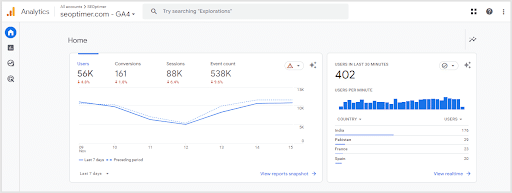
As one of the best tools to use to track competitor and industry benchmarks for digital marketing, Google Analytics 4 has all of the features you need to track a range of metrics in real time.
There are plenty of metrics you can track for traditional and account-based marketing benchmarks, such as:
- Acquisition metrics like new user rate and engaged sessions per user
- Engagement rates
- Average session duration
- Bounce rate
- Monetization metrics, including average revenue per user and first-time purchaser rate
Google Search Console
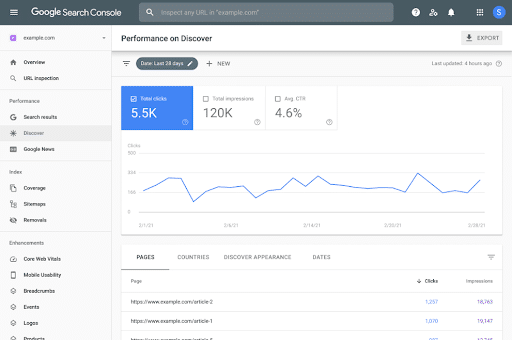
You can also supplement GA4 with Google Search Console, or GSC, which can track additional SEO marketing benchmarks like:
- Total clicks to your site from search results
- Total impressions based on how many times your link appeared in search results
- Average CTR
- Average position
- Core Web Vitals measuring page load speed and other user experience metrics
SEO Tools
You can also use a host of SEO tools to measure these campaigns outside of Google.
A couple of these include:
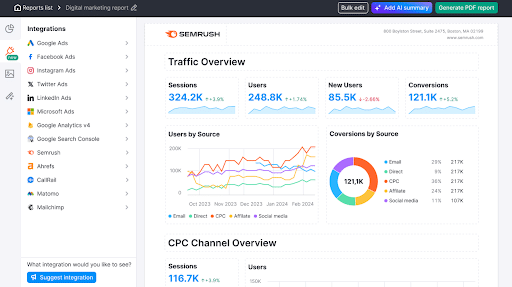
- Ahrefs: You can use Ahrefs for all kinds of SEO tasks, from measuring backlink performance and keyword tracking to site audits and competitor analysis.
- Semrush: This platform also offers plenty of measurement capabilities to track conventional and account-based marketing benchmarks for SEO and PPC, with in-depth competitor and keyword analysis capabilities.
Industry Reports
If you want to track digital marketing benchmarks by industry, you can also look at industry reports. Many sources out there publish regular reports establishing industry averages for all types of marketing benchmarks.
Reports consistently come from many marketing industry giants, including WordStream, Statista, and Databox, among others. Regularly looking up reports from these sources will inform you of any changing trends to target.
Competitor Analysis Tools
If you want to know how to benchmark marketing efficiency against peers in your industry, you may want to implement certain competitor analysis tools.
There are plenty of options to choose from, including:
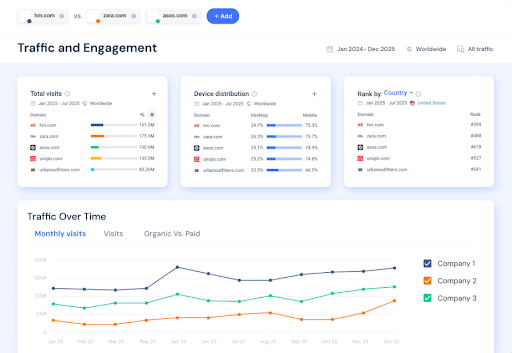
- Similarweb: This tool offers detailed insights as an AI-powered platform for gaining insights into website traffic, audience demographics, referral sources, and more.
- SpyFu: This solution is ideal for analyzing historical ad data and competitors’ paid keyword strategy to help you optimize your paid media campaigns.
- Sprout Social: Use this tool for social media benchmarking, with the ability to perform social listening to see what people are saying about you and your competitors.
CRM Tools
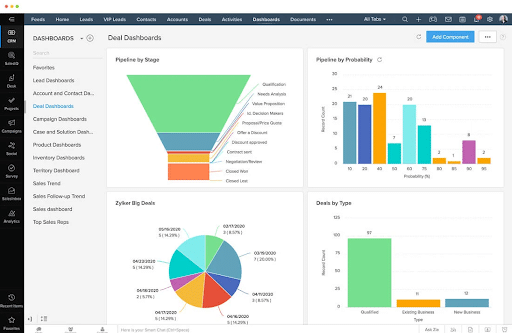
Additionally, you can gain data regarding customer interactions, marketing efforts, and sales cycles using your customer relationship management (CRM) platform.
Some of the best options available include:
Dashboard Tools
Put together custom dashboards that help you effectively organize all of your benchmarking data.
For example, Databox makes it easy to compare performance metrics against multiple top competitors.
Google Looker Studio can also give you detailed insights by pulling data from over 800 sources, with smart reporting capabilities. It’s also free to use while remaining one of the most flexible solutions.
Turning Benchmarks Into Action
By continuing to focus on the benchmark marketing process, you can scale your digital marketing beyond your own expectations.
The whole point of benchmarking is to apply what you learn and act on it by adjusting your digital strategy. Approach your strategy every quarter (at least) to make sure your tactics line up with the KPI results you’re trying to achieve.
The newer you are at benchmarking, the more frequently you may want to adjust your digital strategy. However, it’s important to give each campaign a few months to get valuable pieces of data out of them.
The action you take will generally depend on the data you receive and how you interpret it. For instance, if your campaign results are surpassing your benchmarks, you should scale your efforts to expand on those to facilitate growth. Conversely, if your efforts are failing to meet benchmarks, your next step would be to diagnose the problem, e.g., allocating your budget to the wrong channels or neglecting to look at past performance to influence your goals.
Let’s look at another example: You might see that you have a high CTR but low conversion rates for pages, which could indicate that your landing pages get people to click through on search results, but the content is either irrelevant or of low value to cause people to click away before converting.
Watch a Video on How to Scale Your Business Online
Common Benchmarking Mistakes
The following are some key errors to avoid with your benchmarking efforts:
- Tracking Too Many KPIs: Focus on the KPIs that align with your specific goals to keep you more focused.
- Using Irrelevant Benchmarks: Be sure to select benchmarks based on your industry, competitors, internal data, or other factors that connect to your objectives.
- Ignoring Context: Don’t simply look at the numbers; understand the “why” behind them and the behaviors that influence them, as this can help you more effectively determine how to engage in proper benchmarking.
- Not Tying to Revenue: The benchmarks you attempt to achieve or surpass should help you maximize revenue and ROI in the long run, making your strategies profitable.
Benchmarking in the Age of AI
Today’s developments in AI technology impact benchmarking in nearly every way.
One way AI is revolutionizing digital marketing is through predictive analytics, with many tools allowing you to effectively anticipate trends and outcomes based on existing data.
AI tools can also analyze your competitors, industry, and your own data to help you automate benchmarking, enabling you to get started on your marketing strategy sooner than ever.
Proactively monitoring your campaigns with AI analytics will also facilitate real-time optimization as you perfect campaigns over time.
Also, keep in mind that AI will influence the types of strategies you implement, as AI visibility in search engines is crucial today. Optimizing content to appear in Google’s AI Overviews, AI Mode, and other generative engines will help you rank and connect with audiences through zero-click searches.
FAQs On Benchmarking
1. What is benchmarking in marketing?
Benchmarking is a process that involves determining the best metrics and KPIs to measure based on a combination of industry, competitor, and your own data and past performance. With effective benchmarking, you can give your campaigns the right guidance and know precisely what to track to measure success.
2. Why is benchmarking important in marketing?
Benchmarking can help you effectively evaluate campaign performance, set goals that you can truly achieve, and identify any gaps in the competition that you might be able to fill, ultimately helping you maximize profits and ROI.
3. What are some examples of benchmarking in action?
There are many ways you can go about benchmarking for marketing, such as:
- Analyzing competitor social media engagement to improve your content
- Comparing email click-through and open rates to industry averages
- Identifying valuable keyword opportunities that your competitors aren’t targeting
- Measuring return on ad spend to gauge the effectiveness of paid media campaigns
4. How do you set marketing benchmarks?
To establish worthwhile benchmarks, you can pull data from multiple sources, including industry reports, competitor analysis, and your internal data, all of which can help you determine specific baselines to target before launching your campaign.
5. How often should you update marketing benchmarks?
Generally, it’s best to update your benchmarks at least once every year after performing quarterly reviews. If you notice any changes in industry or competitor trends, you may need to make more frequent changes.
Unlock Data-Driven Growth With Benchmark Marketing From Ignite Visibility
Gathering data and setting a benchmark can help you reach your goals.
It’s a way to create something actionable and tangible. Build and pivot your marketing strategies in accordance with your competitors and industry findings.
Ignite Visibility can help with every aspect of benchmarking, handling the following:
- Looking at industry averages for industry-based benchmarking
- Conducting in-depth competitor analysis to find any gaps to fill
- Setting realistic, actionable goals
- Developing solid, comprehensive digital marketing strategies, from SEO and PPC to social media and email marketing
- Continuous measurement and reporting
- And more!
Need help getting started? Get in touch!

