Marketers often leverage demographic insights to create detailed audience personas, with 71% of companies exceeding revenue and lead goals when using documented personas. However, many of these audience personas are too generic to develop a clear picture of audience segments, rendering them ineffective at guiding marketing decisions.
By understanding specific audience segments and their preferences, audience persona-based marketing can ensure ads and content align with audience expectations.
In this article, Franchise Content Manager, Khanyi Moshia, discusses audience-based marketing. Learn how to craft buyer personas and then design data-driven digital marketing strategies.
What You’ll Learn:
- What Is Audience Persona-Based Marketing?
- Tools to Build Audience Personas with Advanced Audience Insights
- How Can Audience Segmentation Enhance Your Inbound Marketing Efforts?
- Building a Brand Presence Through Audience Insights
- The Future of Demographics in Marketing
- FAQs
What Is Audience Persona-Based Marketing?
Audience persona-based marketing is a tactic that entails developing unique audience personas for each segment of a target audience. Each persona has individual demographics, psychographics, and other characteristics.
There are many potential demographics you can use to understand your audience:
- Age
- Income
- Gender
- Marital status
- Education level
- Ethnicity
- Occupation
- Geographic location
Each of these components, along with psychographic data which explains your audience’s psychology, can help you put together personas for each segment of your audience.
You can then determine which messaging and visuals are likely to resonate with each persona and corresponding segment, creating a truly personalized customer experience.
96% of marketers state that offering personalized experiences increases the chances of repeat sales among new customers. 94% also said that personalized experiences boost sales, period.

As an example of demographic segmentation in marketing: A luxury brand might target high-income Millennials by creating aspirational content tailored to their preferences, such as showcasing premium product features.
In the process, this brand might develop an in-depth persona that accurately describes this segment, including their general age range, occupations, an image to put a face to the name, and a bio describing the persona.

Expert Insights into Audience Personas for Marketing
Audience-based marketing is a strategy rooted in collecting demographic and behavioral data that is used for dynamic engagement tracking.
Audience personas should include the following demographic information: age, income level, occupation, and other characteristics that feed into personalized marketing efforts and tracking consumer behavior. Knowing about each audience segment’s demographics can effectively fuel your strategy and help you make more informed decisions about future efforts.
I’ve seen how an audience persona can get real results to help companies’ bottom lines. One study found that 44% of marketers implemented personas, and another 29% planned to use them in the next 12 months. Meanwhile, 63% of content marketers are actively creating these personas, which can contribute to a 60% increase in profits and a 10-20% decrease in sales and marketing costs.
As marketing technology continues to evolve, artificial intelligence (AI) and other tools have made it easier than ever to identify demographics and target markets and track engagement. Using analytics and in-depth audience insights, you can gain a complete understanding of your audience for highly effective personalization.
Why Personas Matter for Digital Marketing
Persona-based marketing offers numerous benefits that make them a key component of any marketing strategy.
More specifically, developing profiles with an effective audience persona template can help with:
- Messaging: Knowing what kind of language and themes your audience responds to can inform your brand voice and messaging across content.
- Content Planning: A detailed audience persona will also help you determine what kind of content to create to connect with audiences, from web page and blog content to social media posts and videos.
- Ad Targeting: Segmenting audiences into specific demographics and understanding their behavior will help you more precisely target ads to reach the right people at the right time.
- Personalization: You will also be able to use personas to develop highly personalized content, which is essential as 71% of consumers today expect personalized interactions from their favorite brands.
- Search Engine Optimization (SEO): Another advantage is the ability to boost your search engine optimization efforts, including the chance to increase AI visibility through generative engine platforms like Google’s AI Mode and ChatGPT.
- Conversion Rate Optimization (CRO): More precise audience targeting with personalized experiences that resonate will ultimately lead to a higher conversion rate as people move down the funnel more smoothly.
- Email Segmentation: Additionally, brands can use personas to help segment email recipients, enabling them to send email content that truly connects with each prospect or existing customer.
- Sales Enablement: Better personalization will culminate in more sales-qualified leads that your sales team can effectively convert into satisfied customers toward the bottom of the funnel.
- Product Marketing: Based on each segment’s individual preferences and needs, you can focus on the aspects of your offerings that are likely to matter most to each, tailoring product marketing to each prospect.
- Customer Retention: Through personalized product or service recommendations and consistent messaging, you’ll be able to maximize customer retention as you gain repeat business.
4 Buyer Persona Examples and How to Market to Each One
If you want to learn how to build audience personas that connect with your target audience, the following are four great persona examples adhering to a clear audience persona template:
1. The Decision-Maker
Some target audiences might consist of key decision makers within an organization, such as a Chief Technology Officer.
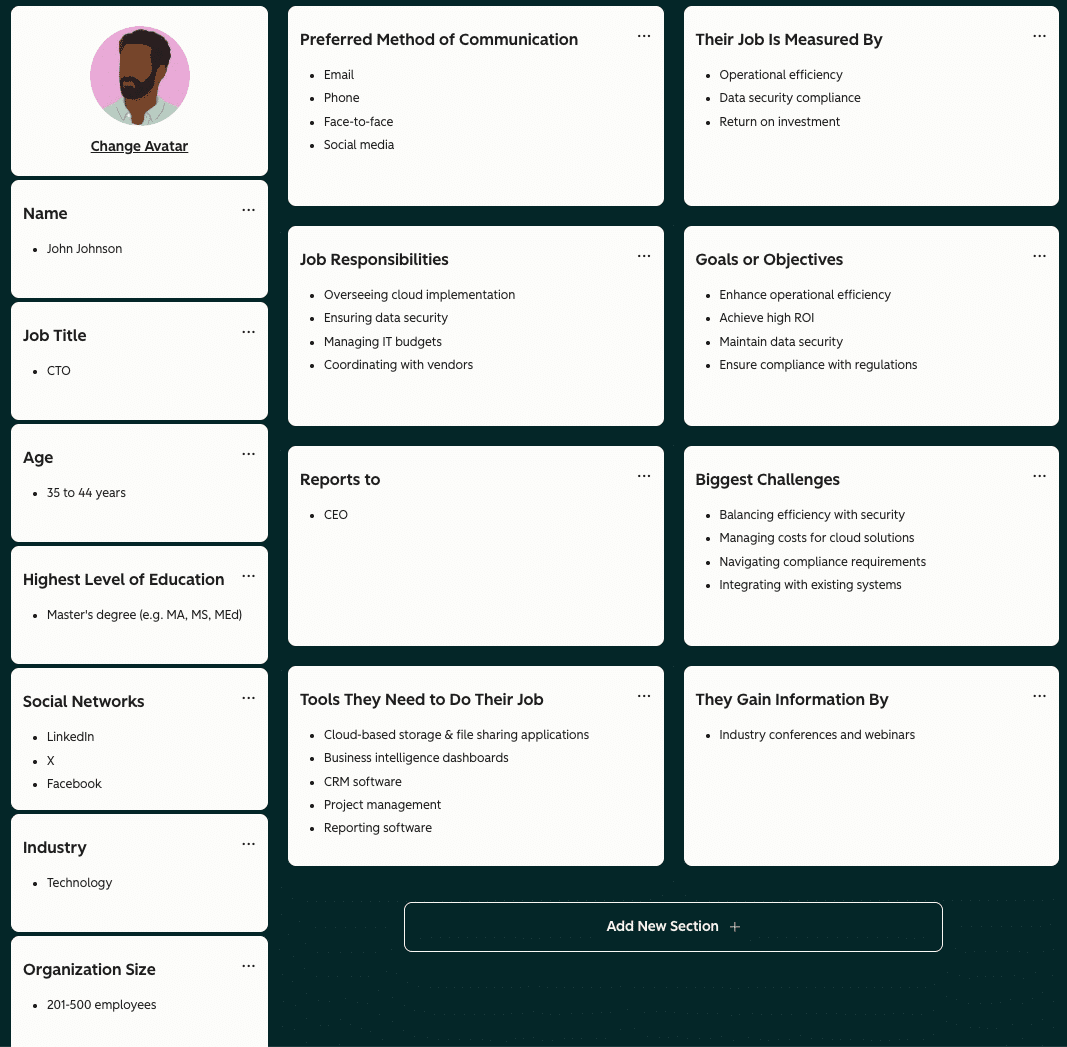
Let’s use the target persona example of John Johnson, a CTO who would be the ideal customer for a B2B company selling enterprise cloud solutions.
Here’s how John Johnson would fit into our audience persona template:
- Persona Summary: The final approver with a focus on ROI, security, strategic alignment, and workflow compatibility.
- Goals: Scale infrastructure efficiently, reduce operational cost, and maintain data compliance.
- Pain Points: Optimizing operational efficiency, misalignment between the tech stack and business growth.
- Buying Triggers: System outages, budget renewal cycles, and regulatory audits.
- Objections: High implementation costs, long time-to-value, and inadequate security.
- Preferred Channels: LinkedIn, email, tech executive peer networks, phone calls, and in-person meetings.
- Content Strategy: High-level whitepapers, compliance checklists, ROI calculators, and enterprise-level case studies.
- Ad Messaging: “Scale operations as needed without losing security,” or “Cut your infrastructure costs by 30%!”
- SEO Keywords: Enterprise cloud scalability, IT compliance framework, and tech stack optimization ROI.
- Email Nurture: A three-part executive series focusing on scalability, cost reduction, and risk mitigation.
- CTA: Schedule a custom ROI assessment.
- KPIs: Customer acquisition cost (CAC), pipeline velocity, and closed-win rate.
Based on these criteria, here is a visual persona example that HubSpot generated with its free Make My Persona tool:
2. The Influencer
At the next level would be the Influencer, someone who plays a key role in the decision-making process but who needs to gain approval from higher-ups.
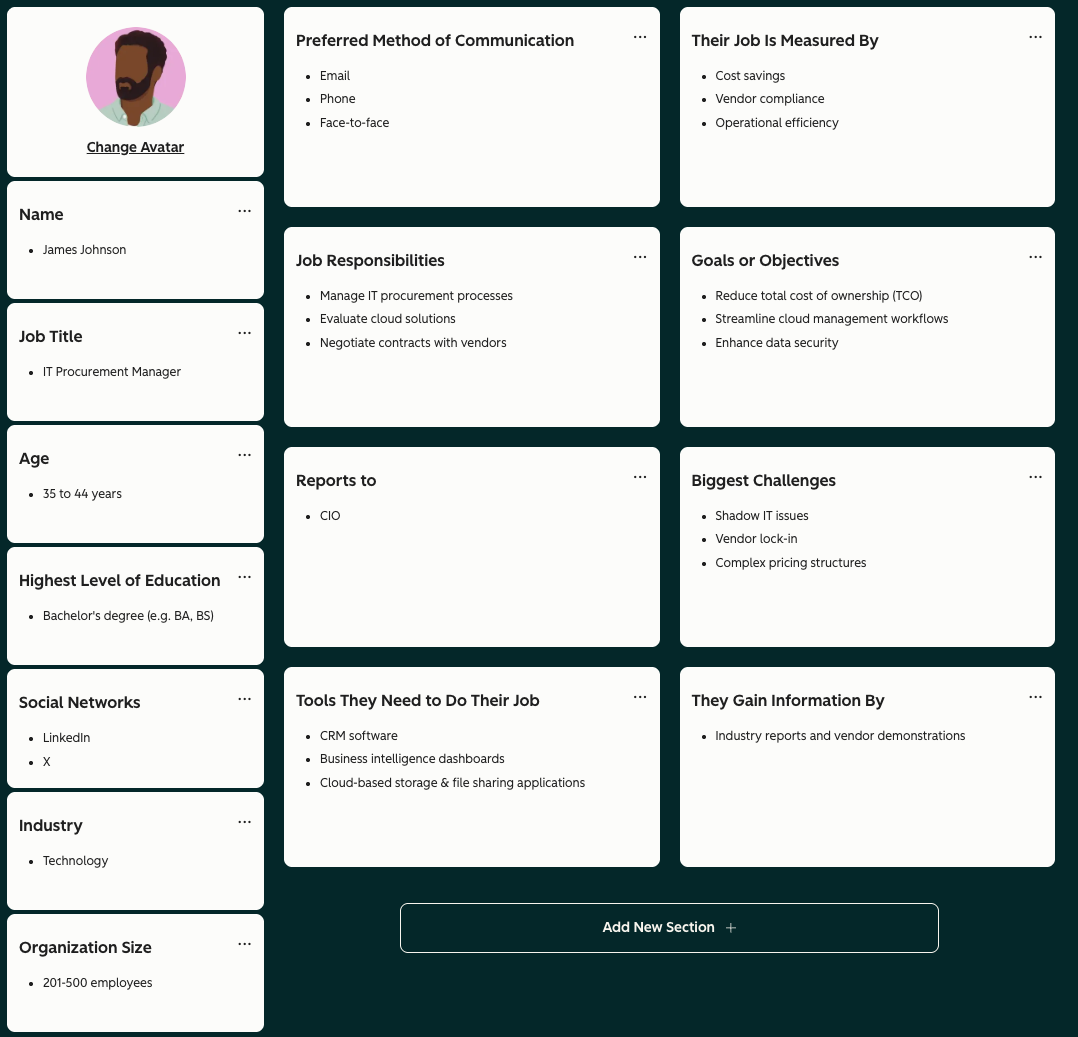
In the above enterprise cloud example, we might target an IT Procurement Manager, James Johnson, who helps evaluate vendors and establish contract terms.
Let’s see how this persona would fit into the audience persona template:
- Persona Summary: Director of IT procurement and vendor management, serving as a leader managing multi-million dollar cloud budgets, all while bridging the gap between tech teams and finance executives.
- Goals: To reduce wasted spending, maintain strict data compliance and privacy, and keep vendor selection cycles short without compromising security.
- Pain Points: Shadow IT involving departments buying solutions without IT approval, high exit costs leading to vendor lock-in, and complex pricing.
- Buying Triggers: When contracts are about to renew (90-day window), audit failure, cloud migration needs, merging disconnected IT environment and software stacks.
- Objections: Implementation risks, hidden fees, security gaps (e.g., a lack of SOC 2 Type II certification), and service level agreement (SLA) weaknesses.
- Preferred Channels: LinkedIn, Gartner and other tech reports, calls, in-person meetings, and procurement events.
- Content Strategy: Detailed case studies, interactive calculators to measure ROI, and vendor comparison guides.
- Ad Messaging: “Stop Overpaying for Cloud Capacity You Don’t Use,” or “Secure Your Cloud Without Slowing Deployment.”
- SEO Keywords: Enterprise cloud procurement strategy, cloud cost optimization, enterprise cloud vendors.
- Email Nurture: A 10-day nurture campaign that starts with an enterprise cloud procurement checklist, followed by a case study on how to reduce cloud waste, and ends with a direct offer to book a total cost of ownership savings assessment.
- CTA: Request a Custom TCO Assessment.
- KPIs: Marketing-qualified leads based on gated content downloads, pipeline value, sales velocity, and win rate.
HubSpot’s Make My Persona tool drafted this target persona example based on the above input:
3. The End User/Customer
Another type of persona involves the average consumer or end user. Different types of prospective customers will have vastly different demographics and needs, so you could have multiple personas for various customer segments.
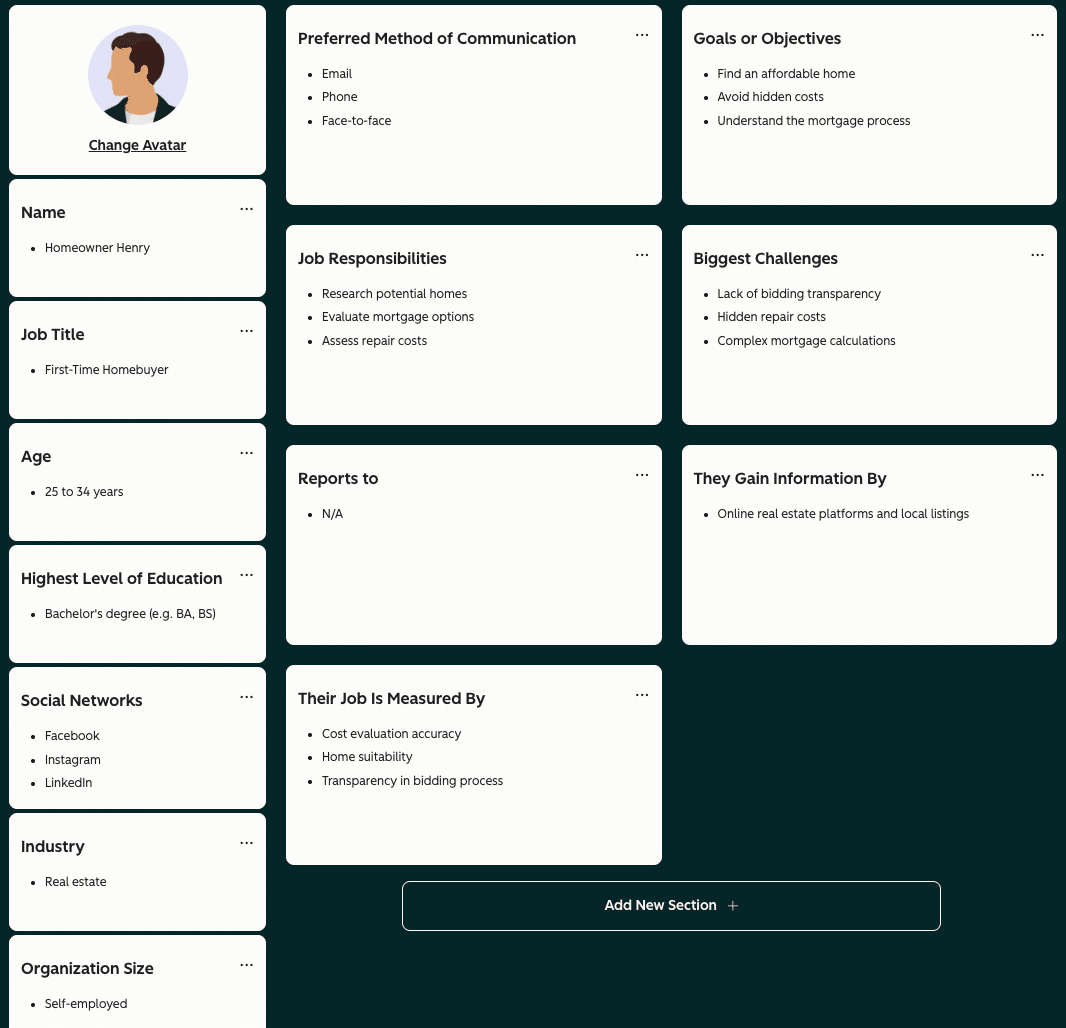
Here’s an example: Homebuyer Henry is a first-time homeowner looking for the right starter home, someone a real estate agency might want to target.
His profile might look like the following:
- Persona Summary: First-time homebuyer seeking a suburban family home with long-term investment value.
- Goals: Stop paying rent, develop long-term equity, and secure a safe neighborhood to grow a family.
- Pain Points: Lack of bidding transparency, mortgage calculation, and hidden structural repair costs.
- Buying Triggers: Rent increase notices, outgrowing small city apartment spaces, or expecting a new child.
- Objections: High interest rates, fear of buying before a market drop, and insufficient down payment funds.
- Preferred Channels: Redfin, Zillow, social media, and real estate podcasts.
- Content Strategy: Home buying checklists, video walkthroughs, and mortgage guidebooks.
- Ad Messaging: “Stop paying your landlord’s mortgage,” or “move-in ready family homes in [city] starting at [price].”
- SEO Keywords: First-time homebuyer grants in [city], mortgage calculator with property tax, and best family neighborhoods in [city].”
- Email Nurture: A four-part series that covers credit score prep, home inspection red flags, closing costs, and down payment help.
- CTA: Get a free pre-approval consultation.
- KPIs: Lead-to-pre-approval conversion rate, average days from lead capture to closing, and consultation booking rates.
HubSpot’s Make My Persona tool put together the following profile with these details:
4. The Champion
This type of audience persona is someone who can’t necessarily make decisions or serve as a direct influencer, but who is capable of bringing ideas for purchases to bridge the gap between decision-makers and end users.
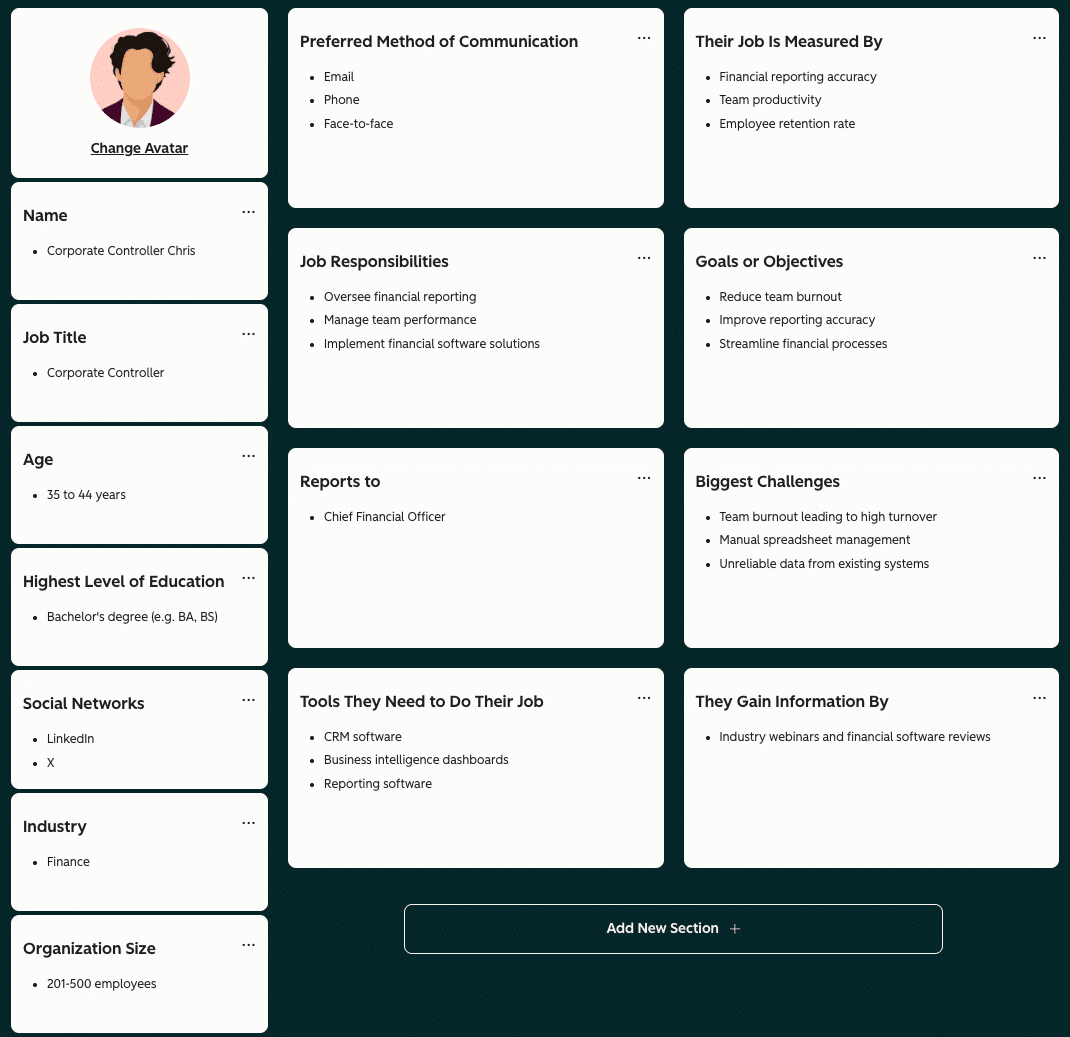
For one of our persona examples, let’s consider Corporate Controller Chris, who is looking for reliable financial software to promote internally for adoption.
Their profile might look like the following:
- Persona Summary: Mid-career corporate controller stuck with manual financial workflows and wants to work as a strategic advisor, but struggles with managing team burnout and manual spreadsheets.
- Goals: Cut monthly financial close timelines, make the transition from manual data entry to strategic financial analysis, and maintain accurate financial reporting.
- Pain Points: Accounting team works lengthy hours during month-end closes, high senior accountant turnover, and erroneous spreadsheets with broken formulas.
- Buying Triggers: Team turnover resulting from burnout, financial audit failures, and mergers and acquisitions, leading to the need for more consolidated workflows.
- Objections: The CFO worries about software implementation delays resulting from ERP rollout going over budget, complex and disorganized data can’t work with an automated tool, and IT won’t approve of integration out of fear of security compromises.
- Preferred Channels: LinkedIn, technical accounting publications like CFO.com, and peer-to-peer communities.
Content Strategy: Implementation blueprints, ROI calculators, and security whitepapers. - Ad Messaging: “Stop spending weekends in Excel and cut month-end close times in half,” or “CFOs want strategic insights, not outdated spreadsheets. Upgrade your workflows today.”
- SEO Keywords: Automated financial consolidation software, how to speed up month end close, and reduce spreadsheet errors financial reporting.
- Email Nurture: A three-part series beginning with a hook discussing the hidden cost of 10-day month-end closes, followed by a case study showing how a company benefited from automated closes and saved several hours per month, and concluding with a CFO pitch deck to help gain approval for implementation.
- CTA: Schedule a 15-minute close custom ROI assessment.
- KPIs: Sales velocity, internal material shared (e.g., how many pitch decks Chris showed to the CFO), and MQL to SQL conversion rates.
Here’s how this profile could look using HubSpot’s platform:
Of course, there are many other types of personas you can create based on your specific audience.
How Can Audience Segmentation Enhance Your Inbound Marketing Efforts?
By segmenting your audience based on advertising demographics and other data, you can optimize inbound marketing content to connect with people who are the most likely to convert to customers.
Let’s consider another example of demographic segmentation in marketing: Imagine a retail brand looking to boost online sales for different types of razors. This company might want to target different audience segments, including men and women in multiple age groups who are looking for a razor with different features; one audience might want a razor for sensitive skin, while another might need a razor that can cover a specific area.
By segmenting their audience and building personas for each, this retailer could develop content that speaks to each pain point and connects each audience segment with the right razor for them.
In doing so, the brand could use personalized, segmented content on various inbound platforms, including social media, ads and retargeting advertising, email, and SMS texting, among others.
The end results for this brand would likely entail more overall engagement and conversions as the company communicates more personally with every potential customer.
Know Where Your Audiences Are
It’s especially important to meet audiences where they are online to establish a meaningful connection. Beyond social media channels, look to more niche platforms, like blogs, forums, or content hubs, that can get you involved in the conversation.
This kind of connection with your audiences will help you succeed even more with your demographic marketing efforts.
Building a Brand Presence Through Audience Insights
Using detailed audience insights gathered through analytics and other tools, you can build your brand presence and make your customers more loyal in the long term.
For instance, you could launch targeted ad campaigns on social media and across the web that use dynamic messaging and visuals based on audience insights. Meanwhile, blog posts could target certain keywords that specific segments are searching on Google and other search engines, reaching them via search results.
At the same time, you could create automated emails that reach particular audience segments at different stages of the buyer’s journey, keeping them consistently engaged with your brand.
Become an Authority With Top-Quality Content
Based on the audience insights you gather, it’s essential that you create relevant, engaging, and consistent content that establishes you as an industry authority. Everything from your website content to social media and forum posts should showcase your knowledgeability, expertise, and unique value propositions that appeal to each segment.
Combine Demographic Segmentation With Content Engagement Data
When measuring the performance of your content, consider how each demographic is engaging with your content. For example, you might find that users in a certain age group spend less time on a particular web page or engage with certain social media posts than others.
Based on this data, you can figure out what kinds of content drive more engagement with the right audiences. Over time, as you hone your craft and personalization skills, you’ll build more brand loyalty and keep your customers engaged.
Buyer Persona vs. Target Audience vs. Segment vs. ICP
Now that we’ve given some business development representative (BDR) lead persona definitions and examples, it’s important to understand the nuances between our audience persona examples, target audiences, segments, and ideal customer profiles (ICPs).
Let’s start at the top: First, you have a target audience that’s relatively broad and defines your overall audience.
At the next level is the segment, which groups that target audience into specific people or accounts with shared traits and behaviors.
Then you have the ICP that defines those people or accounts who are the best fit for your brand and offerings.
At the last level are your personas, which describe the specific people who might purchase or use a product or service, giving them clear personalities with goals and pain points.
Here’s a little table to illustrate their differences:
| Concept | What It Identifies | Key Focus | Example |
| Target Audience | Overarching campaign targets | Buying intent and behavior | Prospective franchisees looking to own a franchise |
| Segment | Groups of people within your target audience | Shared characteristics | Franchisees within a particular region |
| ICP | Best-fit targets | Overall value | Multi-unit franchise owners with at least five locations |
| Buyer Persona | Individual owner profiles | Psychographics, demographics, and personal characteristics | “Hands-off Helen,” a potential franchise investor looking for passive income and turnkey solutions |
How to Use Personas Across the Funnel
Once you know how to build audience personas, you can use them at every stage of the sales funnel.
Here’s how:
1. Top of Funnel (TOFU): Awareness and Education
At this stage, people want to learn more about specific pain points or solutions, seeking initial information and research.
Based on your personas, you can create top-of-funnel content like:
- Blog posts
- Guides
- Social media posts
- Paid ads
- SEO pages ranking for certain long-tail keywords
2. Middle of Funnel (MOFU): Consideration and Evaluation
Once people move down to this stage, they’ll start to consider various options for solutions and brands that meet their needs.
Using your personas to guide your messaging further, you could use the following tactics:
- Lead magnets offering high-value assets like gated whitepapers and ebooks or ROI calculators
- Email nurture campaigns that provide more information and build trust through case studies and other content tailored to each persona
- Webinars and events focusing on topics that apply to a particular persona
3. Bottom of Funnel (BOFU): Decision and Conversion
Once you reach the bottom of the funnel, your personas can help overcome potential objections and friction that might otherwise prevent sales.
Here are some key strategies to use during this stage based on your personas:
- Sales scripts and pitch decks offering customized presentations, with an emphasis on the features that benefit that particular target persona
- Guidelines for handling objections
- Pricing and packaging presentations that illustrate cost-benefit analysis tailored to each persona’s concerns
How to Create Buyer Personas Step by Step
Let’s review some steps to show you how to build audience personas the right way:
1. Define Your Business Goal
The first step is to define your business goals: Do you want to increase brand awareness, or are you looking to increase lead conversions? Maybe you want to maximize sales for a new product launch or shorten the sales cycle.
Your business goal will help you pinpoint specific metrics to gauge success, such as higher email open rates or improved BDR lead qualification.
2. Gather Quantitative Data
You can then collect good quantitative data to inform your strategy, which might come from CRM tools like Salesforce to help you identify top-performing accounts.
Also, look at firmographics and filter your data based on factors like industry, franchise unit counts, regions, and revenue.
Additionally, find out which audiences use which features of your offerings to determine what to focus on in your marketing.
3. Interview Customers and Prospects
You’ll want to talk to some real people in your customer base or target audience to get a feel for unique personalities.
Start by interviewing a handful of high-value and happy customers who align with your ICP. You can also interview a few lost prospects to find out what objections each persona might have.
Some potential questions for audience personas might include:
- What are your primary life or career goals?
- What does success look like to you?
- What values matter most to you when seeking a company like ours?
- What is the biggest hurdle keeping you from achieving your goals?
- What makes you hesitate when making a purchase?
- What solutions have you tried, and why did they fail?
- What do you like most about our offerings?
4. Review Sales and Support Calls
The next step entails reviewing sales and support communications, which can give you a good sense of the kind of language prospects might use when expressing wants, needs, or pain points.
Audit call recordings, review support tickets to identify friction points, and take notes when giving live demos to determine what a prospect might like or dislike.
5. Analyze Search and Content Behavior
Another crucial step is to analyze your SEO strategies, which can give you even more ideas.
Take a look at your Google Analytics to review the watch/view time and other metrics of blog posts, landing pages, and guides, helping determine which materials drive the most engagement among each audience segment.
In addition, use SEO tools to see which long-tail keywords people enter to land on your content, keeping search intent in mind.
You can also monitor discussions in industry forums, Reddit communities, and other platforms to identify trending topics among audiences or determine brand sentiment.
6. Identify Audience Segments
Next, identify your audience segments, which you can then divvy up into ICPs and, ultimately, audience personas.
Group market segments based on certain shared characteristics, based on first-party data and other research. Then you can separate them into different groups based on motivation and goals, and ensure each segment has a sufficient market size to make them worthwhile targets.
7. Draft Personas
Begin drafting your personas based on all of the data and segments you’ve developed.
Start with a name that establishes a defined personality, e.g., “Franchisee Frank” or “Skeptical Sam.”
Then, list core demographics for each persona, including job titles, company sizes, reporting structure, and tech stack.
Also, take psychographics into account by listing stressors, pain points, goals, and primary objections.
8. Validate With Teams
Present your finished personas to sales teams, including BDRs and Account Executives, who can ensure they align with their own experiences with target audiences.
You should also review personas with support teams to refine customer success management.
Based on any feedback, you can optimize your personas and marketing approaches for each, changing messaging, titles, or objections as needed.
9. Test Messaging
Test your messaging with your persona targets to see how it performs. A/B testing can help here, such as running two versions of an email or paid ad and opting to use the one that drives the most engagement and conversions.
Be sure to track all metrics that apply to your goals, whether they include click-through rates, open rates, call bookings, or other key performance indicators (KPIs).
10. Update Personas Quarterly or Semiannually
Conduct quarterly or semiannual audits to review any market shifts or updates to your offerings.
Integrate any relevant data into your personas, be it from customer feedback, competitor changes, new product rollouts, or other factors.
Tools to Build and Validate Audience Personas
There are many tools available to make demographic marketing easy and efficient. Here are some specific audience marketing tools in a few key categories.
Demographics and Behavior Analysis Tools
A few critical tools for identifying demographics and analyzing behavior include:
- Google Analytics: This free tool enables you to collect demographic and behavioral data for audiences engaging with your website and targeted Google Ads campaigns, including age groups, gender, interests, location, and language. Additionally, you can collect behavioral data, including page session duration and engagement rates, to determine what content is connecting with which audiences.
- Facebook Audience Insights: Facebook has its own audience analysis tool that can indicate demographics and other information on the platform, helping you reach the right people with your ads and posts. Other social media platforms also include helpful audience insight tools you can use in conjunction with other third-party analytics and personalization tools.
- CRM Software: To take full advantage of buyer persona marketing, use CRM software to help you develop personas based on existing demographic and target market data.
Suggestion:

CRM/Sales Data
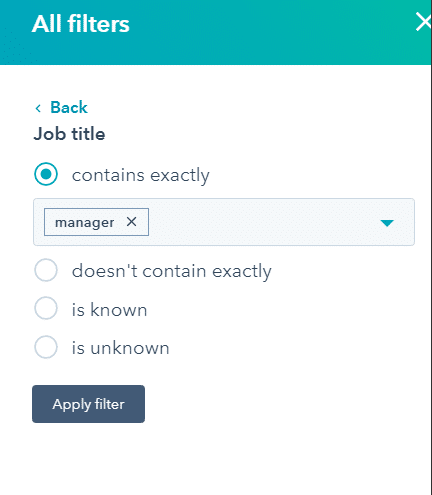
Using your CRM and sales platforms, you can gain insight into the people actually purchasing your offerings and confirm whether it matches your personas.
Platforms like HubSpot and Salesforce CRM can help you filter closed-won deals based on firmographics, job titles, and other elements to help match your personas.
Survey and Interview Tools
Use certain survey and interview tools to collect both qualitative and quantitative data to help with segmentation.
Just remember to ask the right questions for audience personas to get valuable information like goals, objections, and other psychographics.
Social Listening
When preparing demographic-focused marketing campaigns, it’s also important to learn about what types of content your customer personas are already consuming.
Platforms such as Semrush and Ahrefs can help you identify demographics and segment your audiences.
Meanwhile, for social listening across social media platforms, you can utilize tools like Hootsuite and Brandwatch to monitor engagement trends and audience conversions. Find out what draws your audience’s attention on social media and the topics that interest them most.
SEO and Search Data
Take a look at Google Analytics, Google Search Console, and other platforms to help you identify top-performing keywords and the intent behind them.
Again, Semrush and Ahrefs can help with your SEO analytics and keyword research. Meanwhile, Google Search Console can identify the queries that are actually bringing traffic to your site.
Customer Support Data
Review customer support tickets to determine where post-sale issues lie, and look at reviews on G2 and other platforms to see what people have to say about you or your competitors based on their pain points and needs.
This data can help you determine if any early-stage questions, confusion, or hesitations are causing any friction at any stage.
Heatmaps and Session Recordings
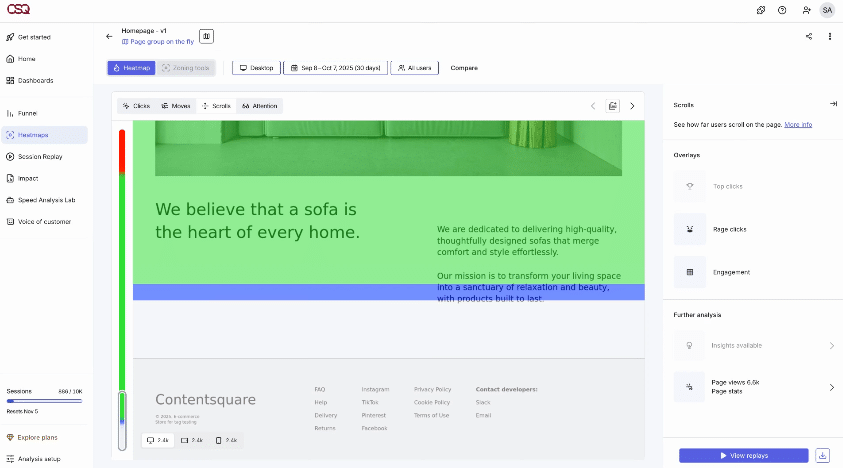
See how people are interacting with your web pages using tools like Hotjar, which can see where people are scrolling or clicking the most on your page. In turn, you can see where people are dropping off or otherwise failing to engage.
AI Persona Tools
Once you have your demographic and target market data, you can use it to build detailed customer personas with the help of a marketing persona generator.
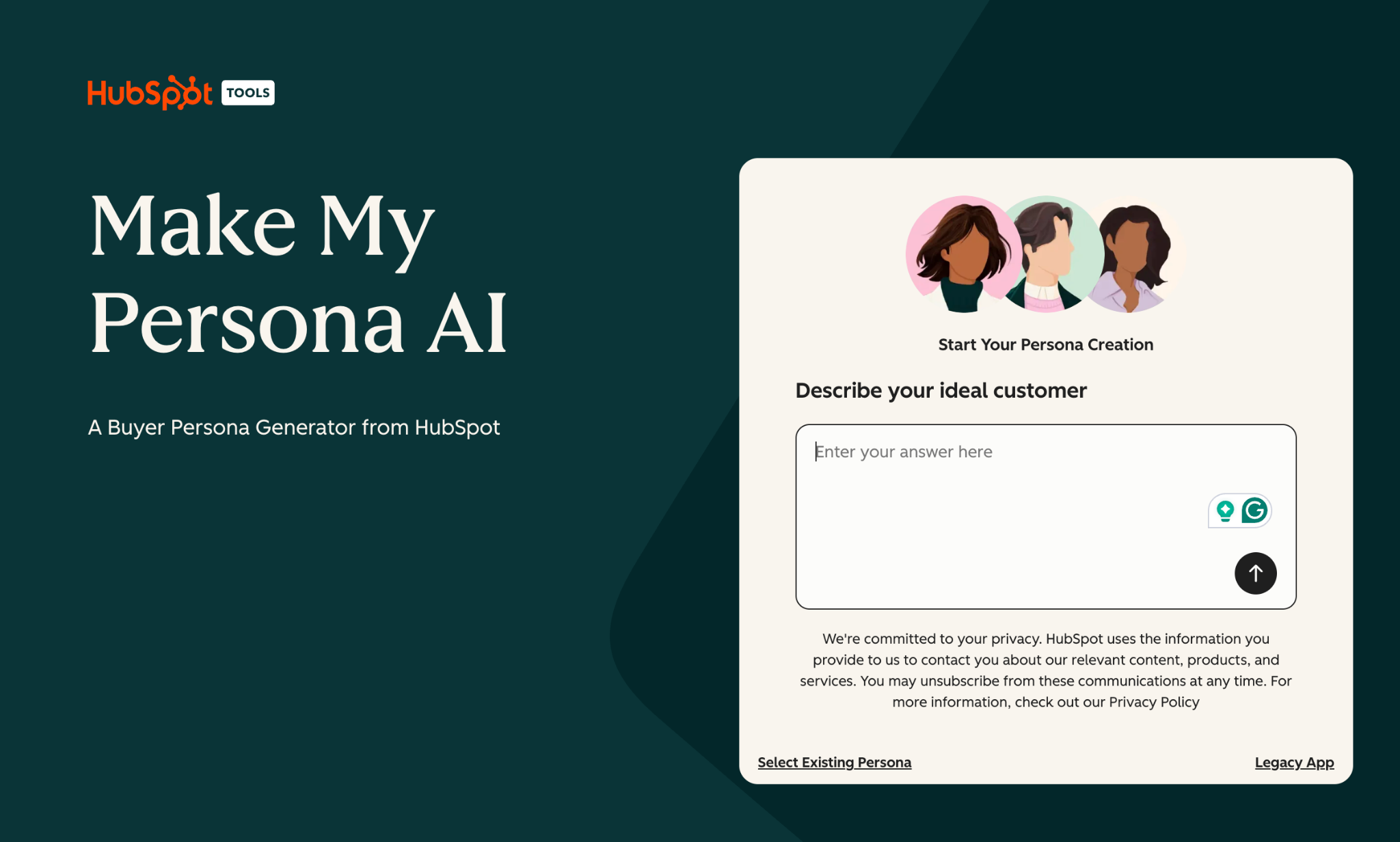
There are several free marketing persona generators out there to try. One of these is HubSpot’s Make My Persona tool, which helps you craft rich personas in a step-by-step process, or you can skip the process and simply enter information in conveniently laid-out fields.
Another option is Rock Content’s buyer persona generator, which also makes it easy to build detailed personas in a simple walkthrough.
If you just want templates to get you started, Canva gives you a large selection of visually appealing persona templates to help you put your personas into a concise and aesthetic format.
One of the main advantages of customer persona generators is the ability to blend demographic, psychographic, and online behavior data to get an even deeper understanding of your audiences. These tools will ask you to input everything from their age and income to their main pain points and their engagement on specific social media platforms.
Template and Design Tools
There are also many tools you can use to design and develop an audience persona template.
The above AI tools can help you draft personas based on input, or you can use more conventional graphic design tools like Canva to put together templates that you can fill in with your own information.
AI, Privacy, Inclusivity, and the Future of Personas
As societal trends continue to evolve, so will audience persona marketing strategies as they work to keep up.
While in the old days of marketing, traditional demographics were sufficient in helping brands succeed with persona marketing, psychographics and behavioral data have become increasingly critical.
Consider various factors that have influenced how people engage with content, from privacy concerns and a need for personalization to existing and changing trends among niche audiences. Know how your audiences think and engage with different brands to determine how yours can appeal most to them.
Also, consider the role of inclusivity and representation in today’s audience marketing efforts. Your demographic data could account for a range of characteristics that represent minorities and more marginalized groups, helping you properly represent these groups in your marketing strategies and content.
AI is another consideration here, as it will help with everything from directly drafting your personas to analyzing and organizing critical data. As AI continues to evolve, it will also allow for even more accurate predictive analysis and optimization to ensure you get the most from your personas.
Of course, you must also take into account current privacy regulations to inform your strategies. When collecting data, you need to be transparent in how you use it with a defined privacy policy, and collecting first-party data from consenting parties will be increasingly important in maintaining compliance.
FAQs
1. What are demographics in marketing?
Demographics are identifying characteristics that help define specific audience segments. These characteristics may include age, gender, income, occupation, sexual orientation, interests, marital status, ethnicity, nationality, and more.
2. What is demographic segmentation in marketing?
This process entails splitting a larger audience into segments based on different demographic and target market data. For instance, one segment may consist of Millennials ages 28-43, while another targets an older generation of users. Others could target people by another characteristic or a particular combination of them.
3. Why are demographics frequently used by marketers?
Demographics give marketers a great way to understand specific audiences and their wants and needs. Categorizing audiences into different segments using these characteristics can determine what kinds of messaging and visuals to use to connect with each prospective customer.
4. What is the most important demographic to advertisers?
There isn’t a universal demographic that’s most important to advertisers. Each advertiser will want to consider certain factors that dictate which is the most critical, including the industry, products, and competition level, among others. Knowing more about your market can help you identify the most valuable demographic to take your focus.
How Ignite Visibility Can Help You Get the Most from Audience Persona-Based Marketing
If you’re looking for ways to excel with demographic marketing, you’ll find them with Ignite Visibility. From search engine optimization to complete lifecycle marketing, we’ll always emphasize demographics to understand your target audience and help you harness the power of personalized content.
Specifically, with our help, you’ll be able to:
- Identify your target audience and segment it based on specific demographics
- Build meaningful buyer personas based on these demographics, psychographics, and behavioral data
- Develop high-quality dynamic ads, web pages, social media posts, and other content to speak to each audience segment
- Continually monitor engagement metrics and others based on your goals
- Work to optimize content to keep your target audiences engaged and maximize conversions
- And more!
Want to get started with your next persona-based marketing strategy? Learn more about our lifecycle marketing services today.