

How would you like to target your ads to people who are ready and willing to buy the product that you’re selling?
You can do that with Google in-market audiences. In this article, I’ll teach you how to use them to get more sales.

What We’ll Cover:
- How to find people with purchase intent
- How it works in the sales funnel
- How to deal with competitors
- A brief history
- Does it really work?
- How to set up
- Best practices
- How to monitor your in-market audience’s performance
- Available audiences
- How to use it with search ads:
If you’re not familiar with in-market audiences, they’re a targeting method that you can use in your Google AdWords campaigns.
Truth be told, you can also use them on Bing, but we’ll focus on Google here. The concept is the same with either platform.
Finding People With Purchase Intent
There are many reasons to run ads. Sometimes, you want to build brand-name awareness. Other times, you’re promoting a sale.
And sometimes you want to land customers right away.
It’s that last group of people that you’re usually targeting with in-market audiences. They’re the folks who’ve shown an interest in what you’re selling and they’re happy to open their wallets and make a purchase.
But how can you find those consumers? That’s the beauty of it: you don’t have to find them because Google has already found them for you.
Google tracks the browsing habits of its users. It will determine that people who are clicking on product ads, browsing related websites, and researching prices are in the market (“in-market”) for that product.

If you happen to be selling that same item and you run an AdWords ad targeting, then Google will show your ad to those very same people. That’s how you’ll reach potential customers at the lower end of the sales funnel.
The Sales Funnel?
If you’re unfamiliar with the concept of a sales funnel, it’s a way to represent the customer journey.
Like any other funnel, the sales funnel is wider at the top than it is at the bottom. That’s because the audience gets smaller at each stage of the sales process.
The top of the funnel represents all people who might purchase your product or service. The bottom of the sales funnel represents people who currently want to buy what you’re selling.
The trip that people make from the top of the sales funnel to the bottom is often called the customer journey.
For example, let’s say you’re marketing mattresses that offer added comfort. Your target market consists of affluent people in their 50’s or older.
In that case, you’d run a promotion to reach all the Gen-X’ers and Boomers who have some cash to throw around. Those are the folks at the top of the sales funnel.
But not all of them want to buy a mattress right now. Some don’t need the added comfort. Others prefer mattresses offered by your competitors (sad, but true).
So they won’t all go to the next stage of the sales journey. That’s why your audience will shrink from one stage to the next.
Those who do go on to the next stage are showing an interest in your mattresses. It’s time to approach them with a marketing message that will move them lower in the sales funnel.
At that point, maybe you could offer testimonials from satisfied customers. Or you could share statements from experts explaining how your mattresses relieve back pain.
After that messaging, some folks will move even lower in the sales funnel while others will lose interest. Once again, your audience will shrink.
Once folks are at the bottom of the funnel, they’re ready to buy. All you need to do is seal the deal with an irresistible offer.
That’s why in-market audiences are so valuable. They give you the opportunity to reach people who are ready to make a purchase right now.
In other words, you’ll save money because you won’t have to spend resources on marketing to folks at the top and middle of the sales funnel. That translates to a higher ROI.
Back to In-Market Audiences & Purchase Intent
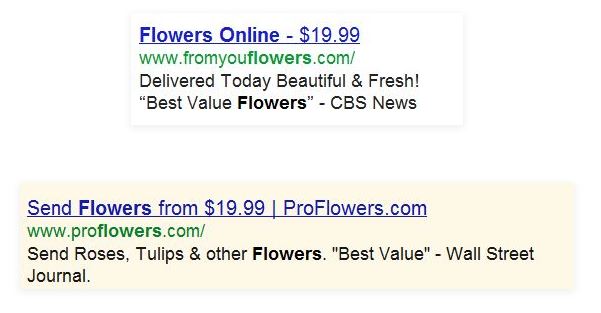
Let’s say that you’re running an online florist. You run AdWords ads promoting your flowers. Google will show your ad to people who’ve recently clicked on flower ads and frequently visited other online florists.
Watch this video to learn how it works.
Google In-Market Audiences – Dealing With Competitors
Keep in mind: Google identifies people who are interested in a particular product or service based on the ads that they’ve clicked and the websites that they’ve visited. So you can expect to face some competition.
That’s why your ad, landing page, overall marketing message, and the product itself must be superior to that of your competitors.
Part of the reason that some people fail is that they don’t realize that they’re squaring off against ads by competitors. They think that a “standard” marketing message will increase sales because they’re reaching people who are ready to buy.
Although the audiences are prepared to make a purchase, they’re also getting hit with marketing messages from other companies. Additionally, they might see ads from competitors who are also targeting the same audience.
So the first piece of advice you need to understand is this: you need to make them an offer they can’t refuse.
We’ll look at specific strategies to use a little later.
In-Market Audiences Have Been Around for Awhile
They aren’t new. They’ve been around since 2013 for display and YouTube ads.
We highly recommend them for YouTube and display.
However, they gained quite a bit of attention just last year when Google announced that it was extending in-market audiences to search campaigns.

So in addition to the signals mentioned above, Google will also determine who’s in-market by looking at a person’s search history.
To continue with the previous example, if Google sees that somebody is searching for “send flowers,” that’s a pretty strong indication that the person is ready to buy flowers.
Of course, you could always run an AdWords ad that targets that keyword. However, you can’t target search history with keywords. That’s how it stand out.
Do In-Market Audiences Work?
The reviews are mixed. Based on my own experience, yes. However, you really need a niche audience with the right intent, a good ad and landing page.
If you read around the web, some marketers have seen significant returns. Others don’t have much success.
As we’ve seen, though, there are strategists who underestimate the extent of the competition. As a result, they get outbid by industry peers.
There does seem to be a broader consensus that in-market audiences are ideal for retargeting.
If you’re unfamiliar with retargeting, it’s a way to reach people who’ve already connected with your brand. Usually, those folks visited your website and didn’t make a purchase.
Fortunately, AdWords offers retargeting.
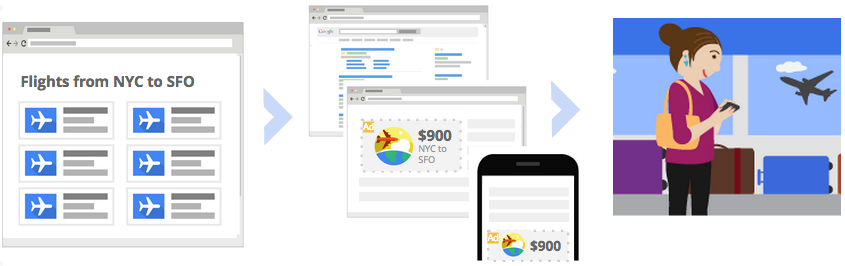
If you opt for that strategy, you’re getting a twofer. You’re reaching people who’ve already expressed an interest in your brand and they’ve recently shown an interest in purchasing what you’re selling.
Put those two ad strategies together and you’ve got the potential for an outstanding conversion rate.
That being said, just because people say this around the web doesn’t mean its true.
Based on our own marketing, and marketing for top clients, I can tell you our results with it have been excellent.
How to Set up In-Market Audiences
If you’re sold on the idea of using in-market audiences, then you need to set up an in-market campaign in AdWords. That’s easy to do.
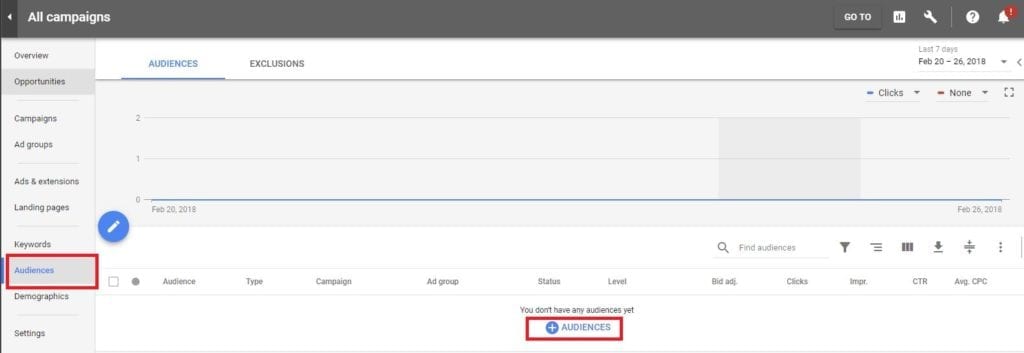
Start by signing in to your Ads account. Click on “Audiences” in the menu on the left-hand sidebar.
On the main screen, you’ll see a table that includes all of your defined audiences. If you haven’t yet defined any audiences, the table will be blank.
Click on the plus sign next to the word “AUDIENCES” at the bottom of the table. That’s how you create a new audience.
Click on “Select an ad group.” Then, select a campaign and ad group from the list that appears.
In the table below, select the type of audience you want to create. In this case, select “In-market audiences.”
Then you’ll see a drop-down of checkbox items that you can click. Those are the different in-market audience categories.
You’ll also see that some of those categories have subcategories. Select the category and subcategory that’s best suited to your business model.
For example, if you’re selling flowers, you would select the “Gifts & Occasions” category and the “Flowers” subcategory to target people who are looking to send flowers as gifts.
In-Market Audiences Best-Practices
Google has offered a couple of best-practices for advertisers who want to be successful with in-market audience targeting.
First, you should avoid using some of the other targeting options within the same ad group and campaign.
For example, don’t target by keyword at the same time that you’re targeting in-market audiences. Instead, set up a separate ad group for the keyword targeting.
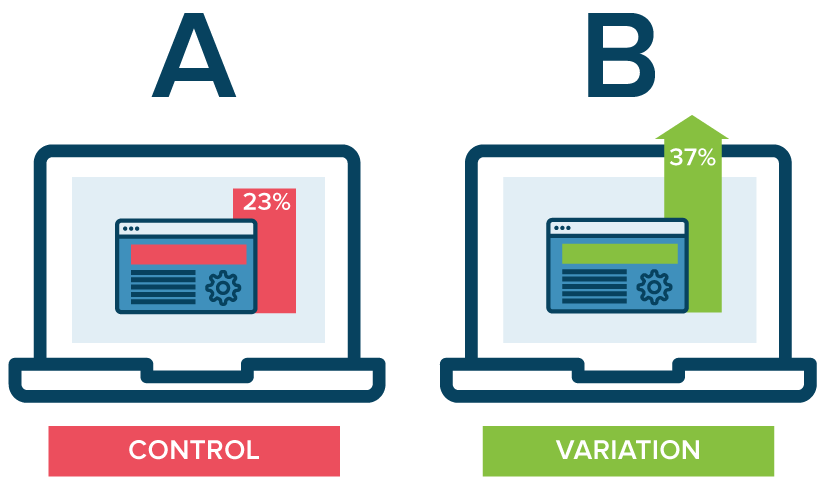
That’s also a great way to conduct some split testing. After a while, take a look at the performance of your ad group that targets market audiences versus the performance of your ad group that targets by keyword. If you find that one is giving you a much better bang for your buck, divert more resources to that strategy.
Next, if you’re focused on direct response, you should use cost per acquisition (CPA) bidding instead of cost per thousand impressions (CPM) bidding.
If you’re unfamiliar with CPA bidding, it’s a strategy that’s designed to maximize your sales. It optimizes your bids to get you as many conversions as possible.
Keep in mind, though, that CPA isn’t always the best strategy. You have more control when you set your own bidding rather than letting Google use its machine learning algorithm to determine the bid that’s best for your ad.
Monitoring Your In-Market Audiences Performance
Even the best online marketing efforts require constant analysis. In-market targeting is no different.
Once you’ve launched the campaign, monitor your analytics. Fortunately, Google AdWords gives you all the info you need to determine if your marketing efforts are bearing fruit.

Your top-line sales growth number will also help you gauge the success of your campaign.
If your in-market targeting doesn’t seem to be giving you a high return, you need to find out why.
Start by looking at your click-through rate (CTR). If that number seems lackluster, then your ad isn’t reeling them in. You probably need to update your copy with something more potent.
On the other hand, if you’re getting a decent CTR but can’t close the sale once people reach your site, then that points to a problem with your landing page.
What’s the problem? Well, it might be that the landing page doesn’t fulfill the promise in the ad. If that’s the case, people will bail on the page and you’ll see a high bounce rate.
It’s also possible that your landing page isn’t closing the sale.
Try running split tests with a couple of different landing pages using different text. Find out which one works best. Then, use that landing page going forward.
Also, if your landing page is too “busy,” you might confuse visitors. Remember: focus on a single offer and make your page easy to read with short, bullet points.
Finally, check out your Quality Score. If it’s on the low side, your ad might not be showing that much. Make it a point to improve the score.
Available In-Market Audiences With Google Ads
As we’ve seen, once you’ve selected “In-market audiences” as a targeting option, you haven’t selected everything. Next, you need to select the type of audience you’re targeting.

Here are the categories of audiences that you can choose for in-market targeting:
- Baby & Children’s Products
- Beauty Products & Services
- Business Services
- Cars & Vehicles
- Clothing & Accessories
- Computers & Peripherals
- Consumer Electronics
- Dating Services
- Education
- Employment
- Event Tickets
- Financial Services
- Gifts & Occasions
- Home & Garden
- Property
- Software
- Sports & Fitness
- Telecom
- Travel
Each category also has one or more subcategories for search ads. Some of those subcategories even have sub-subcategories!
It’s important to drill down to the level that’s best-suited to your target market. If you pick a category that’s too broad, you risk wasting money on clicks from people who aren’t really interested in what you’re offering.
Using In-Market Audiences for Search Ads
Now, let’s put this where the rubber meets the road by looking ways to use it in your online advertising.
If you’re under the impression that you can just create a campaign and launch it with a Google Ads in-market audience, you’re wrong. You need to craft the ad copy so that it appeals to people who are ready to make a purchase.

Before we go over successful copy strategies, though, let’s first look at how you should prep people in your target market before they even reach the lower end of the sales funnel.
Start Marketing to Them Before They’re Ready to Buy
The first thing you should do is invest some of your marketing dollars in brand-name awareness campaigns.
Why? Because that gives you a better shot later on. People who see your in-market ad will already know about your business.
That’s yet another reason why some brands fail. They don’t “warm up” the people in their target market beforehand.
In-market audience targeting isn’t a standalone magic bullet that’s going to land you some quick sales. You should use it as one component of a much larger comprehensive marketing strategy.
In-Marketing Audiences: “Imagine a World…”
Next, it’s time to look at specific types of ad copy that will help you close the sale. The first is one called the Don LaFontaine model.
You might remember Don LaFontaine. He was the famous voice actor who narrated more than 5,000 movie trailers.
In many of those trailers, he started off with the phrase: “Imagine a world…” In fact, he did that so many times it became a running joke after a while.
One great way to target in-market audiences is with an ad that tells them to “imagine a world.”
You’ll do that with a before and after picture. Use the headline to describe what their world is like right now and then tell them how your product can make it much better.
For example, let’s say you’re running an e-commerce site that sells fitness equipment. In your current campaign, you’re marketing to people who are looking to buy a treadmill.
Further, your market research indicates that most people who want to buy a treadmill are doing so because they’d like to lose weight.
In that case, you’d target the “Fitness Equipment & Accessories” in-market audience. Run an ad with a headline like: “Lose 11 pounds in one month with our treadmill!”
Use the description or second headline to validate the claim: “Our customers did it in just 33 minutes a day!”
You’ve probably seen ads like that on TV or around cyberspace. That’s because they’re effective.

What you’re doing with that kind of ad is telling overweight people who are looking to get in shape to “imagine a world” where they lose 11 pounds in a month with limited exercise.
Also, note the use of odd numbers in the ad copy. Instead of 10 pounds, it’s 11 pounds. Instead of 30 minutes a day, it’s 33 minutes a day.
That’s intentional. When you use odd numbers, you give your stats a little more credibility. Just make sure you’re telling the truth.
The Don LaFontaine strategy is successful because it’s relatable. People who are shopping for the product you’re selling can identify with the message. That’s likely to give you a good CTR.
Agitate Them – 🙂
Legendary copywriter David Ogilvy used to say that if you want to sell fire extinguishers, lead with the fire. His point was that you should identify the problem up front, agitate people about it, and then present your product as the solution.

It’s an ad copy strategy that’s very similar to the one we just looked at. In this case, though, you’re trying to create some negative emotion.
For example, if you’re promoting treadmills to an in-market audience, run an ad with a headline like: “Sick of fad diets and counting calories?”
The word “Sick” at the beginning of that headline is significant. It agitates people who aren’t successful with their weight loss efforts to date.
In that same ad, you’d present your treadmill as a way to lose weight with minimal effort.
It’s also important that you use your landing page to continue the agitation process. Include copy like: “Are you frustrated with low-carb diets that keep you from enjoying great food but don’t pull any inches off your waist? Sick of counting calories while your weight stays the same?”
After a few paragraphs of that kind of agitation, swoop in like a white knight with your product and save the day.
Think about ways that you can agitate people in your target market so that they’re more likely to buy your product or service.
From One Customer to Another
A great way to seal the deal with a potential buyer is to let a brand evangelist do all the talking for you. Find a satisfied customer who’s used your product and let him or her write your ad.
For example, run an ad with a headline like: “How I lost 11 pounds in one month.” Then, add this in the second headline: “And I lost 7 pounds in the second month!”
Those numbers seem realistic. The verbiage is also person-to-person rather than salesman-to-person.
On the landing page, just include the testimony of somebody who, in fact, lost 11 pounds in one month and 7 pounds in the second month. Let that person explain why your treadmill is a great buy for people who want to lose weight.
Then, add a compelling call to action at the bottom. Sprinkle it throughout the copy as well.
Stand Apart – In-Market Audiences
Unfortunately, competitors will also run treadmill ads to people who want to lose weight. That’s why you’ve got to stand apart.
What makes your treadmill better than the treadmills your competitors are selling? Does it cost less? Is it more portable? Does it burn more calories? If so, how?
As we’ve seen, the competition is going to be at cutthroat levels when you target an in-market audience. You need to up your marketing game by advertising a unique selling proposition (USP).

Use What Works for In-Market Audiences With Google Ads
If you’re already using AdWords without in-market audiences, then you’re probably targeting people who search for keywords with purchase intent such as “treadmills on sale,” “buy a treadmill,” or “shop treadmills.”
If you’ve come across some successful ad copy when running ads for those keywords, there’s no reason to believe that the same copy won’t work when you target audiences.
So if you’re at a loss as to how to begin, use what already works.
Wrapping Up
In-market audiences give you an outstanding opportunity to reach people who are ready to buy your product. If you haven’t yet launched an Ads campaign that targets an in-market audience, why not do so today?
