


In today’s fast-paced franchise marketing world, the most successful franchises are the ones that manage to innovate while implementing proven methodologies to guide them. They also have the ability to adapt their needs to local audiences, appealing to each target market while remaining consistently recognizable.
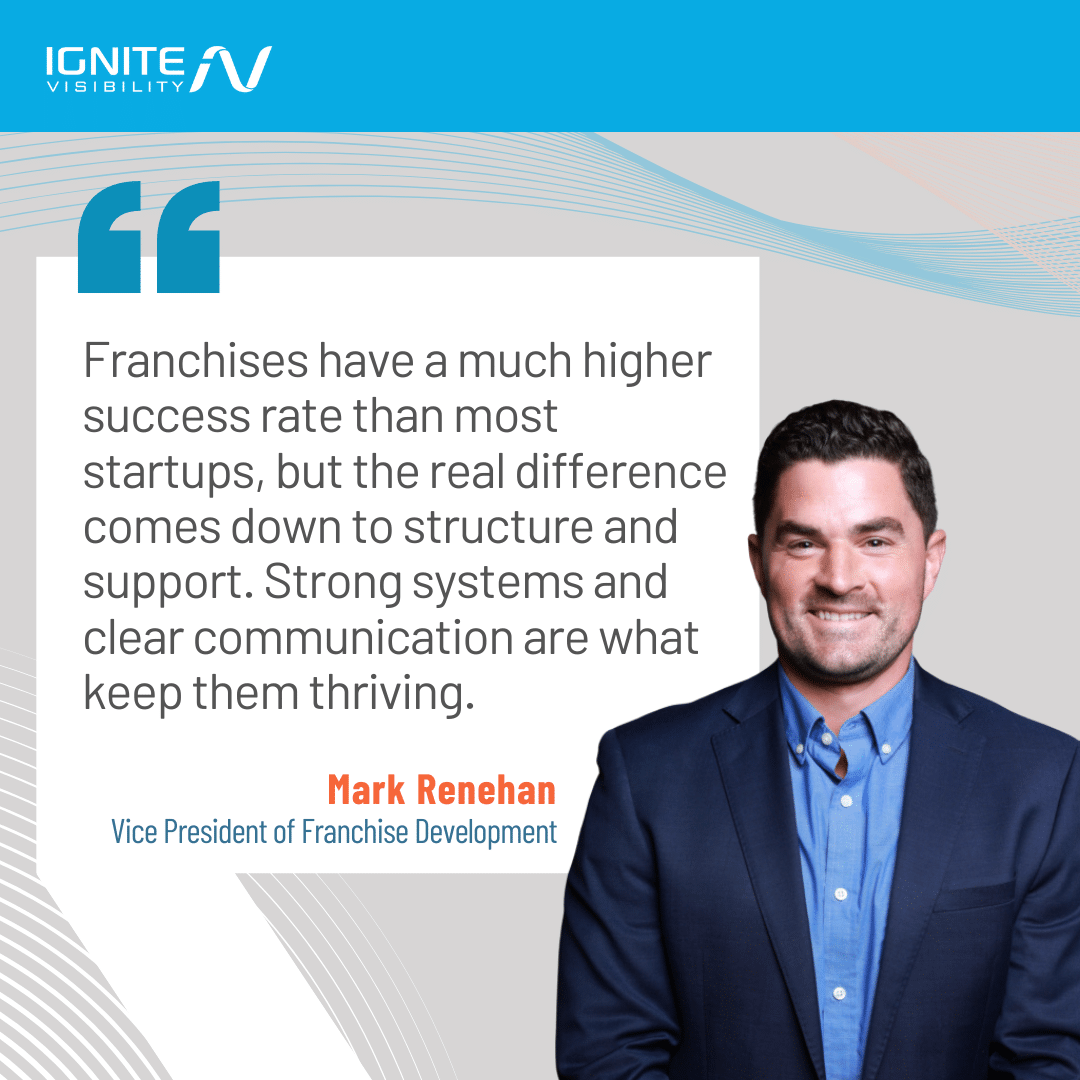
What makes a successful franchise? In this blog, Mark Renehan, Vice President of Development, Franchise, will answer this question by reviewing the various qualities of successful franchises, including examples of some impressive franchise success stories.
My Expert Opinion on the Most Successful Franchises
If you’re considering getting into a franchise over another business model, you’re more likely to succeed as it is. According to recent franchise success statistics from Investopedia, only around 4% of franchises close within the first five years of opening, which is far lower than startups, which have a 50% failure rate in the same period of time.
However, your franchise success rate will hinge mainly on the qualities backing it. Franchise success relies on a blend of components that work harmoniously to help the business flourish, from consistent yet adaptable franchise marketing to a dependable operating system and effective communication between both franchisors and franchisees at all locations.
If you want your business to count toward those franchise success statistics, you’ll want to ensure you set up your business with all of those necessary qualities from the start. Having a checklist in place to measure these qualities will help you maximize your potential franchise success rate in the long term.
The 10 Qualities Shared by Top Franchise Systems
In looking at how to be a successful franchise owner, here are some of the qualities shared among the most successful franchises:
1. A Proven, Teachable Operating System
One of the most critical components of franchise development is a comprehensive operating system that really works. According to Forbes, franchises that can develop these systems meet the characteristic of being an Implementer.
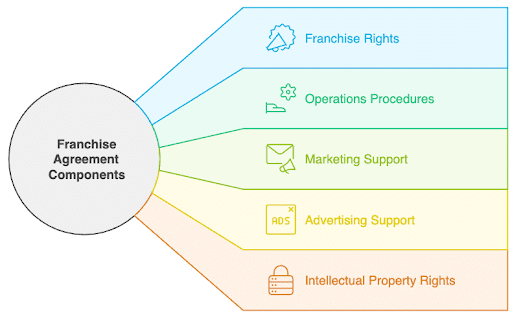
Implementers use repeatable and documented systems, from standard operating procedures (SOPs) and manuals to checklists and franchise agreements to build a strong foundation for franchise success.
The right operating system will go a long way in helping maintain consistency across all units, from the franchisor to all franchise locations.
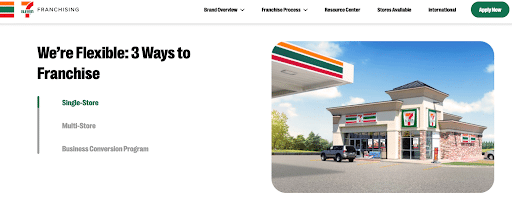
One of the top franchise success stories comes from 7-Eleven, which is known for its effective operating system and model that allows for high flexibility based on what kind of business model a franchisee would like to own.
2. Training and Ongoing Support
You must also have a solid training program in place that provides initial training along with ongoing support, including field support that can directly improve franchisee satisfaction and performance.
For example, McDonald’s has a strong training program that involves 12 to 18 months of training in a restaurant, self-directed training for 20 hours every week, and one-on-one training sessions, along with conferences and seminars.
3. System-Wide Communication
You also need to maintain clear and frequent two-way communication between the franchisor and all franchisees.
For instance, you could set up centralized communication hubs on certain apps or other digital platforms, where the head office can share important updates, guidelines, marketing materials, and other resources, with automatic updates.
Regular check-ins can also help establish good communication, whether you opt for weekly, monthly, or quarterly check-ins to discuss goals, performance, and other aspects of franchising.
4. Data-Driven, Brand-Led Local Marketing
Another key component of the most successful franchises is a comprehensive franchise marketing strategy that maintains consistent branding while also meeting the needs of each location’s community.
You’ll want to develop a brand-led strategy that incorporates many marketing elements, including:
Ultimately, the right approach to marketing can drive consistent demand generation as you continually appeal to your target audiences.
5. A Strong Brand Culture and Franchisee Engagement
Another core component is a strong brand culture that recognizes its franchisees and employees who fuel the franchise’s success. Recognition programs and franchisee involvement can build more trust around your brand while also boosting collaboration and driving long-term growth.
One example of a highly successful franchise known for its brand culture is School of Rock, the country’s largest music school franchise and an inspiration for the movie of the same name. Its unique culture, centered around giving the best available music education to eager students from equally eager franchisees, has earned the company a place on Franchise Business Review’s 2025 Culture100 List.

6. Financial Discipline and Unit Economics
Successful franchises always track and optimize unit-level profitability based on key metrics like:
- Traffic
- Conversion
- Average order volume (AOV)
- Frequency
This need for measurability makes transparency of financial practices a must. Franchisees and franchisors should be able to measure progress with in-depth analytics and reporting tools that can give some insights to help with further optimization.
As each franchise grows and the franchisor assesses the business’s performance, the company can take the appropriate steps to move forward.
7. A Growth Mindset and Multi-Unit Pathways
Additionally, the most successful franchises expand strategically across their franchise locations. For example, franchisees might go from one unit to three, followed by expanding to five locations over a period of five years.
Franchisors should give franchisees a clear pathway for expansion as needed, with flexible models like the above 7-Eleven example, which offers single and multi-store opportunities. In the process, they could help franchisees master their leadership and management skills before expanding to new locations.
8. Adaptability With Brand Consistency
Although marketing can adjust slightly from place to place to connect with local communities, brand consistency is essential across all campaigns. A consistent brand establishes a clear and recognizable brand identity that fosters even greater trust among your audiences.
Using strict brand guidelines, you can ensure that franchisees know what kind of brand voice, messaging, and visuals to use while enabling them to adapt accordingly.
A great example of a franchise with exceptional brand consistency and adaptability is Starbucks, which maintains a consistent ambience with all of its branding, store designs, and products, as one of the most unmistakable companies associated with coffee shops.
At the same time, its highly recognizable branding manages to adapt to local marketing needs, with certain seasonal beverages and other offerings that cater to specific regions.

9. Leadership and a People and Service Mindset
Franchisees need to be strong operators and leaders who effectively embody the franchise brand, know how to hire the right employees, and create great customer experiences.
Through solid initial and ongoing training programs, franchisors could develop reliable leaders within their organization. They can also get a good start by seeking more experienced leaders to serve as franchisees, getting each location off to the right start every time.
10. Community Presence and Customer Experience Consistency
Active local involvement in your community is another great way to succeed in your industry. A good local marketing strategy could help you differentiate your franchise while creating the perfect customer experience.
An example here could involve hosting or sponsoring a local event in specific communities, getting people to positively associate your brand with the community and its activities. You could also partner with non-competitors, potentially attracting their audiences when you might otherwise struggle to do so with other approaches.
Consistently getting involved in your local community will go a long way in building more brand trust, maximizing retention with repeat business, and establishing long-term loyalty.
How to Audit Your Franchise Against These Qualities
With these qualities in mind, let’s look at how to be a successful franchise owner through a comprehensive audit of your franchise’s readiness.
You can complete an audit using a 20-item scorecard, with each item ranked on a scale of 0 to 5, with 0 being unviable and 5 being mature.
- Unit-Level Profitability
- Franchisee ROI and Payback Period
- Franchisor Financial Stability
- Cost of Goods and Labor Management
- Training Program Quality
- Operational Systems and Technology
- Field Support and Coaching
- Supply Chain and Vendor Management
- Brand Recognition and Reputation
- Marketing Effectiveness
- Competitive Differentiation
- Market Saturation
- Franchisee Validation
- Communication and Transparency
- Franchise Leadership and Culture
- Innovation and Adaptability
- Clarity of the Franchise Disclosure Document (FDD) and Agreement
- Exclusivity and Territorial Protection
- Litigation History
- Exit Strategy and Transferability
You can then use the sum of all 0-5 ratings to gauge your franchise’s likelihood to succeed based on the following measurements:
- <60: This score would indicate that you need to stabilize your franchise’s performance.
- 60-79: Here, your franchise would be in the process of scaling and have room for better optimization.
- 80-100: At this level, your franchise would be considered “mature” with peak performance.
Common Digital Marketing Pitfalls to Avoid to Ensure Franchise Success
Here are some common issues to avoid as you set about building your franchise:
Inconsistent NAP and Listings
When setting up your Google Business Profile and other listings, you might struggle to build brand consistency if your name, address, or phone number (NAP) is inconsistent across listings.
Here is where having a strong operating system with clear branding guidelines can mitigate this risk. Pairing that foundation with a targeted franchise PPC strategy ensures each location gets consistent visibility, leads, and growth opportunities.
Insufficient Ad Funds
You could also struggle to advertise your brand and individual locations if you don’t have enough ad funding in place.
To avoid this problem, be sure to get a good, complete picture of your finances and set aside enough funds for your marketing and advertising budget. Remember, allocating a portion to franchise PPC advertising can give your brand an edge in competitive markets, helping you capture more visibility and customers from day one.
Rogue Localization
This issue can occur when a franchisee strays from brand standards to localize marketing or other aspects of your franchise. Doing so could hurt your brand consistency and make your brand’s identity unclear, and it could damage your reputation if that rogue localization uses the wrong messaging or other content.
To prevent rogue localization from occurring at any point, be sure to develop and provide your franchisees with clear brand guidelines to follow while advising on how to tailor messaging and visuals to each audience. Taking this step could effectively align your franchisees with your overarching branding.
Weak Communication Cadence
Poor and inconsistent communication could lead franchisees astray and be detrimental to your operations, especially when trying to gain insight into each location’s performance.
Maintain regular communication through consistent check-ins and a centralized communications hub that keeps everyone in touch across your organization.
Training Stops After Onboarding
If you only provide initial training for franchisees, they could easily become stagnant in their skills and fail to develop into the leaders you need them to be for sustained success.
Make sure training continues well after onboarding with ongoing support, which could include field support for a more hands-on approach, as well as self-directed part-time training.
FAQs
1. What are the top qualities of a successful franchise?
What makes a franchise successful? There are many qualities that go into successful franchises, but arguably the most important are a reliable operating system, consistent and thorough training, effective local marketing, responsive communication across the entire franchise, and a cohesive and recognizable brand culture with franchisee engagement.
2. How do franchisors support franchisee success?
Franchisors must give franchisees sufficient support to help each branch thrive, including initial and ongoing training, access to guidelines and marketing resources that they can adapt to local strategies, access to helpful technologies, and a highly supportive peer network.
3. How can franchises stay adaptable without breaking the system?
Franchises can maintain adaptability by balancing their rigid brand standards and requirements with locally optimized strategies. Strong communication and giving franchisees some autonomy can keep everyone on the same page while helping secure sustained franchise success.
4. What financial metrics matter most for franchise health?
When gauging the health of a franchise, there are certain critical metrics to measure. These metrics include gross sales, net profit margin, return on investment (ROI), and average transaction value (ATV), but the specific metrics you choose will depend on your goals.
Achieve Franchise Success With Ignite Visibility
Now that you know more about how to be a successful franchise owner, you can start building your own success story with the help of the franchise marketing experts at Ignite Visibility.
When you turn to Ignite to develop your franchise, you’ll have the chance to:
- Develop a strong operating system
- Create high-quality marketing materials and guidelines for individual locations
- Maintain consistent branding across all content while adjusting for local relevance
- Continually monitor your progress and determine how to optimize
- And more!
Want to start building your franchise business? Get in touch with us today for a free proposal.
