First party data is crucial for marketing as it can help you learn about your audiences and hone your targeting, helping you reach the right people at the right time.
In this blog post, James Semczuk, Ignite Visibility’s Analytics Strategist, will explore first-party data and how you can use it to elevate your marketing efforts.
What You’ll Learn:
- What Is Audience Data?
- Evolution of Media Targeting Towards Privacy
- The Current State of Third-Party Cookies and Privacy Concerns
- Future of Data Usage in Marketing
- Best Practices for Maximizing First-Party Data
- Why You Should Use Data-Driven Audience Personas
- First-Party Data FAQs
What is Audience Data?
Audience data is detailed information on how your target audience behaves online, which you can use to help segment and target your audiences.
It’s a combination of several sources coming together to form a complete picture.
Audience data includes information like:
- Hobbies and interests
- Demographics (age, location, etc.)
- Stage of the sales funnel
This information lets you create marketing campaigns tailored directly to your audience.
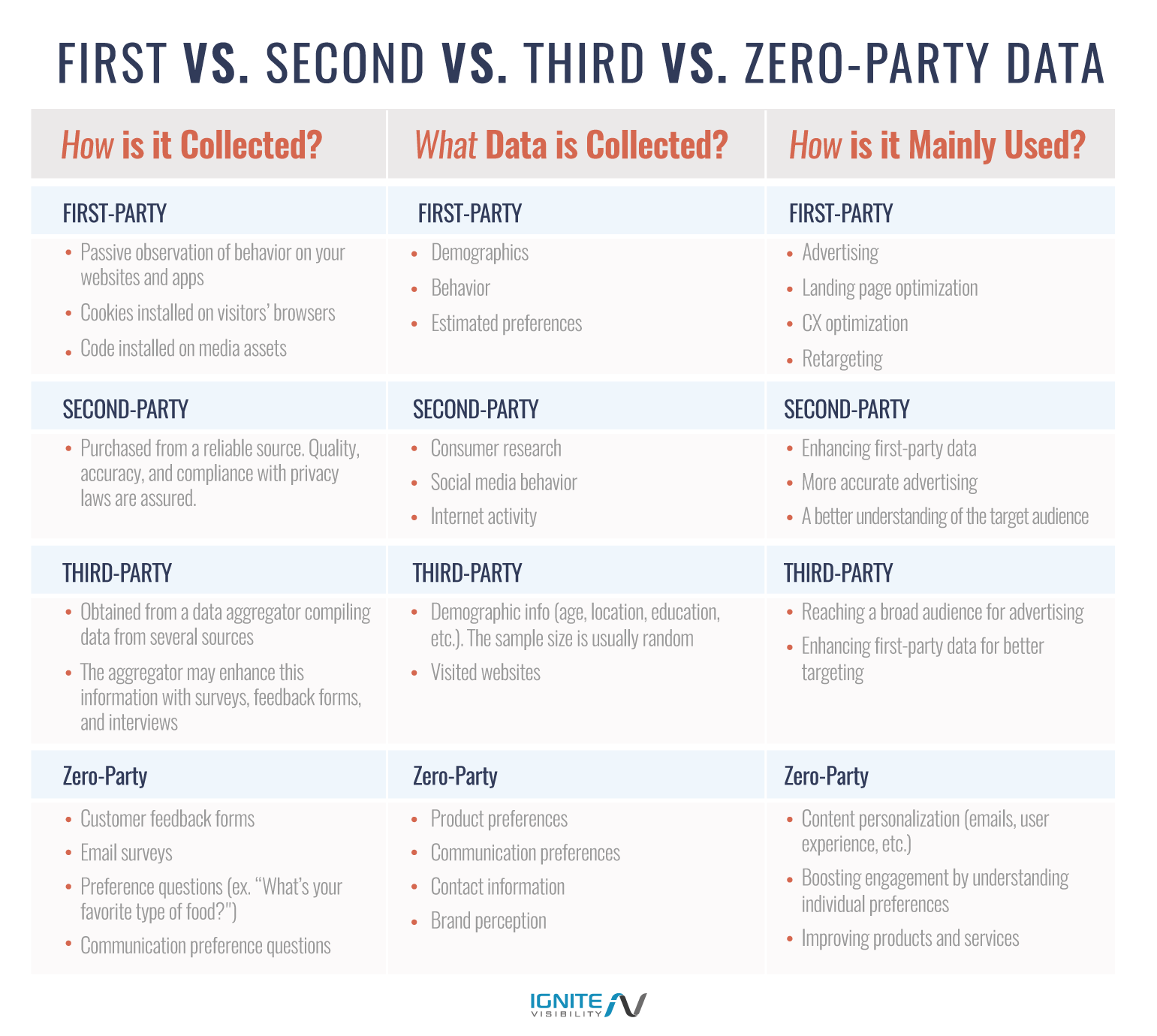
There are 4 types of audience data: first-party, second-party, third-party, and zero-party. Each of these types of audience data is collected in different ways and serves different purposes.
Before we go any further, let’s define each type and explain how they’re collected.
What is First-Party Data?
What is first party data, exactly? First-party audience data is the information you receive directly from your audience.
So, what’s behind first-party data’s meaning? It includes demographic information, audience behavior, and estimated preferences. Some examples include CRM data, subscription information, and behavioral data from your websites and apps.
It is collected through passive observation of behavior on your website, cookies installed on your visitors’ browsers, and code installed on media assets.
It is mainly used for advertising, landing page optimization, customer experience optimization, and retargeting. An estimated 80% of marketers use first-party audience data as their primary source of information collection, making it the most popular of the 4 types of audience data.
Types of First-Party Data
There are a few main types of first-party data to consider. Let’s break them down:
- Transactional: Data including information about customer subscriptions, purchases, and offerings that appeal to audiences.
- Behavioral: Data about people’s behavior, such as how they interact with your website, social media channels, mobile apps, and other points of contact with your brand. For instance, you might measure metrics like clicks and comments to gauge audience behavior.
- Relational: Through a customer relationship management (CRM) platform, you can collect first party data around demographics, names, preferences, and other customer information to help you personalize the customer experience.
Using a variety of first-party data, you can maximize its effectiveness in a holistic marketing strategy.

What is Second-Party Data?
Second-party data comes from a credible partner.
Since you work directly with the data collectors, you can trust that the data is accurate. Second-party data normally consists of things like consumer research, social media behavior, and internet activity.
Examples of second-party data include social media analytics and info bought from data marketplaces. It is often used in tandem with first-party audience data, to achieve more accurate advertising, and to help brands get a better understanding of their target audience.
When second-party data is combined with first-party audience data, it allows you to build ultra-accurate predictive models – especially if you deal with a smaller clientele.
What is Third-Party Data?
Third-party data comes from data aggregators.
It includes information such as demographic information and visited websites. Marketers use third-party audience data to help them reach a broader audience and narrow down their targeting efforts.
These aggregators don’t collect their data directly. Instead, they get it from other companies and compile it into a single report. They often get their information from customer surveys, feedback forms, and client interviews.
Most third-party data comes from advertising service demand-side platforms (DSPs). Certain marketplaces also sell third-party data, like Neilson and Acxiom.
Because they compile multiple datasets into a single report, the original demographics aren’t always clear. There’s also no guarantee aggregators collected it according to privacy regulations like GDPR.
That’s why third-party data is most effective when enhanced with first-party data. In fact, 46% of companies use both third-party and first-party audience data equally.
What is Zero-Party Data?
Zero-party data is information that customers intentionally and actively share with a brand.
Consider the differences between zero-party data vs. first-party data: It’s similar to first-party data, but the customer fully understands they’re sharing audience data. Compare this to first-party data collection methods like behavior data, where customers share info more passively.
Zero-party data is great because it requires no analysis. Your audience has provided you with the exact information you were looking for. This type of audience data includes things like customer feedback forms, email surveys, preference questions, and communication preference questions.
Examples of zero-party audience data include product preferences, communication preferences, communication information, and brand perception. It provides insight that can be used for content personalization, boosting engagement by understanding individual preferences, and improving products and services.
My Expert Opinion on First Party Data
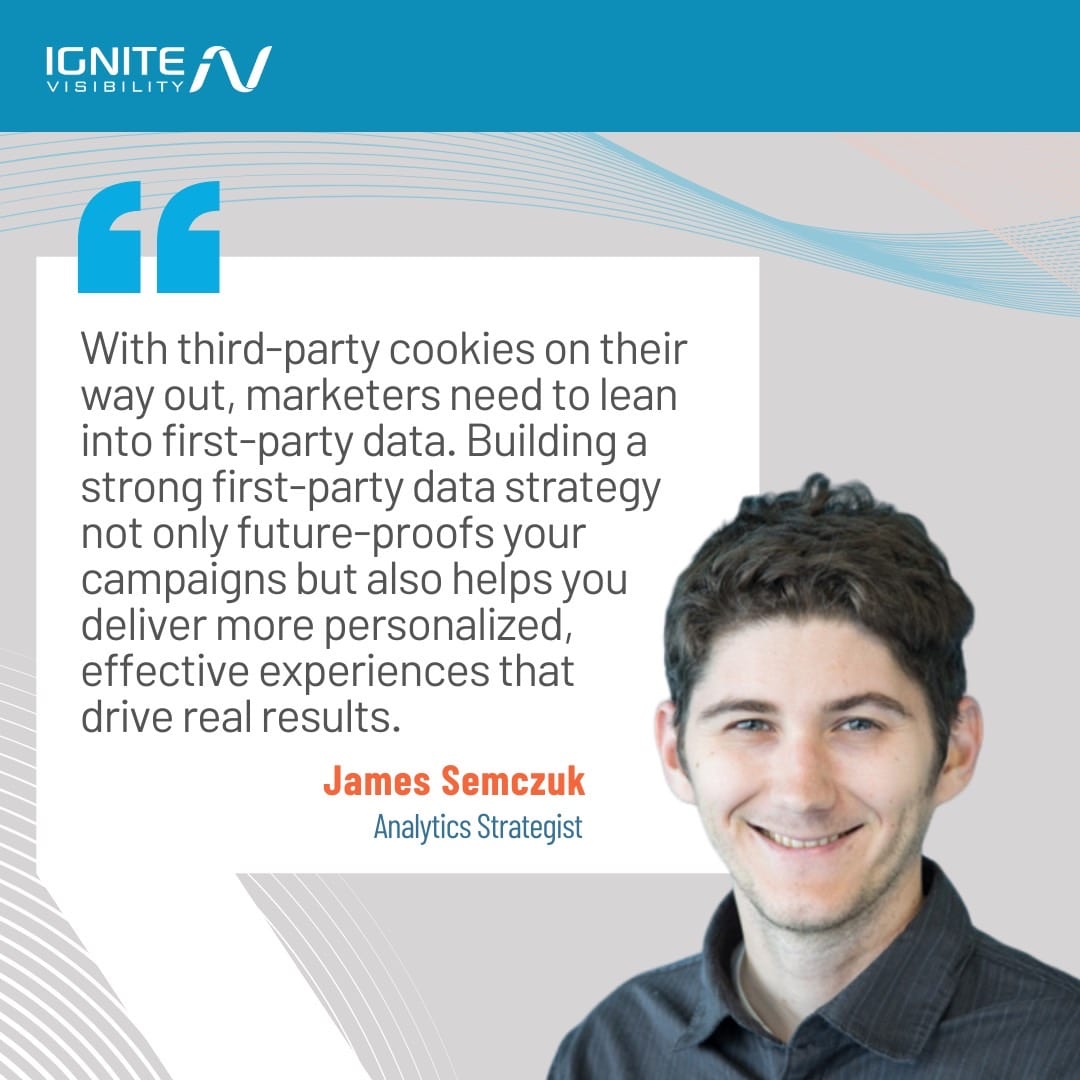
As major platforms limit third-party cookies, it’s become increasingly important to utilize valuable first party data. While we likely won’t lose cookies for a while, particularly with Google, which has decided to hold onto third-party cookies to the relief of marketers everywhere, you should also know how to implement a strong first party data strategy to help you get the most from your campaigns.
I recommend using a combination of first-party, second-party, third-party, and zero-party data to connect with your target audiences. A comprehensive strategy employing each of these can help with everything from personalized messaging and advertising to lead capturing and conversion.
Evolution of Media Targeting Towards Privacy
In response to intrusive tracking by advertisers, we’ve seen a huge shift toward protecting user privacy. In a bid to protect consumers, companies like Google, Apple, and Amazon have made life increasingly difficult for marketers.
To give you some perspective, let’s look at a brief timeline of some of the biggest changes in user privacy over the years:
- Early 2000s: A couple of decades ago, third-party cookies and data management platforms (DMPs) ruled the landscape of programmatic advertising, helping businesses connect with audiences by tracking them from site to site.
- 2010s: By this decade, social media came about with its own walled gardens across platforms, e.g., Google Customer Match and Facebook Custom Audiences.
- 2018: At this point, the landscape began to really shift as GDPR enforcement arose in the EU, while the U.S. and Canada saw their own privacy restrictions via the California Privacy Rights Act (CCPA), both of which required consent from users and established legal guardrails.
- 2020: Two big innovations came around this time, including Apple’s Intelligent Tracking Prevention (ITP) feature in Safari browsers minimizing cross-site tracking, along with Apple’s App Tracking Transparency (ATT) and Identifier for Advertisers (IDFA) frameworks limiting the tracking of mobile identifiers. These developments signify the impact of iOS privacy changes on first-party data platforms in 2025.
- 2024-2025: Google Chrome is set to phase out third-party cookies, a significant change that will lead to even more reliance on first-party data vs. third-party data.
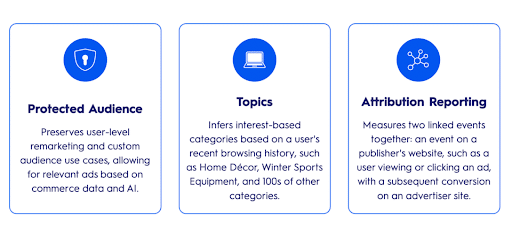
- The Future: As things progress, privacy will only become increasingly important as businesses try to find workarounds, with key new developments including various browser APIs, such as Google’s Privacy Sandbox, Topics API, and Protected Audiences, along with AI-driven predictive modeling.
Many skeptics see this privacy shift as a disguised effort to restrict competition. But the bottom line is the same: your company needs to navigate these changes effectively.
Here are the biggest privacy-related issues marketers face this year:
The Current State of Third-Party Cookies and Privacy Concerns
Modern advertising is hugely dependent on third-party cookies.
Marketers install them on users’ browsers to track their behavior after they leave their websites. That’s why you’ll see related ads following you around online after you’ve browsed for certain products or services.
For many, this represents a blatant violation of user privacy. Most consumers don’t understand what third-party cookies do, so they can’t fully consent to be tracked by them.
That’s why regulations, ad-blockers, and browser developers have increasingly restricted them.
Google plans to phase them out from Chrome in late 2025, a move many see as the abolition of third-party cookies. Mozilla’s Firefox and Apple’s Safari have already done this.
This will change targeted advertising, but it won’t end it. Instead, targeting will shift to components like the Google Privacy Sandbox, which will incorporate Topics API, Protected Audiences, and Attribution Reporting. These components mark the development of interest-based, anonymized targeting using first-party data vs. third-party data, and potentially more zero-party data vs. first-party data.
First-party audience data will also become increasingly important. Zero and first party audience data requires consent, and therefore, isn’t seen as a violation of privacy.
Ultimately, solutions like first party data in marketing will help overcome the various challenges that current restrictions bring, such as maximizing data accuracy, integrating data across systems, and keeping sensitive data secure.
Third-Party Data Restrictions
Some companies want to take user privacy further by banning all third-party tracking on their platforms.
The most notable example is Apple’s ban on third-party tracking without consent. App users must now explicitly agree to let companies track them, which only 20% do.
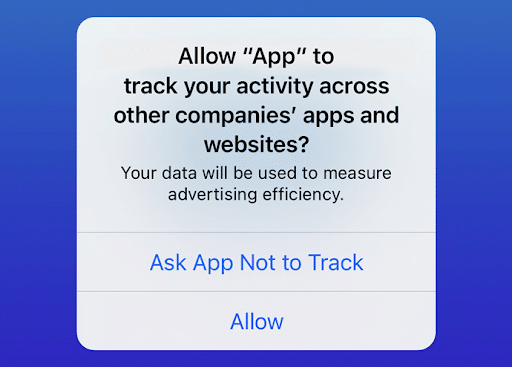
As iPhones make up 58.03% of all American smartphones, this is a major blow to marketers wanting data on mobile users.
Marketers should expect policies like this to continue as consumers demand more privacy, especially the 23% of companies that are still dependent on third-party data.
Why First-Party Data Matters Now
As privacy becomes a top priority among search engines and other tech companies, first-party is everything. In protecting users’ data, marketers will need to comply with the GDPR and other regulations, and 1st-party data will be essential in maintaining that compliance.
Third-party cookies might still be around, but first party data is just as important to collect when learning more about potential and existing customers. It’ll also be instrumental in replacing third-party data if it ever winds up entirely phased out.
Not only can a first-party data strategy help adhere to privacy requirements, but activating it could achieve great results with your marketing efforts, especially when it comes to email retargeting lift and lookalike audience success.
For instance, ecommerce brand Toadfish Outfitters collected emails from unknown visitors to their website and used this data to retarget customers with new product releases. The result of this retargeting with first-party data was a 6.8x increase in return on ad spend (ROAS) and the ability to effectively target more than 2,000 previously unknown shoppers.
Regarding lookalike audiences, Cluey Learning, an education platform, created custom audiences with Google’s Customer Match feature using its first-party CRM data. Specifically, the brand targeted parents who expressed interest in Cluey’s services, leading the platform to send these audiences retargeting ads based on their unique goals, resulting in a 190% increase in ad effectiveness with a 17% lower conversion cost.
Ultimately, harnessing the power of 1st-party data could help you achieve better business outcomes based on your objectives, from lower customer acquisition cost (CAC) to increased lifetime value (LTV).
Future of Data Usage in Marketing
As third-party sources face increasing restrictions, first and zero-party data hold increasing importance. Data-driven marketing isn’t going anywhere, but it’s changing.
Sketchy, unethical tactics will find a stage exit in the future’s marketing. Meanwhile, consent will play a lead role.
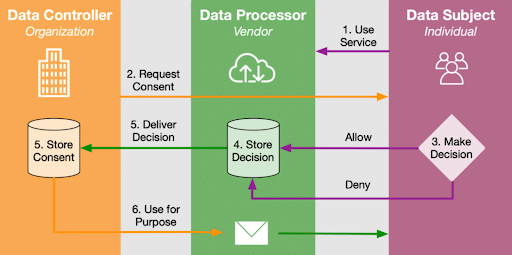
Consumers will generally always understand how companies are using their data. Companies will ask to track users explicitly or collect it in such a way that requires consent.
For instance, consumer surveys will become increasingly common. Companies will use products like Nicereply to make informed data collection easier for consumers.
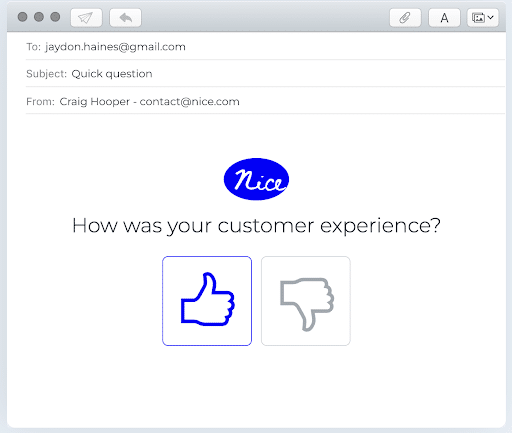
As this move toward explicit consent continues, there will also be a shift to value exchange to gain information from audiences. For example, they may submit data in exchange for personalized content that appeals to them, along with various discounts and loyalty rewards that make the exchange worthwhile. The latter tools are among the best ways to leverage first-party data for post-purchase marketing.
Additionally, we’ll see the rise of AI-driven consent, including adaptive consent flows that help streamline data submission requests while clearly indicating, in narrative form, to what users are consenting. Meanwhile, automated preference centers can also contribute to a first-party data strategy by automatically enforcing consent and centralizing user preferences on every digital touchpoint, making things easier for businesses and users alike.
Another development to take into account is cross-channel data unification, which can involve a specific type of first-party data platform called a customer data platform (CDP) and an identity graph, with the addition of a data clean room for secure external collaboration. CDPs can create unified customer profiles using first-party data, while identity graphs connect cross-channel identifiers that would otherwise remain disparate. Clean rooms could enable compliant data sharing with partners, potentially for the purpose of first-party data monetization.
Keep in mind that these are some of the best ways to leverage first-party data for post-purchase marketing.
How to Build First-Party Data
Here is some step-by-step guidance on how to collect first-party data the right way:
1. Identify Your Key Data Sources
Using a first-party data platform, you can identify all of your data sources with an audit. Sources could include website and mobile apps, customer relationship management (CRM) platforms, email and social media platforms, and in-store interactions, among others.
You can then identify any gaps you need to fill with better data collection.
2. Set Up Tracking and Analytics
You can then set up tools to manage and analyze all of your first-party data from all sources. Solutions like Google Analytics 4 could provide you with valuable data and actionable insights, while a CDP could centralize all data into a single platform.
3. Create Value-Exchange Opportunities
Develop various value-exchange opportunities that encourage people to share their data in exchange for items like:
- Personalized customer experiences, such as custom product recommendations and content
- Gated content like ebooks, whitepapers, or other helpful resources
- Loyalty programs that lead to rewards to keep customers coming back
- Useful tools they can use like personalized dashboards
4. Implement Consent Management Tools
Collect, manage, and document consent to maintain compliance with GDPR, CCPA, and other relevant privacy regulations. You can do so using a consent management platform (CMP) and make it easy for people to pick and choose what data they share.
5. Integrate Data Across Platforms
Using a centralized system, you can avoid data solos and gain deeper insight into your audiences. These solutions could include CDPs and data warehouses, along with a common identifier. Also, be sure to activate data across all channels for targeted marketing.
6. Continuously Test and Refine
You can then develop your first-party data strategy with continuous optimization and refinement over time. Regular testing could help you identify any issues you need to fix in your approach, streamlining data collection and usage as you improve your strategy.
Want to learn more about how to collect first-party data? Check out our video on how to build first-party data for ads and email marketing:
Best Practices for Maximizing First-Party Data
Don’t worry. When it comes to collecting reliable and relevant audience data, all hope is not lost. Here are three other strategies that you can use.
1. Leverage Existing Data Sources
Use existing data sources to inform your strategy, including analytics, social media, trends, and tag diagnostics, among others. Let’s look closer at each:
Google Analytics
Your Google Analytics conversation data should be one of the first places to look for audience data. You can learn a lot when you look at your demographic, technology, different channel, and Google Analytics benchmark reports to learn more about what type of customer is converting from your website the most.
Once you know who is resonating with your product the most, you can use this audience data to refine who you’re targeting with ads.
Social Media
All of your social media platforms are going to give you some insight into your preferred audience and how they are consuming your content. If you post most of your content on Facebook, check out the Meta dashboard. Do you depend more on Instagram? Check out Instagram’s analytics.
Don’t forget to take a look at your followers, too. You can learn a lot about your audience by analyzing your followers and those who interact with your accounts the most.
Website Builders and Hosts
A lot of website builders and hosts, like SquareSpace, also will provide you with platform-level data that you can use. If you’re a premium Google partner, they will give you access to geographic data, category data, and general information about your customer.
Trends
Google Trends is another great place to access quality audience data. Your Breakout Search Report, specifically, will show you all of the action around your top keywords. It’s also going to show you which keywords are going up and going down, which is great information to have for SEO purposes.
Tag Diagnostics
To help make the most of first party data for marketing, Google is introducing two new tools, including Tag Diagnostics and Consent Management Platform (CMP).
Tag Diagnostics can indicate your account’s health and potential problems with data measurement, with some added guidance on how to resolve issues with Google Analytics, Google Ads, and Google Tag Manager.
Meanwhile, CMP can help with consent banner generation and the use of consent mode for Tag Manager, Google Ads, and Analytics. It also allows for integrations with Cookiebot and other consent management partners.

2. Refine Data With Segmentation and Personalization
Based on the data you collect, you can segment it into different subtypes. For example, you might segment data according to certain demographics and behaviors. Doing so could help you group different audiences together in a first-party data strategy.
Based on the segmented data, you can then personalize your marketing materials to connect more effectively with each segment of your audience. This level of personalization can establish a stronger relationship with new and existing customers.
For example, you might have an audience persona that targets single parents, while another targets students, each with messaging and visuals tailored to their wants and needs.
3. Strengthen Infrastructure and Tools
To get the most from your strategy, work on improving your infrastructure and platforms over time, including your CDPs, CMPs, data clean rooms, and consent flows.
As an example, you could find that too many people are declining to submit their information because there isn’t enough customization of the data they’re able to consent to give, which could inform changes to your consent flows as you work to get better results over time.
4. Build Trust Through Transparency and Compliance
Only use the data you need to help optimize your marketing efforts with an ethical first party data strategy. In the process, you should inform users of the kind of data you intend to collect and how you’ll use it on your website and other platforms.
In remaining ethical with your data usage, you must comply with General Data Protection Regulation (GDPR) and the California Consumer Privacy Act (CCPA). Learning more about these regulations will help you avoid potential legal issues associated with data collection.
Common Mistakes and Troubleshooting in 1st-Party Data Collection
In first-party data monetization, collection, and usage, there are some critical mistakes to avoid, including:
- Bad Data Taxonomy: Be sure to standardize naming conventions with a unified governance framework to prevent data siloing and make it easy to analyze customer journeys across all relevant platforms.
- Relying on a Single Data Source: Use a multi-channel data collection strategy to collect information from all touchpoints, from websites and mobile apps to customer service logs and point-of-sale systems.
- Lack of Consent Mapping: Use effective consent management tools that enable people to consent to give specific types of data, and map this solution to your data collection tags to ensure you comply with these permissions.
- Failing to Deduplicate Data: An automated identity resolution system could merge and eliminate any duplicate data records based on certain common criteria.
- Delayed Data Flows: Optimize data pipelines with the help of data streaming tools and prioritization of flows, putting the most high-value data at the top.
- Collecting the Wrong Data: Focus on the data that aligns with your goals, whether you want to enhance personalization or attribution modeling, for example. Also, conduct regular data audits to further streamline data collection.
- Poor Data Validation: Use real-time data validation, including forms with automatic checks to ensure all data is complete and consistently in the right format. Drop down menus could assist with this aspect.
- Siloed Data: Always centralize your data using CDPs, CRMs, or data warehouses, keeping all teams and individuals working with the same accurate data.
- Limiting Scalability: Select scalable platforms that can handle shifts in data volume while automating various tasks, enabling you to focus on more urgent matters as your customer base grows.
- Poor Data Hygiene: Consistently audit and cleanse your data, which you can accomplish by validating email addresses, updating customer details, and getting rid of data that’s obsolete and irrelevant.
Why You Should Use Data-Driven Audience Personas
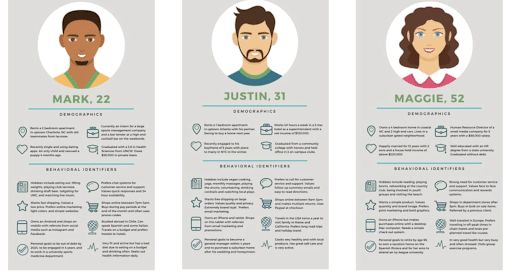
What is audience data without using it to help understand your target audiences better? The best use of all of this audience data that you’re collecting is to create data-driven audience personas. These personas will help your entire company – from your paid ads department to your copywriting team – understand who it is that you want to target.
Since these personas derive from actual audience data, you can rest assured that your marketing team is targeting the correct audience – people that will buy your product or service and engage with your content. Because what is the point of creating incredible content if the wrong people are reading it?
The latest stats reveal the importance of using audience personas and first-party information: 36% of organizations using buyer personas saw shorter sales cycles, while 24% generated more leads and 56% generated higher-quality leads.
Personas will act as the bridge between your raw 1st-party data and successfully executed marketing campaigns.
First-Party Data FAQs
Next, we’ll answer the most common questions we receive about first-party data.
1. What Is First-Party Data?
First party information is data that comes directly from your audiences, typically with explicit consent by completing certain forms. This data could help you target various audience segments and personalize experiences without reliance on third-party cookies.
2. How is zero-party data different from first-party data?
Here is the basic difference between zero-party data vs. first-party data: While first-party information collects data that audiences provide directly, zero-party data applies to data that websites and apps collect automatically, such as page sessions, views, clicks, and other metrics.
3. How do I build first-party data audiences?
You can use multiple data sources like websites, apps, social media, and analytics tools to get a complete picture of your audiences based on this type of data, which could then influence your marketing strategies.
4. How do I maintain privacy while maximizing audience value?
Complying with GDPR, CCPA, and other privacy regulations and guidelines is crucial, which you can achieve using solutions like compliance management platforms (CMPs), data clean rooms that enable secure data sharing, and consent flows, all while providing you with valuable data for marketing.
5. What tools help activate first-party audiences to ad platforms?
Customer data platforms (CDPs), ad platforms like Google’s Customer Match, and data management platforms (DMPs) can all help you collect, segment, and centralize 1st-party data to help you get the most from it.
Harness the Power of First-Party Data With Ignite Visibility
Want to successfully implement a first party data marketing strategy? Ignite Visibility can help with a comprehensive solution that works for you. From search engine optimization to email marketing, we’ll develop a strategy using this critical data.
With the help of our experts, you can:
- Use tools like Google Analytics to collect valuable behavioral data
- Collect transactional data from your website and other platforms
- Use a CRM platform to gather relational data
- Use the data collected to segment audiences
- Personalize your marketing materials using segmented data
- And more!
Reach out to us today to learn more about what we can do for your marketing efforts with first-party and other data.