

If you want your emails to connect with your target audience, you need compelling email subject lines. These elements are essential for getting people to open your emails and engage with their contents and, ultimately, your brand.In this blog post, Joel Staniszewski, Lifecycle & Email Marketing Strategist, will look into what makes the perfect email subject line and some tips for crafting effective email subject lines that convert.
What We’ll Cover:
- Subject lines by the numbers
- What Makes an Email Subject Line “Good?”
- Email subject line best practices
- Email subject lines that work
- Common Mistakes and Deliverability Pitfalls
- FAQs
Email Subject Lines By the Numbers
Before we get into the best subject lines for emails and email subject line best practices, let’s first take a look at the importance of subject lines to your email marketing strategy through the lens of numerical data:
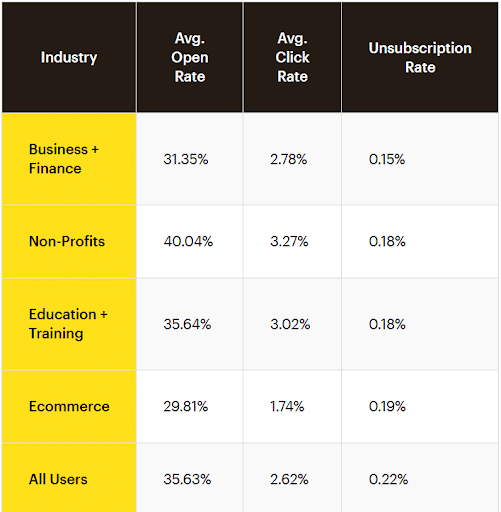
- According to Mailchimp, the average open rate for emails is 35.63%
- The average click-through rate is 2.62%.
- 33% of email recipients claim that they only open emails that have catchy subject lines.
- 69% of people will report an email as spam based solely on the subject line.
- Companies that incorporate emojis into their email subject lines have a higher open rate of as much as 56% over companies who don’t.
- Brands that use interactive content in their email subject lines yield a 70% higher conversion rate versus 36% of those who use static content.
- Email subject lines using the word “alert” are opened 61.8% more often.
- Email subject lines with the word “tomorrow” are opened 10% more often.
- Your email is 10% more likely to be opened if your subject line includes the word “free.”
- Personalizing email subject lines can lead to open rates as high as 50%.
It is also worth mentioning that the implementation of Apple’s privacy rules, particularly Mail Privacy Protection, has significantly impacted the accuracy of email open rates.
With users having the option to block email tracking pixels, open rates may no longer provide a precise measure of actual opens. This devaluation emphasizes the importance of shifting focus towards more reliable metrics, such as Click-through rates (CTR) and Click-to-open rates (CTOR).
Users have prioritized privacy, and we must adapt to these alternative metrics for campaign success.
Say your brand notices a decline in open rates but a consistent rise in CTOR. By analyzing these metrics together, you discover that while fewer recipients are opening emails, those who did were highly engaged. This knowledge enables you to refine your targeting strategy and increase conversion rates.
My Expert Opinion on Email Subject Lines
To stand apart from competitors in people’s inboxes, you should focus on a combination of personalization and testing to develop strong email subject lines. In addition, make sure your emails and email headings are mobile-responsive to avoid mobile truncation on smartphones and tablets.
Good subject lines for cold emails, newsletters, and other campaigns must also be relevant and well-targeted to mitigate the risk of users reporting emails as spam.
A/B testing is key here, as you can use it to test two different versions of sales email subject lines to determine which option works best.

What Makes an Email Subject Line “Good?”
There are several key factors that go into good subject lines for cold emails, re-engagement, promotion, and other types of emails.
Some email best practices for subject lines include:
- Relevance: All of your email titles and their corresponding content must be highly relevant to the recipient’s interests and needs, which is why you should target emails effectively to reach the right people at the right time.
- Value: When crafting effective email subject lines, you should also consider the specific value you bring to your recipients. A unique value proposition (e.g., “Get 50% Off!” or “Stop Wasting Time and Money on Solutions That Don’t Work”) can help differentiate you from the many competitors who appear to be offering the same thing.
- Curiosity: When appropriate, inspire curiosity with your subject line to entice people to click through to your email. Something like “Here’s a Surprise for You, [Name]” can use personalization to grab attention and encourage people to investigate.
- Clarity: Although you don’t want to give away everything in your email title, you shouldn’t be too vague, either. Good sales email subject lines will be clear about what offer is behind them while inspiring curiosity to learn more.
- Deliverability: People within your contact lists should be actively subscribed to you, and you should ensure your emails comply with the CAN-SPAM Act and other regulations to maintain deliverability.
Email Subject Line Best Practices
There are seemingly infinite schools of thought when it comes to creating slam dunk subject lines. But, when implemented correctly, they can take your email marketing strategy to the next level.
Let’s review these email subject line best practices:
Keep your Target Audience Top of Mind
The most important thing to be aware of when you’re drafting an email subject line is knowing who your audience is and what action you want them to take next.
Is the outcome a sale? Are you offering a promotion? Or is this a re-engagement campaign where you want to reach out to your subscribers who have lost interest? Your final goal will determine the course of your subject line strategy. Be clear about what your email is trying to achieve from the get-go and why subscribers should care.
Understanding the goal of the email will make the process of writing the subject line much more straightforward.
Personalize, Personalize, Personalize
No two subscribers are the same, which means the emails you send them shouldn’t be either.
Marketers have never had so much subscriber information at their fingertips. They can easily learn about their preferences, jobs, or general likes and dislikes. So, when you plan on sending an email, cater it to the individual.
The good news is that personalizing your email subject line can be broken down into various categories, including first names, birthdays and anniversaries, transaction history, and location.

Avoid Long Email Titles
Your email subject lines should be long enough to convey the information you need to convey, but without risking mobile truncation, i.e., getting cut off on mobile devices.
Keep your email headings at around 30 to 40 characters, putting the most important words first within your emails. Also, make sure the content of the actual email is mobile-optimized to allow for easy reading across devices.
You can use responsive design and a mobile email subject line tester to give you a preview of how your emails will look on mobile screens.
Avoid Long Email Titles
Your email subject lines should be long enough to convey the information you need to convey, but without risking mobile truncation, i.e., getting cut off on mobile devices.
Keep your email headings at around 30 to 40 characters, putting the most important words first within your emails. Also, make sure the content of the actual email is mobile-optimized to allow for easy reading across devices.
You can use responsive design and a mobile email subject line tester to give you a preview of how your emails will look on mobile screens.
Tell Them What’s Inside
Your email subject line is a teaser meant to entice your audience to act.
Take the opportunity to share something of value with them. This may be your new e-book or limited-time discount promotion. Let your audience know that by taking the time to open your email, there’s something valuable waiting for them inside.
This far outperforms email subject lines that simply say “thank you,” because it makes it clear that there’s a tangible benefit that they won’t want to miss out on.
Under-Promise and Over-Deliver
Think of your email subject line as a promise you’re making to your reader. You are letting them know what they can expect in your message, and it’s crucial that you deliver.
These days, people receive a staggering number of emails per day. To boost your chances of getting them opened, avoid making false promises.
Deceiving your subscribers is no way to earn goodwill. Not only will this displease your audience to no end but they’ll learn not to trust your subject lines in the future.
Urgency
Think of a subject line that will help get your recipients to do something. They must feel the pressure to take immediate action. You can do this by depicting that the event or sale is time-sensitive.
Think of the classic 90s infomercials that urged viewers to “Act Now!” While we wouldn’t recommend you use that exact language in your content, communicating urgency and scarcity in an email subject line can help compel readers to click, especially when phrased strategically.
Subject lines like “5 Hours Left to Save Big” or “Act Fast and Save 15%” will make your audience feel like time is running out. Try to use these subject lines sparingly to avoid coming off as “the brand that cried wolf.”
Curiosity
Much of the time, the best email subject lines work because they make readers feel that they will benefit from the message inside.
Other times, it’s perfectly acceptable to maintain some sense of mystery, mainly if it pique’s the recipient’s natural curiosity and interest. Readers will be compelled to open the email to get more information, resulting in higher open rates.
But, always make sure the subject line remains consistent with your brand. If you go too obscure, it could end up making its way into their spam folder. Instead, you must work to strike the delicate balance between enigmatic and relevant.
Be Relevant and Timely
Ultimately, no matter how intriguing or creative, a subject line cannot influence recipients if it’s not relevant or timely.
Much of the time, when we subscribe to an email list, it’s because we want information or to learn more about a given topic.
Similar to appealing to your audience’s interest, crafting email subject lines that feature trending topics or timely headlines can help you position your brand as more credible within your industry.
Be sure to pay close attention to the sending schedule. For instance, you could send something like “Top 10 Rooftop Bars to Visit Tonight.” In this case, you’d want to send this out on a Friday or Saturday morning, because that’s when most people are making weekend plans.
Incorporate Emojis to Build a Connection
Emojis can be a good supplement to text if you want to add some emotion or visual appeal to an email subject line to make it pop.
Adding an emoji here or there can make your emails feel more human, but be careful not to overdo it. Too many emojis in an email title might come across as you simply trying to get attention without adding any real value; instead, strike a balance between visual appeal and value-driven text to connect with recipients.
Avoiding Spam Signals
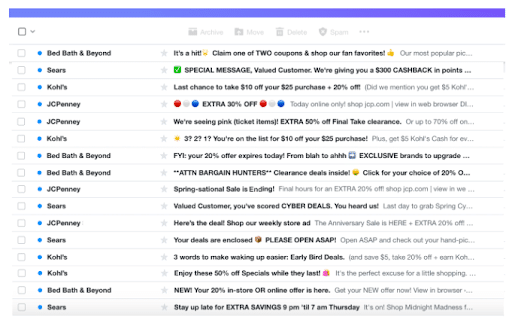
If you want to ensure your email doesn’t end up in the recipient’s spam folder, avoid using generic, confusing, misleading, or over-the-top email subject lines.
The highest-performing subject lines are often short, informative, and to the point. It should set the expectation for the reader and explain what’s in the email.
Subject lines will typically get cut off if they’re too long, particularly when viewing them on mobile devices. And, since the majority of email opens are taking place on mobile, we recommend using subject lines with 50 characters or less to ensure the users scanning your emails will read the entire subject.
This same rule applies to regular emails.
Don’t waste your time adding the word “update” or “newsletter” in the subject line. Recent studies have even suggested that these words can decrease the message’s open rate, since it informs readers the email is associated with a series, and therefore, they can keep an eye out for the next one.
Pairing With Preheaders
Email headings can also implement preheaders that elaborate on the email content without requiring the recipient to click. They can be a great way to add more information while still inspiring curiosity.
For example, sales email subject lines might promote something like “Get 20% Off for a Limited Time!” with a preheader detailing “Get [Product], [Product], and other items available with this great deal.”
A/B Testing Email Subject Lines
As mentioned, A/B split testing is one of the best ways to determine which email subject line works best for every campaign.
In A/B testing, you would test one variable in two different versions to see which drives the most engagement among a test audience. For instance, you might run one subject line with emojis and one without, or one might offer a specific deal while another is more vaguely promotional.
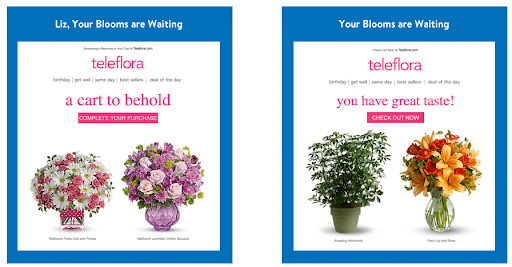
When selecting a sample size for your A/B test, try to shoot for up to 10,000 or more if possible. Certain A/B testing calculators available can also help you gauge what sample size will be sufficient to provide you with meaningful results.
In addition to a good sample size, you should run your test long enough to get significant results. This could range from around 24 to 48 hours to measure various user behaviors, but some testing campaigns might last for several weeks, particularly if your sample size is smaller and you need more conclusive evidence that changes influence behavior.
Be sure to document learnings, which could influence future efforts across campaigns. For example, you may discover that your audience tends to respond more favorably to emojis and personalization than more broadly targeted, formal email messaging.
Once you determine what works, you can then roll out the winning subject line.
Email Subject Lines That Work
A creative and engaging email is one of the most powerful marketing tools at your disposal.
To help you get the most out of them and win your readers over with your next email marketing campaign, we’ve compiled a list of some of the best email subject lines and why they work:
Welcome
“Welcoming You with a Sweet Treat Inside” – LuckyBrand
Why it Works: LuckyBrand’s welcome email goes beyond the conventional greeting, encouraging recipients to open the email with a special treat, or in their case, a discount code.
“Ready to Meditate?” – Headspace
Why it Works: This email takes a refreshing approach to the standard welcome email by diving right into the purpose of the app.
Promo
“go the $#@^ to sleep” – Margo (See?)
Why it Works: While this type of humor won’t land for every audience, if your brand is known for being a bit more casual, a little shock value may get you the open rates you’re looking for.
“You definitely don’t have these yet (and they’re 30% off)” – J. Crew Factory
Why it Works: This example induces the feeling of FOMO (fear or missing out) from J. Crew leaves readers asking, “What am I missing?” Here, J.Crew Factory combines both a sense of curiosity with a hefty discount incentive to fuel open rates.
“TIME’S ALMOST UP: Final hours for 30-50% off EVERYTHING” – EXPRESS
Why it Works: EXPRESS takes a more aggressive, yet targeted approach to create urgency by specifying just how much time remains, and uses all-caps to emphasize the message.
“STOCK UP! 20% off all your favorites” – Ulta Beauty
Why it Works: Ulta Beauty uses the first bit of real estate in the subject line to draw the eye to the words “STOCK UP!” and playfully shows just how good this deal is.
“$15 to get over the hump” – Postmates
Why it Works: Postmates made a great choice to place the deal first in the subject line, so that recipients can immediately see that they’ll be getting a $15 voucher on their Wednesday order.
“You’ve scored 15% off (but it won’t last)” – Society6
Why it Works: This is an excellent example of creating urgency without relying on exclamation points, all-caps, or the words “today” or “now.”
Abandoned Cart
“You left this behind…” – Rent the Runway
Why it Works: This subject line may be used often, but that doesn’t take away from its effectiveness. Engaging abandoned cart emails like Rent the Runway’s can help get a prospect’s shopping addiction back on track.
Re-Engagement
“Now is not the time, Ramona” – Laura Belgray
Why it Works: When users casually scroll through their emails, seeing their first name makes the message feel like it was created specifically for them. It feels more thoughtful and personal.
“Wild Places. Wilder Women.” – REI
Why it Works: REI most likely segmented their contact list to send this targeted email only to their female contacts. Even this minimal kind of personalization helps engage contacts and boost your email open rate.
“Vacation Mode: On” – Efficacy Clothing Company
Why it Works: This small clothing company quickly engages recipients by launching this email campaign in the beginning of summer and hitting the vacation vibes their contacts are feeling.
“Your home awaits: Romantic Apartment -near Acropolis” – Airbnb
Why it Works: This is a unique take on a simple reminder email. Instead of simply saying “Don’t forget about this home you bookmarked,” Airbnb puts an idealistic, personalized twist on the update.
“Find This Year’s Goal” – Peloton
Why it Works: Knowing that people tend to let their workout habits slip during the holidays, Peloton offers to help their subscribers get back on track in the new year.
“Goodbyes are Hard…” – Framebridge
Why it Works: This bittersweet subject line gets to the point using just three words, attempting to win back some of their subscribers and purge their email list of subscribers who are no longer interested.
“You’re missing out on points.” – JetBlue
Why it Works: JetBlue makes a matter-of-fact statement, while capitalizing on the psychological principle that is virtually impossible to resist is the fear of missing out.
Newsletter
“Why guys never ask for directions..” – Chandler Bolt
Why it Works: In so few words, this example from Chandler Bolt introduces the first part of an interesting story. He indirectly informs subscribers that by clicking on the email, they’ll find out the reason behind the age-old question “why guys never ask for directions.”
“Why I’ll Live in These Boots Till I Die.” – Thursday Boot Company
Why it Works: This emphatic statement is made even more potent by the fact that when opened, recipients found out these words pulled directly from a customer’s review.
“A good pizza advice” – Clark from InVision
Why it Works: Who doesn’t love puns? The subject line undoubtedly makes readers curious enough to open to find out the connection between pizza and design.
Transactional
“Your beauty issues, solved” – Sephora
Why it Works: Who doesn’t want to solve their beauty issues? Without getting into specifics, Sephora outlines an obvious benefit to opening their email.
“Just A Thank You Note (And A 30% Off Coupon)” – MacPaw
Why it Works: Thanking your customers is always a great way to show your appreciation. But, a thank you gift to go along with it worked wonders for MacPaw’s open rates.
“Stop wasting money on ink” – HP
Why it Works: HP understands its buyer persona and uses this subject line to address those pain points and urge its subscribers to open their emails by offering a solution.
Event/Webinar
“[Last Call] Zoom Webinar Basics” – Zoom
Why it Works: Zoom gets a little meta here with its webinar covering the basics of hosting a webinar. Creating a sense of urgency, Zoom promotes its event with simple messaging and a convenient button to encourage people to get on their guest list.
“Mark your calendar” – Litmus
Why it Works: Litmus promotes its Litmus Live event with a simple, instructive subject line that gets people excited to attend, enticing recipients to “Save the date” at specific locations.
B2B Sales
“Work friends” – Inc.
Why it Works: While it hardly seems like much effort was put into this strategy, Inc. did a fantastic job keeping its subject line brief, while still making it vague enough to urge the recipient to click through to get the full message.
“How to choose the PERFECT book title” – Chandler Bolt
Why it Works: Not only does this email subject line provide a clear benefit right off the bat, but it takes all the guesswork out of figuring out what recipients can gain from opening it.
“Become a content master” – ON24
Why it Works: ON24 taps into the desires of readers who want to become the best content marketers possible with this simple, yet effective subject line.
Common Mistakes and Deliverability Pitfalls
Here are some of the most common mistakes that marketers make with their email subject lines:
- Misleading Clickbait: “This One Trick Will Change Your Life!” and other forms of clickbait often simply disappoint recipients, especially if the content doesn’t actually reflect that eye-catching subject line.
- All Caps & Excess Punctuation: In an attempt to stand out, many marketers might go heavy with ALL CAPS and abundant exclamation points, but these efforts tend to come off as misleading and, at worst, purely spammy.
- Spammy Phrasing Clusters: Another aspect that can be spammy is phrasing, like “Act Now!” mixed with “100% Free!” or other exaggerated guarantees, all of which you should avoid in favor of offering real, tangible value to recipients.
- Vague Subjects: While you want to leave a little mystery to your emails beyond the subject line, you don’t want to be too vague, as this can also come across as misleading or simply confusing to your audiences.
- Over-Personalization Creepiness: Some emails call for personalization, such as addressing recipients by name, but don’t get too granular with the personal details; revealing a recipient’s specific abandoned cart segment or other sensitive information can feel too intrusive.
- Failing to Match Body Content: Your subject lines should always align with the underlying email content. Otherwise, you might draw a high open rate with minimal clicks and conversions afterward, and people might be more inclined to unsubscribe if they keep opening your emails to find irrelevant content.
- Ignoring Segmentation: Always segment audiences in your email marketing strategy, as doing so can help you determine how specific audiences respond to various messaging and offers. Persona-based marketing can help with segmentation efforts.
FAQs
1. What are the best email subject lines?
Various email subject line best practices go into the most effective subject lines, such as:
- Personalization when appropriate
- Clarity of the offer
- Matching content with subject lines
- Mobile optimization
- Inspiring curiosity
2. What makes a good email subject line?
Good subject lines for cold emails and other campaigns need to offer real value to recipients, with clear messaging that doesn’t mislead recipients. Additionally, good subject lines are highly relevant to target audiences and optimize deliverability by avoiding spammy tactics.
3. What is the best length for an email subject line?
Ideally, subject lines for emails should be around 30 to 35 or 40 characters, but they should never exceed 50 unless you are unable to fit your messaging within that limit. An email subject line generator can help you keep your titles to the right length.
4. How do you A/B test email subject lines?
You can conduct an A/B test of your subject lines by running two versions of your emails with a single element changed, such as the use of emojis, personalization, or different phrasing. You can then run this test among a sufficient sample and measure the results to identify the winning subject line.
5. Should you use emojis in email subject lines?
In some cases, emojis can enhance your subject lines and result in more engagement among audiences, especially if you want to evoke a certain emotional response and make your emails less formal.
Improve Your Email Open Rates With Ignite Visibility
Higher email open rates don’t happen by accident, they’re driven by data, strategy, and a deep understanding of what motivates your audience to click.
From subject line testing to audience segmentation and send-time optimization, every element of your email strategy should be informed by performance insights, not guesswork.
Our team of digital marketing experts is ready to analyze your email data, identify patterns, and help you build a strategy that:
- Creates attention-grabbing subject lines
- Aligns messaging with audience intent
- Improves engagement and open rates
- Drives more clicks and conversions
Interested in learning how to make your emails impossible to ignore?
Contact us today to get started.

