

When trying to develop the perfect digital experience for your customers, user interface designers play a critical role. These professionals have the expertise and skills needed to help craft digital products that truly work and impress users.
Here, Oscar Lutteroth, Chief Creative Officer, will answer the following questions: What is a UI designer? What skills should UI designers possess? How do I find the right user interface artist?
Let’s dive in.
What You’ll Learn:
- Understanding the Role of a User Interface Designer or User Interface Artist
- User Research and Persona Development
- Branding and Visual Consistency
- Proficiency With Design Tools
- Collaboration and Communication Skills
- Continuous Learning and Adaptability
- Evaluating UI Designer Candidates
My Expert Opinion on User Interface Designers

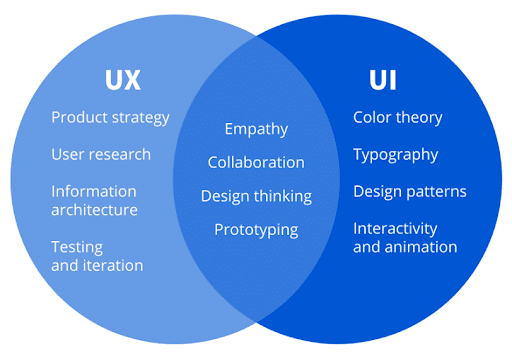
To start off, it’s important to distinguish user interface designers from the concept of the user experience (UX). Many people tend to use both user interface (UI) and UX interchangeably, but the fact is that UI is an integral component of the user experience.
UI determines how people interact with a digital product, including its look and feel and the ability for people to effectively engage with it. UI is, subsequently, its own branch and profession, requiring unique skillsets that UX designers might not have.
For instance, while UX designers could have a diverse background in computer science, design, and psychology, UI designers focus more on the design side of things; they know what people are looking for when it comes to the aesthetics of the user experience.
Now, let’s get a little more into the interface designer job description and the kinds of skills a UI designer should have.
Understanding the Role of a User Interface Designer or User Interface Artist
a professional who focuses on the visual elements and interactive components of digital products like websites, apps, and software.
So, what is a UI designer? Typically, the user interface designer job description focuses on the digital elements – both visual and interactive – of digital websites, apps and software. While a UX designer might be able to develop a user experience for many types of products and services extending beyond the digital realm, a user interface artist is responsible for creating websites and apps that users find both appealing and easy to use.
Some of the specific UI designer job requirements include:
- Selecting the right visual design components for sites and apps, including fonts and colors
- Determining the ideal web page layouts
- Creating buttons, scrollers, menus, icons, toggles, and text fields, among other interactive elements, for an app or website
- Detailing how the final product will look via layouts and wireframes
- Collaborating with web development teams to successfully launch the end product
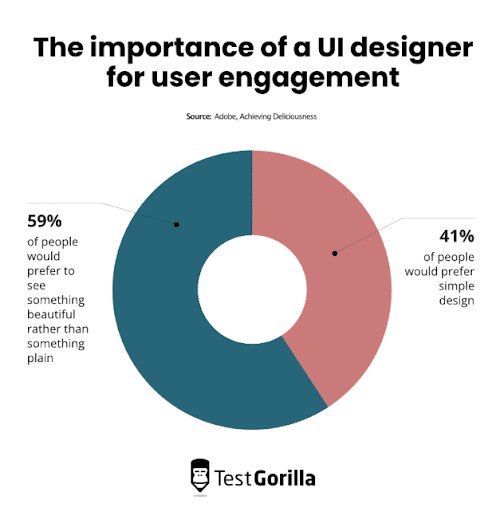
Ultimately, UI designers are essential in helping connect with users, as recent statistics show:
User Research and Persona Development
Before getting to work on developing a user interface, skilled user interface designers will lean into user behavior insights to inform their efforts.
As they learn more about the audiences they’re targeting, they will conduct a combination of qualitative and quantitative research. For example, qualitative research would involve learning more about the user’s motivations and behaviors through usability testing and observing users interacting with a UI, followed by gathering feedback through user surveys that describe their experience.
Meanwhile, qualitative research could entail measuring behaviors and identifying patterns, with analytics tools that help gauge page session duration and other critical metrics.
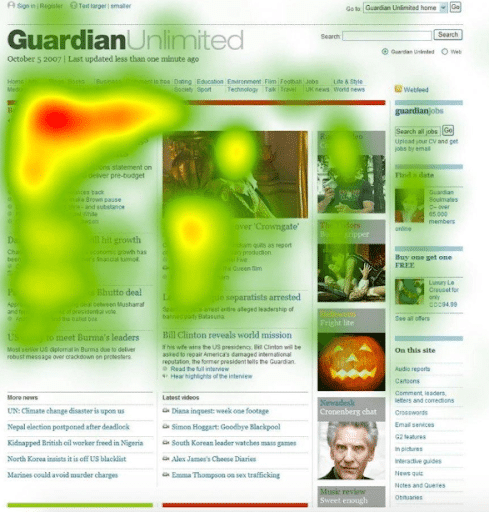
Heatmaps are a very helpful tool here, indicating which parts of an interface see the most activity from users based on interest.
Following this blend of qualitative and quantitative research, the user interface artist could develop audience personas that segment users into different groups. Subsequently, it’s possible to personalize the digital experience for each segment.
Branding and Visual Consistency
A major component of any UI is brand consistency, which helps establish a coherent, clear brand identity that resonates with users.
Among the various UI designer job requirements is maintaining a consistent visual identity that builds recognition and trust. Doing so could involve maintaining specific colors, typography, spacing, animations, and imagery that align with a brand’s unique aesthetics, voice, and messaging.
In establishing consistent visual branding, user interface designers will often use certain design systems, such as Google’s open-source tool, Material Design. This tool, which now uses the latest version of Material 3, makes it easy for UI designers to implement many UI components on websites, along with Android and Flutter interfaces.
Proficiency With Design Tools
Crucial skills for UX and UI designers also include the ability to work with different types of design tools, with a deep understanding of how to effectively utilize them to complete a range of projects.
For example, UI designers might have proficiency in:
- Figma: A cloud-based UI and UX design tool that allows for prototyping with design systems and real-time collaboration.
- InVision: This solution helps streamline design workflows and also allows for collaboration and prototyping, with integrations into different design tools like Adobe XD and Photoshop.
- Zeplin: An effective design handoff tool that makes it easy for designers to share finalized designs with developers for good communication between teams.
- Notion: An AI-powered productivity tool that can organize docs, tasks, notes, and databases on a centralized platform.
Skilled designers can also use cross-functionality to get the most from all of the tools in their kit. In addition, these tools should make it easy for designers to hand off designs to developers and other decision-makers to foster collaboration.
Collaboration and Communication Skills
Another sign of a good user interface artist is the ability to closely collaborate and communicate with everyone involved in a project, from devs and product managers to marketing teams.
When finalizing designs, UI designers will typically share progress and versions with developers and others for approval, modifications, and implementation. Often, marketing teams may also guide designers on how to put together the ideal interface based on talking points, the customer journey, and other marketing elements.
As an example, a designer might request input from a marketing team on the page layout, with call-to-action (CTA) buttons placed periodically throughout a page to move people down the sales funnel. Once the designer completes a version of the page, they can then use a tool like Zeplin to hand off the design to a developer, who might then request adjustments before implementing the design on the designated website.
Continuous Learning and Adaptability
UI designer job requirements also include continuous learning and the ability to adapt to different tools, depending on each project’s specific needs and the latest tech.
A great user interface designer will be naturally curious and follow the latest industry and design trends, with a good understanding of what users want to see and experience across platforms.
In addition, they will be able and willing to learn new tools as they develop and adapt their skills to different platforms. For instance, a UI designer should be able to transition from Sketch to Figma, converting Sketch symbols into Figma components through importing.
Evaluating UI Designer Candidates
When seeking the right designer, there are some red flags to watch for in user interface design career portfolios.
Some signs of an unreliable or inexperienced user interface artist could include:
- Prioritizing Aesthetics: Although aesthetics are an essential component of UI, usability is equally important. In addition to looking good, an app, website, or another digital experience should be easy to interact with and navigate, keeping users engaged and moving along the customer journey.
- Insufficient Research: UI designers must be willing to do qualitative and quantitative research into users, assessing behaviors, and collecting meaningful data that informs designs. Failure to do this research could lead to a design that simply doesn’t connect with its intended users.
- Inconsistent Design Elements: In a portfolio, you should see some consistent themes and a cohesive visual style in samples. Otherwise, inconsistency could indicate that a designer might struggle with maintaining a brand identity across designs.
- Overcomplicating Designs: Designers should know how to balance engagement with usability without overwhelming the user. Overly flashy and busy designs could hurt rather than help the user experience.
When vetting user interface designers, one test task you could try involves a redesign of a specific interaction or screen. Here, you would provide the designer with a screenshot of a current screen from your product or an example product, requesting the designer to optimize it for improved aesthetics, usability, or clarity.
If the designer demonstrates an understanding of what works in the final design, this is a good indicator that you’ve found the right professional.
When assessing a user interface design career portfolio, you can also look for certain items that help it stand out. For example, a designer could include multiple case studies and the narratives behind their designs, along with an emphasis on UI expertise and skills rather than broader UX experience.
Work With Expert User Interface Designers at Ignite Visibility
Trying to find the best UI designer for your next project? It helps to work with marketing managers who know what UI and UX entail for a complete and cohesive solution. At Ignite Visibility, we have multiple UI design experts behind our company, with the ability to provide many supplemental services to get the most from your designs, including creative design and content marketing.
Here’s just a taste of what you’ll get when you work with us:
In-depth audience research and persona development
Comprehensive UI design that fits in with the overall UX
Ongoing measurement and optimization
Implementations to boost your product’s performance, including content development and search engine optimization
Like this idea? Connect with us today to speak with our design experts.
