

With the help of social listening tools, brands can keep track of all brand mentions on social media, identify and take cues from competitors, gauge audience sentiment, and gain clear, actionable insights to help them optimize their marketing strategies.
In this blog, Katya Manoukian, Social Media Manager, will review the top 10 social media listening tools and how you can use them to supercharge your marketing.
What We’ll Cover:
- What Is Social Listening?
- Why It Matters for Digital Marketing
- How to Use Social Listening in 2026
- Key Features to Evaluate in Listening Tools
- How to Choose the Right Tool
- The 10 Best Social Media Listening Tools
- Common Mistakes When Setting Up Listening
- Social Listening Tool FAQs
My Expert Opinion on Social Listening Tools
Using the right social listening tool, you’ll get a full picture of how people see your brand on social media platforms.
More specifically, the best social listening tools can:
- See what people are saying about your brand based on mentions
- Determine what channels are mentioning your brands
- Provide you with key metrics and insights to help you measure campaign success
However, with so many options out there, it can be difficult to find the best social media listening tool based on your needs. There are some features to consider, and you need a solution that can provide you with meaningful insights that help you optimize your marketing.
What Is Social Listening, and What Are Social Media Listening Tools?
Social listening involves monitoring and analyzing social media content to determine how an audience perceives a brand, identify competitor strategies, and learn about trending interests that could inform your marketing.
To conduct social listening, you can use various social listening tools that crawl social media sites, forums, blogs, and other sites, compiling data to gauge sentiment and provide metrics and insights that can help you develop a solid campaign.
Why It Matters for Digital Marketing
Social media listening is important for businesses to understand how their target audiences feel about them and their offerings. The right social media listening tools can give you the data you need to optimize your social media strategy and other marketing efforts.
Some of the main benefits of using a reliable social listening tool include:
- Campaign analysis providing feedback on how marketing might connect (or fail to connect) with audiences
- Competitor analysis to inform you of what competitor strategies work and can inform your own
- Industry trend monitoring to determine what industry topics to focus on with your marketing
- Brand mentions to gauge people’s overall sentiment, which could influence your offline and digital PR efforts
The key is to find the best social listening tools based on your unique needs.
How to Use Social Listening in 2026
Social listening is only going to continue to grow in popularity among marketers, as the tools get better and better, and brands look to stand out from all the noise in their industries.
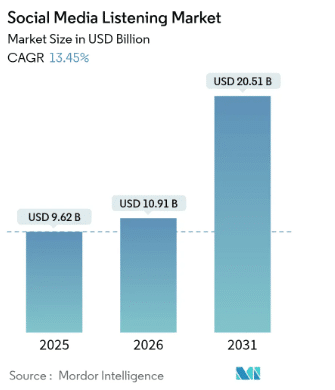
In fact, according to recent data from Mordor Intelligence, the social media listening market is expected to grow to $10.91 billion this year, up by more than $1 billion in 2025.
If you want to get ahead with social listening in 2026, here are some strategies to implement:
Define Your Goals and KPIs
The first step to take is to define your campaign’s specific goals and social performance indicators (KPIs) to guide your strategy.
For example, you might want to increase brand mentions, in which case your corresponding KPIs would be mentions and engagement. In other cases, your goal may be to increase sales via influencers or improve audience sentiment.
You can then connect your goals to specific business decisions to put your insights into action.
Go Where Your Audience Is
Don’t simply listen to the social media platforms your business uses; look everywhere your audience spends its time. In doing so, you might track audiences and mentions on social channels like Facebook and LinkedIn, along with blogs, forums, and news sites where people might talk about you or your industry.
Build a Keyword Map
Knowing how to pick specific keywords can help you focus your listening on certain areas. For example, you might focus on your brand name, product names, and other brand entities for some keywords.
Meanwhile, category terms related to your industry could help identify trending topics to target. Other keywords could relate to discussed problems and solutions, potentially helping you spot any content gaps you might be able to fill.
Structure Your Data to Help Identify Trends
Develop a clear taxonomy to organize all of your data for better comprehension. For instance, you might organize data based on:
- Theme such as pricing or quality of products
- Sentiment, e.g., positive, neutral, or negative
- Intent, e.g., transactional, informational, advocating
Set Alerts
Be sure to set up automatic alerts and notifications to keep you aware of any mentions and other critical data updates. Taking this step will keep you on top of your listening practices.
Monitor Competitors
Don’t simply monitor your own brand’s mentions and reputation; instead, look into your competitors as well. You could discover that people talk positively about a brand because of a perceived benefit you might want to advertise, for instance. Meanwhile, other competitors might be taking an approach to an industry trend that you could integrate into your own strategy.
Incorporate Insights into Influencer Strategies
Your insights should also inform your influencer marketing strategy, identifying influencers who cover the themes in your industry and can advocate for your brand.
Establish a Strong Governance Model
Determine who in your organization is responsible for social listening and implementing your tools to assess and organize all data. Governance should also cover how the data integrates into a comprehensive digital marketing strategy.
Key Features to Evaluate in Listening Tools
To help you find the perfect social media listening tools, here are some features to look for:
Sentiment Analysis
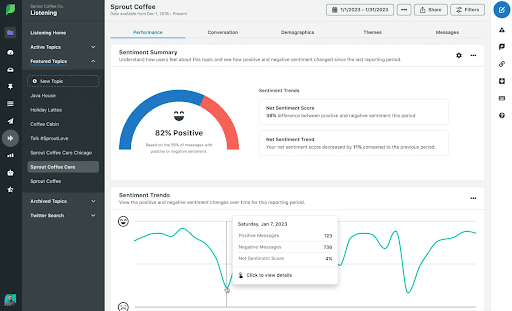
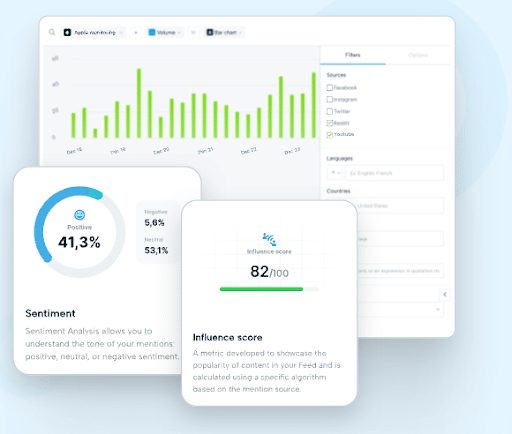
The best social media listening tools will include sentiment analysis to help gauge how people feel about your brand and offerings. Typically, sentiment ranges from positive to neutral to negative, with many tools giving you a specific percentage to help measure sentiment.
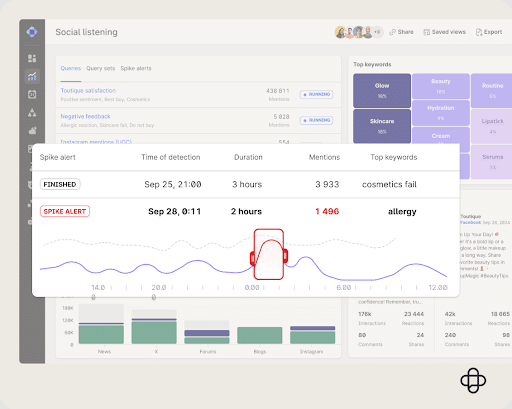
Real-Time Alerts
Another key feature to look for is real-time alerts that update you when people mention your brand, interests begin trending, competitor mentions occur, brand sentiment changes, and other situations. This will keep you in the know to pivot proactively as needed.
Boolean Search
Good social listening tools will also feature boolean search to help you find certain meaningful keywords more easily. It allows you to use operators like “and” and “or” and quotations to find the most relevant sentiment, mentions, and trends.
For example, you might want to see how brand mentions indicate whether people use the terms “love OR hate OR awful” to describe their experience.
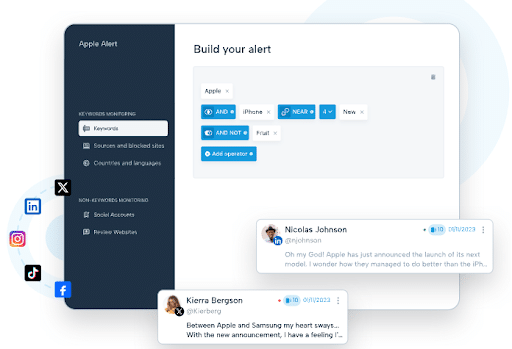
Image Recognition
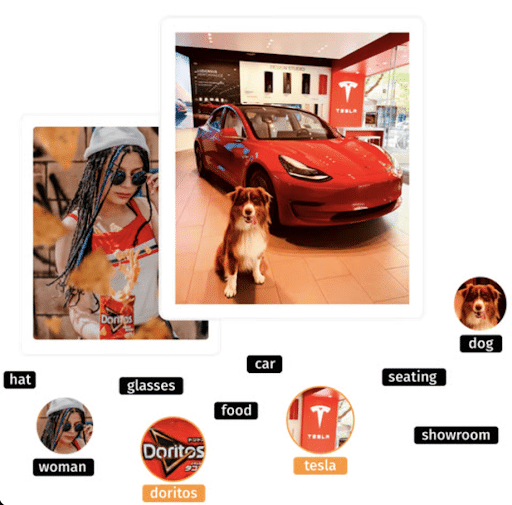
Even if your brand isn’t mentioned in text, you can identify image mentions with AI-powered image recognition solutions. This feature can identify brand logos, products, and other elements connected to your brand, which can provide you with even more insights.
How to Choose the Right Tool
To help you nail down the perfect social media listening platforms, here is a decision framework to guide you:
1. Determine What You Want to Achieve
To point you in the right direction, first consider what it is you want to achieve with your social listening tool. The best social media listening platforms will equip you with a solution that realizes your vision, whether you want to increase positive brand mentions, boost sales, or achieve other goals with your social campaigns.
2. Consider Your Budget
Additionally, consider any budgetary constraints that might affect your buying decision. Keep in mind that the right solution will help you maximize ROI and profits in the long run, potentially making even seemingly steep investments worth it.
3. Look for a Solution That Offers the Tools You Need
With your budget in mind, try to pick a solution that comes with only the features you absolutely need. Do you think you need a more bare-bones tool with a few critical features, or do you believe you’ll need a more comprehensive solution that can scale with your campaigns?
4. Think About Platform Coverage
You must also implement listening tools that cover all of the relevant platforms in your industry. You might need to focus more on social media platforms exclusively, or you could expand your coverage to blogs, forums, and other industry-related sites where people are likely to discuss your brand and certain industry topics.
5. Gauge Sentiment Accuracy
Consider the accuracy of sentiment measurement based on reviews. The right tools will paint a clear picture of how people perceive your brand and offerings, giving you the data you need to develop a more effective strategy.
The 10 Best Social Media Listening Tools
The following is a breakdown of some of the best social media listening platforms available:
| Tool | Best for | Pricing | Platforms Covered | Reporting | Cons |
| Rallio | AI-powered social media management and listening | $325/month management fee and $70/month ad spend | Facebook, Instagram, LinkedIn, X, TikTok | In-depth reporting capabilities for multi-location brands, franchises, and small-to-medium businesses |
|
| Brandwatch | Enterprise consumer research and deep data analysis | Custom (Est. $800 to $3,000/month) | Over 100 million sources, including social sites, blogs, and news sites | AI-powered sentiment and historical trends |
|
| Meltwater | PR, media monitoring, and communications | Custom (Est. $6,000 to $15,000/year) | Global news and social, along with offline TV and radio | Unified earned, owned, and social reporting |
|
| Talkwalker | Global enterprise and visual listening with image recognition | Custom pricing | Over 30 networks and 150 million websites | Real-time AI and image recognition reports |
|
| Sprout Social | Comprehensive social media management | Begins at $199 per user per month | 9 sources, including all major social media platforms and Reddit | Intuitive dashboards and automated reporting |
|
| YouScan | Visual social listening and market research | Custom pricing | Focuses on Instagram and other visual-heavy platforms | AI image and sentiment discovery |
|
| Brand24 | SMBs and real-time brand monitoring | Begins at $79 to $99/month | Over 25 million online sources | Real-time alerts and sentiment analysis |
|
| BuzzSumo | Content marketing and trend discovery | Tiered monthly plans | Web and leading social networks | Content performance and question analysis |
|
| Agorapulse | Mid-market social inbox and ROI | Begins at $69 to $79/month | All major platforms, including Facebook, IG, LinkedIn, Pinterest, and Bluesky | Unified inbox and ROI measurement capabilities |
|
| Keyhole | Hashtag monitoring and influencer marketing | Custom/Tiered pricing | X, Instagram, and campaign-specific data | Real-time tracking and influencer ROI measurement |
|
Common Mistakes When Setting Up Listening
When using social listening tools, avoid the following critical mistakes:
- Too Broad Keyword Tracking: Make sure the keywords you’re tracking are highly specific and honed, potentially using boolean search when appropriate to narrow down your targeting.
- Ignoring Sentiment Nuances: Remember that not everyone will love or hate your brand; sentiment could be more nuanced with people liking some aspects of your brand and not enjoying others, which can give you a better idea of overall sentiment.
- Not Integrating With Strategy: The data and insights to gather should factor into the rest of your social media and marketing strategy, which will help you continually perfect your campaigns.
Social Listening Tool FAQs
1. What’s the difference between social monitoring and listening?
Social monitoring is a more reactive process that involves tracking brand mentions, comments, and tags to gauge strategy performance, while social listening is a proactive process involving the in-depth analysis of data to understand audiences and their sentiment toward your brand.
2. How do social listening tools work?
Social media listening platforms work by using web crawlers and API integrations to look into social media sites, blogs, forums, and news sites for particular keywords, hashtags, or brand names. They can then analyze data to determine brand sentiment and audience trends.
3. Which features matter most in a listening platform?
There are multiple features to look for in a social media listening tool, such as:
- Comprehensive data coverage to monitor any social site you need to monitor
- Real-time monitoring and alerts when mentions occur
- AI-powered sentiment analysis
- Boolean search
- Image recognition
4. What is the best social listening tool for enterprise brands?
There are several listening tools that are ideal for enterprise brands, with some of the best including Rallio, Brandwatch, and Talkwalker. You need a tool that can cover every aspect of your social listening strategy and integrate data into your marketing campaigns.
5. How do I measure ROI from social listening?
You can measure the ROI of your social listening efforts by attributing your social media strategy to increased revenue, saved costs from averted PR crises, and improved customer retention.
Use the Top Social Listening Tools With Ignite Visibility
Want to take advantage of the best social listening tools like Rallio? Ignite Visibility offers social media marketing solutions that incorporate social listening to inform your strategy.
With Ignite Visibility, you’ll benefit from the following:
- Access to the best social media listening tools
- Consistent audience tracking and listening with goal-based metrics
- Regular reports with key insights
- Continual optimization of your social strategy
- Integration of social into a comprehensive digital marketing solution
Ready to get started? Contact us today to speak with one of our experts.

