

Getting a complete picture of the journey your customers take from initial acquisition to retention is key in maximizing the efficiency of your marketing efforts. This is where a customer journey map comes into play, helping you track each segment’s complete path from the time they become aware of your brand.
In this blog, , Jeff MacGurn, Chief Client Officer, will discuss customer journey mapping, including what it is and how to effectively map out the entire customer experience journey.
What We’ll Cover:
- What customer journey mapping is
- Why is customer journey mapping important
- The stages of the customer journey
- What goes into a customer journey map
- How to properly map yours
What is Customer Journey Mapping?
So, what is a customer journey map? In short, customer journey mapping involves identifying all of the touchpoints where your audience interacts with your brand, starting with that initial interaction and ending with purchase and repeat business.
Using relevant customer data, including first-party data that your audience provides with consent, you can get a better understanding of the kind of path each prospect takes to become a customer.
Ultimately, you want to get a complete picture of the journey to determine if any bottlenecks keep people from converting, while also nurturing long-term relationships with your customers long after they convert. Customer personas can inform personalized journeys as you continue to move people along the sales funnel toward a sale and sustained loyalty.
Why is customer journey mapping important?
Now you have the answer to: What is customer journey tracking. Now, let’s explore the specific advantages you can expect:
- Reduced Customer Churn: One of the main benefits of developing a clear customer journey map is the ability to cut down on customer churn by eliminating certain friction points throughout the journey, such as unresponsive support and technical site issues. Some critical marketing metrics to track here include churn rate and the Customer Effect Score (CES), which measures ease of interaction.
- Higher Conversion Rates: Customer experience journey mapping can also help optimize touchpoints to improve overall effectiveness and personalization to drive conversions. KPIs to track for this include conversion rates and time to conversion.
- Shorter Onboarding: Through digital customer journey mapping, you might be able to spot confusing steps and moments during the onboarding process, enabling you to optimize it for better results. To measure this, you can track metrics like time to first value, which gauges the efficiency with which customers experience a product’s core benefit, along with onboarding drop-off rates that indicate where people are ceasing the onboarding process.
- Increased Customer Lifetime Value: Tracking CLTV can help you ensure every touchpoint gives customers a positive impression to make them not just customers but also brand advocates. To maximize this metric, keep tabs on KPIs like Net Promoter Score (NPS) and Customer Satisfaction Score (CSAT).
My Expert Opinion on the Customer Journey Map
These days, customers want their experience with a brand to be smooth and seamless.
They expect businesses to know and remember who they are and what they want across multiple touchpoints so that all information is readily available without the need to repeat or clarify their demands.
As a marketer, your central focus is to predict and shape customer behavior with uncanny precision.
From publishing landing pages and email campaigns to creating buyer personas and educational content, your primary goal is to convince customers to act while anticipating and preparing for their next move.
This means that you need to know what inspires your customers both now and in the future. And with the invention of customer journey mapping, the customer journey has been altered to address soaring expectations in speed, accuracy, and personalization.

What Are the Stages of a Customer Journey?
Customer journeys, particularly for larger purchases, may take years to result in a purchase decision.
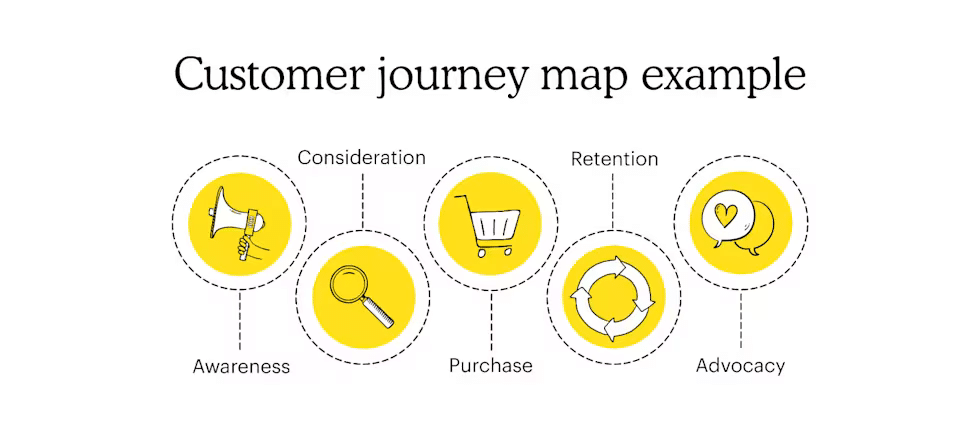
The first three phases are known as passive or inactive phases—awareness, consideration, and purchase. The last two take place post-sale—retention and advocacy.
Awareness
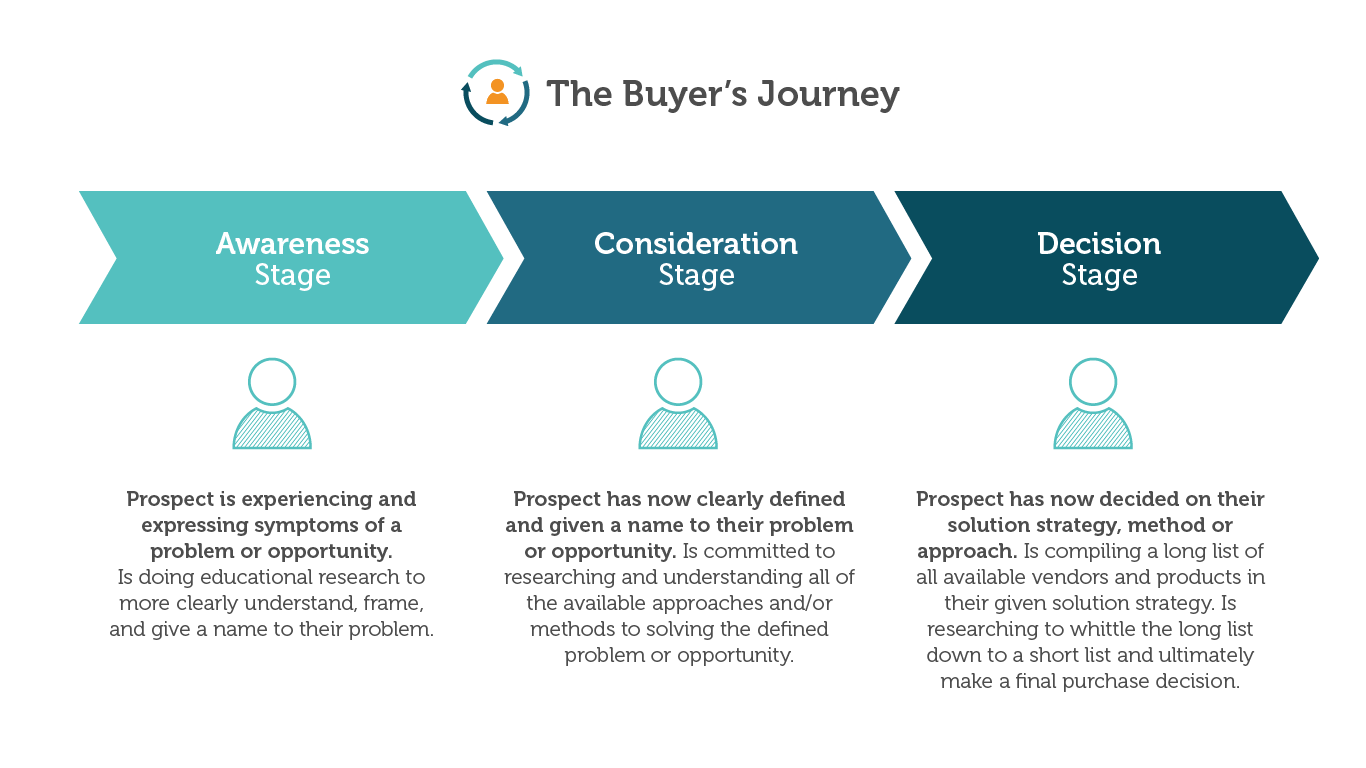
During this stage, the customer is not yet officially a customer of your brand. They have just discovered your product and are seeking more information. While it’s not necessary to segment the type of user yet, it’s important to start using social networks and other online tools to help communicate your brand’s message.
Consideration
The ‘consideration’ stage is when the customer is looking to make a purchase and beginning to weigh different options. At this point, the user becomes aware of the brand and what it has to offer.
Decision
At this point, the user has finally made the decision and followed through with it. In this case, it is important to have a reliable online channel that speeds up the process, as well as a qualified team ensuring that the shopping experience is a positive one for your customer.
Retention
The first phase following the sale, the ‘retention’ stage involves keeping in touch with your customer, encouraging them to continue to make more purchases in the future, and ultimately, become loyal to the brand.
Advocacy
This is the final stage of the customer journey and the most challenging to achieve. This is where the customer becomes an active advocate for your brand by spreading the word to friends and family.
What Does a Customer Journey Map Consist Of?
The following elements are needed to create an effective, optimized customer journey map:
Create buyer personas
Encompassing demographics like age, gender, and occupation, a buyer persona is a representation of your target customer derived from extensive market research. Each buyer persona has its own unique buying behavior, which is why you need to dedicate a different customer journey map for each persona.
Determine customer stages
Before you map out the entire customer journey, you need to figure out the phases your customer goes through before they encounter your brand. Define when, where, and how they find your company, research your products or services, select you over competitors, buy from you, and sustain a relationship with you over time.
Understand customer goals
Each stage represents a major goal your customer is trying to reach in the journey. Learn to identify these goals, as this helps inform the structure of your customer journey map. Data can be collected via surveys, interviews, and customer service emails.
Find touchpoints
Customer experience requires that every touchpoint is taken into account. Be it a customer service representative, a printed brochure, or a mobile app, touchpoints are defined as the interactions your customer has with your brand at each stage. For instance, ‘awareness’ stage touchpoints are likely to include short-form post-click landing pages, case studies, webinars, and blog posts.
Maintain a realistic time frame
With the data collected through customer analytics, surveys, and interviews, you can follow a schedule that determines when each customer stage should end. You should be aware of how long your touchpoints take to persuade customers to advance to the next stage.
Take customer emotion into consideration
The customer journey is told from the customer’s point of view. So, being aware of which emotion (whether joy or dissatisfaction) your customer is likely to feel helps you find out if they will move from one stage to the other.
How Do You Properly Map Your Customer Journey?
Navigating your customer’s journey is complex. The key is to lay out the customer journey mapping process step-by-step and make it as focused and as simple as possible.
Step 1: Use your sales funnel to identify the purchasing process
Ideally, your brand will already have an online sales funnel in place that demonstrates how leads move through your marketing tactics to eventually complete a purchase.
This data will provide you the information needed to track all the potential touchpoints a customer has with your brand and how each interaction leads to the next.
Step 2: Think like your customer
Although it’s impossible to predict a prospect’s next steps with spot-on accuracy, you can align their goals with varying stages of your sales funnel, all while going through the process yourself.
As you progress through different touchpoints along the buying journey, make a note of the steps that don’t feel natural or organic. You can even review transcripts of support calls and emails to track where the process went wrong.
From there, you can more easily spot those make-or-break moments and optimize accordingly to make the journey more sensible and straightforward for your customer.
Step 3: Segment the touchpoints of customer interaction
This step marks the point where you should start grouping your touchpoints into various categories.
For example, a customer ‘liking’ a social media post is a touchpoint while clicking through to a link to a blog post on your site from that social media post is another. You can separate these touchpoints into areas called ‘social media touchpoints.’
Step 4: Launch your customer journey map and perform research
Compile your findings and touchpoints in the form of a customer journey map that is visually appealing and easy-to-understand.
Platforms like Google Analytics are advantageous in this area if you’re looking to see where buyers are abandoning the journey on a regular basis. Whether you’re noticing a lack of click-through from emails or abandonment just before the customer completes their purchase, review these touchpoints, and make necessary changes.
And, while reviewing your customer journey map, make sure that the journey is simple enough to keep them moving through the steps, but still includes plenty of personalized and educational content needed to stay engaged through the end.
Step 5: Treat your customer journey map as a living document
Like several other aspects of your digital marketing strategy, your online customer journey will often change as new digital platforms emerge and are integrated into the buying cycle.
Taking the time to regularly examine how your customers are navigating your buying cycle will help you identify gaps and develop new processes to streamline the overall customer experience.
Customer Journey Map Templates and Tools
Various customer experience journey mapping software and templates will be able to simplify the mapping process.
Here are some key tools to use and when to use each:
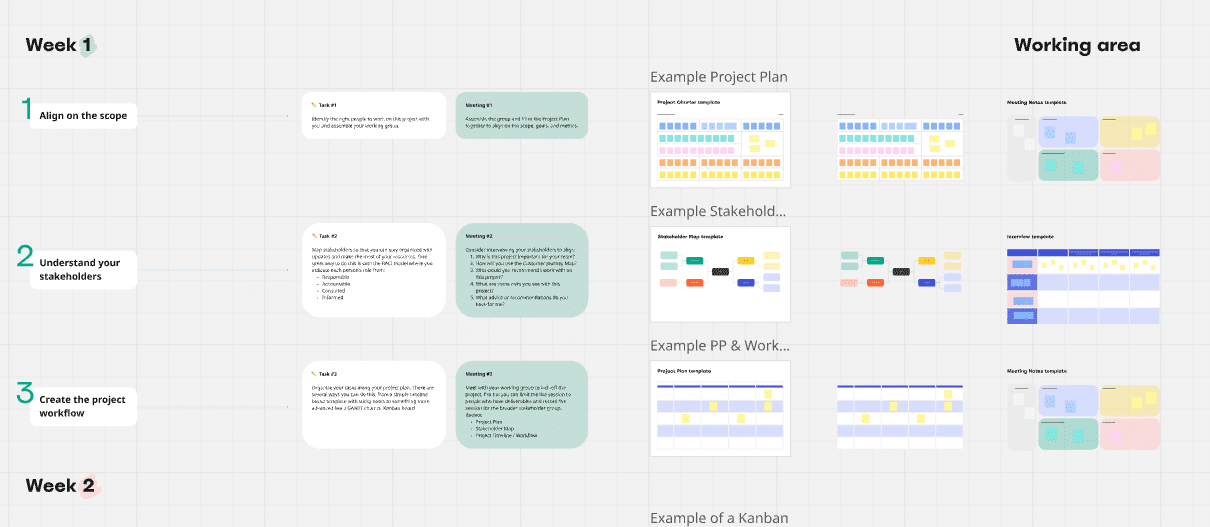
Miro
For collaborative workshops, you will want to use Miro, particularly during the initial “Hypothesis” and “Discovery” phases. This customer experience journey mapping software features an unlimited whiteboard and AI-powered sticky notes that make brainstorming easier than ever.
Here is a User Journey Map template you can use, which can track the stages a customer goes through from initial search intent to the time they want to make repeat purchases after an initial order.
Lucidchart
For more formal documentation, you can use Lucidchart. This platform can help you determine how to create a customer journey map with standardization to serve as permanent records for stakeholders.
What’s cool about Lucidchart is the ability to develop data-linked process diagrams and more complex flowcharts with live updates from Google Sheets and other sources.
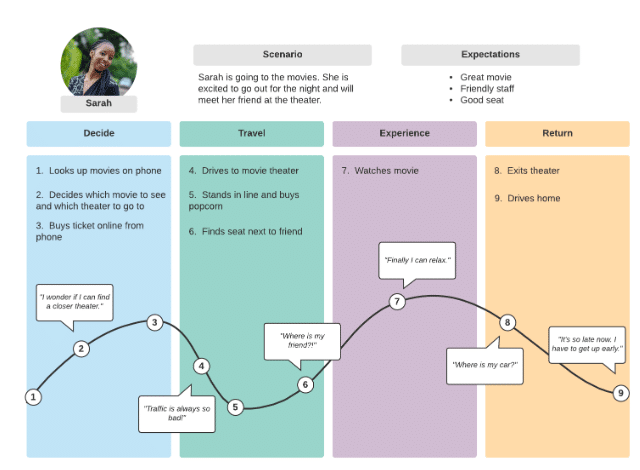
Here are some example templates you can use from Lucidchart, such as a flowchart detailing the path a customer takes when at the Awareness Stage, all the way to Advocacy, with emotional indicators appearing at each stage.
HubSpot Templates
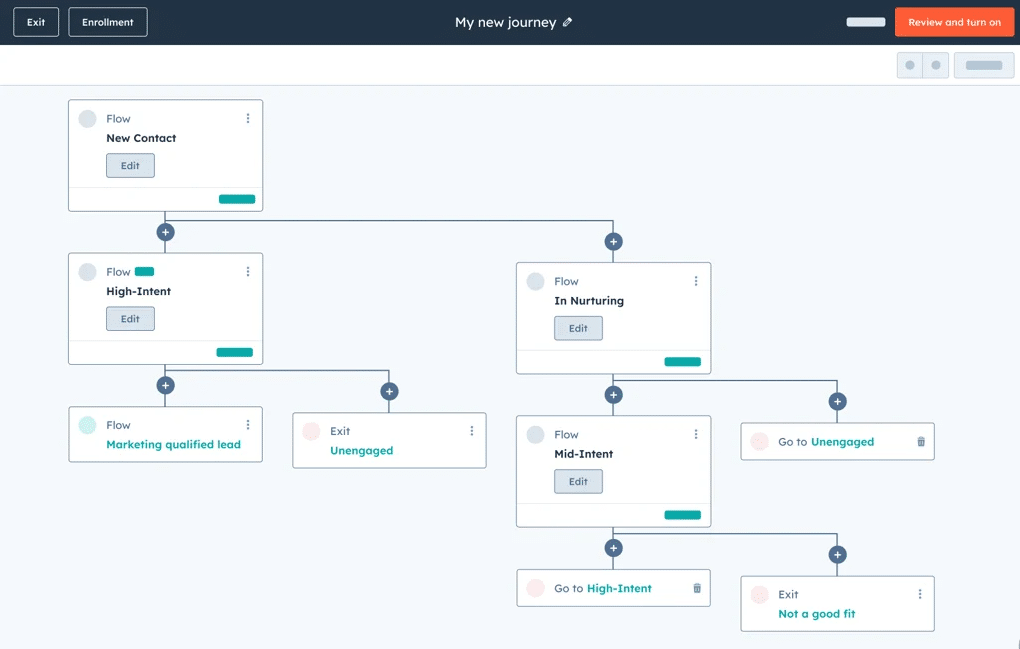
Another platform you can use is HubSpot, which offers templates that can integrate with your company’s CRM software. These templates have the ability to effectively trigger marketing or sales actions based on customer touchpoints.
Check out HubSpot’s Customer Journey Orchestration templates, which can segment audiences by intent.
Common Pitfalls and Best Practices
As you learn more about how to create a customer journey map, here are some mistakes to avoid and fixes for each:
Mapping Based on Opinions
You might create a map based on your “gut feelings” over hard research. To avoid this, conduct around five to 10 interviews with customers or review tickets to keep your map reality-based.
Scoping Too Broadly
Mapping too many scenarios or personas can make the map unclear. Instead, stick with a particular start and end point and focus on one or two main personas.
Not Including Stakeholders
Neglecting stakeholders or others leads to siloed creation. Mitigate this by forming a cross-functional “core team” comprising sales, support, product, and stakeholders for a more holistic view.
Ignoring Key Data
Overlooking critical customer data will leave you with an incomplete and, possibly, useless map. Always incorporate all relevant data to get the most from your mapping project.
Overlooking Emotions
You may not establish an emotional connection if you’re not thinking about how your audience feels at various touchpoints. Be sure to implement an emotion curve to see how people feel throughout the journey.
Static Documentation
Inconsistent updates to your map as needed will leave teams with an outdated map that doesn’t reflect the current state. Prevent this by scheduling quarterly or even more frequent reviews to update when required, or use tools that allow for automatic updates through integrations with real-time data.
Missing “Dark Stages”
Some companies may not account for what happens before or after direct contact with the brand. “Pre-Awareness” and “Post-Awareness” lanes and similar data can indicate external factors like word-of-mouth.
No Actionable Tie-ins
You might identify pain points while failing to assign specific owners or metrics to address them.
Additionally, adhere to the following key best practices to get the most from your mapping:
- Map one persona at a time to keep your map specific and useful.
- Validate with quantitative data that overlay qualitative counterparts, helping measure accuracy.
- Include micro-moments like mobile searches or other invisible interactions that could impact the final decision.
- Iterate constantly, treating the initial map as a sort of “hypothesis,” with A/B testing helping to fix pain points across the map.
FAQs
1. What is a customer journey map?
A customer journey map is a visualization of the path your customers take from initial prospect to conversion and retention. It details the types of engagement your audiences have at every stage and can help identify bottlenecks keeping people from converting.
2. What is customer journey mapping?
Digital customer journey mapping is a process that involves identifying critical touchpoints where your brand connects with audiences, turning them into leads and eventually customers, giving you a full picture of the path your audiences take.
3. Why is customer journey mapping important?
Customer experience journey mapping is essential in determining how your audiences move down the sales funnel at different stages and how you can move people more efficiently from interest to purchase.
4. What templates should I use for digital customer journey mapping?
There are plenty of customer journey map templates you can use, including Miro’s templates that offer pre-built frames and sticky notes, along with Canva’s Online Whiteboard templates that you can easily customize for mapping.
5. Which customer journey mapping platforms offer multi-touch visualization?
Certain customer experience journey mapping software can provide you with multi-touch visualizations that display both online and offline interactions. For example, Cometly unifies all touchpoints across platforms to conversion, and Contentsquare offers a “Sunburst” analysis displaying looping behaviors and common paths.
Build the Perfect Customer Journey Map With Ignite Visibility
With a better understanding of how to map the customer experience journey and connect with your audiences, you can streamline your marketing efforts. For help with customer experience journey mapping and every other aspect of your marketing strategy, turn to the experts at Ignite Visibility.
With our help, you can:
- Identify your target audience
- Segment audiences with in-depth personas
- Map content to each stage of the buyer’s journey
- Develop top-quality personalized content
- Measure your marketing efforts
- And more!
Begin your own journey with Ignite by requesting a free proposal today!

