Search engine optimization (SEO) might entail a lot of technical elements, but another effective tool that can enhance your content consists of SEO power words. These words are emotionally resonant terms that can help with SEO while appealing to your audience’s emotions. Using power words for SEO the right way will ultimately help boost rankings while holding people’s attention and increasing your click-through rate (CTR).
In this blog, Ignite Visibility’s Senior SEO Strategist, Eric Solomon, will give you the ultimate list of power words to get you started and show how you can optimize different types of content to target them.
What You’ll Learn
- Expert Insights into Power Words for SEO
- Why Power Words Matter in SEO and Marketing
- How to Optimize Titles and Meta Descriptions With Power Words
- Practical Applications for Power Words in Different Marketing Channels
- Case Studies and Examples of Power Words
- Selecting Power Words Based on Audience Personas
Our Expert Insight into Power Words for SEO
Think of power words as SEO keywords that optimize for your audience’s emotions rather than search engines. These terms enrich your content to make it, as their namesake indicates, significantly more powerful among your readers. By carefully choosing these terms and integrating them into your content strategy, you’ll be able to establish a stronger relationship with your target market and gain a real competitive edge in the long term.
Action Item: Consider the words that convey the specific emotions your audience shares. Once you identify these words, you can begin strategically including them in your content across all of the marketing channels your audiences use. Combined with the right overall messaging, you can use power words for SEO and much more to get real results.
What Are Power Words?
Power words are special words that grab attention and spark emotion. They make people want to click, read, and take action.
But here’s the key difference: power words aren’t the same as keywords. Keywords tell search engines what your content is about. Power words make people care about it. For example, “shoes” is a keyword, while “stunning shoes” uses a power word to create excitement.
You’ll find power words working their magic in many places, including:
- SERP titles
- Meta tiles
- Website headings
- CTAs
- Ad copy
- Email subject lines
- Email copy
When you combine power keywords with emotional power words, you create content that ranks well and connects with real people. That’s the winning formula.
Why Power Words Matter in SEO and Marketing
Power words give you control over something important: your click-through rate. CTR measures how many people see your content and actually click on it. While you can’t control everything about SEO, you absolutely can influence whether people choose your link. Power words make your titles irresistible compared to boring competitors on the same page.
Here’s the exciting part: higher CTR sends positive signals to search engines. When more people click your result, Google notices. It thinks your content must be valuable. Over time, this can further boost your rankings on search engine results pages (SERPs).
But there’s a crucial rule you must follow. Your SEO words need to match what’s actually on your page.
Don’t promise “ultimate secrets” if you’re sharing basic tips. When your headline doesn’t deliver, visitors hit the back button immediately. This is called pogo-sticking, and it harms your SEO.
Think of power words as a promise to your reader. Use them to create excitement and curiosity. Just make sure your content keeps that promise. When you do this right, people stay longer and engage more.
How to Choose Power Words
Choosing the right power words isn’t random. Different emotions work better in different situations. You need to match your power words to your channel and what people are searching for.
Let’s break this down with a helpful guide.
When someone is looking for information, they want to learn and discover. Words like “proven,” “essential,” and “ultimate” work wonderfully here. These build trust and promise valuable knowledge. Use them in blog titles, educational content, and how-to guides.
For commercial intent, people are ready to buy or take action. They respond to urgency and exclusivity. Words like “limited,” “exclusive,” and “guaranteed” create excitement and fear of missing out. These power words shine in product pages, sales emails, and paid ads.
The channel matters too. Email subject lines need curious words like “secret” or “revealed.” Meta descriptions benefit from trust words like “proven” and “expert.” Your call-to-action buttons work best with action words like “discover,” “unlock,” or “grab.”
Here’s your quick reference guide:
- Curiosity & Trust → Blog posts, meta descriptions → Informational intent
- Urgency & Exclusivity → Ads, CTAs, product pages → Commercial intent
- Safety & Confidence → Landing pages, service pages → Transactional intent
Match your emotion to your goal, and you’ll connect with readers perfectly!
Power Word Master List
To help you find the best emotional marketing value words for your campaigns, here is a complete list of power words by emotion.
Words That Trigger Urgency
One effective way to connect with audiences emotionally is through words that convey a sense of urgency and appeal to that fear of missing out (FOMO). Using urgency words in marketing gives your audience the impression that your offer is only on the table for a limited time or in limited quantities, which will inspire more people to take immediate action.
Some of the most effective urgency-triggering SEO power words include:
- Limited time
- Today only
- Don’t miss out
- Limited offer
- Exclusive
- Rare
- Hurry
- Don’t delay
- Expires soon
- Act now
- Running out

Words That Build Trust
As you build a meaningful connection with potential customers, you’ll want to earn their trust and appear credible to them. Assure your audience that you’re there to give people what they need from your business, setting you apart from less trustworthy alternatives.
The following are some trust-building words to try:
- Proven
- Ensured
- Certified
- Reliable
- Professional
- Protected
- Assured
- Verified
- Guaranteed/Guarantee
- No risk/low risk
- Backed
- Full refund
- Confirmed
- Protected
- World-class
- Respected
- Reputable
- Trustworthy
- Dependable
Words That Evoke Curiosity
Curiosity is another powerful emotion you’ll want to convey, as it will get people to investigate more about your brand and offerings. These words are often vague and don’t explicitly talk about what the underlying content contains, as they inspire audiences to look deeper to gain a better understanding.
Here is a list of power words that evoke curiosity in SEO:
- Sneak peek
- The truth about
- Surprising
- Proves
- Reveals
- Hilarious
- Insider
- Top secret/secret
- Trade secret
- Incredible
- Confidential
- Unveiled
- Shocking
- Exclusive
- Private
- Classified
- Unlock
- Discover
Words That Inspire Confidence
In some cases, you might also want to make your audiences feel confident with your content. Empower your audiences with terms that fill them with pride, which will further encourage them to turn to you over less pride-inspiring competitors.
The following are some confidence-building power words:
- Safety/safe
- Fulfilling
- Boost
- Successful
- Hope
- Brighten
- Transform
- Innovate
- Optimize
- Brilliant
- Capable
- Reliable
- Expert
- Trusted
- No hidden fees
- See for yourself
Optimizing Title Titles With Power Words (Rules & Formulas)
Title tags are your first impression in search results. Power words transform boring titles into click magnets. The secret is following a proven formula that combines all the right elements.
Use this winning structure: [Primary topic] + [Benefit] + [Power word] + [Qualifier].
Your primary topic tells people what you’re covering. The benefit shows what they’ll gain. Power words add emotional punch. Qualifiers like numbers or timeframes build credibility.
Here are real examples showing the difference:
- Before: How to Write Blog Posts
After: How to Write Stunning Blog Posts That Drive Traffic (10 Proven Tips) - Before: Email Marketing Guide
After: The Ultimate Email Marketing Guide for Beginners (2026 Edition) - Before: Save Money on Groceries
After: 15 Secret Ways to Save Money on Groceries Instantly - Before: Social Media Tips
After: Essential Social Media Tips That Boost Engagement Fast - Before: Learn Photography
After: Master Photography: Complete Guide for Stunning Photos - Before: SEO Strategies
After: Powerful SEO Strategies That Guarantee Page One Rankings - Before: Productivity Hacks
After: 7 Game-Changing Productivity Hacks for Busy Professionals - Before: Content Writing Basics
After: Transform Your Content Writing: Proven Techniques That Work
Notice how the “after” versions promise specific value and create excitement? That’s the power of strategic word choices.
Optimizing Meta Descriptions with SEO Power Words (and Why Google May Rewrite Them)
Meta descriptions convince searchers to click your link over competitors. SEO words make them irresistible.
But here’s something important: Google sometimes rewrites your carefully crafted descriptions. They do this when they think a different text better matches the search query.
Don’t let that discourage you from writing great meta descriptions. Use these three proven templates based on content type:
How-to template: “Learn how to [action] with our [qualifier] guide. Discover [benefit] in just [timeframe].”
Example: “Learn how to rank higher with our proven SEO guide. Discover powerful techniques that work in just 30 days.”
List template: “Get [number] [adjective] [topic] that [benefit]. Perfect for [audience] who want [result].”
Example: “Get 15 essential email templates that boost conversions. Perfect for marketers who want instant results.”
Product/service template: “[Action verb] [benefit] with our [qualifier] [offering]. [Social proof] + [guarantee].”
Example: “Transform your website with our premium design service. Trusted by 500+ businesses. Money-back guaranteed.”
Match your power SEO words to searcher motivation:
- Use “exclusive” and “premium” for luxury seekers.
- Choose “fast” and “simple” for efficiency hunters.
- Pick “proven” and “trusted” for validation seekers.
Practical Applications: How to Use Power Words for SEO in Different Marketing Channels
Going beyond titles and meta descriptions on SERPs, there are many other applications for power words across your marketing channels.
You could integrate power words for headlines and other content for the following:
Email Subject Lines
Email subject lines have one job: get people to open. You’re competing against dozens of other messages in crowded inboxes. SEO power words create urgency and curiosity that’s impossible to ignore.
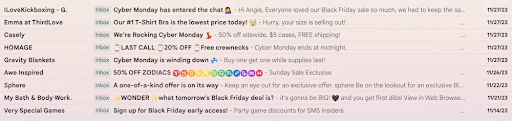
How-to template: “How to [achieve result] without [common pain point]”
Example: “How to Double Your Sales Without Spending More on Ads”
Motivation: Efficiency – People want better results with less effort.
List template: “[Number] [Adjective] Ways to [Benefit] Starting [Timeframe]”
Example: “7 Secret Ways to Boost Productivity Starting Today”
Motivation: Value – Readers love actionable lists they can use immediately.
Exclusive template: “[Qualifier] [Benefit] for [Audience] Only”
Example: “Premium Marketing Tools for VIP Members Only”
Motivation: Exclusivity – Making people feel special increases opens dramatically.
Keep subject lines under 50 characters for mobile readers. Test urgency words like “now” and “today” against curiosity words like “secret” and “revealed.” Track which motivations resonate most with your specific audience.
Ad Copy
Paid ads demand instant attention and quick decisions. Every word costs money, so power words must work extra hard. You’re paying for clicks, so choose words that convert browsers into buyers.

How-to template: “[Action verb] [Benefit] in [Timeframe]. [Proof/Guarantee].”
Example: “Master Spanish in 30 Days. 10,000+ Students Succeeded.”
Motivation: Validation – Social proof makes promises believable and reduces risk.
Product/service template: “[Qualifier] [Product] that [Benefit]. [Urgency trigger].”
Example: “Premium Noise-Canceling Headphones that Block 99% of Sound. Sale Ends Tonight.”
Motivation: Exclusivity + Urgency – Combines quality signals with fear of missing out.
List template: “Get [Number] [Adjective] [Benefits]. [Call to action].”
Example: “Get 3 Powerful SEO Reports Free. Start Your Trial Now.”
Motivation: Value – Free offers with concrete numbers build trust and encourage clicks.
Match your power words to ad platform limits. Google Ads allows 30-character headlines. Facebook gives more space for storytelling. Always include clear calls-to-action with action words like “start,” “get,” or “claim.”
Blog Titles and Subheadings
Blog titles must rank in search engines and appeal to human readers. Subheadings keep people scrolling through long content. Power words accomplish both goals when used strategically.
Here are some examples of how to use power words in blog titles and subheadings:
How-to template: “How to [Achieve goal]: [Number] [Qualifier] [Methods] for [Audience]”
Example: “How to Build Backlinks: 12 Proven Strategies for Small Businesses”
Motivation: Efficiency + Validation – Readers want tested methods that save time.
List template: “[Number] [Emotional adjective] [Topic] That Benefit”
Example: “25 Powerful Content Ideas That Drive Traffic (Updated 2026)”
Motivation: Value – Big numbers suggest comprehensive coverage worth reading.
Product/service template: “The [Qualifier] Guide to [Topic]: [Benefit] Like [Aspirational comparison]”
Example: “The Ultimate Guide to Email Marketing: Convert Like the Pros”
Motivation: Validation + Efficiency – Promises expert-level results with clear guidance.
For subheadings (H2s), use question formats and “why/how/what” structures. These match how people actually search. Power words in H2s should preview the value in each section without giving everything away.
Product Descriptions
Product descriptions must inform and persuade simultaneously. Power words transform features into irresistible benefits. They help shoppers visualize owning and using your product.
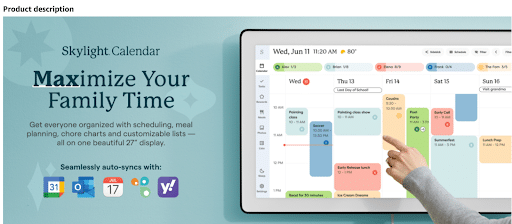
Here are some examples of how to use power words in your product descriptions:
How-to benefit template: “[Product] helps you [achieve benefit] so you can [bigger benefit].”
Example: “Our premium planner helps you organize tasks effortlessly so you can focus on what matters most.”
Motivation: Efficiency – Shows how the product saves time and reduces stress.
Feature + emotion template: “[Qualifier] [Feature] delivers [emotional benefit] with [proof point].”
Example: “Professional-grade materials deliver lasting confidence with our lifetime guarantee.”
Motivation: Validation – Combines quality signals with risk-free assurance.
Transformation template: “Transform [current state] into [desired state] with [qualifier] [product].”
Example: “Transform cluttered spaces into stunning showcases with our elegant storage solutions.”
Motivation: Exclusivity – Appeals to aspirational identity and lifestyle upgrade.
Focus on sensory power words like “smooth,” “crisp,” or “luxurious” for physical products. Use outcome words like “successful,” “confident,” or “accomplished” for services. Always connect features to real-life benefits customers actually care about.
Practice Applications Across Channels
In illustrating how effective power words can be, let’s consider a couple of case studies on SEO power words.
Case Study #1: Meta Titles and Descriptions
Let’s imagine an automotive company trying to sell used auto parts to customers through higher Google rankings.
In this instance, the company might want to rank their home page. Before optimizing with power words, the business might have gone with a generic title tag like: “Used Auto Parts for Sale,” and an equally bland meta description simply advertising auto parts.

By optimizing with certain power words, the company could inspire confidence and trust to convert more leads and boost rankings.

Case Study #2: Product Descriptions
An ecommerce company might want to increase sales for certain products. Here, urgency-inspiring power words might work best.
For example, when selling a limited number of a particular designer handbag, a product description might just advertise the product plainly: “This new handbag features an open interior and a full exterior pocket to hold all of your day-to-day items, with a style that complements your look.”
Incorporating certain power words here could make all the difference, giving audiences a more compelling reason to buy now: “For a limited time, get your hands on this exciting handbag design that exudes elegance while allowing for convenient storage for all of your must-haves. Act now: Only [number] handbags in our inventory!”
That sense of urgency can help you realize the CTR impact of power words as you drive more clicks and purchases.
These and other examples of power words in marketing show how crucial they are in psychologically influencing audiences.
Advanced Tips for Selecting Power Words Based on Audience Personas
When choosing power words for blog titles, ad copy, and other materials, you must also consider the specific audience.
Different words will resonate with different audiences based on their psychological makeup and demographics.
For example, younger audiences may respond more to “trendy” terms that include certain contemporary lingo and phrasing. Meanwhile, older professionals may want less flashy and more meaningful words that inspire confidence and trust.
When choosing audience-targeted power words, you’ll want to conduct testing to determine how the personalization of SEO power words impacts click-throughs and general engagement.
Start by developing in-depth audience personas for each segment of your target market. These personas would create a hypothetical personality for every branch of your audience, helping you paint a picture of them.
Based on these personas, you can figure out what terms and emotions might resonate most with each. From there, begin A/B testing two versions of your ad copy or other content. For instance, one version of a paid search ad might have a broader tried-and-true power word, while another uses something more modern and specific. Based on how each performs, you can decide which to use in the long term.
Guardrails to Consider When Using Power Words
Power words are powerful tools, but they require responsible use. Misusing them damages your credibility and hurts your SEO long-term. Let’s explore important guardrails to keep your content effective and trustworthy.
- Avoid clickbait. Power words should enhance truth, not exaggerate it. Claiming “shocking secrets” when you’re sharing common knowledge breaks trust. Readers remember being disappointed and won’t click your content again.
- Avoid overuse. Too many power words create exhausting, unbelievable content. Your writing starts sounding like spam. Use power words strategically where they truly add value.
- Watch for brand mismatch. A law firm using “crazy” and “insane” feels unprofessional. A youth gaming brand using “prudent” and “sensible” sounds boring. Power words must match your brand personality.
Do’s and Don’ts for SEO Power Words
- DO use 1–2 power words per title or meta description
DON’T stuff every sentence with dramatic language - DO align power words to your actual on-page promise
DON’T promise “ultimate secrets” when delivering basic tips - DO create genuine urgency for real deadlines
DON’T fake scarcity with misleading countdown timers - DO ensure power words match your established brand voice
DON’T copy competitor styles that conflict with your values
Use power words as seasoning, not the main ingredient. When chosen thoughtfully, power words can enhance your message and grab the attention of your audience!
Get the Most from Power Words for SEO With Ignite Visibility
With the help of the above examples of power words and their potential uses, you could harness their power to bolster your SEO and other marketing efforts. However, you may want some help to make full use of these terms and target the ones that work best, which is where Ignite Visibility can help.
At Ignite Visibility, we can help with:
- Building audience personas to determine demographics and psychographics
- Select power words that appeal to each audience segment
- Test power words for blog titles, ad copy, product descriptions, and more
- Continually develop and optimize all content for a complete SEO strategy
- And more!
If you like the sound of that, reach out to Ignite Visibility today and get a leg up on the competition.