


One of the main elements that will make or break a website is the structure of a website, also known as website architecture. This foundation establishes how developers and designers will organize as well as how users will navigate the website, with good architecture optimizing the user experience while helping search engine bots crawl and index each page.
In this blog, Lucas Dantas, Head of Engineering, will discuss the benefits of organized website architecture and how to plan a website structure that works for you and your site visitors.
What You’ll Learn:
- The Importance of Website Architecture in SEO
- Understanding User Intent in Website Architecture
- Best Practices for Structuring Your Website
- Conducting a Content Gap Analysis
- Implementing Internal Linking Strategies
- Optimizing URL Structures
- Utilizing Sitemaps and Breadcrumbs
- Monitoring and Updating Site Architecture
- FAQs About Website Architecture
My Expert Opinion on Website Architecture
You could have a winning business model and a strong content strategy in place to help your business excel online, but you won’t be able to truly succeed in building your online presence without the framework of solid site structure.
Having a well-structured website helps businesses in several ways, enabling them to establish a better connection with their target audiences and convert them into customers. Consider that 75% of consumers judge a company’s credibility solely based on web design, which tells you just how important the architecture of a website is in moving people down the sales funnel.
Not only is the structure of a website important for the user experience, but it also can help Google and other search engines better understand your content and what it’s about.
Ultimately, you should prioritize site structure whenever you put together a new website, which will get it off the ground much more effectively.

The Importance of Website Architecture in SEO
Good website information architecture comes with numerous benefits, including:
Improved Crawlability
Google and other search engines use bots to crawl all indexable websites before ranking them on search engine results pages (SERPs). When a website has a sound structure, including XML sitemaps that establish an obvious hierarchy, bots will have an easier time going through all web pages and subsequently indexing and ranking them.
Optimized Distribution of Link Equity
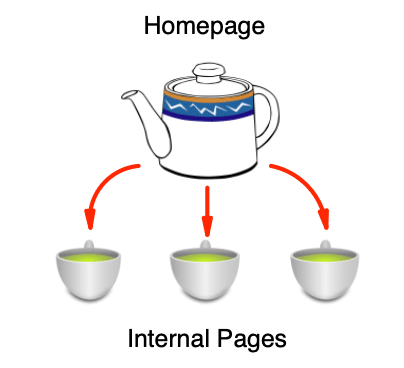
Also known as link juice, link equity refers to the distribution of one web page’s authority to other web pages, helping them all rank better.
For example, a website’s homepage might be well-optimized to the point of becoming a top domain in search engines. Linking to internal pages from that homepage could then distribute that page’s authority to each, helping those pages perform better.
Link equity can also work across multiple websites through link building efforts, as one authoritative website can link to other less authoritative sites, signaling to search engine crawlers that the linked sites are reputable enough to rank higher.
Enhanced User Navigation
In addition to directly boosting SEO performance, the architecture of a website can improve a site’s navigability for users. Visitors to your site will be more inclined to move from page to page and consume your content if you have an established website hierarchy that clearly indicates where to go.
Keep in mind that the user experience can also impact your SEO, as the longer people spend on your site after visiting from search engines, the more this activity signals to those engines that your pages adhere to Google’s E-E-A-T guidelines for Experience, Expertise, Authority, and Trustworthiness.

Understanding User Intent in Website Architecture
A key element that will influence the structure of a website is user intent, or search intent.
People who visit your website will have varying intent based on where they are in the customer journey.
There are four main types of user intent based on the stage of the sales funnel, including:
- Informational: At this stage, people want more information about a certain topic and are likely to ask questions related to it. The content that people might consume at this level include tutorials, guides, tips, and various resources as they seek to learn more.
- Navigational: Here, people will be more interested in finding a particular page on a company’s website. They’ll be aware of your brand and want information like policies, contracts, and terms and conditions, or they’ll look for other types of branded content on your site.
- Commercial: People in the commercial stage will be interested in a product or service offering, but they’ll also want to do more research into them to find the right solution. As such, they might search for “best” and “top” companies or offerings, seeking reviews, product details, and comparisons to help them make an informed buying decision.
- Transactional: Finally, people will be ready to make a purchase at the bottom of the funnel. Service and product pages will shine here as people look for the offerings they want.
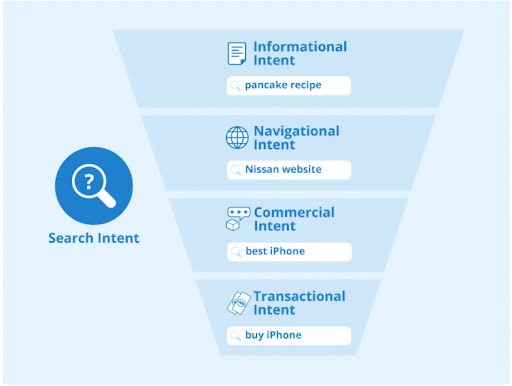
By aligning your content to each type of user intent, you can connect with people at every stage of their journey and move them more efficiently toward a sale.
For example, you could write a blog about various industry topics, establishing you as an authoritative voice in your industry as people learn more about each topic. An easy-to-navigate website will also help people with navigational intent find what they’re looking for, while a page featuring customer testimonials can connect with people in the commercial stage.
Then, service, product, and contact pages could convert leads into customers when they reach the transactional phase.
Best Practices for Structuring Your Website
If you want to know how to plan a website structure, here are some best practices to implement:
Use Flat Architecture
Effective website information architecture will entail making sure that the most important information on your site is front and center, making it easy for people to find the most crucial content.
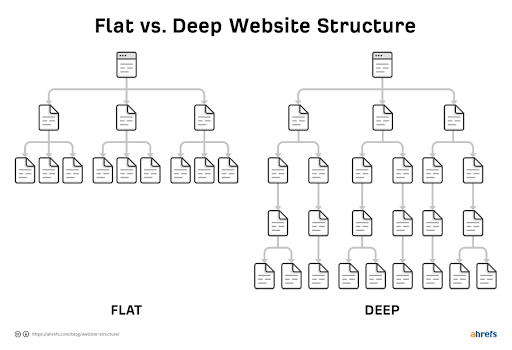
In doing so, you may want to opt for flat website architecture that keeps all of the most important pages no farther than three clicks away from the homepage.
For instance, from the homepage, someone might visit a service page for more details about your offerings. From that page, they should be able to find even more granular information through blogs as well as contact or product pages to get in touch or make a purchase.
However, as your site expands, you may need to adopt a deeper architecture.
Conduct Keyword Research
To appeal to each user on your site based on search intent, use tools like Semrush and Google’s Keyword Planner to find the most valuable keywords to target at every stage.
You might want to target broader short-tail keywords, but to make the competition a little easier to outperform, you should also look for high-value long-tail keywords of three or more words. Many long-tail keywords might be low-hanging fruit that can appeal to people at the top of the funnel in the informational stage, such as long questions about a certain topic.
Research Your Competitors
To get a better feel for what works and what doesn’t in web page architecture, take a look at some of your top-performing competitors. What do their websites look like, and can you adapt the techniques they’re using for your own website?
Explore their websites and view it from the eyes of the average user. You might find that there are things you can actually improve upon with your site structure.
Conducting a Content Gap Analysis
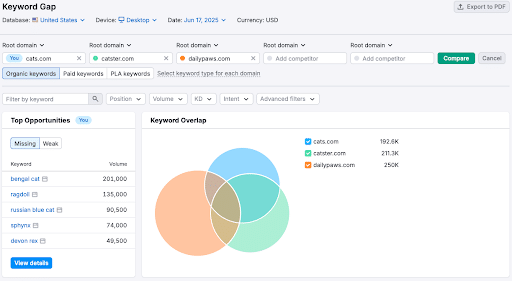
A critical step to take in developing the architecture of a website is a content gap analysis, which looks for any underdeveloped or missing content that competitors aren’t covering.
It’s a great way to determine what you can do to make your website stand out in your industry, potentially addressing pain points or covering key topics that competitors have overlooked.
For example, you could use Semrush to look up missing keywords that are worth targeting, which could give you certain content ideas for blog posts, articles, service pages, and other pages.
Implementing Internal Linking Strategies
Internal linking is another vital element in website architecture, and it serves multiple purposes in helping your website thrive.
A good internal linking strategy can help with SEO by improving link equity as you distribute authority across pages.
Internal linking also helps keep users engaged as they can dig deeper through your site as they go through your content, providing them with more information at their convenience.
There are many ways to go about internal linking on your site. An example here could include linking blog posts to certain service pages that move people to the next stage of the customer journey. You could also include a list of “related posts” at the end of or even in the middle of blog posts, encouraging people to continue exploring a specific topic or subtopic in the informational stage.
Optimizing URL Structures
It’s also best to adopt a clean URL structure for every page on your site. The ideal URL structure will be short, lowercase, keyword-oriented, and hyphenated to separate each word.
An example could include “https://website.com/blog/good-url-structure-practices/.
In optimizing your URLs, you might also want to choose between a flat and hierarchical URL structure.
The above example could be part of a flat structure, as that page is potentially only three clicks away from the homepage. Flat URL structures also use pillar and category pages without going too in-depth with each topic.
Flat URL structure is best for simpler sites with only several main pages under the navigation. Many professionals might choose this structure because of its simplicity.
If this structure doesn’t work for you, you might go with a hierarchical URL structure, which forms more of a branching tree.
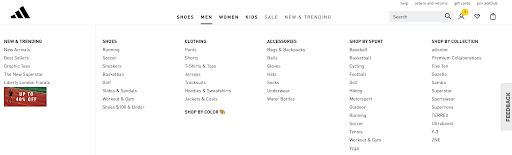
The tree structure starts with a homepage, followed by categories that link to subcategories, and so on. In many cases, this culminates in the use of mega menus that allow people to see most of the main pages and categories in a large dropdown menu on the homepage.
This structure is often great for large sites with many products and categories, such as ecommerce sites with hundreds of products.
Utilizing Sitemaps and Breadcrumbs
To help with user navigation and search engine crawling, you will want to use a combination of sitemaps and breadcrumbs, both of which are crucial navigational aids.
Sitemaps
Sitemaps are what they sound like: maps of your site’s hierarchy located somewhere within your website.
There are two main types of sitemaps you may use, depending on the sitemap’s objective:
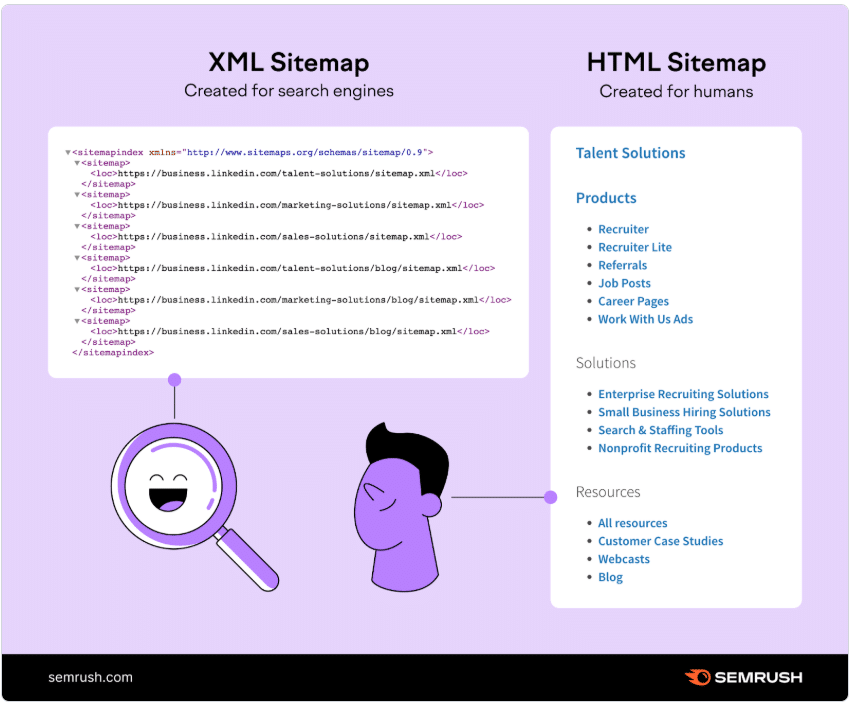
- XML Sitemaps: These are sitemaps that help Googlebot and other search engine bots more efficiently crawl your entire website. In addition to providing bots with a structured list of pages, they can indicate when you last updated each page and the frequency of updates. You would implement this type of sitemap with an XML file.
- HTML Sitemaps: Meanwhile, HTML sitemaps help human users find all of the pages on your site in a convenient menu, usually in the footer of the website or on a dedicated web page.
Breadcrumbs
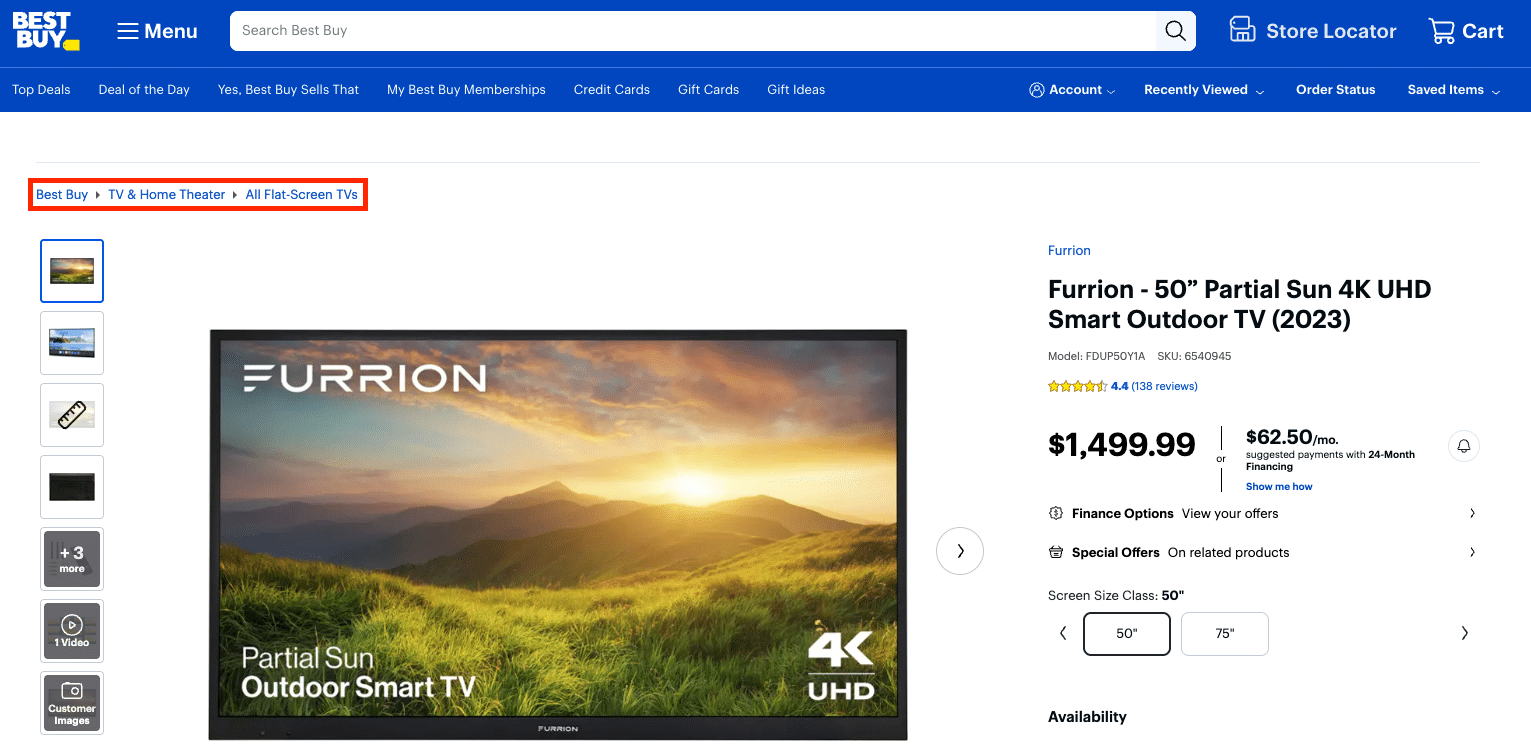
To supplement sitemaps, you may incorporate breadcrumbs on your site that indicate to users where they are within your website’s hierarchy.
These tend to appear at the top of web pages and show location using “greater than” symbols or arrows between words. One might look like: Home > Blog > Post.
Like sitemaps, breadcrumbs can help with user navigation and SEO. In the case of SEO, they can be particularly effective when used in conjunction with schema markup, which uses structured data to give search engine bots more context as to what a site is about.
Monitoring and Updating Site Architecture
Over time, you will need to update your website architecture to improve the user experience and your pages’ rankings.
Keep track of page performance using tools like Google Analytics and Search Console, tracking changes in rankings and user engagement metrics to determine what’s working and what isn’t. For example, you might notice a surge in a page’s bounce rate, which might indicate that content isn’t helpful or relevant. Meanwhile, you might see a page drop in rankings, which might signify it’s time for an update.
Refreshing your content and restructuring as needed could help continually optimize the user experience while potentially improving SEO.
To learn more about when and how to update your site architecture and content, check out the video below:
FAQs About Website Architecture
1. What is website architecture in SEO?
This refers to the web page architecture your site uses to help search engine bots crawl and index each page. Your structure should be clear and hierarchical, with added SEO elements to enable search engine crawlers to better understand your content and site layout.
2. Why is a flat site structure beneficial for SEO?
A flat structure is a format that keeps all important information no more than three clicks away from the homepage. This simplified and streamlined structure can help search engine bots more efficiently crawl your entire site.
3. How does user intent influence website architecture?
The structure of a website will depend heavily on user intent. For instance, people at the beginning of their buyer’s journey in the information stage will want more information, in which case you would direct these users to blog posts discussing these top-of-funnel topics. At the same time, your service or product pages could reach people at the bottom of the funnel in the transactional stage, when they’re ready to buy.
Testimonials, about pages, and other branded content could also connect with people in the commercial stage who want to learn more about the options available to them before buying.
4. What tools can help identify content gaps?
There are plenty of tools out there you can use to help you find content opportunities in your industry, such as:
- Ahrefs: This SEO platform includes a “Content Gap” feature that can help you compare keyword and topic rankings between your site and various competitors.
- Semrush: You can get even more with Semrush, which includes a “Content Gap” tool in addition to other “Gap Analysis” solutions to identify key opportunities.
- Moz: Use Moz’s “Competitive Research” and “Keyword Explorer” tools to compare your site with competitors to locate content gaps.
- SpyFu: This tool works similarly to the above, helping identify keywords that competitors might rank for that you don’t.
- Similarweb: Perform market research and conduct a competitor content analysis using Similarweb.
5. How often should I review my website’s architecture?
The answer to this will vary, but it’s important to regularly monitor page performance and make any adjustments if a page isn’t meeting your objectives. You might notice drops in rankings, which could tell you that you need to update your page’s SEO or add more relevant content, while another page might not be getting people to move past it, indicating a need for better internal linking or overall better content.
Build the Perfect Website Architecture With Ignite Visibility
Now that you know more about how to plan a website structure, maybe you’re ready to get started with the help of experts. Ignite Visibility offers comprehensive web design and development services that can give you precisely what you need for a high-performance, low-maintenance website.
With our team at the helm, you can:
- Determine which structure would work best for your website based on industry and unique business needs
- Develop high-quality content that connects with all target audiences at every stage of the customer journey
- Optimize your website and all content with keywords, links, and other components to help with rankings
- Continually monitor and update your website to boost performance over time
- And much more!
Like this idea? Request a free proposal from us today and find out how Ignite can supercharge your website.
