Contrary to popular belief, local citation building is not a magic trick that shoots you to the top of Google overnight. But when you approach them correctly, they are a foundational piece of how search engines verify your business is real, relevant, and trustworthy.
In this blog, Keely McGroarty, SEO Strategist, breaks down what local citations are, explains why they matter, and tells you how to build them the right way.
TL;DR: Local Citations in 60 Seconds
- What they are: A local citation is any online mention of your business’s name, address, and phone number (NAP). It includes sites like Google Business Profile, Yelp, and the Yellow Pages.
- Why accuracy matters: Inconsistent info across directories confuses search engines and customers alike. If Google can’t verify your details, your visibility takes a hit.
- Do they still help SEO? Yes, but they’re not a ranking shortcut. Citations build trust and data consistency across the local search ecosystem, which supports your overall local SEO health.
- What to prioritize: Start with the big platforms (Google Business Profile, Yelp, Facebook), then work your way through industry-specific and local directories.
- Your next step: Audit your existing citations for accuracy before building new ones. Fix what’s broken first.
What Are Local Citations?
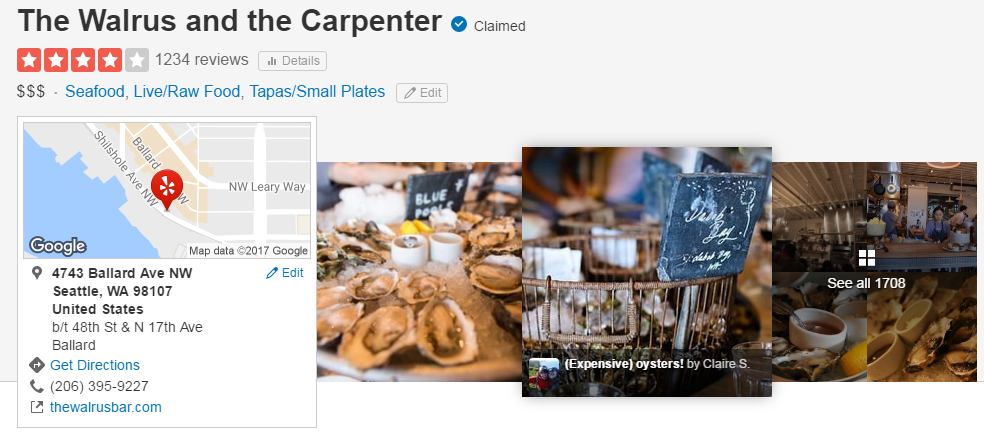
A local citation is any online mention of your business’s key details, such as name, address, phone number (NAP), website, or other identifying information.
Citations appear on directories, maps, apps, social profiles, and local websites. They help search engines verify that your business is legitimate and help customers find you in the right place at the right time.
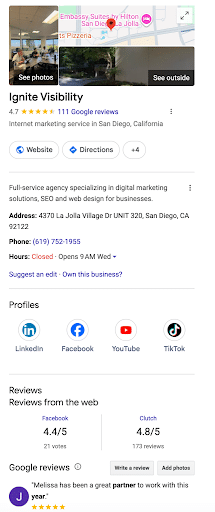
A strong citation includes more than just your NAP. The more complete your listing, the more useful it is to both search engines and real people looking for you. Here’s what a fully built-out citation includes:
- Business categories
- Hours of operation
- Driving directions
- Images and videos
- Accepted forms of payment
- Geo-coordinates
- Reviews
- Description of services
- Taglines and slogans
- Links to social media channels
- Email addresses
- Alternate phone numbers
Citations ultimately help Internet users discover local businesses, and the volume and accuracy of these citations have been shown to influence which businesses rank higher in local search engine rankings.
Do Local Citations Still Matter for SEO?
Short answer: yes. But the full picture is a little more nuanced than more citations = better rankings.
Citations are not the powerhouse ranking factor they once were. Google has gotten much better at finding and verifying business information on its own, but local citations are still an important supporting factor.
Most importantly, they act as trust signals. Consistent mentions of your business across reputable directories tell search engines that your information is accurate and that your business is the real deal.
Where citations really shine is as part of a broader local SEO strategy. On their own, they’ll only get you so far. But when paired with a well-optimized Google Business Profile, a steady stream of genuine customer reviews, locally focused landing pages, and strong local backlinks, citations help reinforce everything else you’re doing. Think of them as the foundation, not the whole house.
Here’s a simple way to think about it: if your NAP information is inconsistent or missing across the web, search engines have a harder time trusting your business data.
That uncertainty can quietly drag down your local visibility. Getting your citations clean, consistent, and present on the right platforms removes that friction and helps you get noticed.
Expert Opinion on the Importance of Local Citations
Citations alone won’t transform your local SEO overnight, but ignoring them can quietly hold everything else back. I’ve seen this play out in real campaigns.
We recently worked with a multi-location home services franchise that wanted to increase local visibility, boost organic traffic, and drive more calls and bookings across all its locations. We built out a comprehensive local SEO strategy that included:
- Google Business Profile optimization
- Localized geo-area pages,
- Targeted content
- Local link building
- Local citation management
Our client saw a 24% year-over-year increase in organic sessions and a 207% year-over-year increase in impressions in Q3 2025. We also secured 332 page one rankings and optimized 129 local pages across franchise locations.
Here’s the insight worth taking away: our local SEO citation building service wasn’t the main focus of the strategy, but it was key to making everything else work.
Consistent, accurate business information across directories gave search engines the confidence to rank them in local results. Without that data consistency, even the best content and link-building efforts have a harder time gaining traction. Clean citations provide a stable foundation for the rest of your local SEO strategy.
What Information Should a Local Citation Include?
Not all citation fields carry the same weight. Some details are non-negotiable. If you get them wrong, you risk confusing both search engines and customers. Others are optional but worth filling out if you want to stand out from competitors in your category.
Here’s a quick breakdown of what to prioritize:
- Must Haves
- Business Name
- Address
- Phone Number
- Website URL
- Business hours
- Business categories
- Description of services
- Nice to Haves
- Photos and videos
- Acceptable payment methods
- Business attributes (wheelchair accessible, women-owned, etc.)
- Taglines or slogans
- Links to social media profiles
- Alternate phone numbers
- Email address
- Geo-coordinates
The must-haves form the core of your NAP data. It’s the information that search engines use to verify and match your business across the web. You have to be consistent here. Even small differences, like abbreviating Street as St. on one platform and spelling it out on another, can create data mismatches that chip away at your local search credibility.
The nice-to-haves are where you can really boost up your listings. They draw more attention to your listing and give consumers more confidence to pick you over a competitor.
Structured vs. Unstructured Citations
When most people think of local citation building, they picture directory listings. But citations are so much more.
There are actually two different forms of local citations: structured and unstructured.
Structured Citations
Structured citations are the ones you’re probably most familiar with. These are formal, directory-style listings on platforms like Google Business Profile, Yelp, Yellow Pages, and Apple Maps.
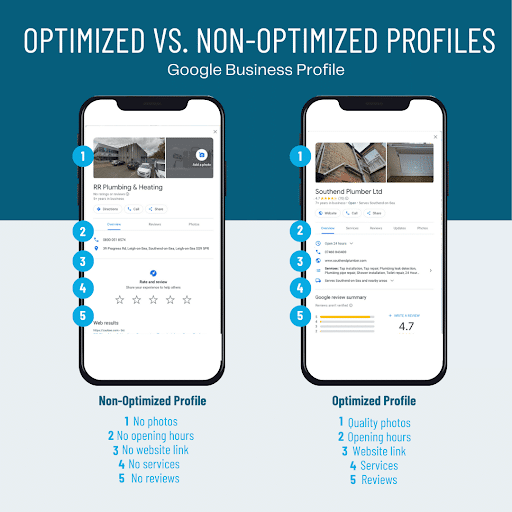
The information is organized into specific fields, like name, address, phone number, hours, categories, and so on. Because the format is consistent and predictable, search engines are very good at reading and using this data to verify your business.
Unstructured Citations
Unstructured citations are a little different. These are mentions of your business on websites that aren’t directories, like a local news article featuring your business, a blog post rounding up the best coffee shops in town, a chamber of commerce member page, a sponsorship acknowledgment, or a community event listing. There’s no standardized format here. Your business name and address might appear naturally within a paragraph, and that’s totally fine.
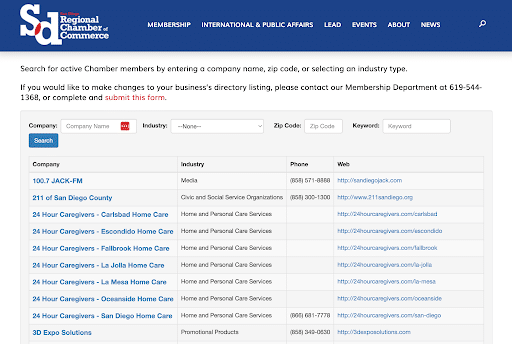
Both types matter. Structured citations give you the data consistency that search engines rely on. Unstructured citations build credibility and context. They signal that real people and organizations in your community recognize your business. A strong local SEO strategy pursues both.
Which Local Citations Should You Prioritize?
Not all citations are created equal. A listing on Google Business Profile carries a lot more weight than an obscure directory with no real traffic or authority.
Our local citation building service starts by working through citations in order of priority, starting with the platforms that have the most influence and working your way outward from there.
Use this chart to help guide your process:
| Priority Tier | Platform Type | Examples |
| 1 – Start Here | Core Search & Map Platforms | Google Business Profile, Apple Business Connect, Bing Places |
| 2 – Build Next | Data Aggregators | ZoomInfo, Foursquare |
| 3 – High Value | Review & Social Platforms | Yelp, Facebook, Better Business Bureau (BBB) |
| 4 – Targeted | Industry-Specific Directories | Healthgrades, Houzz, Avvo, TripAdvisor |
| 5 – Local Authority | Community & Local Sites | Chambers of commerce, local business associations, city directories |
| 6 – Navigation | Map & Navigation Apps | Waze, Apple Maps |
Start with Tier 1 and work your way down. Core search and map platforms have the most direct impact on local visibility, especially in Google’s local pack and map results. Data aggregators are worth tackling early, too. They distribute your business information to hundreds of downstream directories automatically, which saves you a lot of manual work.
From there, focus on the platforms where your customers are actually spending time. For example:
- For a restaurant: Yelp and TripAdvisor
- For a contractor: Houzz and Angi
- For a law firm: Avvo and Justia
The more relevant the directory is to your industry, the more value that citation brings, both for SEO and for real customer discovery.
How to Build and Fix Local Citations
Local citation building works best when you follow a clear process from the beginning. Here’s how to do it right.
Step 1: Standardize Your Business Data
Before you touch a single directory, decide on the exact version of your business name, address, phone number, and website URL that you want to use everywhere. Write it down and make sure every citation you build matches it exactly.
Step 2: Audit Your Existing Citations
Next, find out what’s already out there. Local citation checkers, such as BrightLocal or Semrush, can help you run a citation audit and find local citations that need correcting. You’re looking for existing listings, incorrect information, and gaps where you’re missing from important platforms.
Don’t skip this step! Building new citations on top of a messy foundation just makes the problem bigger.
Step 3: Fix Major Errors First
Once your audit is complete, prioritize fixing the big mistakes. Wrong phone numbers, outdated addresses, and misspelled business names are the most damaging. These are the errors that directly undermine search engine trust and send customers to the wrong place.
Step 4: Remove or Merge Duplicates
Duplicate listings are a common problem, especially for businesses that have moved or rebranded. If search engines find two listings for the same business with different information, it creates confusion. Track down duplicates and either remove them or merge them into your primary listing.
Step 5: Claim Your Core Profiles
Work through the priority tiers from the previous section and claim any unclaimed listings. Start with Google Business Profile, Apple Business Connect, and Bing Places.
Then move to data aggregators, review platforms, and industry-specific directories. Claimed listings give you control. Unclaimed ones are just ticking time bombs of bad information.
Step 6: Add Niche and Local Citations
Once your core listings are clean and claimed, start expanding. Look for industry-specific directories and local community sites that are relevant to your business. These targeted citations carry real weight because they signal relevance, not just presence.
Step 7: Document Everything
This one gets skipped more often than it should. Keep a spreadsheet that tracks every platform you’ve claimed, the login credentials, the date it was updated, and any notes.
Local citation management is an ongoing task that needs to be monitored. You’ll thank yourself for this spreadsheet later when it’s time to make updates across the board.
Manual Citation Building vs. Listing Management Tools
The right approach to local SEO citation building depends on your goals, budget, and the number of locations you’re managing.
In most cases, the best strategy is actually a mix of both manual local citation management and local citation software tools.
When Manual Citation Building Makes Sense
Manual building is the right move when you’re targeting niche or locally specific directories that automated tools don’t cover. It’s a good approach for things like your city’s chamber of commerce website, a local business association, an industry-specific directory, or a community sponsorship page. These citations carry real relevance value, and they’re often the ones your competitors haven’t bothered to claim.
Manual submissions also give you more control over how your listing looks. You can write a custom business description, select the most relevant categories, and ensure every field is filled out thoughtfully. When quality matters more than quantity, doing it by hand is worth the extra time.
When Listing Management Tools Are Worth It
Once you move beyond a handful of locations or a short list of core directories, it’s time to turn to local citation software tools.
These tools are designed to help you push consistent information across dozens or hundreds of platforms at once, monitor for unauthorized changes, flag duplicates, and keep everything up to date when your hours, address, or phone number change.
Here’s a quick look at some of the most popular local citation software tools:
| Tool | Best For |
| BrightLocal | Citation audits, manual citation building, rank tracking, and multi-location reporting |
| Whitespark | Citation finding, local rank tracking, and competitor citation gap analysis |
| Yext | Enterprise-level listing management and real-time data syndication across a large publisher network |
| Moz Local | Listing distribution, duplicate detection, and profile completeness scoring |
| Uberall | Multi-location brands needing listings management, local landing pages, and review monitoring |
| Rallio | Business directory listings, local directories, brand reputation management, and review monitoring |
For small businesses with one or two locations, BrightLocal or Whitespark are great starting points. They’re affordable, flexible, and built specifically for local SEO.
For larger brands or franchises managing dozens of locations, platforms like Rallio, Yext, or Uberall provide the infrastructure to maintain consistency across the board.
Common Citation Mistakes to Avoid
Citation building isn’t complicated, but it is easy to get wrong. And when you do get it wrong, the damage is subtle. You won’t see a dramatic drop overnight, but you’ll quietly lose ground to competitors who are doing it right.
Here are the most common mistakes to watch out for.
Chasing Quantity Over Quality
More citations are not always better. Submitting your business to hundreds of low-quality, irrelevant directories isn’t the fast track to success. It just creates more listings to manage.
Instead, focus on directories that are authoritative, relevant to your industry, and actually used by real people.
Ignoring Duplicate Listings
Duplicates are among the most common citation problems and among the most overlooked. If Google finds two listings for your business with conflicting information, it doesn’t know which one to trust, so it may not fully trust either.
Using local citation checkers to run audits regularly will help you clean up duplicates before they cause real damage.
Using Inconsistent Business Names
Your business name should be exactly the same across every platform. Pick a format and stick to it everywhere.
Selecting the Wrong Categories
Categories tell search engines what your business does and who it serves. Choosing vague or incorrect categories can hurt your relevance in local search results. Take time to research the most accurate and specific categories available on each platform.
Leaving Hours Outdated
Outdated hours on your listings are a customer experience problem as much as an SEO problem. Update your hours for holidays, seasonal changes, and any permanent schedule shifts right away.
Setting Up Call Tracking Numbers Incorrectly
Call tracking numbers can be a great tool for measuring marketing performance, but they need to be set up carefully. Using a tracking number as your primary NAP phone number across directories creates inconsistency.
If you use tracking numbers, keep your real business number consistent across citations and use them only where they won’t disrupt your NAP data.
Submitting to Irrelevant Directories
Not everyone needs to be everywhere. Irrelevant citations don’t help your relevance. Every directory you submit to should have a clear connection to your business, industry, or local community.
Not Owning Your Listing Logins
This one is surprisingly common, especially for businesses that have worked with multiple agencies or employees over the years. If you don’t have the login credentials for your listings, you’re not really in control of your business data.
Always ensure the primary account owner is the business itself, not a vendor, contractor, or former employee.
FAQs About Local Citation Building
1. What is a local citation?
A local citation is any online mention of your business’s key information, typically your name, address, and phone number (NAP). Citations appear on directories, maps, apps, review sites, social platforms, and local websites.
2. Are citations still important for SEO?
Yes, but not as the ranking superpower they used to be. Today, they function primarily as a trust and consistency signal. When your business information is accurate and consistent across reputable platforms, search engines (and consumers!) have more confidence in your data.
3. How many citations do I need?
There’s no magic number. The right volume depends on your industry, your location, and your competition. Accurate citations on ten relevant directories will outperform sloppy citations on one hundred irrelevant ones every time.
4. What is NAP consistency?
NAP stands for Name, Address, and Phone Number, the three core pieces of information that identify your business online. NAP consistency means that this information is formatted and spelled exactly the same way across every platform where your business appears. Even small differences, like “Ave” versus “Avenue” or a missing suite number, can create data mismatches that confuse search engines and chip away at your local credibility.
5. What are the best citation sites?
Start with the platforms that carry the most authority and reach. Your top priorities should be Google Business Profile, Apple Business Connect, Bing Places, Yelp, and Facebook. From there, work through data aggregators, industry-specific, and local community directories.
6. How often should I audit my citations?
At a minimum, audit your citations once or twice a year. That said, you should also trigger an audit whenever your business undergoes a significant change, such as a new address, phone number, updated hours, rebrand, or new location.
7. How should multi-location businesses handle citation building at scale?
Managing citations across dozens or hundreds of locations requires a centralized data strategy rather than manual submissions. Multi-unit brands must first establish a single source of truth for every store’s Name, Address, Phone number (NAP), and URL structure. This data is then pushed simultaneously to primary data aggregators (like Data Axle and Neustar Localeze) and major platforms (Google, Apple Maps, Bing, Yelp) via API integrations. Additionally, active duplicate suppression is critical to prevent legacy addresses, former franchisee listings, or scraper bots from diluting search authority.
Because managing API feeds, suppressing duplicate listings, and ensuring NAP data matches each website location page requires continuous oversight, many brands partner with a specialized multi-location marketing agency. An experienced team manages software integrations, resolves complex listing ownership conflicts, and continuously audits directory accuracy across all operating territories.
Find Success with Local Citation Building and Ignite Visibility
Hundreds of businesses and franchises have turned to Ignite Visibility to help them build their online reputation. Whether you’re in automotive services, healthcare, or financial services, we can help you build citations and credibility.
Sound exciting?
Discover how our local SEO citation building services can help your business today!