

Imagine you have two prospects sitting across from you. Both are young professionals between the ages of 30 and 35 who work in commercial banking in San Diego. They each earn more than $80,000 per year.
However, one of these women routinely interacts with your marketing content and buys your products and/or services, while the other prospect isn’t engaging with your brand at all anymore.
So, why the disparity between these two sales prospects? What happened during the segmentation process? Enter psychographics.

What You’ll Learn:
- The definition of psychographics
- Ways you can collect psychographic data
- Examples of psychographic segments
Psychographics Defined
When it comes to segmentation, one size doesn’t always fit all.
For decades, demographic, transactional, and behavioral data, have guided marketing efforts across multiple platforms and industries. These data points primarily focus on subjects like age, sex, education level, marital status, income level, occupation, and nationality.
Don’t get us wrong—this information tells you quite a bit, but it doesn’t paint the whole picture.
For example, let’s say a luxury skincare company is looking to create a base-level buyer persona to get a better idea of who their target audience is.
Their demographic data could look like this:
- 30 – 45
- Married
- United States
- Annual income exceeds $70,000
And their psychographic data could look like this:
- Prefers ingredients that are sustainably sourced
- Willing to spend more on products that minimize environmental impact
- Enjoys yoga, hiking, and camping
- Instagram and Pinterest are most used social networks
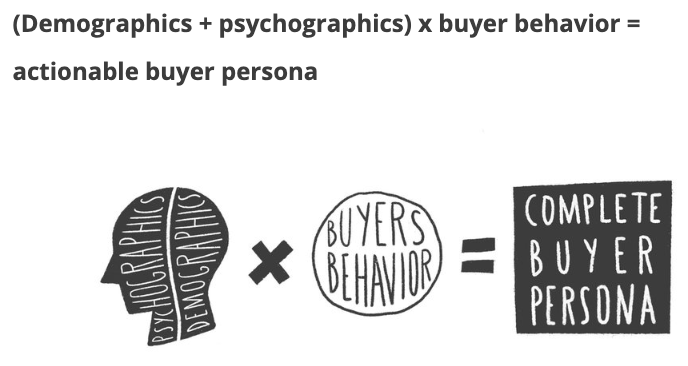
Notice a difference between the two? Both data sets can provide some useful details individually, but when combined, you can create a thorough customer persona that really puts things into perspective.
While demographic data essentially looks at the “who, what, where, and how” of your buyer persona, psychographics examine the why.

Psychographics is the study of consumer viewpoints and activities, often researched in tandem with conventional demographic data to build more comprehensive profiles of target audiences.
Put simply, psychographics is an effective market segmentation method that encompasses certain aspects of human behavior. This includes likes, dislikes, habits, goals, values, interests, hobbies, lifestyles, and political views.
What motivates your customers to purchase one product over another? Why does your message appeal more to a certain age group? Why does your eBook receive more downloads in a certain country?
(source)
To find all of this out, several steps need to be taken to ensure you understand your subscribers’ habits and in turn, can communicate with them much more effectively.
But, how do you go about gathering and analyzing this data?
How to Collect Psychographic Data
Consumer Surveys
One of the simplest, most straightforward ways to collect information about your customers is by administering a survey. You can create the survey and encourage your customers to complete it by sharing the link through social media or via targeted email campaigns.
Be sure to include questions outside the scope of topics that are directly related to your company’s products or services. Here are some examples:
- Do you identify as an introvert or an extrovert?
- Would you say you are loyal to specific brands?
- How often do you donate to charity?
- How would you describe your political philosophies?
- When is the last time you purchased something that cost more than $1,000?
Since some of these questions can be quite personal, a good way to ensure you’re getting honest responses is by explaining exactly what the results will be used for, as well as making your survey 100 percent anonymous. Also, you need to be aware that there might be a fair amount of people who are reluctant to participate, especially if the questions require more than the standard “yes or no” answer.
Therefore, it’s a good idea to offer some type of incentive for participating like a discount code or coupon.
Customer interviews
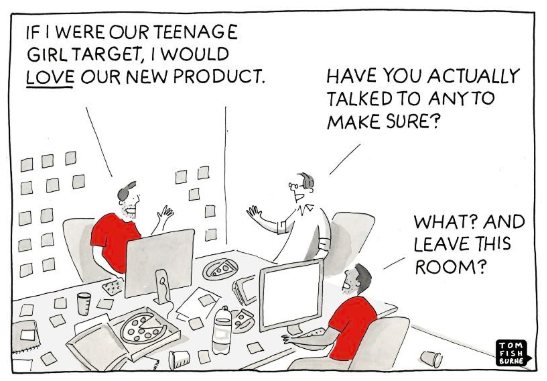
Considering you already have an established relationship with your customers, focus groups or customer interviews are a great way to collect psychographic data. You can conduct these interviews in-person, online, or over the phone. Each has their own set of pros and cons.
The benefit of choosing an in-person option is that you can often persuade customers to be more candid with their responses. Plus, you can ask follow-up questions. However, the downside of in-person discussions is that they lack the online option’s anonymity.
(source)
Considering the alternatives, interviewing someone over the phone may be your best bet. When people are in their own environment, they tend to be more relaxed and forthcoming, which guarantees that you’ll receive accurate, unbiased information.
Not to mention, phone interviews offer the type of comfort and convenience you can’t get when conducting them in person.
In terms of structure, be as conversational as possible. Allow the discussion to flow organically where it doesn’t feel forced or overly rehearsed.
Relevant sample questions include:
- What inspired you to purchase our product?
- How did our product solve your problems?
- How would you say we compare with our competitors?
- Considering your experience, would you choose us again?
Website analytics
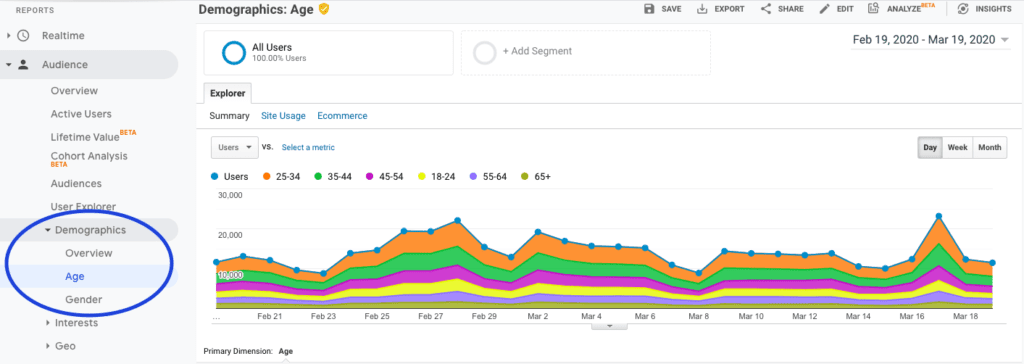
While web analytics are known to reveal plenty of information on demography, most platforms can also provide valuable psychographic data as well. Whether you’re using Google Analytics or another analytics platform, numerous modern websites have tools that deliver insights about purchasing behavior, interests, and more.
For example, you can retrieve data on audience interests on the “Demographics Overview” feature within Google Analytics. Then, click on the “Other Category” to drill into different age brackets and see what their various interests are.
If nothing else, your website analytics can help validate insights you unearth through other data collection strategies.
Social media analytics
These days, the more competitive social media platforms are offering some type of built-in analytics. As Alexandra Samuel of the Harvard Business Review notes, “Social media analytics let you identify trends in interests and attitudes, and even use sentiment analysis to help dig a little more deeply into psychographic attitudes.”
The more followers you have on LinkedIn, Facebook, Twitter, etc., the easier it will be to leverage it in order to accumulate more psychographic data.
Market research
When you’ve exhausted all other options, it may be beneficial to avert your attention to a company that specializes in market research.
Although this option is the costliest on the list, the advantages are pretty clear. The best market research firms are equipped with the right technology, have access to the information you can’t find and have extensive experience collecting psychographic data.
Examples of Psychographic Segments
Personalities
Personality describes the set of traits that someone regularly exhibits over time, which can commonly be broken down into the following subcategories:
- Belongers—Constantly seek to fit in as opposed to stand out in a crowd, feel alone, or undergo change.
- Achievers—Driven by a need to succeed and be productive.
- Emulators—Seek out the success of Achievers, but lack the skill set and/or work ethic to achieve this status.
- Saviors—Socially-conscious and aim to succeed to improve the world as a whole.
Lifestyles
Lifestyle is the amalgam of someone’s day-to-day activities, including who they associate with, where they live, and how they spend their time. It provides the most tangible insight into what a person truly values in the form of three dimensions called AIO variables:
- Activities—What a consumer spends money on and how much they engage in those endeavors.
- Interests—Refers to the satisfaction a customer gets from engaging with something.
- Opinions— Forms the baseline in which they determine what is most important to their life.
Social Class
Different social classes have varying levels of purchasing power. If you target the incorrect social class, they won’t be able to or in many cases, willing to buy from you. Here’s how these groups are classified:
- Top-upper class—Never faced financial hardship and tend to spend excessively, without paying much attention to cost.
- Bottom-upper class—Don’t spend as freely as the top-upper class, but also are willing to purchase what they want.
- Top-middle class—Comfortable with their current financial situation yet prefer not to be wasteful with their money.
- Bottom-middle class—Able to provide the basics of food, shelter, and clothing for their families, with more careful consideration placed on larger purchases.
- Top-lower class—Typically live paycheck-to-paycheck and seek to work and save as much as possible.
- Bottom-lower class—Often either underemployed or unemployed, living well below the average standard of living.
Wrapping Up
Today’s savviest marketers know that basic demographic data points no longer cut it when it comes to gaining a deeper understanding of your customer’s needs. With the entire internet at their disposal, marketers need to compile as much information as they can about their audience in order to create more personalized marketing content and unique buying experiences.
When used alongside other data, psychographics provide critical insight and context to consumer behavior, which has the power to drastically optimize your marketing efforts and take your business to the next level.
