Understanding your CPC (cost per click) is crucial for online advertising success. It’s more than just a metric; it’s a guiding force steering your business toward profitability.
In this article, Senior Vice President of Paid Media, Meghan Parsons, will walk you through a comprehensive examination of your analytics to truly understand the impact your marketing campaigns have on overall business profitability.
What You’ll Learn:
- Starting Point: Defining ROI
- Understanding C0st-Per-Click (CPC)
- Evaluate Your Conversion Rate
- Pulling it Altogether – Calculate CPC
- FAQs: How to Calculate CPC
My Expert Insights on Calculating Cost Per Click
Cost-per-click (CPC) isn’t just a number—it’s a strategic lever that guides campaign performance and budget efficiency. As digital advertising platforms lean further into automation and machine learning, marketers must adapt. The goal isn’t just to pay less per click, but to extract more value from every dollar spent.
Smart bidding takes the guesswork out of determining your cost per click (CPC), using machine learning to optimize bids for each click in real time. This dynamic approach directly influences your budget and overall profitability. With smart bidding, you’re not just chasing lower CPCs; you’re ensuring that your budget is utilized for the most effective clicks, potentially enhancing your campaign’s reach and impact.
However, smart bidding isn’t solely focused on cost savings. It’s about finding the perfect equilibrium between cost-effectiveness and maximum visibility.
Leveraging algorithms that analyze historical data, market trends, and competitor activity, smart bidding automatically adjusts your bids to target the optimal CPC. This ensures maximum exposure without compromising on efficiency.
Furthermore, the insights gained from smart bidding inform strategic decisions, guiding keyword selection, ad placement, and audience targeting. If certain keywords are consistently bringing in a higher cost per click, it might signal a need to reassess your approach, thanks to the intelligent data analysis offered by smart bidding systems.
In the PPC model, where each click is a crucial investment, embracing smart bidding strategies is key. It’s about employing technology to make each click more impactful and align with your business objectives, ensuring a smarter and more efficient ad spend.

Starting Point: Defining ROI
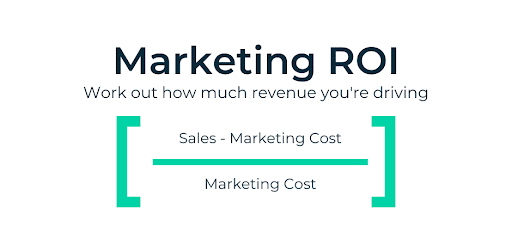
Put simply, ROI answers the big question—“Am I making more money than I’m investing into my business?” It also tells you just how much money you’re raking in (or losing) compared to what you initially invested.
And guess what? Marketers who calculate their ROI numbers are 1.6 times more likely to score bigger budgets for their marketing efforts.
Understanding ROI – An Example
Now, let’s paint a picture with a real-life example.
Imagine you drop $1,000 on some stock in a hot market. Fast forward two months, you decide to cash in, and voila – you pocket $1,300.
Here’s how you calculate your ROI:
ROI = (Gain from investment – Cost of Investment) / Cost of Investment
Now, let’s crunch those numbers. You made $1,300 from selling the stock, and the initial cost was $1,000:
ROI = ($1,300 – $1,000) / $1,000 or $300 / $1,000 = 0.3 or 30%
Ta-da! 30% – a positive ROI. It means your investment is doing its job, bringing in more cash than it costs.
But what if things take a downturn? Picture this…you bought those stocks for $1,000, but a bear market hits, and you’re forced to let them go for $700. Let’s run the numbers:
ROI = ($700 – $1,000) / $1,000 or -$300 / $1,000 = -.3 or -30%
A 30% loss is a negative ROI, signaling a not-so-great outcome for your investment.
Understanding Cost Per Click (CPC)
Many online advertising platforms follow the cost-per-click model. That means you only get charged when somebody clicks on your ad.
In other words, if your ad appears a million times and nobody clicks on it, then you don’t pay anything. Of course, that’s a pretty clear signal that you need to work on your ad copy.
How much does each click cost? On Google’s average cost per click is up to $4.66 in 2024. But, it depends on several factors.

Methods to Calculate and Find CPC
CPC is calculated by dividing the total cost of your ad campaign by the number of clicks received.
CPC = Total Ad Spend / Number of Clicks
If you’re not sure how to find CPC, you can do so with the following techniques:
Manual Calculation
Of course, you can determine CPC relatively easily using the CPC calculation formula, as mentioned above. Knowing how CPC is calculated manually could equip you to regularly maintain your campaigns and stay within your budget.
The following are the basic steps to follow for manual cost per click calculation:
- Figure out the total cost of your ad campaign, which we’ll go ahead and state as $500 in this example.
- You would then count the total clicks your ad received. In this example, we’ll say your ad got 250 clicks.
- Divide the total cost by the number of clicks, and here, you’d get a CPC of $2 per click.
Using Tools and Estimators
While manual calculation can help you determine what is a good cost per click, you may benefit more from using tools that incorporate the cost per click formula into their operations.
- Google Ads Cost Per Click Estimator: This tool gives you a convenient solution that’s compatible with Google Ads campaigns (more on this later).
- Google Ads Bid Simulators: Try out these tools for effective cost per click calculation based on specific campaign details.
- Publift’s CPC Calculator: This easy-to-use tool can help you determine what is a good cost per click based on the total cost of your campaign plus the number of clicks you want to receive.
- DashThis’s CPC Calculator: You can also use this tool to calculate CPC with ad spend, clicks, and platform inputs.
- Infidigit’s CPC Calculator: This tool is almost identical to Publift’s tool to instantly calculate CPC for marketing and advertising.
- SEMRush: While this is a paid platform, it can supplement Google Ads with even more research into CPC, including competitor CPC to help you compare campaigns. You can also do much more with Semrush, from keyword research to predicting campaign performance.
In summary, there are plenty of ways to go about calculating CPC, whether you use a manual cost per click formula or an automated tool for the job.
What Affects Your CPC? Factors to Consider
There are certain factors that can influence your ads’ CPC, including:
- Competition: The more competitive your ad is, the higher the CPC will be, which is why you’ll want to review competitor CPC in your industry for certain terms to get a better handle on where you stand based on your available budget.
- Keyword Quality: Google Ads and other platforms can also analyze the quality of your site’s keywords, ads, and landing pages. The higher the Keyword Quality Score, along with your overall Quality Score, the lower the CPCs due to their improved user experience.
- Ad Relevance: The more relevant your ad is, the lower the CPC as, again, this leads to a better user experience as target audiences are more likely to find your ad useful and worth clicking.

How Does Bidding Affect Your CPC?
For starters, many of the same platforms that offer pay-per-click (PPC) advertising operate on an auction system. That means you bid on what you’re willing to pay for a single click.
Of course, like any other auction system, you can bid too high, too low, or just right.
- If you bid too high, you’ll spend more money than you should on advertising and cut into your ROI.
- If you bid too low, your ad won’t show at all because the advertising platform will give priority to higher bidders.
- If you bid just right, then you’re paying the market price for a click.
So the “right” bid is driven by demand. The more people who bid on a particular keyword, the higher the cost per click.
Although social media advertising doesn’t usually operate on a bid per keyword, it still operates on an auction system. You’re constantly competing with other advertisers for space.
That’s why it’s impossible to offer you a “one size fits all” answer in terms of what you should bid for a particular keyword or an ad on social media. The answer is dependent on current demand and the popularity of keywords you’re targeting.
Google AdWords Industry Benchmarks – Average Cost-Per-Click
Even though you might not know exactly what you’ll pay per click when you advertise, there are some industry benchmarks that you can use as a starting point.
First, let’s take a look at industry averages in terms of cost per click on Google AdWords.
If you’re unfamiliar with Google AdWords, it’s an advertising system offered by the top search engine in the world. It uses a pay-per-click auction model.
It’s also important to understand that AdWords offers both a search and display advertising platform. Search advertising allows marketers to bid on keywords so their ads display in the results list when people search for those keywords. Display advertising shows banner ads on websites.
Before we jump into industry averages, it’s important to note that the average cost per click increased for 86% of industries in Google Ads (and Microsoft Ads).

The average cost per click across all industries is $4.22.

In the realm of online advertising, some industries are making their mark with impressively low average costs per click, all under $2.25:
- Arts & Entertainment
- Travel
- Real Estate
- Restaurants & Food
According to insights, even industries with slightly higher CPCs can make sense when you factor in the cost per average customer. Highlighted sectors like Attorneys & Legal Services, consistently rocking higher CPCs compared to their counterparts.
Why the disparity? Well, legal services often involve hefty transactions that can easily climb into the thousands of dollars. The silver lining? A potentially lucrative profit margin.
So, even when the CPCs play in a higher league, the return on investment might just be your ace in the hole.
Facebook Advertising: Average Cost Per Click by Industry
Another great option when it comes to advertising online is Facebook. That’s because it allows you to target ads to people based on demographics and interests.
But how much does a click on a Facebook ad cost? Again, that depends.
Across various industries, the typical cost per click for Facebook Ads averages $1.72 in 2024.
There are, however, some industry benchmarks that we can look at:

As you can see, some industries pay more to advertise on Facebook (for example, Finance & Insurance) while other industries pay less (Travel & Hospitality).
Why is it that some pay so much less? Again, it’s because there’s likely very little buyer intent on Facebook.
People aren’t generally looking to buy something when they’re going through their Facebook newsfeeds. Instead, they’re looking for status updates from friends and family members.
Benchmarks for Other Social Media Platforms
You may also wonder: What is a good CPC for other social media ads?
Today, the average CPC for LinkedIn ads, for instance, is around $3.94 for all industries.

Meanwhile, for other industries, the current average is:
- Finance and Insurance – $2.59
- Education – $3.11
- Health and Fitness – $3.87
- Business Services – $4.73
- Advertising and Marketing – $4.77
- Software and Applications – $8.04
Meanwhile, the current average CPC for Instagram in 2025 is around $1.43 across all industries.
Keeping up with industry averages can help you consistently predict the likely CPC of your ad campaigns as you determine how to work out CPC on all platforms.
What’s Your Conversion Rate?
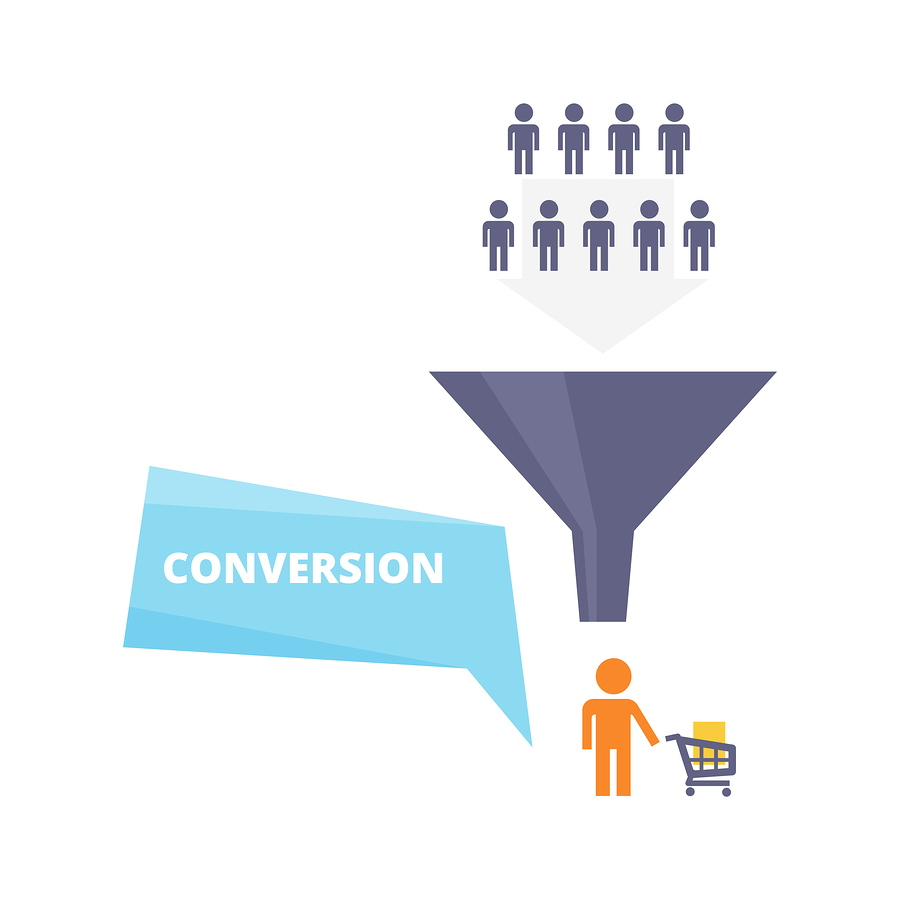
Next, you need to understand your conversion rate. That’s the percentage of people who click on your ad and make a purchase.
It’s important to follow that metric because, unfortunately, not everybody who clicks on your ad is going to buy your product or service.
That means the cost per click is not the same as the cost per sale. Now, let’s consider the cost per conversion formula and the important role it plays in performance-based marketing.
For example, let’s say you’re running an ad for women’s shoes that costs you $1.25 per click. At first, you might think that’s an affordable price to pay for a click because you’ve already got a profit margin of $17 for each pair of shoes you sell.
With the cost of the ad, your profit margin drops to $15.75 ($17 – $1.25). You can afford that!
Not necessarily.
You need to take a look at your conversion rate. If only one out of every ten people who click on your ad buy a pair of shoes then you’re really paying $12.50 ($1.25 x 10) per sale.
Now, calculate your margins again. It’s $17 – $12.50. That leaves you with a much slimmer $4.50 profit margin.
Can you afford that?
You’ll find out as long as you understand that your conversion rate and your cost per click directly tie into calculating your overall ROI.
Google AdWords Industry Benchmarks – Conversion Rate
In Google AdWords, search ads typically boast a 6.96% conversion rate, which decreased for 12 out of 23 industries.
Keep in mind, that your conversion rate goes beyond the click to measure who completed a purchase, and click-through rate (CTR) tells you how many people clicked your ad.
In short, CTR focuses on getting people to your site, while conversion rate focuses on those who take the desired action
Now, let’s look at conversion rates by industry:

Facebook Advertising: Average Conversion Rate by Industry
The average conversion rate for Facebook ads across all industries is a healthy 9.21%!
Here are the average Facebook ad conversion rates by industry:

In gauging the potential impact of your ad, a straightforward method is to project your monthly conversions. Simply take your monthly click count and multiply it by your conversion rate.
Setting Realistic Expectations
Incorporating the cost per conversion formula into your ad cost in addition to CPC can help you determine a “good” CPC based on your needs. You can set realistic goals for your ad campaigns, which will further factor into how to calculate CPC.
Google Ads CPC Estimation Tools: How to Use Them
There are a few different ways to complete a cost per click calculation using Google pay per click cost estimators.
Bid Simulators
Using Google Ads, you can take the following steps to calculate CPC based on your campaign data in the bid simulator:
- Go to Google Ads.
- Navigate your Google Ads “Keywords” or “Ad Groups” section.
- You’ll see the “Bid Simulator” icon beside either section.
- Adjust your bid amounts to see what the CPC and other performance metrics will look like.
Keyword Planner
Another option is Google’s Keyword Planner, which can give you all kinds of metrics for various PPC and SEO keywords.
To look for CPC using this tool, simply:
- Open Google Ads.
- Go to “Tools.”
- In the “Planning” section, choose “Keyword Planner.”
- Enter one or more target keywords to see CPC ranges, average search volume, and other critical metrics.
Additionally, once you’ve integrated the keywords you want and set up your campaigns, you can see the average CPC from your dashboard within the “Avg. CPC” column in your existing campaigns.
Putting It All Together – Calculate CPC
Now that you’re equipped with insights on ROI, conversion rates, and industry benchmarks, let’s delve into a practical example. Consider managing a boutique hotel in the Travel and Hospitality industry, contemplating Google AdWords for online advertising.
Revisiting ROI
While we’ve toyed with the numbers, it’s time to plug them into the ROI formula. Google AdWords provides budget control, and let’s assume a $100 daily budget, advertising $150/night rooms with a 3.55% conversion rate.
With around 26 daily clicks, resulting in 1 booking per day, your daily revenue is $150. For a 30-day month, spending $3,000 on advertising generates $4,500 in revenue.
ROI =($4,500−$3,000)/$3,000
The ROI is an impressive 50%, indicating a profitable return despite the $3,000 monthly advertising cost.
Finding Your Ideal CPC
Remember, CPC represents the cost you pay for each click on your ad. The formula for CPC is straightforward:
CPC=Total Advertising Cost/Number of Clicks
Let’s illustrate this with our hotel example. If you spent $3,000 on advertising and received 100 clicks, your CPC would be $30.
Understanding how to calculate CPC is essential for optimizing your advertising budget. Experiment with different CPC values to find the sweet spot that maximizes returns, considering your specific industry, conversion rates, and profit margins.
Calculating a CPC Target
First and foremost, outline your ROI goal – the critical threshold for a positive return when venturing into online advertising. Following the same scenario, after a thorough review with your accountant, you determine that a minimum ROI of 50% is essential for your business model.
- Step 1: Adjust For Competitive Keywords – If your hotel operates in a competitive area, where keyword bids surpass industry averages, a 500% ROI may be unattainable. Suppose the current bid landscape hovers around $3 per click; in that case, your competitive stance demands a bid in that range.
- Step 2: Crunch the Numbers – With a daily budget of $100 translating to approximately 33 clicks a day at $3 per click, maintaining a consistent 2.57% conversion rate implies around 1 booking daily. This equates to a daily revenue of $150, culminating in a monthly revenue of $4,500.
- Step 3: Verifying Your ROI – Plug these figures into the ROI formula, considering a cost per click of $3. The result? A 50% ROI, aligns perfectly with your preset goal.
- Step 4: Utilize Spreadsheets – Create a comprehensive spreadsheet, encompassing key metrics like cost per click, conversion rate, and daily budget. Use this tool to play out different scenarios, adjusting the CPC until your ROI surpasses the targeted threshold.
This proactive approach ensures a well-informed determination of your maximum cost per click.
Optimizing CPC for Better Campaign Performance
If you want to get the best results from your ad spend and save more money in the long run, there are some steps you can take to reduce CPC for your ad campaigns, including:
1. Improving Quality Score
You can improve your Quality Score by keeping ads relevant, which largely entails making sure your ad copy matches keyword intent, using targeted language, and grouping keywords together for ads with similar themes.
The landing pages connected to your ads should also be of high quality and keep people moving along through the customer journey after clicking through your ads.
2. Bid Management Strategies
Automated bidding in Google Ads could help you, such as Target CPA and Target ROAS, which will adjust your bids in real time based on revenue or conversion goals without compromising click-through rates.
Additionally, you can bid more on long-tail keywords, which are often less competitive than broader short-tail options with often clearer intent behind them.
Other bidding strategies could include:
- Adjusting your bids by device based on which types of devices get the best results
- Bidding higher during peak hours when people are more likely to engage with your ads
- Optimizing geotargeting efforts
3. Ad Copy and Targeting
In addition to making your ad copy relevant with optimized keywords, ensure your copy is compelling and entices viewers to click.
Also, segment your target audiences appropriately and hyper-target your ads to reach each segment, which will increase efficiency even more and work to optimize CPC.
We recommend layering audiences by engagement and conversion proximity:
- Top Funnel: Broad audiences with awareness-focused messaging
- Mid Funnel: Interest-based, remarketing, or 30-90 day pixel audiences
- Bottom Funnel: 1st-party data, high LTV customers, lookalikes
Cost Per Click FAQs:
1. Why does cost per click increase?
Like any auction, cost-per-click (CPC) advertising gets pricier with more competition. Multiple advertisers vying for the same ad space drive up the CPC. Even a lack of clicks can raise your CPC on platforms like Facebook, where engagement is a factor. The key to lowering CPC is crafting irresistible ads that people can’t help but click.
2. What’s the difference between cost per click (CPC) and cost per thousand impressions (CPM)?
With the cost-per-click (CPC) model, you only pay when someone clicks on your ad. In CPM (cost-per-thousand impressions) model, you pay a fixed rate for every 1,000 views regardless of clicks. CPM might be cheaper if you expect a high click-through rate, but CPC ensures you only pay for results. Generally, CPC is recommended for better control over your ad budget.
3. What is enhanced cost per click?
Enhanced Cost Per Click (ECPC) is a program offered by Google Ads. It’s designed to get you more conversions by raising your max bid for clicks that will likely land you a sale. It may seem risky to let Google automatically increase your bid. However, ECPC is designed to keep your cost per conversion the same. So you shouldn’t take a huge hit on your margins. Still, it’s a great idea to limit your maximum ad spend per day when you first decide to go with ECPC. That way, if the cost per conversion goes through the roof, you can make adjustments with minimal loss.
4. Why is CPC important for my marketing strategy?
CPC is crucial because it directly impacts your advertising budget. Knowing how to calculate CPC ensures you allocate funds efficiently, maximizing returns on your marketing investment.
5. How do external factors influence CPC?
External factors like market trends or seasonal variations can impact CPC by altering demand. Adapting your cost-per-click formula based on these influences ensures your strategy remains responsive and cost-effective.
6. How often should I revisit and adjust my CPC targets?
Regularly revisit and adjust your CPC targets to stay aligned with evolving market conditions. A quarterly review is a good starting point, but more frequent adjustments may be necessary during dynamic periods.
7. Are there tools to automate CPC calculations?
Yes, various tools automate CPC calculations, streamlining the process. Platforms like Google Ads provide automated bidding options, leveraging algorithms to adjust bids based on performance metrics.
8. How do different keywords influence my CPC?
Keyword competitiveness affects CPC. High-demand keywords often have higher CPC. Strategic keyword selection and understanding how to calculate CPC for each keyword can optimize your budget allocation.
9. Why might my actual CPC differ from the maximum bid?
Factors such as ad relevance, quality score, and competitor bids influence actual CPC. A comprehensive understanding of the auction dynamics goes beyond the cost-per-click formula and helps explain these variations.
10. How does ad positioning impact CPC?
Ad positioning directly impacts CPC. Higher positions often come with increased costs. Striking the right balance, considering your target audience and budget, is crucial in optimizing CPC while maintaining effective ad placement.
11. What is the formula for on-target CPC?
Generally, the on-target CPC calculation formula will look like:
On-target CPC = (Total Ad Spend on Target Audience) ÷ (Total Clicks from Target Audience)
Using this formula, you can determine how to calculate CPC based on specific audiences you wish to reach.
12. How will privacy regulations impact CPC?
We can expect developments like the GDPR and CCPA to restrict access to user data, which will subsequently make it harder to effectively target ads and optimize CPC. Advertisers could also wind up bidding more aggressively to reach high-value audiences due to the lack of data for precision targeting.
13. Will AI automation affect CPC?
With developments in AI and machine learning, platforms like Google Ads will become increasingly better at predicting and optimizing CPC. In turn, you may find it easier to optimize ad campaigns thanks to more accurate data and a better understanding of your ads’ relevance.
14. Does a lower CPC always mean better performance?
No, a reduced CPC doesn’t necessarily mean your ads will perform better.
For instance, using the cost per conversion formula, you might discover that people are clicking through your ads but aren’t converting into customers, which could mean that your ads aren’t truly getting you the results you want, often by targeting unqualified traffic.
Ads might also have a low CPC because of their lack of visibility and poor placement, which could prevent people from seeing and clicking on your ads.
15. Why is my CPC increasing even though my budget hasn’t changed?
This issue could result from a number of factors, such as:
- Higher competition from other bidding advertisers
- A lower Quality Score for ads, keywords, or landing pages
- Seasonal trends that see more competition, including holidays when people are shopping online more
- Changes in user behavior, such as certain search trends
16. What’s the difference between Max CPC and Actual CPC?
The maximum CPC is the highest amount you’re capable or willing to pay for each ad click, but you won’t likely wind up paying this amount. Meanwhile, the actual CPC is the amount you wind up paying for a click.
The max helps you establish the highest CPC you’ll reach before exceeding your budget, while the actual CPC can indicate what your ads truly cost.
Based on actual CPC, you can more realistically set your max CPC and determine how to calculate CPC that will maximize ROAS.
Achieve Your Marketing Goals with Ignite Visibility
Whether you’re eager to master how to calculate CPC, refine your best CPC target, or optimize your online presence, Ignite Visibility has got you covered.
Countless businesses across various industries trust Ignite Visibility to enhance their online strategies. Whether you run an ecommerce business, offer financial services, run a healthcare practice, or any other sector, we’re here to propel your success.
Ignite Visibility empowers you to:
- Fine-tune your advertising strategies based on industry averages and real-time campaign analytics
- Maximize returns on your advertising investment, even with substantial monthly spending
- Take control of your online presence and engagement
Contact us today to get started!