
A standard operating procedure, or SOP, provides essential guidelines for businesses of all kinds when completing work for clients. Among other industries, standard operating procedures are crucial in marketing, providing agencies with the groundwork needed to develop highly effective campaigns and communicate efforts to clients.
In this blog, Sebastian Turner, VP of Business Development, will discuss why standard operating procedures are important for marketing, how to write standard operating procedures, and examples of SOPs in this industry.
What’s Covered:
- What Are Standard Operating Procedures (SOPs)?
- SOPs’ Role in Client Communication
- Improving Campaign Results With Standard Operating Procedures
- Best Practices: How to Write Standard Operating Procedures
- Case Studies
- Common Implementation Challenges
What Are Standard Operating Procedures (SOPs)?
A standard operating procedure is a type of document or series of documents that details precisely how to complete various activities within an organization.
Using a well-organized and comprehensive standard operating procedure document can give companies the kinds of guidelines needed to maximize quality with consistent services.
The purpose of standard operating procedures in marketing is to detail the various activities that marketing agencies must complete for their clients. For instance, they could cover:
- Content development and publishing
- Social media post writing and scheduling
- SEO and PPC campaigns
- Influencer marketing management
- Email marketing
- Planning and strategy
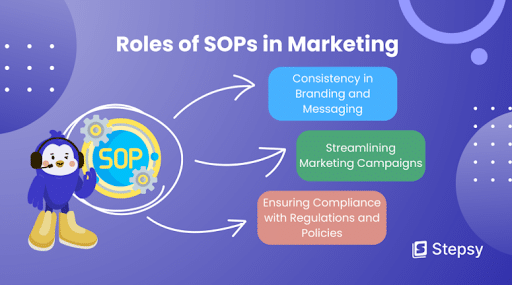
In the process, the SOP could help maintain messaging and brand consistency, help all branches of a marketing team provide superior services, and maintain consistent regulatory and company compliance.
To get the best results from a standard operating procedure, it’s important to know how to put one together the right way.
There are multiple key components to consider, and it’s not enough to simply draft your documents, SOP maintenance is equally important in helping you get the most from your efforts.
Consider how you would put your standard operating procedure document together and the processes you’d need to continually audit and optimize it. If your operations change in an integral way, or even subtly, you will likely want to reflect those changes in your SOP as it evolves with you.

SOPs’ Role in Client Communication
It’s also important to understand why standard operating procedures are important for client communication.
SOPs will guide marketers on how to maintain responsive and consistent communication with clients through all channels, which can:
- Maintain Quality of Customer Service: SOPs give businesses the framework needed to make sure every client benefits from reliable service and consistent information, regardless of points of contact.
- Reduce Errors and Miscommunication: Employees can follow strict communication templates that include ready-made content for them to adhere to, reducing the risk of human error and potentially costly miscommunication.
- Optimize Efficiency: By using digital standard operating procedures, employees can easily and conveniently access guidelines and other information, enabling them to quickly answer any questions that clients may have and further shorten response times.
- Increased Client Trust: Having an organized process for managing clients and interactions between them will lend your agency a more professional image that builds more trust among your clientele.
- Continual Improvement: Regular SOP maintenance can help you regularly update your documentation as needed over time, especially if you change your customer service interactions using certain tools or procedures.
Improving Campaign Results With Standard Operating Procedures
When it comes to marketing, business standard operating procedures can improve campaign results in a number of ways.
Content Creation
Marketing SOPs can provide clear guidance on how to develop high-quality content that adheres to branding guidelines, quality standards, and messaging requirements for each content piece across platforms.
Digital Advertising
SOPs could also detail how to set up digital advertising campaigns for display ads, paid search, and social media advertising by streamlining keyword targeting, social media posting, and more. The result is a well-optimized ad campaign that maximizes visibility and conversions.
Budgeting and Tracking
You may also use these documents to help outline the process for establishing marketing campaign budgets and tracking related expenses. In doing so, you could avoid going over budget and comply with your company’s financial requirements.
Campaign Reporting
Another benefit of a standard operating procedure for marketing is the ability to optimize reporting, which can provide marketers with meaningful insights into campaign performance. Agencies can establish reporting procedures, including specific marketing metrics to track and analyze, based on the goals the client wants to achieve.
Best Practices: How to Write Standard Operating Procedures
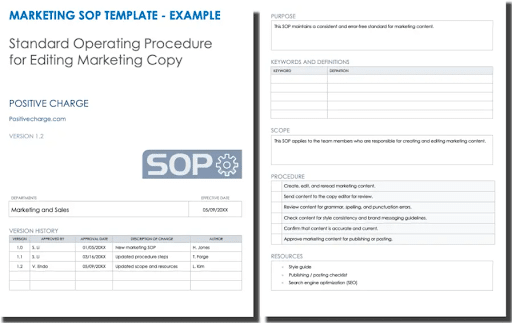
Now that you know more about the purpose of standard operating procedures for marketing, let’s explore more about how to write standard operating procedures that get results.
The following best practices can help you draft the ideal SOP:
Keep the SOP Concise
To help employees remember your SOP details better, try to write brief sentences that get the point across efficiently. Avoid using overly technical terminology to help ensure everyone stays on the same page within your organization, with clear step-by-step guidance.
Be Specific
In addition to being concise and brief, it’s best to avoid any ambiguities in your SOPs. Certain words like “general” and “periodic” do not give precise instructions to employees. If anything, generalizing verbiage could significantly hurt people’s understanding of the guidelines you put into place.
Prioritize the Main Idea
When structuring the content of your SOP, start by presenting the main idea in a specific summary, after which you can elaborate further. It also helps to eliminate any instances of passive voice that could weaken your writing, instead directing employees with active voice.
Format SOPs for Readability
Don’t bog down your SOPs with massive blocks of text. In maintaining conciseness, break up your content into sections, which you can easily do with bulleted lists and subsections that make all of the information presented more digestible.
Case Studies
To give you a better idea of how you can incorporate SOPs into your marketing efforts, here are some sample standard operating procedures that you can set up for your business:
Blog Content Creation
For effective content creation, you might have an SOP specifically for blog posts, which details ideation, team review, drafting, publishing, and ultimately promoting blog content.
An example here could include guidance on specific topics that blog posts should cover, when and how team members will review the content, schedules for publishing and the designated platform used, and which channels to use to promote blog posts and how frequently to do so.
Email Marketing
You may also implement an SOP to guide marketers through email campaigns.
A sample standard operating procedure could cover items like:
- Subject lines, including language and symbols used
- Body content, such as layout, greetings, and signatures
- Scheduling to maintain sufficient frequency without annoying recipients
- Tracking email campaign performance, such as metrics like open rate and clicks, based on goals
Search Engine Optimization
A company may want to develop a comprehensive SEO strategy that helps increase visibility and conversions through organic search traffic.
An SOP for SEO may focus heavily on keyword research and how to optimize content with those keywords, as well as how to develop and execute link-building strategies with outreach through the proper channels.
Employee Onboarding and Orientation
Another type of SOP could go over onboarding and orientation for new employees in your marketing team.
This SOP could go over branding guidelines to introduce new employees to the brand’s particular language and visuals. It could also establish protocols for completing various tasks to keep processes uniform for all employees.
Additionally, this document might detail the kinds of resources used for various campaigns and standards for using various assets.
Client Feedback Management
SOPs can streamline customer service by giving employees detailed guidance on how to respond to client feedback and maintain communication.
For instance, digital standard operating procedures might provide templates for customer service representatives to use when responding to positive or negative feedback. They may also indicate who will serve as the point of contact for specific clients.
Additionally, this SOP could detail customer relationship management (CRM) solutions and how to use them to document client interactions and keep track of successes.
Campaign Planning and Execution
A marketing company may develop an SOP that clearly outlines the steps for conceiving of campaign objectives, followed by guidance on putting together creative assets like images and content, and ending with channel selection and monitoring frequency.
One example might include an SOP that dictates using certain social media platforms to push content and when to post based on when audiences are most active. This SOP might also include instructions on how to develop ideas for content based on the company’s audience and marketing goals for a particular period, whether the agency wants to build brand awareness, generate more leads, or drive more sales with marketing campaigns.
Legal Compliance
On the legal side of things, you might have an SOP that helps ensure compliance in various areas. The document might include guidance on maintaining data privacy and providing consumer protection with marketing content.
You may also be able to avoid potentially misleading campaigns that might otherwise tarnish your brand reputation and lead to legal repercussions down the road.
These are simply some of the many types of standard operating procedures that marketers can employ to manage their marketing efforts successfully and keep clients consistently satisfied.
Common Implementation Challenges
There are various implementation challenges that marketing agencies may face when writing SOPs, including:
- Unclear Procedures: Avoid poorly written and overly technical SOPs, keeping the details simple and well-defined to give your employees a good understanding of how to complete various tasks and comply with company policies.
- Resistance to Change: Employees could also push back against new procedures if they find them irrelevant, too complex, or difficult to follow, in which case you could communicate how they will benefit from the implementation of new SOPs or their necessity when it comes to industry or regulatory compliance.
- Inadequate Training: Always train your employees on the SOPs you have in place to facilitate their proper application, which can help minimize the risk of errors and issues with noncompliance.
- Outdated SOPs: Companies may also neglect to perform SOP maintenance to keep their procedures up to date. Avoid this issue by continually reviewing your SOPs and determining if they need any changes based on everything from internal strategy to legal developments.
- Version Control: Develop a digital standard operating procedure that everyone can access on a centralized platform that regularly updates, which will ensure everyone within the organization is using the latest version.
- Lack of Enforcement: Make clear any consequences of failing to comply with SOPs, which could further keep everyone compliant and following your guidance. Subsequently, you can mitigate the risk of any noncompliance problems and potential issues with incomplete tasks or poor quality control.
Develop Solid SOPs With Ignite Visibility
Want to learn more about how to write standard operating procedures? Maybe you need some help with your company’s marketing. In any case, the experts at Ignite Visibility could help you develop a winning strategy to bolster your business.
With our expertise here for you, you can:
- Develop effective SOPs for your organization
- Put together high-quality marketing campaigns with all the resources you need
- Continually monitor campaign performance with meaningful metrics and KPIs
- And more!
Reach out to our team today to discover the ways we can help you thrive in your industry.