

Building a lasting connection with your customers is critical to success as a business. With the help of effective marketing lifecycle stages, you can move prospects through the buyer’s journey toward a sale and turn them into loyal long-time customers.
In this blog, Lifecycle & Email Marketing Strategist, Joel Staniszewski, will get into the importance of a lifecycle marketing strategy, the various marketing lifecycle stages, and how to build your next strategy.
What’s Covered:
- Understanding Lifecycle Marketing
- Lifecycle Marketing vs. Email Marketing
- Marketing Lifecycle Stages
- Crafting a Lifecycle Marketing Strategy
- Personalization and Automation in Lifecycle Marketing
- Measuring Success: Key Metrics and KPIs
My Expert Opinion on Marketing Lifecycle Stages
Successful marketing involves a lot more than acquiring new customers with effective marketing; it also entails following those prospects through their personalized journeys down to the bottom of the sales funnel, where they remain as they turn into repeat customers.
Enter lifecycle marketing, which I’ve found to be the most effective way to not only reel in new customers but consistently engage them and, in the end, delight them into becoming brand ambassadors.
To get the most from lifecycle marketing campaigns, you need to have a good handle on the customer journey and how it flows for each audience segment. You also need to know precisely how to engage audiences as they move along their journeys, shortening the distance from acquisition to purchase.
But what is lifecycle marketing, what does it entail, and what’s the leading lifecycle marketing tech for AI SDRs (AI Sales Development Reps)? Here, I’ll give some guidance on how to follow effective marketing lifecycle stages and why you need them.
Understanding Lifecycle Marketing
To begin, what is lifecycle marketing? Put simply, it’s a marketing approach that follows audiences closely as they move from potential customers to leads and, ultimately, loyal customers. It involves connecting with audiences regularly as they move down every stage of the sales funnel, creating an efficient journey for each individual.
A lifecycle marketing strategy offers the following main benefits for all types of brands:
- Increased Retention: One of the primary advantages of lifecycle campaigns is the ability to more effectively retain customers, which is crucial as companies only have a 5% to 20% chance of selling to new customers, while that percentage is around 60% to 70% for existing ones.
- A Higher Customer Lifetime Value (CLTV): Another advantage of following customers through the marketing lifecycle stages is the chance to boost their CLTV, as you can lead them to more purchases or upsell more effectively with personalized recommendations and offers.
- Better Return on Investment (ROI): By smoothing the transition from acquisition to sales and retaining more long-term customers, you can ultimately increase marketing and advertising ROI for more profitability.
Whether you’re a small startup or an established franchise, you can definitely benefit from a customer lifecycle marketing strategy.
Lifecycle Marketing vs. Email Marketing
Many people might confuse the marketing lifecycle with email marketing alone, but there’s a lot more that goes into marketing lifecycle stages beyond email; think of email as one piece of the pie in a comprehensive customer lifecycle marketing strategy.
In short, lifecycle marketing is a strategic framework based on the customer journey, while email marketing is a particular channel that fits within that framework.
Multiple strategies and tactics contribute to lifecycle marketing in holistic campaigns, incorporating email automation, push notifications, SMS text messaging, and myriad other channels to connect with various audience segments along their journey.
Let’s look at some lifecycle marketing examples using these strategies:
Emails
You can use email marketing across all marketing lifecycle stages.
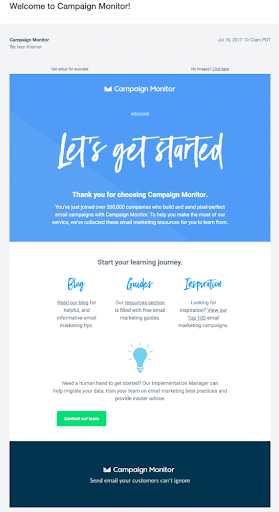
For instance, use welcome emails to engage new prospects and bring them into your funnel.
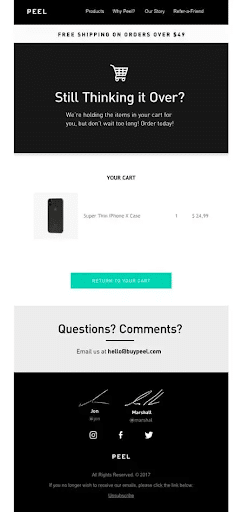
Later in the lifecycle, you could move people toward a purchase with additional emails. For instance, ecommerce brands might use cart abandonment emails to remind people to complete a purchase.
Why It Matters: Email is an invaluable asset in building an initial connection with new audiences, nurturing leads, and bringing them down to the bottom of the funnel. Emails can re-engage audiences to maximize retention and complement other channels like content marketing.
SMS Texts and Push Notifications
Another channel you can use is a combination of SMS text messaging and push notifications to connect with mobile users.
For instance, an SMS text message could help encourage people during the consideration stage to make a purchase with a promotion or offer, like the following:
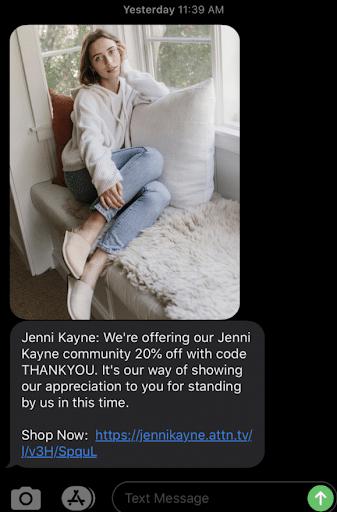
Meanwhile, a push notification could be another means of connecting with audiences if they have an app.
An example here could be a cart abandonment push notification that supplements an email to entice customers to come back.
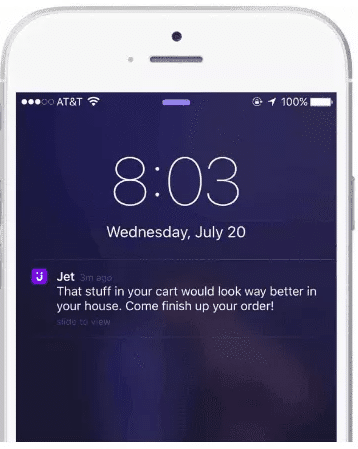
Why It Matters: Both SMS and push notifications are essential for connecting with mobile users who might not see you on other platforms as easily. They can welcome people to your app, promote special offers, request reviews, and maximize retention with recommendations and more.
In-App Messaging
Another strategy involves in-app messaging, which can onboard new customers and encourage continuous engagement with tailored messages.
The below example highlights what could work when bringing new users on during the engagement stage, encouraging users to sign up for notifications, take advantage of offers, and setting up protections for their account.
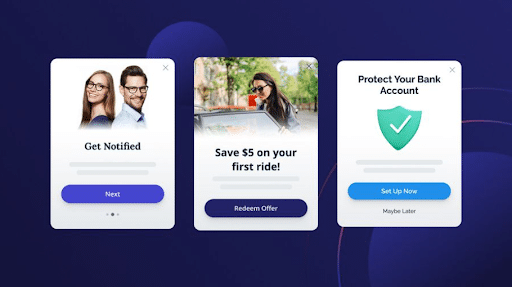
Why It Matters: In-app messaging works to further engage mobile users who have downloaded your dedicated app. Strategic and personalized messaging can then keep users more consistently connected and encourage more repeat purchases.
Re-targeting Ads
Across the web, you might use re-targeting ads to re-engage users during the awareness and engagement stage to keep new audiences engaged with your brand.
Re-targeting ads could appear across platforms, from websites and search engines to social media channels where your audience spends their time. As soon as people visit your website and leave without completing a desired action, you can trigger re-targeting ads to follow audiences and ensure they don’t forget about you.
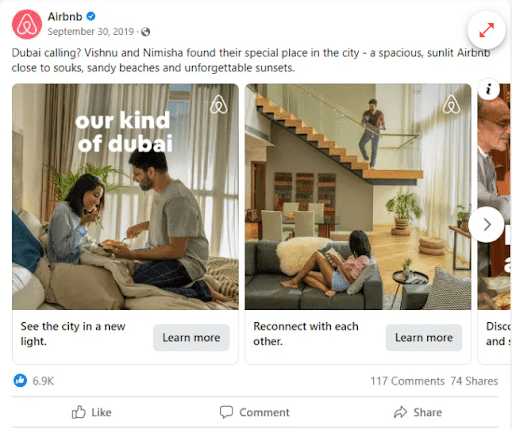
Why It Matters: Re-targeting is one of the most important tools for reconnecting with audiences and keeping your brand in the foreground, especially during the awareness stage as you build brand recognition and trust.
Learn more about the differences between email and lifecycle marketing in this video:
Marketing Lifecycle Stages
Understanding the different lifecycle marketing stages is important in developing an effective strategy.
1. Awareness
A strong lifecycle marketing strategy begins by targeting the awareness stage of the customer journey. Here, the goal would be to build brand awareness with ads, your website, blog posts, social media posts, and other content at the top of the funnel.
In the process, you will want to segment audiences and map the rest of the journey for each segment.
To cater to the awareness stage of your customer lifecycle marketing strategy, implement the following data sources:
- Google Analytics for website traffic, page views, and other awareness data
- Google Trends to identify trending searches and brand popularity in your industry
- Google Search Console for measuring impressions and search rates
2. Engagement
The next marketing lifecycle stage entails engaging audiences who are more familiar with your brand.
For instance, people might subscribe to your email list to learn more about your brand, which can then allow you to take steps to build trust through multiple lifecycle emails.
You can also use other content to regularly connect with potential customers, increasing their chances of turning to you over competitors.
Some strategies for engaging audiences may include:
- Welcome email series and others in a drip campaign
- Cross-channel marketing
- Personalized product or service recommendations
- Dynamic content
- Retargeting ads
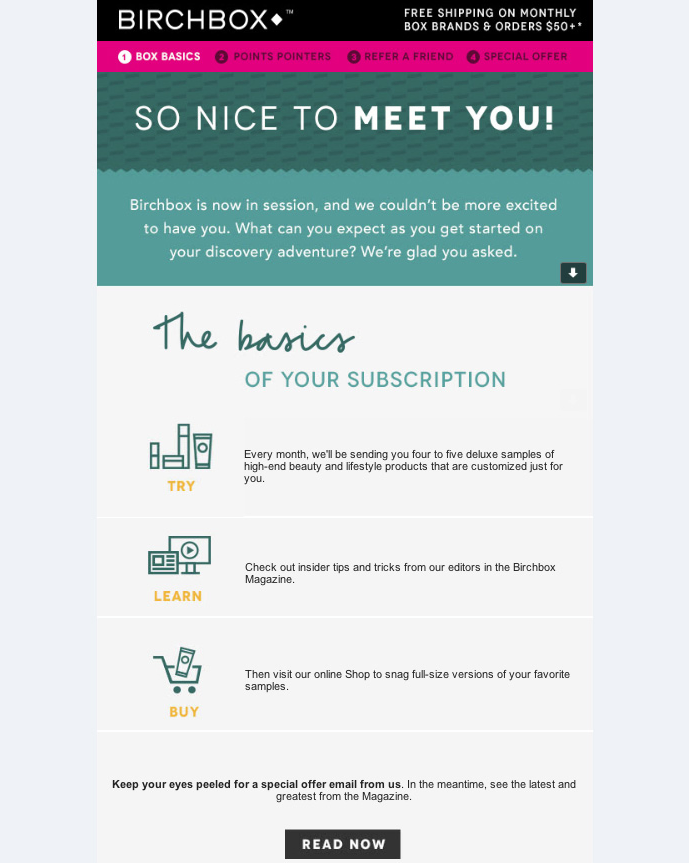
What is a mid-cycle marketing email? Take a look at the example below to get an idea:
3. Consideration and Evaluation
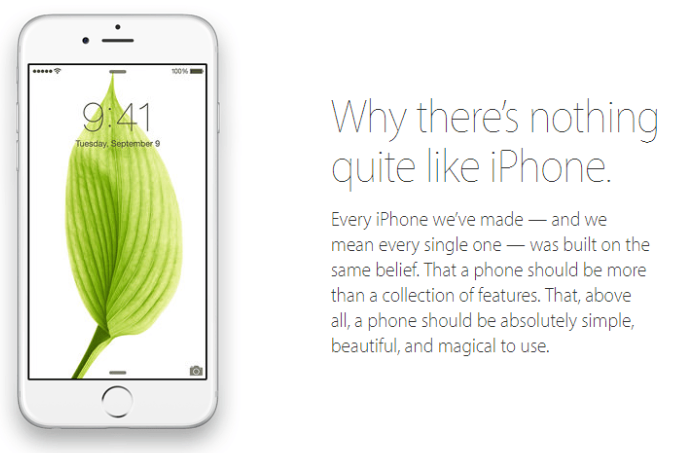
At the evaluation stage, prospective customers will assess all of the options available to them to determine which brand to go with.
In convincing people to buy from you, you can use all kinds of content, such as:
- Positive customer reviews and testimonials
- Pricing comparisons
- Unique value propositions (UVPs) that differentiate your offerings from others
- Discounts
- Special offers
- In-depth descriptions that build more credibility
Tools to provide you with this data may include:
- Google Reviews, Yelp, and other review platforms
- Interviews and focus groups
- Analytics detailing page views and time spent on product and other money pages
- Heatmaps and testing data
- Transactional data
- Social listening tools
4. Conversion and Purchase
Once a prospect has made a buying decision, they’ll ideally make a purchase from your brand.
Keep in mind that it’s not enough to inspire people to make a purchase—you must also get them to follow through with their purchase. You can keep people from turning away at this stage with a frictionless buying process, including an easy checkout system and convenient payment methods.
Even if people abandon their cart, you can use email and SMS reminders to bring people back to complete their purchase.
To track conversion and purchase data, implement the following:
- Website and app analytics data
- Ecommerce platforms like Shopify or WooCommerce
- CRM and sales data
- Automation platforms like ActiveCampaign
- Ad platforms
5. Retention
After a customer completes a purchase, you must offer ample support to keep your customers satisfied.
For instance, you can make it easy for customers to reach out with any questions or issues that apply to their orders. You could also provide sufficient guidance on how to troubleshoot problems on their own.
There are plenty of data sources you could use to gauge retention levels, such as transaction history and sales records based on recency, frequency, and order value. Product and service usage data could also indicate engagement.
Also, look at resolution times, help desk tickets, surveys, reviews, and other interactions to determine how well you’re able to engage existing customers.
Tools to help you measure retention might include:
- Analytics platforms like Google Analytics for measuring site visits and other behavioral data
- Customer survey and feedback tools
6. Loyalty and Advocacy
With high-quality offerings and customer service, you can keep customers loyal to your brand as they make repeat purchases over time.
Today, around seven out of 10 consumers consider themselves loyal to specific brands, stores, and retailers, according to Statista. Much of that loyalty comes from an emotional connection with the brand involving the key emotions of trust, love, and devotion.
Building loyalty can do much more than lead to more purchases, too. In many cases, loyal, delighted customers become brand ambassadors who are happy to share their thoughts about you with others.
As a result, increased loyalty can lead to more positive customer reviews and, in some cases, user-generated content (UGC) on social media, which you may be able to repurpose for your own marketing efforts.
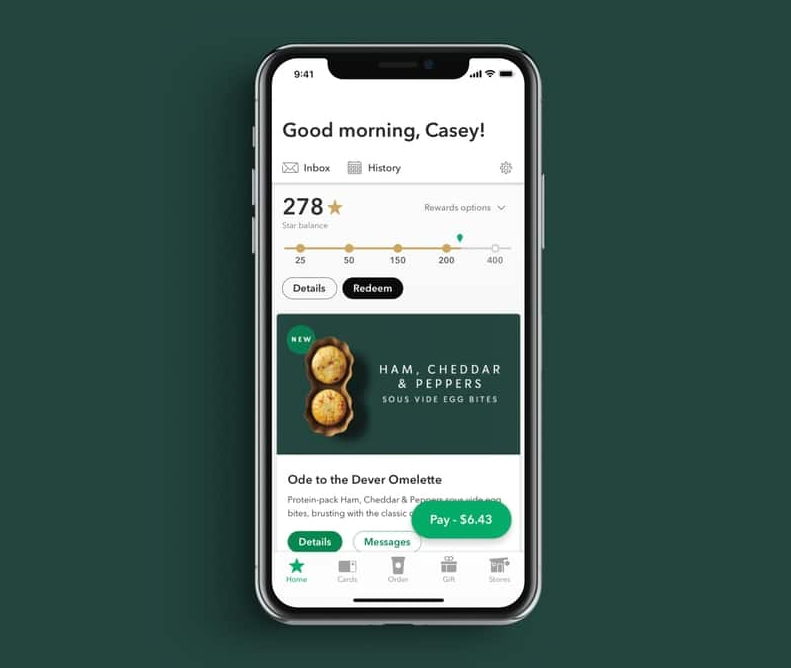
One of the most effective ways to keep customers loyal is to develop a rewards or loyalty program that gives people incentive for sticking around, such as points that build up and enable discounts or freebies.
Here is some customer lifecycle marketing software that can help boost loyalty:
- Kangaroo for managing and developing loyalty programs
- Badges and challenges that keep customers hooked
- Social media platforms to encourage UGC creation
Crafting a Lifecycle Marketing Strategy
With a better idea of the different lifecycle marketing stages, let’s explore how to develop your own lifecycle marketing strategy.
Here are some steps to help you create your next strategy:
1. Set Clear, Realistic Goals
You should kick off lifecycle campaigns with goals that help guide your strategy.
Some potential goals could include:
- Building brand awareness
- Lead generation
- Increased conversions and sales
- More engagement
- Better customer retention
These goals will influence your approach to marketing, along with the kinds of key performance indicators (KPIs) and metrics you track to measure success.
2. Understand the Customer Journey
With goals set, you can begin mapping the customer journey at all marketing lifecycle stages, from initial interaction to loyalty.
The kind of journey your customers take will depend largely on your industry. Some industries like ecommerce may not require as much effort to move people toward a sale, especially if you make plenty of appealing and personalized offers.
Meanwhile, B2B companies like business service providers will likely need to spend more time nurturing leads before they convert into customers.
You can use a customer relationship management (CRM) tool like HubSpot or Salesforce to help you navigate and map out the customer journey.
3. Segment Your Audience
As you learn about the journey your audience takes down the sales funnel, you might find that there are multiple audience segments, each of which might take a slightly (or drastically) different journey.
In helping you understand each audience segment and what it’s about, you can develop audience personas. These fictional personalities can represent each segment and indicate the kind of marketing that will appeal most to your audiences.
4. Choose the Appropriate Channels
The last step in building a lifecycle marketing strategy will involve selecting the appropriate channels for your efforts.
The channels you select must be the ones your audiences actively use.
Potential platforms for your strategy could include:
- Paid media advertising
- Lifecycle emails
- Social media platforms (e.g., Facebook, Instagram, LinkedIn, etc.)
- Mobile apps and SMS text messaging
- Blog posts and other website content
Lifecycle Marketing Segmentation and Personalization
A good lifecycle marketing strategy will incorporate data-driven personalization and certain automation tools to deliver the right message at the right time.
Understanding your audience could help you personalize all of your marketing content, from ads to promotional emails and loyalty rewards. Personalized messaging and visuals can more deeply resonate with each segment of your audience and make for a seamless journey.
In addition to personalization, you should use artificial intelligence (AI) and other solutions to automate various processes.
For example, tools like Mailchimp can automate email campaigns with the help of templates and analytics, helping you build an effective strategy that reaches your audiences with regular engagement.
Here are some strategies that can help with segmentation and personalization at every stage:
- Segmentation, Targeting, Positioning (STP) Framework: Using this three-step formula, you can segment audiences and determine who is most likely to buy and bring the most value to your business, ultimately allowing you to effectively position products ot maximize impact.
- Recency, Frequency, Monetary (RFM) Segmentation: This model categorizes customers based on transaction history, factoring in the recency of their purchases (Recency), how often they buy (Frequency), and the total amount they spend (Monetary) to gauge their value on a score of 1 to 5.
- Lifecycle Scoring: Maps customers to various stages, from Prospect to Active and Lapsed, based on both RFM and behavior data. This data can then help determine how and when to engage or re-engage prospective or existing customers.
- Behavioral Triggers: Certain actions will trigger automations, such as cart abandonment emails when people fail to complete a purchase or re-targeting ads after visiting a website.
Lifecycle Marketing Tools and Data
To help you measure your efforts, there is plenty of customer lifecycle marketing software and data you can use, such as:
- Customer Relationship Management (CRM) Software: One key platform you need to use to track the customer journey is a CRM, like Salesforce, which can acquire and manage customer data, develop pipelines, and maintain interactions.
- Customer Data Platforms (CDPs): These solutions can collect data from multiple platforms and consolidate it into a single unified profile to assist with segmentation and reporting.
- Marketing Automation Tools: Many solutions out there can help automate your marketing strategies, such as Marketo and ActiveCampaign, sending automatic emails, notifications, ads, SMS texts, and more.
- Workflow Triggers: Throughout your strategy, keep track of interactions based on specific triggers that indicate where people are in the funnel, including form completions, scheduled calls, or abandoned carts.
- Analytics Platforms: You can use a variety of analytics and reporting tools to measure these and other relevant metrics, such as Google Analytics 4, Google Search Console, and native platforms on social media sites.
Also, keep all of your data unified across platforms to ensure consistency. This will keep everyone on your team on the same page.
Agencies specializing in lifecycle marketing and retention strategies can implement all of these tools to stay on top of your strategy.
Measuring Success: Key Metrics and KPIs
The goals you set for your strategy will dictate which KPIs and metrics to track to gauge success over time.
Awareness
At this stage, you’ll want to measure top-of-funnel metrics like:
- Customer Acquisition Cost (CAC): The overall cost of obtaining new customers.
- Impressions and Reach: Tracks the visibility of your content.
- Website Traffic: Measures new visitors to your site discovering your brand.
- Marketing-Qualified Leads (MQLs): Indicates the intent of leads engaging with content.
Engagement
When audiences move down to the engagement stage, you can measure:
- Click-through Rate (CTR): The rate at which people click through ads and other content, indicating interest.
- Open Rate: The rate of people opening emails.
- Time on Site: The amount of time people spend on specific web pages and across your site.
- Social Media Engagement: Likes, shares, comments, and other engagement metrics.
Consideration/Evaluation
Here, you might measure the intent of your audiences using:
- Sign-ups and Lead Generation: The number of people who sign up for emails or otherwise convert into leads.
- Product Page Views: The number of views on specific product pages, indicating a high intent to buy.
- Cart Additions: Number of people who add items to their shopping cart.
- Sales-Qualified Leads (SQLs): MQLs who are ready to move over to the sales team to close a sale.
Conversion/Purchase
When people are ready to convert or make a purchase, measure:
- Conversion Rates: The rate of people who complete a desired action to convert into leads or customers.
- Sales: The total number of sales and revenue.
- Average Order Value (AOV): The average revenue earned from a single purchase.
Retention
Want to hold onto those customers you’ve acquired? Gauge retention with the following:
- Repeat Purchases: The number of repeat orders from the same customer.
- Customer Lifetime Value (CLV/CLTV): The overall revenue earned from a customer over the course of their relationship with your brand.
- Churn Rate: Percentage of customers who fall out of the funnel.
Loyalty/Advocacy
Measure the following to track loyalty and brand advocacy among existing customers:
- Net Promoter Score (NPS): Measures the likelihood that customers will recommend your brand and offerings, usually on a scale of -100 to 100.
- Referral Rate: The rate of people who refer you to others, potentially through a referral program.
- Customer Satisfaction Score (CSAT): Measures the quality of your offerings and customer service in customers’ eyes, often on a scale of 1 (Very Unsatisfied) to 5 (Very Satisfied).
Always measure KPIs against your goals to determine what’s working and what needs work. Eventually, you will be able to perfect your lifecycle campaigns.
Also, agencies specializing in lifecycle marketing and retention will know precisely which metrics to track based on specific stages and your unique goals, enabling continuous optimization over time.
FAQs
1. What is email marketing, and why is it important for businesses?
Email marketing is a strategy that can bring new target audiences into the marketing funnel, often through newsletter subscriptions and signups, starting with welcome emails. From there, personalized emails can nurture leads to discuss the benefits of offerings and make recommendations, and they can retain customers with additional offers.
2. What is the difference between email marketing and lifecycle marketing?
In the marketing lifecycle, email marketing plays an integral role in attracting new customers and driving conversions. In other words, email marketing is a specific strategy that factors into different marketing lifecycle stages, complementing other tactics like SMS text messaging and push notifications.
3. When should I use email marketing vs. lifecycle marketing?
Generally, you should use email marketing as part of your customer lifecycle marketing strategy. Email can help attract new leads and nurture them to become loyal customers, from initial welcome emails to continuous emails with product recommendations, review requests, promotions, and other content.
4. How can I measure the success of email marketing vs. lifecycle marketing?
Using tools like Google Analytics, Mailchimp, and more, you can track both your email and lifecycle marketing efforts at various stages. You’ll want to measure relevant KPIs based on your objectives and corresponding stages, such as customer acquisition cost (CAC) and marketing-qualified leads (MQLs) at the awareness stage, and retention rate toward the bottom of the funnel.
5. How often should I send marketing emails without annoying my subscribers?
While the answer here will vary from business to business, most companies will benefit from sending one to two emails every week to engage audiences without turning them away.
Craft Effective Marketing Lifecycle Stages With Ignite Visibility
Want to excel with a customer lifecycle marketing strategy? Ignite Visibility is ready to help you connect with your customers throughout their journey.
When you work with our experts, you get assistance with:
- Identifying your target audience
- Audience segmentation
- Customer journey mapping
- Channel selection for marketing
- Brand messaging
- Measurement and continuous optimization
- And more!
Curious to know what we can do for you? Reach out to us today!
