Ahead of BFCM (BFCM meaning Black Friday and Cyber Monday) you need to get in front of shoppers with the right strategy. Here, we’ll provide a practical plan for profitable promotions, coordinated campaigns, and increased customer retention. In 2026, Adobe projects a $47.5 billion forecast for U.S. online Cyber Week spending, making this year a particularly profitable one for brands with the right approach.
In this blog, Joel Staniszewski, Sr. Lifecycle & Email Marketing Strategist, will explore actionable strategies, quick tips, and hacks to help you maximize conversions and revenue to hit your holiday marketing goals. Plus, we’ll show how Ignite Visibility’s Lifecycle Marketing Services can support your brand through this busy time.
What You’ll Learn
TL;DR
- Plan early: Prepare offers, test campaigns, check inventory, and optimize checkout before Black Friday and Cyber Monday (BFCM).
- Personalize campaigns: Use audience segmentation, VIP early access, and tailored offers to drive conversions.
- Coordinate channels: Align email, SMS, paid ads, social commerce, and SEO to create a seamless shopping experience.
- Avoid promo fatigue: Balance promotional messages with helpful content and adjust send frequency based on engagement.
- Track profitability: Monitor conversion rates, acquisition costs, profit margins, and repeat purchases to measure performance.
- Focus on retention: Use post-purchase emails, personalized recommendations, and follow-up offers to turn holiday shoppers into loyal customers.
What is BFCM?
To start, what is BFCM, exactly? BFCM, or BF/CM, is the marketing acronym for Black Friday Cyber Monday. Black Friday is the day after Thanksgiving (November 27, 2026) and focuses on in-store deals, while Cyber Monday falls on the Monday after Black Friday (November 30, 2026) and prioritizes ecommerce sales.
Following the traditional November-to-December holiday season, Cyber Week comes along to establish more online sales to drive those extra purchases.
BFCM’s meaning goes beyond a simple acronym, representing two critical holidays for businesses across all industries. It’s one of the biggest shopping seasons of the year, which is why so many brands put so much emphasis on their holiday marketing campaigns.
My Expert Opinion on BFCM Marketing
While Black Friday is just one day out of the year, it can be the jumpstart you need to funnel a ton of buyers and subscribers into your sales funnel. In order to do this though, you have to think beyond tried-and-true Black Friday tips. You have to consider the entire customer journey.
That’s where lifecycle marketing comes in. Black Friday is a great gateway but the value really lies in where your customer’s journey takes them next. When you’re crafting your Black Friday emails, don’t focus on just making that one sale. Focus on building a relationship with your contacts so that they continue to come back to you over and over again!
Pro Tip: Revisit your 2026 holiday marketing strategy. Are you too focused on BFCM? Are you pushing sales, sales, and more sales? Instead of focusing so much on your sales revenue for this one season, reframe your marketing so that the goal is to create long-term, loyal fans of your brand – on Black Friday and beyond!
I also like to apply Ignite’s Lifecycle Lift Framework, which incorporates the following stages:
- Attraction: A VIP early-access page and ads attract new audiences, with key metrics including list growth rate and cost per lead.
- Nurture: A retargeting campaign reconnects with people who have visited your site to remind them of sales, requiring tracking metrics like email and SMS open rates and click-through rates.
- Conversion: To increase urgency among customers, you might add alerts to low stock or countdown timers, tracking KPIs such as conversion rate, average order value, and return on ad spend.
- Retention: Send a “thank you” email after conversion with a coupon code for future orders; here, you would want to measure repeat purchase rates, customer lifetime value, and customer return/refund rates.
By taking the right approach to BFCM marketing, you can maximize sales around the holiday season, boosting year-end revenue annually as you keep up with changing trends in your industry and among your audience.
BFCM Marketing Preparation Timeline
To get your BF/CM marketing ready, perform the following checks before and throughout the holiday period:
| Period | Action Items |
| 6-8 Weeks Prior |
|
| 2-4 Weeks Prior |
|
| Final Remaining Week |
|
| Cyber Week |
|
| December Onward |
|
A/B Test Early: Run A/B tests for BFCM campaigns in October to test one meaningful variable against a chosen conversion/profit metric, e.g., an email subject line and corresponding open rates.

Also, perform checks on:
- Stock: Ensure all items for sale are in stock and make your most popular products easy to access for faster packaging and order fulfillment.
- Checkout: Make sure checkout processes are frictionless, include relevant upsells, and allow for the application of discounts automatically without a code.
- Contingency: Prepare a contingency plan for any issues you might encounter, such as site outages and shipping delays, with backup systems in place to handle them.
Throughout the planning stage, assign owners and completion criteria to ensure everything is in order before launch.
Your Black Friday Checklist for Marketing Success
Don’t let planning out your BFCM strategies get too overwhelming. Here are some tips to keep in mind as you map out your messaging for the next few months.
1. Pre-BFCM Planning: Set Yourself Up for Success
Preparation is everything when it comes to BFCM marketing. The groundwork you lay in the months leading up to the holiday season will determine your success. Here are essential pre-BFCM tactics to ensure you’re ready to capitalize on the season:
- Audit Your Automations: Make sure automated email and SMS flows, such as welcome sequences, cart abandonment, and post-purchase, are optimized to handle higher traffic during the holidays. These flows will catch potential customers at key moments in their journey, especially during the 2024 holiday marketing season.

- List Growth and SMS Sign-Ups: Build your email and SMS lists early by offering enticing incentives such as early access to sales or exclusive discounts. Use pop-ups, exit-intent forms, and sign-up incentives to convert visitors into subscribers before the holiday rush. Also, be sure to capture email and promotional SMS permissions separately, as a checkout phone number doesn’t establish SMS marketing consent, which Twilio’s policy makes clear. For help with email campaigns for BFCM marketing, consider Ignite’s email marketing service.
- Test Components: Conduct tests for offer expiry, coupon conflicts, purchased item exclusions, stock changes, and actual triggers to facilitate a consistently smooth shopping experience.

- Start Spending Early: Push acquisition efforts in October and early November, with test budgets and acquisition cost limits using margin, conversion data, and inventory. Building your audience early means you can remarket during the higher traffic BFCM days when competition and CPMs spike.
2. Email Sender Readiness
If you want to learn how to retain BFCM shoppers and inspire more sales, Cyber Monday and Black Friday email marketing remains one of the most essential tools.
Here are some BFCM email marketing best practices to optimize your strategy:
Optimize Send Times and Frequency
Choose the right send times for each email in your campaign, which will depend on when your audience is most active and likely to check their email.
Additionally, you should choose the right frequency for sending emails. Ideally, you would send about two to five emails every week to recipients. For instance, you might send a thank you email for people who sign up, along with an order confirmation email, one abandoned cart email, and another email making personalized product recommendations.
The key is to keep your audience engaged with your brand without irritating them to the point of abandonment.
With some experimentation with various emails and send frequencies, you can pinpoint how to retain BFCM shoppers more efficiently.
Ensure Deliverability and Avoid Spam Filters
You also want to maximize your emails’ deliverability by:
- Cleaning Your Email List: Make sure your BF/CM contact lists are consistently updated with accurate emails, and make it easy for people to unsubscribe if they want.
- Authenticating Your Domain: Prevent potential spoofing and other issues by verifying your domain using bulk-sender requirements, including SPF and DKIM authentication plus DMARC, aligning the “From” domain to SPF or DKIM. You can get help with authentication by following Gmail and Yahoo guidelines. Also, keep in mind that authentication does not guarantee inbox placement.
- Sending Valuable Emails: One fast way to end up out of people’s inboxes is by sending generic, uninteresting, or seemingly spammy emails with generic subject lines and low-quality content, which is why you should try to ensure your emails are engaging while creating a good customer experience. BFCM email personalization will help establish better connections through more relevant offers that speak to recipients.
- Maintaining Compliance: To further avoid issues with spam, comply with the Controlling the Assault of Non-Solicited Pornography And Marketing Act (CAN-SPAM) regulations in the US and the General Data Protection Regulation (GDPR) in the EU. CAN-SPAM regulations are separate from SMS marketing regulations. EU audiences also need to consider national electronic marketing rules under ePrivacy, as well as GDPR.
Another step to take to finalize Cyber Monday and Black Friday email marketing is to verify one-click unsubscribe headers to make opting out easy, with a visible unsubscribe link, suppression handling, and complaint monitoring in place.
Complete all of these checks before choosing the cadence for BFCM campaigns, and avoid sudden blasts to dormant or purchased email lists.
3. VIP and Early Access Tactics: Reward Your Best Customers
One of the most effective ways to create excitement and drive early revenue is through exclusive offers for your VIP customers:
- Exclusive Early Access: Reward your VIPs by tying exclusive early access deals into your BF/CM email marketing content. This can not only increase customer loyalty but also drive high early sales. Ensure your messaging makes them feel special and part of an elite group of shoppers.

- Define Qualifying Groups: Determine who specifically qualifies for your BFCM campaigns using recent purchases, customer value metrics, or opted-in product interests. Specify access timing, offer terms, and permissions for wishlist/back-in-stock items.
- Wishlist Incentives: Encourage customers to create wishlists ahead of the holiday season. Not only does this give you valuable data about their interests to improve your target marketing for the holidays, but it also primes them to make purchases once your holiday deals go live.

4. Creative and Personalization Strategies: Stand Out With Smart Messaging
During the BFCM period, the inboxes of consumers will be flooded with promotions. Here’s how to make sure your Black Friday emails and SMS messages stand out:
- Simplify Messaging: During the holiday rush, clear, concise messages perform best. Focus on one main offer per email or SMS to avoid overwhelming your audience. Calls-to-action (CTAs) should be prominent and easy to understand, and only include one clear offer and corresponding CTA per BF/CM asset.
- Gift Guides and Personalization: Create targeted gift guides segmented by personas (e.g., gifts for him, gifts for tech lovers, etc.). Personalize your messaging based on customer behavior, such as their past purchases or wishlist items, along with budget and need. Additionally, certain emails could address customers by name in the subject line and body text, further giving your emails a personal touch. This adds relevance to your campaigns and boosts engagement.
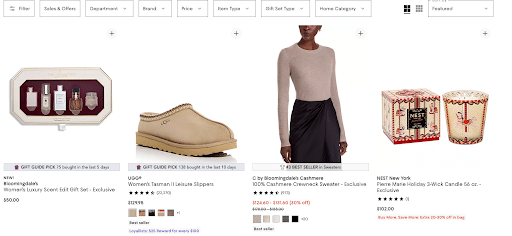
Take this example of a holiday gift guide from Bloomingdale’s.

This guide tailors recommendations to various segments, including categories for women, men, teens, and others, with each taking users to specific category pages promoting popular items and deals.
- Prove the Value of Your Offers: Build more trust among audiences with detailed product demonstrations and authentic customer proof, such as review blurbs in emails or on product pages.
- Ensure Accessibility: Conduct mobile and accessibility checks to confirm that everyone who accesses your BFCM marketing assets enjoys a seamless experience.
- Leverage Social Commerce: Integrating social commerce within platforms like Meta and TikTok reduces friction in the purchasing process. Customers can shop directly from the platform, cutting down on the steps needed to complete a purchase.

5. Omnichannel BFCM Marketing Approach: Connect With Audiences at All Critical Touchpoints
In maximizing BFCM sales, take advantage of all major channels that your target audience uses to extend your outreach and maintain consistent communications.
- Use a Strong Marketing Media Mix: There are plenty of channels you could use for BFCM marketing, including social media, PPC ads, and high-quality website content. However, you must ensure you’re targeting only the channels that your audience actively uses to get the most from your BFCM strategies. For example, you might target certain audiences on Facebook while others might want more visual content on Instagram or TikTok. You can then use email and SMS to execute and supplement your channel plan, like sending abandoned cart reminders to shoppers to complete their purchase, creating a sense of urgency by letting them know the offer won’t last. Meanwhile, social media ads could make personalized offers targeting each audience segment. Map your audience, channel role, offer, timing, owner, and tracking, and be sure to coordinate your campaign effectively and incorporate automation exclusions.
- Follow Buying Paths by Integration: Consider the kinds of journeys customers may take at various points based on existing integrations. For example, Facebook and Instagram Shops route shoppers to websites, and Shopify stores also allow for direct checkout on Meta platforms, while TikTok Shop supports native checkout without needing to leave the platform.
- Create a Frictionless and Cohesive Customer Experience: In developing your omnichannel BFCM marketing strategy, make sure the customer experience is cohesive across all touchpoints. Your brand identity, including your voice and visuals, should be recognizably yours while creating a seamless experience for customers that leads to more sales.
- Incorporate Influencer Marketing and UGC: Also, in getting the most from social media and other channels, you may want to implement influencer marketing and user-generated content (UGC) to optimize your BFCM strategies. Influencer partnerships could connect you with popular personalities in your niche, while unboxings, social media contests, and other strategies could produce UGC that you could then repurpose for other strategies. Also, consider working with micro-influencers who establish a stronger and more personal connection with audiences. Just remember to disclose usage permissions and lear paid/gifted relationship disclosures, which will help maintain compliance with Federal Trade Commission (FTC) disclosure requirements.

6. Product Discovery and Accurate Offer Pages
Build organic discovery with your BFCM marketing, including:
- Gift guides
- A useful BCFM-specific landing page
- Product pages answering questions around price, availability, eligibility, shipping, and returns
Align all pages, checkout, and Google Merchant Center data, including price, sale price and effective dates, availability, shipping, and returns. Consult Google’s product specifications for more Merchant Center guidance.
To increase AI search visibility on platforms like Google’s AI Overviews, put material offer facts in readable text with concise answers, bullet points and hierarchical subheaders where appropriate, and consistent product information.
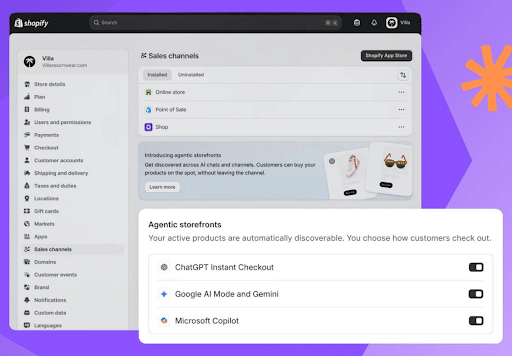
On Shopify stores, you should also review catalog access and supported checkout channels by going to the Agentic section of Sales channels on the Shopify dashboard before launch.
7. Mobile Checkout, Shipping, and Support
Your audiences’ experience on mobile should also be frictionless, accessible, and clear. Before attempting to drive more traffic on mobile devices, make sure conversions and fulfillment are smooth across all devices.
According to Adobe, mobile purchases alone will account for 57.4% of U.S. online holiday spending during the November-December period in 2026.
Before launch, here are some additional checks to ensure your mobile campaigns are ready to go:
- Real Mobile Test Order: Use a mobile device, or multiple device types, to run a test order and see to it that the experience is efficient and easy throughout.
- Guest/Wallet Checkout: The checkout process must be consistently smooth for every user, including checkouts as guests or via third-party mobile wallets. To create a frictionless checkout experience with continuous testing, turn to Ignite’s conversion optimization service.
- Coupon Stacking: Determine if you want to implement coupon stacking, which would allow users to combine multiple discounts, such as store and manufacturer coupons, and make sure the process works right if so.
- Final Shipping/Tax Costs: Make sure the checkout process displays all shipping and tax costs before submission to avoid surprising users with unexpected costs and becoming noncompliant in price disclosure. Nielsen Norman Group details how to display taxes, fees, and shipping for ecommerce sites.
- Synchronized Inventory: All mobile orders should pull from real-time inventory figures to avoid selling items when out of stock.
- Delivery Cutoffs: Indicate the latest time of day a customer can place an order and still have it processed, shipped, and delivered within a particular timeframe. For example, systems should update if a user adds an item to a cart and begins the checkout process, only to suddenly stop and return later to finish the order.
- Return Windows: Establish return windows that allow customers to return and receive refunds for items.
- Outage/Support Contingencies: Set up a plan to keep operations running in the event of an app or website outage or support unavailability, such as automated chatbots when live sales reps are unavailable to respond to customer inquiries.
8. SMS As An Essential Channel: Drive Urgency and Conversions
SMS is becoming a key tool for driving urgency and conversions during BFCM so you should definitely consider incorporating it into your 2026 holiday marketing strategy:
- Last-Minute Reminders: SMS is ideal for sending launch notices, low-stock alerts, countdown reminders, and last-minute deals to consenting subscribers, which you can coordinate with email. Its immediacy makes it a perfect channel for time-sensitive offers.

- Use Shortcodes for High Volume: If your SMS list is substantial, consider using a shortcode. This allows you to send high-volume messages during peak shopping days. Choose appropriately registered and verified senders for SMS and email with provider guidance, such as Twilio’s scaling guidance. In doing so, check throughput, queue delays, and promotion expiry. Twilio’s policy also establishes that sender type does not remove consent requirements..
- Document Promotional Consent: Make sure you have users’ consent before sending any promotional content, as neglecting to do so could result in not only compliance issues but also wasted spend on audiences who aren’t interested.
- Identify the Brand: Make it clear what brand is associated with the promotional content, including in logos and body text throughout.
- Honor Opt-Outs: If people unsubscribe from your email list, don’t try to win them back with more pushing.
- Verify Applicable Quiet-Hour Rules: Consider what regions your recipients reside in and when sending an email might be inappropriate, e.g,. Don’t send someone a promotional email at 2 A.M. when they’re not likely to see it.
9. Avoid Promo Fatigue: Keep Your Audience Engaged
BFCM is a marathon, not a sprint. If you bombard your audience with constant sales emails, they may unsubscribe or stop engaging. Here’s how to avoid promo fatigue without damping the excitement over your BFCM marketing strategy:
- Mix Up Your Content: Alternate between promotional content and more value-driven messages such as gift guides, customer testimonials, and UGC (user-generated content) to keep your audience engaged without overwhelming them. Also, preserve gift guides and customer proof for future use.
- Segment by Engagement: Target customers based on their recent engagement, including their individual preferences, historical response, clicks, purchases, and site activity. Keep in mind that Apple MPP can inflate opens, so look at other metrics and platforms to gauge actual email open rates.
- Turn Off Smart Sending: Smart sending controls the frequency with which you send emails. During BFCM, you may, upon review of campaign/flow overlap, want to reduce or entirely disable your smart sending limits to ensure your customers receive all of your promotional messages without throttling.
Measuring BFCM Campaign Success
To figure out how to retain BFCM shoppers and fully optimize your campaigns, it’s important to know how to measure your BFCM strategies.
Some key metrics to monitor include:
- Net Revenue After Refunds: The total sales income after subtracting all refunds.
- Contribution Profit: The amount of money remaining after you’ve covered all variable costs like shipping and fulfillment to pay fixed costs and boost profits.
- Acquisition Cost: The total average marketing and sales spend needed to acquire a new customer.
- Conversion Rate: The percentage of store visitors or sessions resulting in a purchase or another type of conversion event.
- Average Order Value (AOV): The average amount spent per order or transaction.
- First/Repeat Buyers: Tracks the count or ratio of new customers vs. returning customers.
- Unsubscribe/Complaint Trends: Tracks the rate at which email recipients opt out of an email list or mark an email as spam.
Using these and other metrics you track, you can identify what’s working and what needs some improvement for optimized performance.
While you might want to measure traffic and session duration, treat these metrics as diagnostics that could indicate a bigger underlying issue.
Assign monitoring owners and intervention thresholds to address any issues that might come along before they hinder your entire campaign.
In addition, you’ll need to reconcile channel claims against store orders using consistent attribution windows and order IDs, which will tell you which channels are actually leading to purchases along the customer journey. In the process, avoid adding up platform-attributed revenue.
If you operate via Shopify, you also need to remember that Shopify’s Meta direct checkout capability does not fire any Google Analytics or custom pixels, making it necessary to reconcile Shopify order reporting with other measurements.
Continually refine your strategies with A/B testing, which can run two versions of the same content piece with one differentiating element between them. Based on which performs best, you can decide on which piece to use in your official campaigns, potentially guiding the next year’s BFCM marketing efforts.
Post-BFCM Retention Strategies: Turn New Customers Into Loyal Fans
BFCM brings in a lot of new customers, but the real value lies in turning those first-time buyers into repeat customers:
- Post-Purchase Nurture: After BFCM, set up post-purchase flows to thank customers and offer personalized recommendations for future purchases. Use these flows to build long-term relationships with your new customers.
- Optimize Follow-Up: Base your follow-up marketing based on fulfillment, product use/replenishment timing, buyer preferences, and gifting context, e.g., “these would make great gifts based on your previous purchases.”
- Track Engagement: Track appropriate 30-, 60-, or 90-day repeat purchase and net margin cohorts to get timing right, and compare with previous season buyers or valid holdouts. Just remember that observed behavior doesn’t necessarily equal estimated lifetime value; behaviors could change given certain factors like budget and season, but that customer could come back.

- Reduce Cadence in January: After the 2024 holiday marketing rush, ease back on your email and SMS sends to prevent an uptick in unsubscribes.
FAQs
1. Should Black Friday and Cyber Monday use different offers?
Depending on the circumstances, try to change up your BFCM campaigns. The offers you choose will depend on factors like profit margins, stock, and communicated terms, based on how sales performed during Black Friday leading up to Cyber Week.
2. Should I resend to email non-openers?
Cyber Monday and Black Friday email marketing should target people who are actually going to open your emails. Qualify non-opener targeting with opening tracking pixels or interactions with email messages, as Apple MPP obscures opens. If you find people aren’t giving a satisfying open rate, avoid resending.
3. Should I extend an expiring sale?
In accordance with FTC guidance, if selling an expiring offer, you should specify eligibility, exclusions, deadlines, and stock limits for each sale, ensuring that your BFCM marketing isn’t misleading at any point during the sale.
Accelerate Your 2026 BFCM Marketing With Lifecycle Marketing Managed Services
The right approach to your BFCM strategies can help you get the most from the holiday season. It’s critical to protect margins, verify the buying journey, and earn the second purchase if you want to experience real success.
To begin, you need to complete a readiness audit that equips your strategy.
Ignite Visibility can assist with this, enabling you to:
- Effectively segment your audiences
- Automate those mundane marketing processes for more efficiency
- Close retention gaps to maximize repeat purchases
- And more!
If that sounds good to you, check out our lifecycle marketing services and complete our Customer Journey Evaluation.