Brands everywhere subtly influence your decisions without you even realizing it. Ever wonder how?
In this blog, Senior Content Strategist, Lina Zehan, uncovers the fascinating world of subliminal advertising, where hidden messages are crafted to impact your choices. Keep reading to uncover the secrets behind these powerful techniques and how they’re used in everyday marketing.
What We’ll Cover:
- What is Subliminal Advertising?
- Subliminal Advertising Techniques
- Subliminal Advertising Examples That Went Wrong
- Subliminal Advertising Example Successes
- Subliminal Advertising FAQs
What is Subliminal Advertising?
Subliminal advertising is often misunderstood as a tactic used to secretly manipulate consumer behavior. In reality, modern subliminal advertising focuses on subtle cues that influence perception, emotion, and brand association without requiring conscious attention.
Rather than forcing decisions, subliminal advertising works by reinforcing familiarity and emotional response over time. These cues frequently appear through visual design, messaging tone, sound, and user experience, all of which play a role in how audiences perceive brands.
From a consumer psychology perspective, subliminal influence relies on priming and associative learning. These psychological principles help explain how repeated exposure to subtle stimuli can shape perception without overt persuasion. When applied responsibly, these techniques can support brand recall, emotional engagement, and consistent messaging.
Expert Insight on Subliminal Advertising
From a psychological standpoint, subliminal cues work best as reinforcement strengthening existing brand perceptions rather than creating new motivations on their own.
When integrated into a broader digital marketing strategy, subliminal elements can enhance clarity and cohesion without replacing clear, value-driven messaging.
Is Subliminal Advertising Ethical?
The ethics of subliminal advertising are often debated, largely due to misconceptions about its intent and power. While subtle influence is a natural part of communication, ethical considerations remain essential.
Responsible subliminal advertising:
- Avoids deception or fear-based manipulation
- Respects consumer autonomy
- Reinforces transparency and trust
- Aligns with ethical marketing practices
Brands that prioritize trust understand that long-term success depends on authenticity rather than hidden persuasion.

Using Subliminal Advertising Responsibly
Marketers can apply subliminal techniques ethically by focusing on:
- Consistent branding
- Thoughtful design choices
- Emotionally intelligent messaging
- User-centered experiences
When paired with clear communication and value-driven messaging, subliminal cues enhance, rather than replace, effective marketing strategy. This is especially important in complex marketing environments, such as franchise marketing, where subtle cues help maintain brand consistency while still allowing for localized execution.
Subliminal Advertising Techniques
Subliminal advertising operates at the subconscious level, shaping perception rather than dictating behavior. These cues influence how consumers feel about a brand, often without deliberate analysis.
In practice, subliminal marketing techniques help:
- Increase brand familiarity
- Reinforce emotional tone
- Support recognition and recall
- Reduce cognitive friction during decision-making
Advertisers often use this to their advantage. They will use particular color palettes designed to invoke an emotional reaction in their audience or hide pictures within other graphics, including their logo.
Let’s look at a few common techniques:
Visual Subliminal Cues
Visual elements such as color, shape, spacing, and symbolism play a powerful role in subliminal messaging in advertising. These cues subtly influence emotional response even when consumers are not consciously analyzing them.
For example:
- Warm colors may evoke excitement or urgency
- Cool tones often convey trust or professionalism
- Rounded shapes feel approachable, while sharp angles suggest precision
Visual consistency is also a key component of effective branding strategy, reinforcing familiarity and emotional association over time.
Backmasking
Another way to incorporate subliminal messages into advertising is through backmasking. Backmasking is a digital audio trick where a message is recorded and then played backward on a track that is designed to be played forward.
There are a few examples of backmasking in popular Beatles songs like “Rain” and “Free as a Bird,” and also in Beck’s famous song “Loser.” However, it isn’t used as often in advertising as other subliminal messaging techniques.
Subaudible Messaging
Another audio-specific subliminal advertising technique, subaudible messaging, happens when a specific message is embedded into a soundtrack. The key is for the frequency, or volume level, to be below the threshold of one’s conscious hearing levels. Subaudible messages are usually not detectable by the listener and designed to influence the subconscious mind.
Subvisual Messaging
Another more popular subliminal advertising technique is subvisual messaging. This is when a graphic (usually a company’s logo) will flash on the screen so quickly that you don’t notice it but your subconscious does.
The goal of this type of advertising is to deliver the message to the audience without openly delivering it … if you know what I mean.
Digital and Neuromarketing Advances

Today, many ads and commercials use unique digital techniques to take full advantage of subliminal advertising.
For example, some digital subliminal advertisements use extremely brief microcopy or microanimations that audiences barely perceive, while others could focus more on color psychology.
At the same time, neuromarketing techniques can provide marketing researchers with real-time biometrics that gauge the effectiveness of subliminal messages in commercials and other digital ads.
Some contemporary neuromarketing techniques include:
- Techniques Registering the Central Nervous System (CNS): Certain neuromarketing techniques can help measure how people’s CNS reacts to certain stimuli, including electroencephalogram (EEG), functional magnetic resonance (fRMI), and magnetoencephalography (MEG), which can measure and map brain activity from memory and attention to blood flow.
- Techniques Registering Peripheral Nervous System (PNS) Activity: Other techniques can measure people’s PNS reactions, such as electrocardiogram (ECG) and galvanic skin response (GSR), eye tracking, and other forms of testing to measure a person’s emotional responses and attention through eye movement, perspiration, and heart rate, among other biometrics.
- Other Techniques: Implicit response test (IRT), indoor positioning techniques (indoor GPS), and other types of techniques can measure different types of behaviors and the overall effects of subliminal images in advertising and other content.
Keep in mind that with any type of subliminal advertising technique, it largely comes down to context. The pre-existing needs and situation of the individual will have a huge influence on how that person reacts to a subliminal advertisement.
For instance, someone who’s thirsty will likely be more responsive overall to beverage commercials with subliminal messages than someone who’s recently enjoyed a drink. People with more spending money may also be more swayed to make luxury purchases than people still waiting for that next paycheck to come.
As such, knowing when to push subliminal messaging and images can help you get the best results with your efforts.

Examples of Subliminal Advertising Done Wrong
Here’s what you don’t want subliminal ads to be: obvious.
People don’t like feeling manipulated, which is an inherent risk when it comes to hidden advertising. When a message loses its subtlety, it becomes too obvious.
Being caught purposely trying to insert “hidden” messages can lead to controversy. Aside from generally poor execution, the below subliminal messages in advertising examples illustrate the ethical questionability of deceptive advertising. In some cases, this lack of ethics has resulted in regulatory scrutiny in some areas, making it important to ensure your subliminal advertising is both compliant and overall devoid of truly deceptive tactics.
Here are a few of the most infamous examples of not-so-subtle subliminal advertising.
1. The Food Network and McDonald’s
The Food Network made major headlines in 2007 when it was caught inserting a flash of the McDonald’s logo during the popular show Iron Chef.
Why It Doesn’t Work: There was no attempt to hide this one, and the fact that the flash was completely unrelated to what was being aired didn’t help matters. Was it really a play at subliminal messaging? Sure seems like it, but McDonald’s and The Food Network both claimed the message was an error.
2. KFC’s Dollar Snacker
KFC drew negative attention in 2008 when it aired a commercial for its Dollar Snacker featuring a green dollar bill in the lettuce. You had to slow this commercial way down to see it, but once you do it, it can’t be unseen.
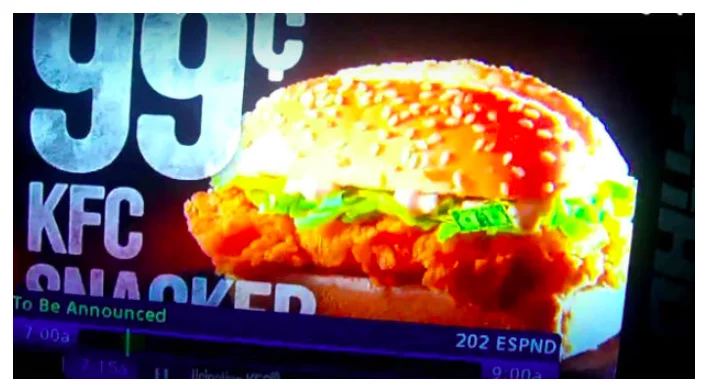
Why It Doesn’t Work: First of all, it’s sloppy. Secondly, it’s a dollar bill. No one needs to be reminded that KFC’s end goal is to make us spend money.
3. Husker Du
You probably don’t remember the board game Husker Du. That could have something to do with their subliminal advertising scandal.
In 1973, the company aired ads that featured a series of frames reading “Get It.” The manufacturer admitted to inserting the messaging, and the ad is ultimately what lead to the FCC’s condemnation of such tactics.
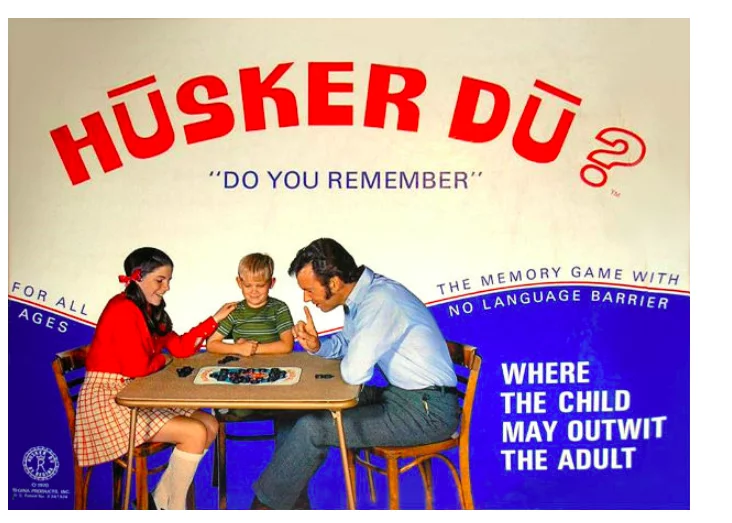
Why It Doesn’t Work: Again, it’s sneaky. It’s manipulative. And just like the McDonald’s ad, it was far too obvious.
4. Burger King
In 2009, Burger King launched an advertisement campaign to promote its new seven-inch burger, which included a single beef patty, American cheese, sauteed onions, and A-1 steak sauce. It features a surprised-looking woman with her mouth agape, facing the product. The caption reads “It’ll blow your mind away.”

Why It Doesn’t Work: First off, the implications are anything but subtle. For an ad that’s trying to sell a sandwich, it’s laden with sexual metaphor. There was no need to include this kind of imagery, particularly for a product that has absolutely nothing to do with sex.
5. Wendy’s
Wendy’s updated its logo in 2013 for the first time since 1983. While it still retained many of the same elements as the original, the new logo attempted to create a positive mental image in the mind of the consumer by including the word “MOM” on Wendy’s ruffled collar.

Why It Doesn’t Work: Few think of mom’s delicious home cooking when visiting a nationwide fast-food chain like Wendy’s.
6. 2000 US Presidential Race
Ahhh… the 2000 Gore v. Bush presidential race. The year the entire country learned the phrase “hanging chads.” Turns out there were a few other memorable moments of the election and one of them involved subliminal advertising.
During one of George W. Bush’s campaign commercials, his team used subliminal messaging to display the word “RATS” more prominently than the rest of the words, when flashing the word “Bureucrats” across the screen, leading some people to believe that he was calling Al Gore and his campaign a derogatory term.
Why It Doesn’t Work: It could have gotten the Bush team into some hot water! Even though Bush denied the allegations, the ad caused a lot of speculation and took attention away from the real issues of the campaign. It was eventually investigated by the FCC and pulled off the air.
Examples of Subliminal Advertising Done Right
Here’s how people should feel about subliminal ads: clever. It should never feel like an attempt to brainwash or hypnotize. People don’t want to be fooled, but they do want to be in on the joke.
Here’s what you do: play with images and optical illusions. Blur the line a little.
The great thing about these hidden messages is that, when done well, they can pay off big time and lead to some of the most memorable ads to date.
They should help carry people down the sales funnel from initial contact to repeat purchases. Consistent messaging taking advantage of subliminal images or messages will help create a cohesive experience that builds recognition and trust for your brand at every touchpoint.
Here are a few examples of subliminal advertising done right.
1. Pepsi Vs. Coke
Pepsi was the first to unveil the ad, playing up the “horror” of receiving a Coke when you really want a Pepsi.
Coke’s response was perhaps even better, capitalizing on the caped Coke as the real hero of the story.
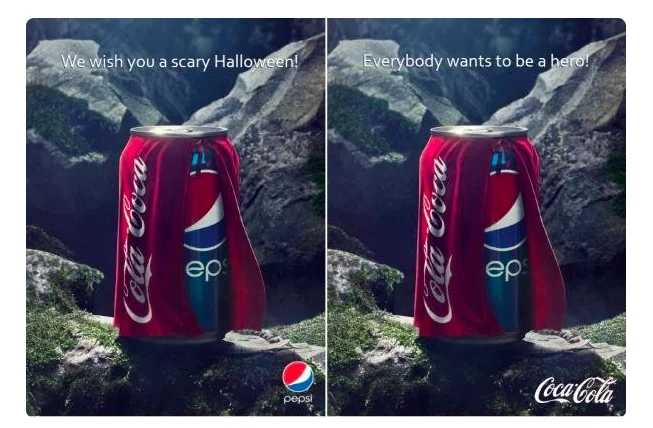
Why It Works: It works so well because the two classic competitors each manage to make consumers see their product in a positive light – while casting a clear shadow on the competition. It’s designed to make you feel something without explaining why, and it manages to do just that.
2. Tostitos
The Tostitos logo is something almost all of us are familiar with, but unless you’ve taken the time to really inspect it, you probably missed the hidden scene in the middle. The two T’s also form two friends sharing chips and salsa. Pretty cool, eh?

Why It Works: It works because it isn’t in your face, and it promotes the benefit of the brand. The message is so subtle, you likely never even consciously noticed the message before: Enjoy a tasty snack with people you like. It isn’t pushing sales necessarily; instead, it’s pushing an experience.
3. Amazon
Amazon has arguably one of the most recognized logos around. But no matter how many times you’ve seen it, you may not have really taken it in. Take a look at the strategically placed arrow to see what I mean.

Why It Works: The hidden message here is simple: Amazon sells everything, from A to Z. It helps, of course, that Amazon actually does sell everything. It’s not pushy or salesy, it just reinforces the channels, all-in-one model. The fact the arrow also forms a smile doesn’t hurt, either.
4. Snooty Peacock
Sometimes, a subliminal message can be in your face and still work. Case in point: the Snooty Peacock.
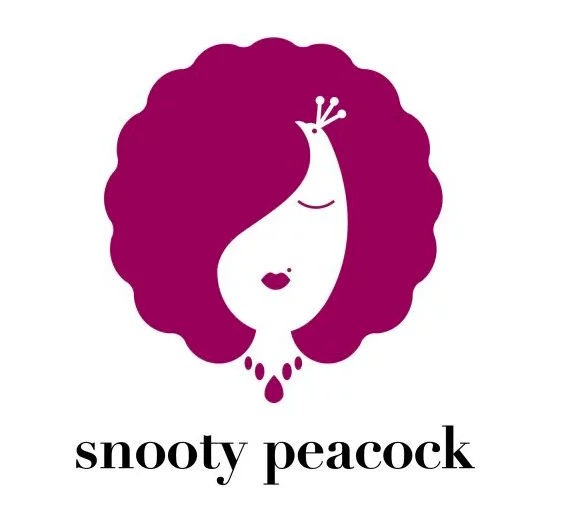
Why It Works: The optical illusion used here delivers two images: one a peacock, the other a woman with a necklace. Depending on how you look at it, you could see one or the other. Both, however, are intended to hint at the elegance of the brand.
Peacocks are one of the prettier birds, often seen as decorative, while the woman represents the unique clientele. It’s effective, it causes a viewer to look twice at the ad – which is exactly what the Snoot Peacock wants.
5. FedEx
Here’s another one you probably didn’t see coming. Even your friendly, neighborhood FedEx is harboring a hidden message. The whitespace between the E and X clearly outlines an arrow.
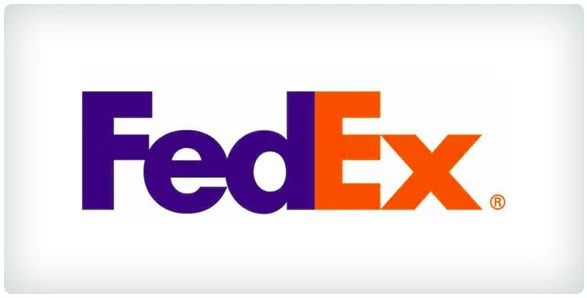
Why It Works: FedEx uses the arrow to highlight speed and efficiency – the brand’s biggest benefits. Like many others on the list, you wouldn’t know it until someone pointed it out. But once you do, you feel all the more clever about it.
6. Pirates of the Caribbean
Disney’s long been accused of hiding subliminal messages in their movies. But this one may be the most subtle (and clean) of them all.
While not exactly obvious, a longer look has many convinced that Disney adapted the well-known skull and crossbones emblem to look more like their iconic Mickey Mouse logo.
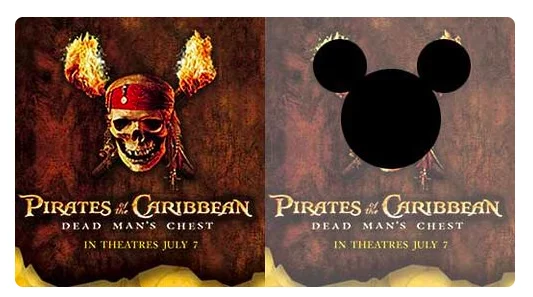
Why It Works: People love Mickey Mouse. They feel good about Disney. So present them with something that’s reminiscent of both, and they’re bound to transfer some of those good feelings – whether conscious of it or not.
Whether it was Disney’s intention or not to draw such a close similarity, there’s no denying the resemblance.
7. Baskin Robbins
Did you know that Baskin Robbins used a subliminal message to promote the number of flavors it sells. Check out the logo below. Look carefully at the non-blue part.
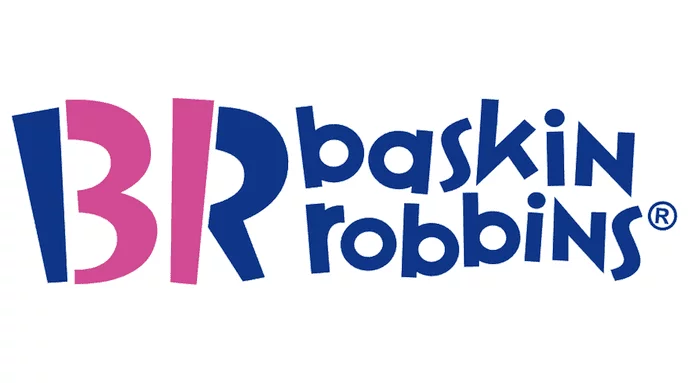
Why It Works: It’s subtle, but it gets the point across. There’s a distinct “31” within the “B” and the “R”. The company uses that subliminal message to reinforce its well-known unique selling proposition: a whole lot of flavors to choose from.
8. Toyota
Have you ever looked closely at the Toyota logo? It looks like a fairly routine car company graphic. However, if you pay careful attention, you can see that various parts of the graphic can spell out the word “Toyota.”

Why It Works: Toyota uses that logo to reinforce its brand. It’s a very clever strategy.
9. Toblerone
At first glance, the Toblerone logo looks like your average Swiss mountain range. But take a closer look and you’ll notice that the logo features a bear standing on its hind legs expertly hidden in the design.
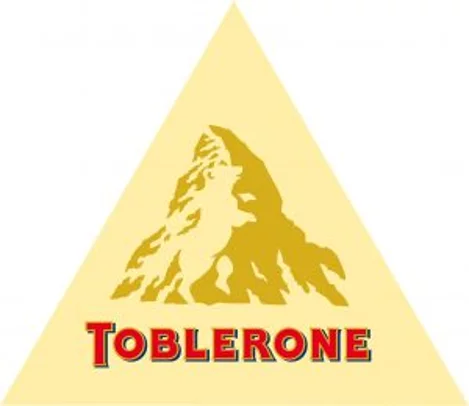
Why It Works: This is a clever tribute to the Swiss city of Bern, nicknamed “the city of bears,” where the chocolate company was founded.
10. NBC
While most are familiar with the NBC logo, there are a few subtle details that are easy to overlook. The white space in the middle combined with rainbow colors around it creates the illusion of a peacock.

Why It Works: This represents the company’s pride in the shows and programs they produce and broadcast.
11. Spartan Golf Club
At first glance, you may notice a Spartan helmet but look again. Do you see the golfer? This is an incredibly, well-designed logo that will remind you to go play golf at the Spartan Golf Club.

Why It Works: It’s subtle but powerful. If you see this logo, you’re going to remember to play golf at this club.
12. Milwaukee Brewers Logo
Another example of a good subliminal logo is the one used for the Milwaukee Brewers from 1978 to 1993, which art student Tom Meindel developed by combining an M and B to resemble a catcher’s mitt.

Why It Works: Subtly using the initials of the team name and creating a memorable image from them is a clever way to promote the Milwaukee Brewers across all merchandise and advertising. It demonstrates how consistent subliminal messages in advertising examples can contribute to marketing across all channels, especially when incorporated into a uniquely identifiable image.
Subliminal Advertising FAQs:
1. What is subliminal messaging?
Subliminal messages are visual or auditory cues placed below the level of conscious awareness, often used in media like ads, music, or commercials. Their purpose is to subtly influence perception or reinforce an idea without being obvious or overwhelming, making them difficult to detect even when someone actively looks for them.
2. Do subliminal messages work?
In generations past, researchers would have argued that subliminal messages were ineffective. But, these days, emerging research has demonstrated that subliminal messages do have the power to influence us to some degree and tend to work best when we don’t notice them.
3. Is subliminal advertising illegal?
In order for marketing speech to be protected by the First Amendment, it must not be misleading. If your subliminal message is misleading, you could run into problems.
4. What is a subtext in marketing?
Marketing subtext refers to the underlying meaning that supports the main message of an advertisement, often conveyed through subtle implications rather than direct statements. When used effectively, subliminal elements and subtext can influence audiences more powerfully than the primary message by appealing to unconscious emotions and associations.
5. Under what conditions does subliminal advertising work?
Subliminal messages in commercials and other ads work best when they appeal to the pre-existing circumstances of the viewer. For instance, if someone is hankering for a meal when they see subliminal messages in advertising, that emotion will be more likely to influence the viewer and lead to a purchase, potentially on the spot.
Get Started With Subliminal Advertising
Utilizing advanced strategies, like subliminal messaging, can subtly influence consumer behavior and strengthen brand perception. To capitalize on these methods, Ignite Visibility offers cutting-edge digital marketing services that can be help you launch your own subliminal ads such as:
- Craft compelling and persuasive content that subtly influences your target audience.
- Integrate subliminal messaging techniques into your advertising efforts to enhance consumer engagement.
- Stay informed with the latest trends in digital marketing, ensuring your strategies remain effective and relevant.
- Monitor and measure the impact of your campaigns with comprehensive analytics and reporting.
Get in touch with one of our marketing experts to learn more today.